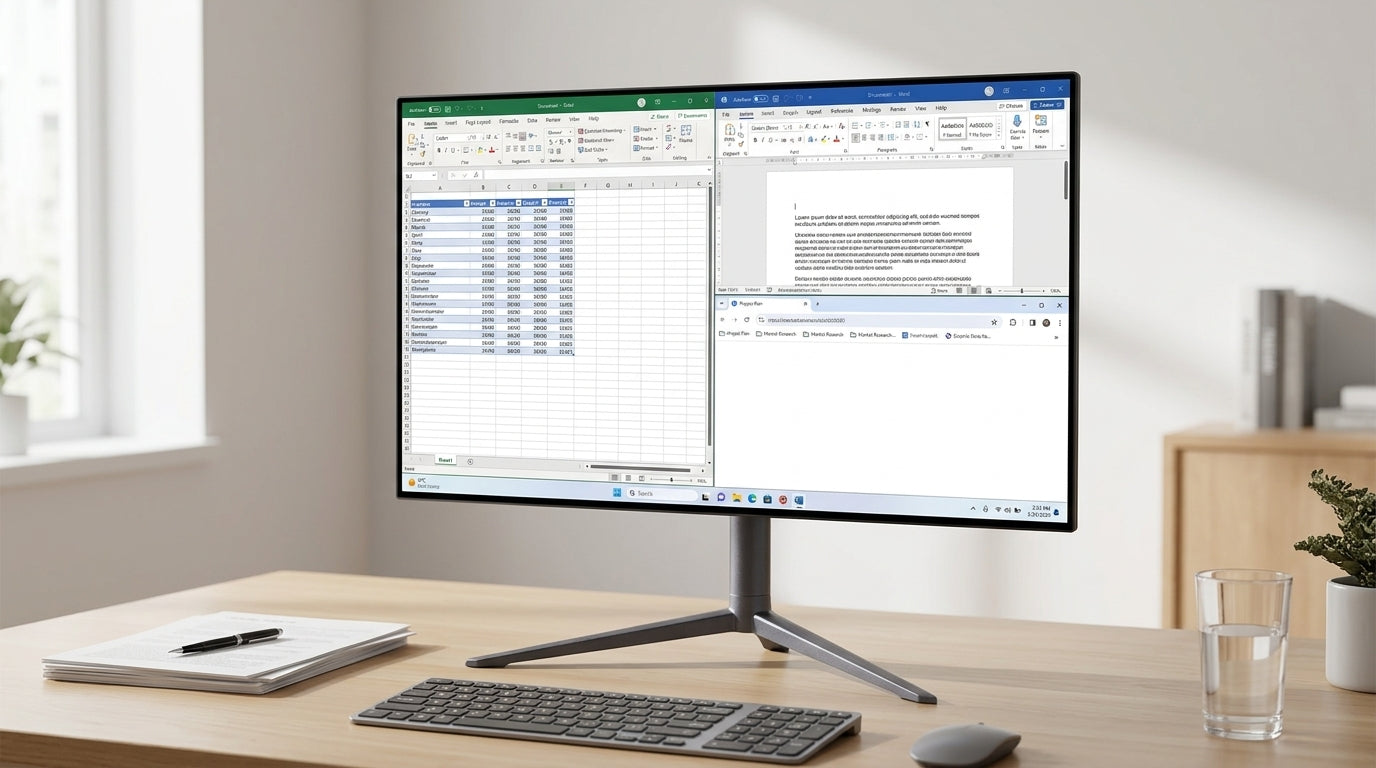
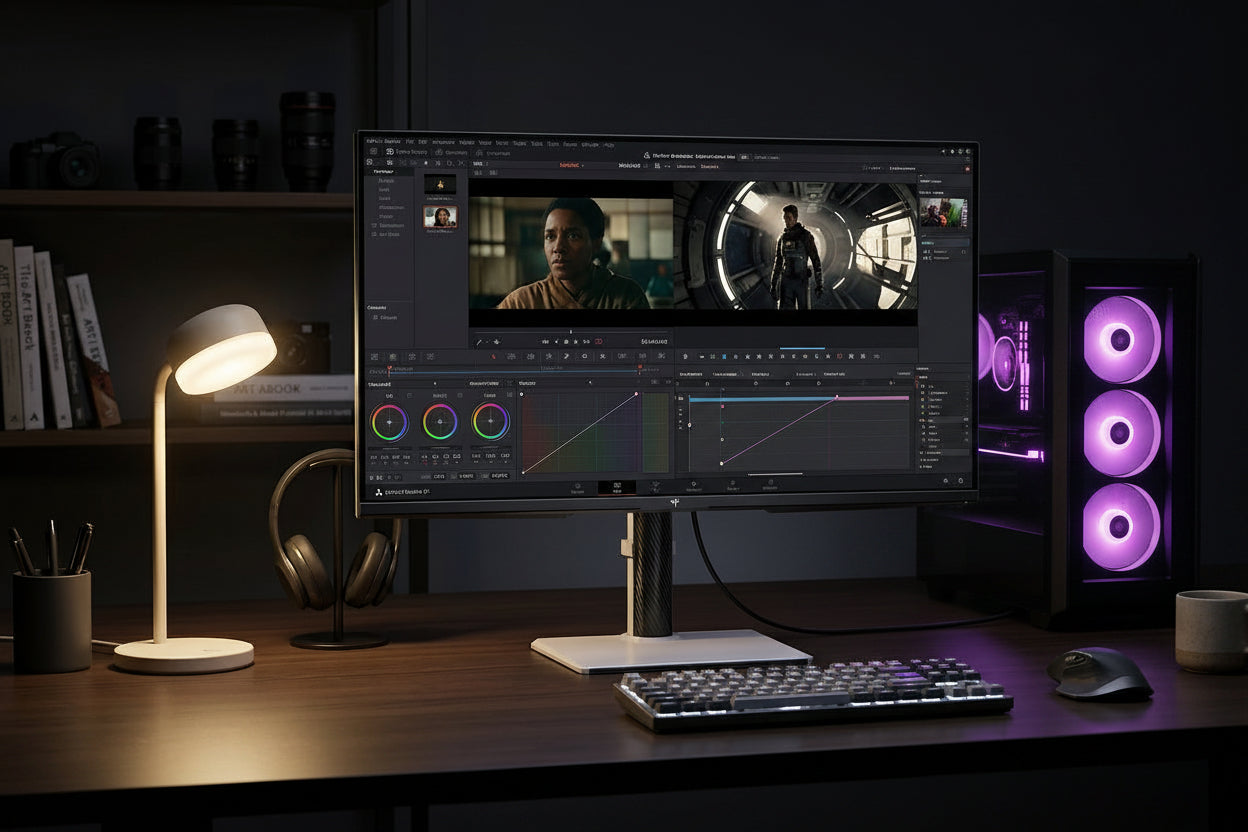
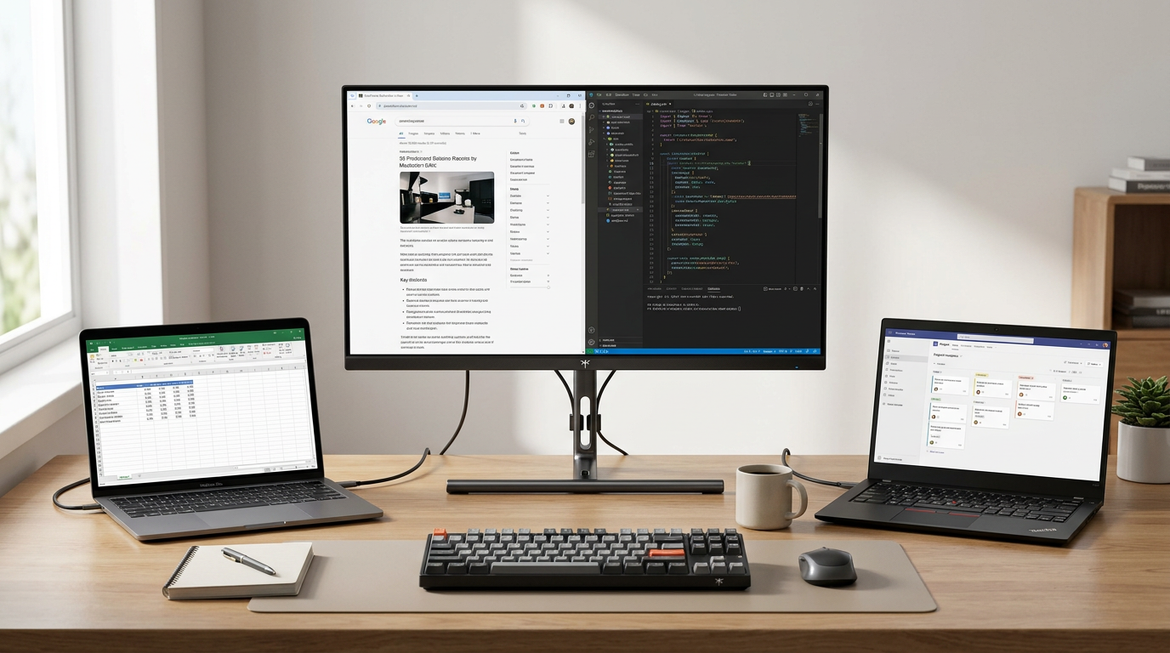
The best KTC monitor for bright room use is the one that keeps text readable and reflections manageable in your actual desk setup, not the one with the biggest HDR number on the page. For most buyers, the first things to check are sustained SDR brightness, anti-glare coating, local dimming contrast, and whether the stand lets you tilt or swivel away from light sources.
What Matters Most in Bright Rooms
Brightness matters most when ambient light washes out text, dark UI elements, and game scenes. In practice, a monitor that looks fine at night can feel weak beside a window at noon. A useful rule of thumb is that 300+ nits of sustained SDR brightness is a practical starting point for many bright offices, especially when the room has daylight or strong overhead lighting. Planning for that range helps most users.
A matte or anti-glare finish is the next check. It does not make reflections disappear, but it can reduce the mirror-like effect that makes a screen annoying in a lit room. For buyers comparing surfaces, matte versus glossy coatings is a useful background reference because the trade-off is simple: matte usually handles reflections better, while glossy can look a little sharper in darker rooms.
Local dimming matters because higher contrast helps keep detail visible when the room is bright. Zone-based backlights preserve dark areas better than a plain backlight. That does not make a monitor glare-proof, but it can make the image hold up better when ambient light is already working against it.
A fully adjustable stand is the last factor people underestimate. If you can raise, tilt, and swivel the screen, you can often reduce reflections without changing the whole desk layout. If the stand is fixed, you have fewer ways to escape a bad window angle.
Decision sentence: If your desk sits beside a window, prioritize sustained brightness and a matte finish first; if the room is only moderately bright, a well-adjusted IPS monitor can still be a sensible buy.
Mini-LED and IPS for Different Bright Rooms
Mini-LED is usually the safer choice when the room is genuinely hard on the screen, especially if you sit near a window or under strong ceiling lights. That is where stronger contrast and better highlight control can make the picture feel less washed out. Standard IPS is easier to justify when the room is bright but not harsh and you care more about price than HDR impact.
If you want the most room-friendly KTC option in this guide, the KTC Mini LED 27" 4K 160Hz HDR1400 Gaming Monitor | M27P6 is the clearest premium fit. Its 600 nits SDR brightness, 1400 nits HDR peak, 1,152 local dimming zones, and anti-glare coating line up well with bright desks where contrast gets flattened fast. That said, it is still a monitor, not a glare shield, so direct sunlight remains a setup problem.
If you do not need Mini-LED, the cheaper KTC 4K IPS options can still make sense for bright rooms that are controlled with blinds, lamp placement, or a better desk angle. The main trade-off is that you give up some contrast and HDR punch. That is fine when the main goal is everyday office readability, not dramatic HDR gameplay.
For readers comparing the category first, the Mini-LED Monitor Buying Guide is the best follow-up because it shows why zone count and HDR tuning matter more than marketing labels. All-Mini-LED Monitors is the browsing path if you already know you want to stay in the Mini-LED tier.
| Panel Type | Bright-Room Strength | Contrast Behavior | Best Fit | Main Trade-Off |
|---|---|---|---|---|
| Mini-LED Fast IPS | Strongest for mixed light | Better dark-area control in bright rooms | Window-side desks, HDR gaming, creator work | Costs more |
| Mini-LED HVA | Strong contrast focus | Good black-level handling for the price | Buyers who want contrast first | Less color-speed flexibility than top-tier options |
| Standard IPS | Good in controlled bright rooms | More limited contrast control | Office work and mixed use where price matters | Less dramatic HDR impact |
Decision sentence: If the screen faces a window or you care about HDR games in daylight, Mini-LED is the better fit; if you mostly want a usable office monitor and can manage the room, standard IPS can still be the smarter value.
Peak Brightness Is Not the Whole Story
Peak HDR brightness is the number most shoppers notice first, but it is not the number you live with all day. A monitor can advertise a strong HDR mode and still feel ordinary in spreadsheets, email, or web work if its normal SDR brightness is lower. That is why sustained brightness matters more than peak brightness for a sunlit office.
The KTC lineup makes this trade-off easy to see. The M27P6 reaches 600 nits in SDR and 1400 nits in HDR, so it has more room to stay visible when the ambient light is high. The KTC 27" 4K 160Hz/320Hz 90W Gaming Monitor | H27P6 is a different kind of choice, with 400 nits typical brightness and an anti-glare surface. That is still usable for many desks, but it depends more on room control.
The same applies to the KTC 27" 4K 160Hz HDR400 Gaming Monitor and the 4K Monitor collection generally. A 4K label alone does not tell you whether the screen will hold up in daylight. Bright-room buyers should look for the number the monitor can sustain during normal use, not just the one used in the HDR headline.
This is where regret usually starts. Buyers see a big HDR claim, then discover that office windows and overhead lights are affecting the screen more than expected. A better habit is to ask, "What brightness mode will I actually use most of the day?"
Decision sentence: If you spend most of the day in documents and browser tabs, sustained SDR brightness matters more than HDR peak; if you mainly watch HDR content in a controlled room, the peak number deserves more weight.

Coating and Reflections Change the Experience
When glare is the main problem, coating matters as much as brightness. A matte or anti-glare surface helps break up reflections from windows and overhead lights, which makes the screen easier to live with in a real office. A more reflective finish can look slightly punchier in a dark room, but it usually becomes a headache near sunlight.
The practical mistake is assuming coating solves everything by itself. Even a good anti-glare surface can struggle if a lamp points straight at the panel or the monitor sits directly opposite a bright window. Screen position and room layout still matter.
For shoppers who want a deeper explainer, how panel coating changes reflections is a helpful follow-up, and Why Your Eyes Feel More Comfortable with Matte Screens Despite Lower Perceived Sharpness is a useful reminder that "sharper-looking" and "easier to use" are not always the same thing.
A few quick self-checks help:
- If you can see a window reflection in your current monitor, favor anti-glare first.
- If you work mostly at night, a glossy-like finish may seem attractive, but it is a weaker bright-room bet.
- If your desk is between two light sources, coating matters less than positioning and stand movement.
Decision sentence: If reflections are the thing that bothers you most, pick the monitor with the better anti-glare treatment and a flexible stand, even if another option looks a little more vivid on paper.
Stand Setup and Desk Placement
A good stand can rescue a borderline room, while a weak stand can ruin a decent panel. The goal is not perfect darkness. The goal is to move the screen so it no longer catches the worst reflections.
Start with height. Raise the display so the top edge sits near eye level, then tilt it slightly downward if overhead lights are landing on the panel. After that, swivel the screen away from the brightest side of the room. If the desk is near a window, even a small angle change can make the image easier to read.
The M27P6's full ergonomic stand is useful here because it gives you height, tilt, swivel, and pivot adjustment. The Ergonomic Brightness guide is a good background resource if you want to connect monitor placement with comfort. For product browsing, Gaming Monitor is a broad starting point, but the real filter is whether the included stand gives you the movement your room needs.
A practical placement order works best:
- Move the desk or monitor to avoid direct window aim if possible.
- Tilt the screen to reduce ceiling-light reflection.
- Raise the monitor to a comfortable seated height.
- Swivel it away from the strongest light source.
- Consider a monitor arm only if the included stand still leaves you stuck.
Decision sentence: If the monitor cannot move enough to escape a window reflection, no amount of extra brightness will fully fix the problem.
A Practical Shortlist for Bright Rooms
Here is the simplest way to narrow the field if you are choosing a KTC monitor for a bright room. The best fit depends on how harsh the room really is and how much HDR you expect to notice.
- Best fit for harsh daylight: M27P6. Its Mini-LED backlight, 600 nits SDR, 1400 nits HDR, and full ergonomic stand make it the strongest all-around bright-room option here.
- Best fit for mixed work and gaming on a lower budget: H27P6. Its 400 nits and anti-glare surface can work well if you can control reflections.
- Best fit when you want 4K value first: H27P22S and other 4K IPS options. They are easier to justify when the room is bright but not extreme.
If you are still deciding, use this final check before buying:
- Do you sit beside a window for hours at a time?
- Will you use HDR often enough to care about Mini-LED?
- Does the stand let you change height, tilt, and swivel?
- Is the monitor's normal brightness high enough for daytime work, not just HDR demos?
If the answer to most of those questions is yes, the M27P6 is the most convincing pick. If not, a simpler IPS model can be the better value and the easier room match.
Related Resources
- Ambient Light Changes HDR Image Quality
- The Comprehensive Guide to Mini-LED Display Technology in 2026
FAQs
Q1. How Many Nits Do I Need for a Bright Office?
There is no single magic number, but many bright offices are easier to manage once sustained SDR brightness gets into the 300-nit range or higher. If your desk sits beside a window, prioritize the sustained figure over the HDR headline, because that is the mode you will use most.
Q2. What Is the Practical Difference Between Mini-LED and IPS in Sunlight?
Mini-LED usually holds contrast better when ambient light is high, so it feels more stable in mixed lighting. IPS can still work well if the room is controlled and the buyer wants a lower price. The buying implication is simple: the harsher the room, the more Mini-LED matters.
Q3. Do More Local Dimming Zones Always Mean a Better Bright-Room Monitor?
More zones usually help preserve contrast and reduce washout, but zone count is only part of the story. Peak brightness, tuning, and how the monitor handles blooming still matter. For buyers, zone count is a strong clue, not a stand-alone verdict.
Q4. Can an Anti-Glare Coating Fix Window Reflections on Its Own?
It helps a lot, but it cannot overcome a bad desk angle or direct sunlight by itself. The best result comes from pairing anti-glare coating with a stand that can tilt, raise, and swivel. Treat coating as one part of the setup, not the whole solution.
Q5. Which KTC Model Fits a Bright Desk Without Overpaying?
If you want the strongest bright-room performance, M27P6 is the cleanest match. If you mainly need a usable daylight office monitor at a lower cost, H27P6 or H27P22S can make more sense. The real tiebreaker is whether you need Mini-LED contrast or just better room control.
What to Check Before You Buy
For a bright room, the best KTC monitor for bright room use is the one that matches your lighting, not just your resolution target. If you need the most forgiving setup, choose Mini-LED with a matte surface and full stand adjustment. If your room is bright but controllable, a good IPS monitor can save money without becoming a bad buy. The right answer is the one that fits your light sources first, then your budget. Check the stand's tilt and swivel range against your window angles before purchase.