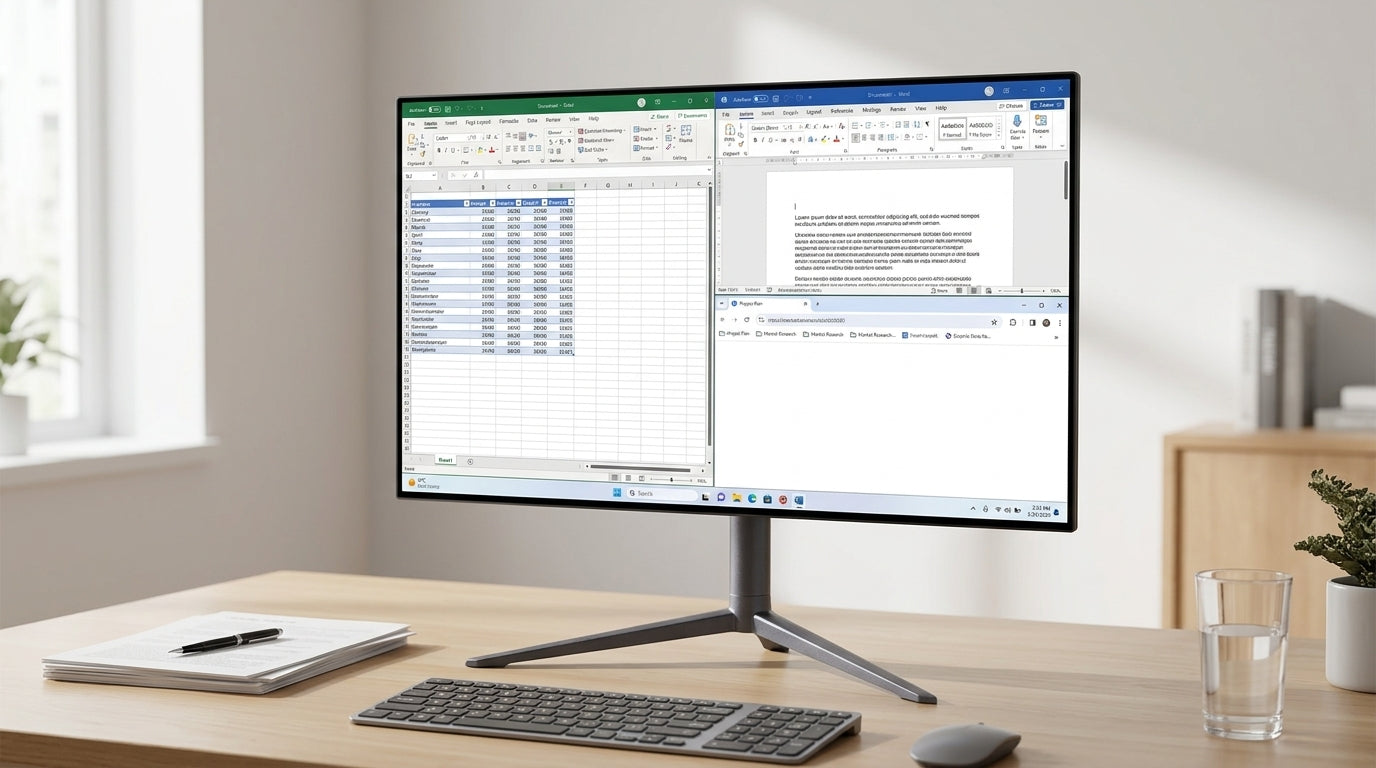
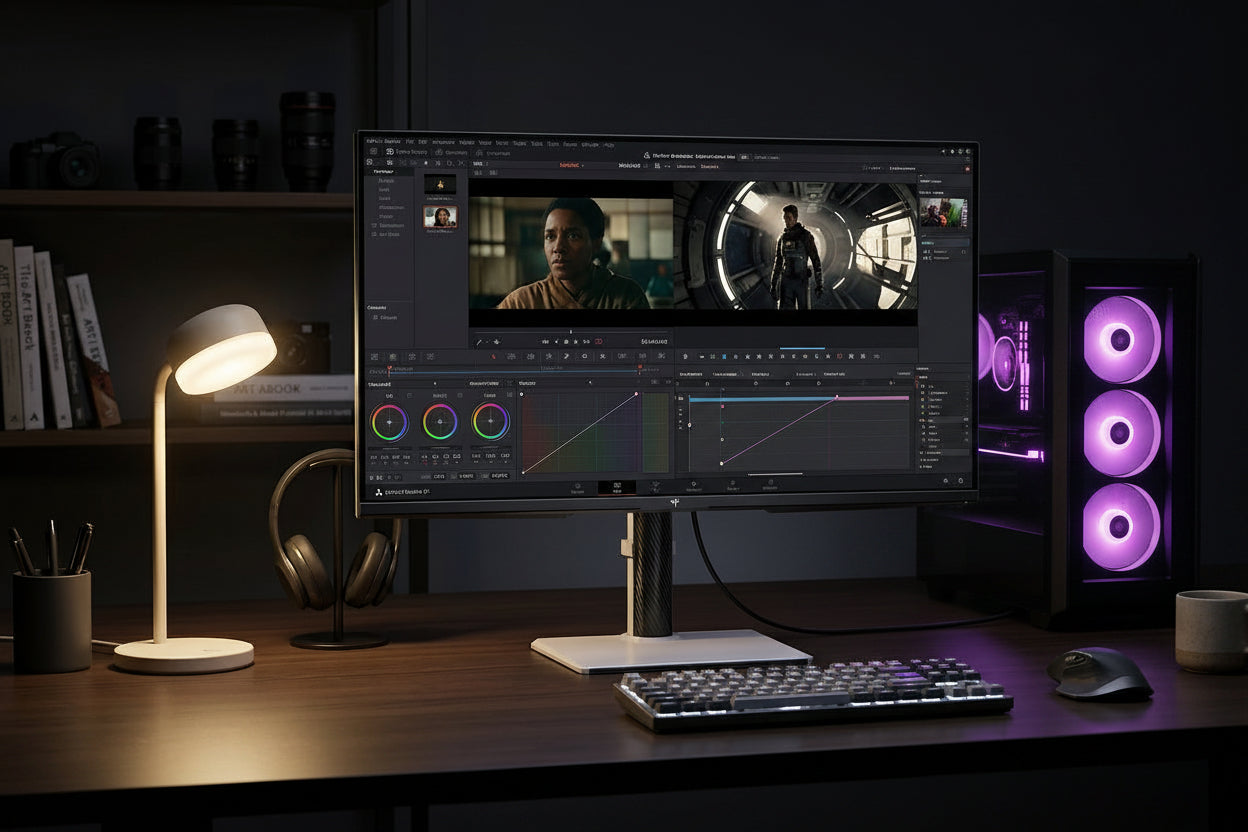
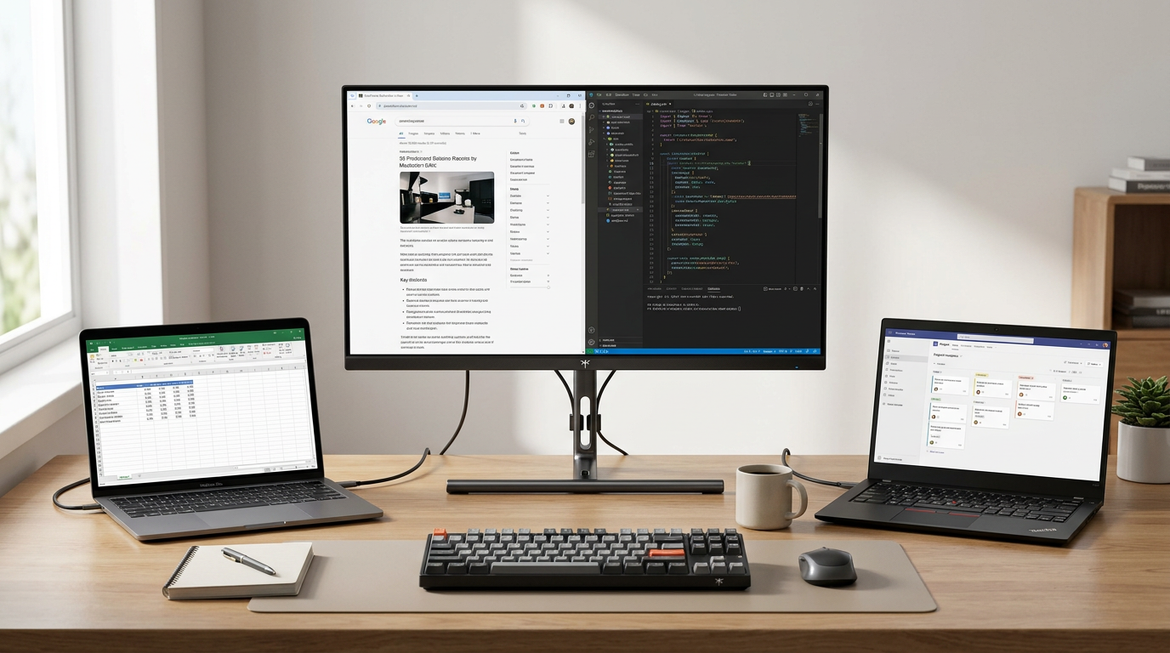
For turn-based strategy, 60Hz to 75Hz is usually enough; for MOBA games, 120Hz to 144Hz is the sweet spot. Beyond that, higher refresh rates can feel better, but they are rarely the smartest use of your budget unless you also play fast-twitch esports.
If matches feel visually chaotic when team fights erupt, or your strategy map looks fine but still feels a little sticky while scrolling, the issue is often not raw GPU power alone. In real buying decisions, the biggest gains usually come from moving up from 60Hz, while the jump beyond 144Hz is much more situational. This guide will help you choose a practical refresh-rate target, understand the tradeoffs that matter, and focus on the monitor features that actually improve play.
Refresh Rate Matters Differently in Strategy and MOBA Games
A monitor’s refresh rate is how many times per second the screen updates the image. That sounds simple, but its practical value changes a lot by genre. In turn-based strategy, decision-making matters more than pure motion speed, so the benefit of extreme refresh rates is limited. In MOBA games, however, the screen is constantly in motion during lane trades, jungle pathing, camera panning, and late-game team fights, so smoother updates make the action easier to read.
That is why many monitor buying guides separate slower-paced gaming from competitive gaming. Strategy titles are often treated as comfortable at 60Hz or 120Hz, while 144Hz and above matter more when reaction speed, tracking, and on-screen chaos increase. For a player who spends half the week in a grand strategy campaign and the other half in ranked MOBA queues, the right answer is usually not “buy the highest refresh rate possible.” It is “buy enough refresh rate to match the pace of the game you care about most.”
What Turn-Based Strategy Players Actually Need
For most strategy players, 60Hz remains adequate because the game does not demand constant target tracking or split-second flicks. If your main rotation is Civilization, Total War campaign management, XCOM, or a 4X game with long planning phases, image sharpness, text clarity, and screen space usually matter more than jumping from 144Hz to 240Hz.
That does not mean higher refresh is wasted. A 75Hz or 120Hz display makes map scrolling, cursor movement, and interface animation feel cleaner, which can reduce friction over long sessions. Many monitor recommendations position 75Hz to 120Hz as a meaningful comfort upgrade for productivity and smoother visual workflows, and that applies surprisingly well to strategy gaming because these games are often dense with text, menus, and side panels. If you spend three hours moving armies, reading tooltips, and dragging across a huge world map, smoother motion is nice, but resolution and panel quality usually deliver more value.

A simple real-world example makes this easier. On a 27-inch monitor, 1440p gives you more room for a minimap, build queues, diplomacy panels, and browser tabs than 1080p, and 27-inch screens pair especially well with 1440p. For turn-based play, a 27-inch 1440p monitor at 75Hz or 120Hz often feels more premium than a 24-inch 1080p panel at 240Hz, even though the second screen wins on headline speed.
Why 120Hz to 144Hz Is the Sweet Spot for MOBA Games
For MOBA players, 120Hz to 144Hz is the mainstream sweet spot because it delivers a major jump in fluidity without the extreme hardware and price demands of 240Hz and above. Camera movement becomes smoother, moving skill shots are easier to follow, and crowded fights are less visually smeared. This is where refresh rate starts to feel like a competitive tool instead of a spec-sheet bonus.

The technical reason is straightforward. A 144Hz screen refreshes every 6.94 milliseconds, while 240Hz drops that to 4.17 milliseconds. That 2.77-millisecond gap is real, and it can matter in high-level competitive play. But MOBA games are not Counter-Strike. You are usually dealing with ability timing, positioning, cooldown awareness, and battlefield readability rather than nonstop precision tracking. For most players, the jump from 60Hz to 144Hz is obvious; the jump from 144Hz to 240Hz is much smaller.
That is why a balanced 1440p 144Hz to 180Hz class monitor is such a strong fit for MOBA gaming. You get enough smoothness to clean up motion during team fights, enough resolution to keep the map and UI crisp, and a performance target that far more systems can actually sustain.
When 240Hz Is Worth It, and When It Isn’t
A 240Hz monitor is built mainly for serious competitive play, and that still applies if your competitive game happens to be a MOBA. If you play ranked every night, care about animation readability, and already run very high frame rates, 240Hz can make the game feel more immediate. Inputs feel tighter, camera dragging feels lighter, and spell effects stay cleaner in motion.

The catch is value. Multiple monitor recommendations note diminishing returns above 144Hz. That matters even more in MOBA and strategy games because these genres do not scale with higher refresh rates as dramatically as twitch shooters do. If your system averages 110 to 150 FPS in actual matches, then buying 240Hz mostly buys headroom and future-proofing, not a dramatic advantage.
Another buying lesson is easy to miss: headline refresh rate alone does not make a monitor better. Motion handling, brightness, stand quality, adaptive sync support, and overall image quality often matter more. A strong 1440p 180Hz or 240Hz IPS or OLED display can be the smarter choice than a cheaper ultra-fast 1080p panel with weak contrast, poor ergonomics, or visible ghosting.
The Better Buying Formula: Match Hz to Frame Rate, Resolution, and Genre
Your monitor only shows what your system can feed it, and matching refresh rate to real FPS is the rule that keeps purchases honest. If your PC can only hold 70 to 90 FPS in your favorite MOBA at the settings you actually use, then 240Hz brings limited benefit today. If your machine can stay near 144 FPS consistently, 144Hz makes immediate sense. If you can drive more than 200 FPS and you are chasing every edge, then 240Hz becomes more rational.

A quick example helps. Suppose your game averages 135 FPS in lane and dips to 105 FPS in late-game fights. A 144Hz monitor still fits well, especially with adaptive sync, because it keeps motion smooth across the range you actually hit. If you buy 240Hz without upgrading the GPU, the monitor is not the bottleneck, but it is also not being fully used.
Adaptive sync matters here because it helps reduce tearing and stutter when frame rate and refresh rate do not perfectly match. In practical terms, that means a 144Hz FreeSync or G-Sync Compatible monitor often feels better in a real match than a faster panel with weaker tuning or no variable refresh support.
The Best Refresh Rate by Player Type
The cleanest answer is simple. If you mostly play turn-based strategy, stay in the 60Hz to 120Hz range and spend extra money on resolution, size, and comfort. If you mostly play MOBA games, 120Hz to 144Hz is the strongest value point and the easiest recommendation. If you are a highly competitive MOBA player with a system that can sustain very high frame rates, 240Hz is a luxury that can be justified.
The form factor matters too. Strategy players often benefit more from a 27-inch 1440p screen, or even an ultrawide, because extra screen space supports the genre. MOBA players usually get the best balance from a 24-inch to 27-inch panel with fast response times, adaptive sync, and a stable stand. The most immersive choice is not always the most efficient one, but the right fit makes every session feel cleaner, calmer, and more controlled.
A monitor should sharpen your decisions, not just inflate the spec sheet. For strategy, prioritize clarity and workspace; for MOBA, prioritize smoothness up to 144Hz before chasing anything higher. That is where performance, value, and immersion stay in balance.