

For fashion photography, 100% sRGB is the baseline, broad print-oriented RGB coverage matters when print is part of the job, and 95%+ DCI-P3 is useful for modern screen-first campaigns. The best choice is the gamut that matches where your images will be judged.
Does that red satin dress look perfect on your monitor, then turn flat on a client’s laptop or too orange in a printed lookbook? A properly matched display workflow can make web galleries, e-commerce images, and print proofs far more predictable without forcing you to overspend on specs you will not use. Here is how to choose the right gamut coverage for fashion work, from social drops to editorial print.
Why Gamut Coverage Matters More in Fashion Than in General Photo Editing
Fashion photography is color-sensitive by nature. Skin tone, textile dye, makeup, leather, denim wash, metallic accessories, and brand palette all have to survive the trip from camera to editing display to final delivery. A landscape photographer can sometimes tolerate a slightly dramatic green or blue; a fashion client may reject a campaign because the garment color no longer matches the sample.
Display gamut is the range of colors a monitor can reproduce, and a wider gamut can show more saturated colors. But richer colors appear correctly only when the rest of the workflow is managed correctly. If the monitor is in an unmanaged wide-gamut mode while you are editing sRGB web files, lipstick, red fabric, and warm skin can look more intense than they really are. You may then under-edit saturation and deliver images that look dull everywhere else.
In practical display evaluation, gamut coverage is never the only question. I look at whether the monitor has a true sRGB mode, whether brightness is controllable for a normal editing room, whether the panel is uniform from center to edge, and whether calibration is supported. For fashion, this is especially important when comparing a full-body frame with skin near the center and garments near the edge; an uneven panel can trick you into correcting a color problem caused by the screen.

The Three Color Spaces That Matter
sRGB: The Non-Negotiable Baseline
sRGB is the standard target for most websites, social platforms, e-commerce stores, client previews, email campaigns, and general online viewing. If your fashion work is mostly product pages, web lookbooks, social-style campaign crops, or marketplace images, a monitor with 99% to 100% sRGB coverage is the practical minimum.
For web delivery, sRGB is recommended because browsers and common devices handle it predictably. That predictability is valuable. A black dress should not shift green, a beige trench should not look pink, and a white shirt should not look warmer just because you edited on a display with an aggressive vivid preset.
A strong sRGB display is also a value-oriented choice. If you never send files to a print house and your clients approve images on laptops, tablets, and phones, paying extra for near-complete print-gamut coverage may not improve the final result. Spend first on accuracy, uniformity, and calibration behavior.
Print-Oriented RGB: The Editorial Workhorse
Broad print-oriented RGB coverage becomes important when the final image will be printed, especially for magazine layouts, catalogs, fine-art fashion prints, posters, and high-end client proofs. Its practical strength is in colors that sRGB cannot cover as well, especially certain greens and cyans. In fashion terms, that can matter for emerald fabric, teal swimwear, glossy packaging, or color-rich editorial sets.
Photography-focused monitor guidance commonly separates web and print users: photographers who print should prioritize wide print-gamut coverage, while web-focused users can often work well with full sRGB. For serious print work, a target around 98% or higher coverage in the relevant print-oriented RGB space is a strong benchmark, provided the panel is accurate and uniform.
The catch is that a wider print gamut is not magic. You still need soft proofing, the right printer and paper profile, and an sRGB export for web use. If you upload wide-gamut files to a platform or client system expecting sRGB, colors can appear muted or inconsistent. For a fashion campaign with both a printed mailer and web banners, the disciplined workflow is to edit from a managed wide-gamut file, soft proof for print, then export separate sRGB versions for online delivery.

DCI-P3 and Display P3: The Modern Screen Advantage
DCI-P3 and Display P3 are useful when your fashion images live on modern wide-gamut screens, especially premium laptops, tablets, app previews, streaming content, and hybrid photo-video campaigns. P3 can make saturated reds, oranges, and some greens feel more alive than sRGB, which is attractive for beauty, activewear, and luxury campaigns.
For creators mixing stills and video, 95% or more DCI-P3 coverage is a strong target. It is not a replacement for print-oriented RGB coverage in print-focused work, and it is not automatically better than sRGB for web delivery. Think of P3 as a screen-first wide-gamut space rather than the universal answer.
One real-world example is a fashion launch package that includes homepage visuals, short video ads, and app banners. In that case, a monitor with 100% sRGB, accurate Rec. 709 mode, and 95%+ P3 gives you better control across stills and motion. If the same job includes printed showroom materials, print-gamut coverage becomes more important again.
Recommended Gamut Coverage by Fashion Workflow
Fashion workflow |
Practical display target |
Why it fits |
E-commerce, social, web portfolios |
99% to 100% sRGB |
Predictable color on browsers, phones, and client screens |
Lookbooks, catalogs, magazine print |
98%+ print-oriented RGB, plus 100% sRGB |
Better print preview range, with reliable web exports |
Hybrid photo and video campaigns |
100% sRGB, 95%+ DCI-P3, accurate Rec. 709 |
Covers online stills, SDR video, and modern wide-gamut displays |
Budget-conscious professional editing |
100% sRGB, Delta E under 2, good uniformity |
Accuracy beats unused gamut coverage |
High-end color-critical studio work |
Wide print-gamut coverage, hardware calibration, strong uniformity |
Best fit for repeatable print and agency review workflows |
Accuracy Beats Coverage When You Have to Choose
A monitor that advertises a large gamut but displays color inaccurately is a liability. Color accuracy tells you whether the colors you see are close to the intended values, while gamut coverage tells you how many colors the monitor can potentially reproduce. For fashion, a smaller but accurate display can be more trustworthy than a wider but poorly controlled one.
Practical monitor advice for photo editing consistently puts color space near the top of the priority list, but it also points to viewing angle, calibration, and real workflow needs. That is the right hierarchy. If you are retouching skin, checking fabric color, and approving finals for a brand, the display must stay consistent when you shift in your chair or compare a reference image beside the active edit.
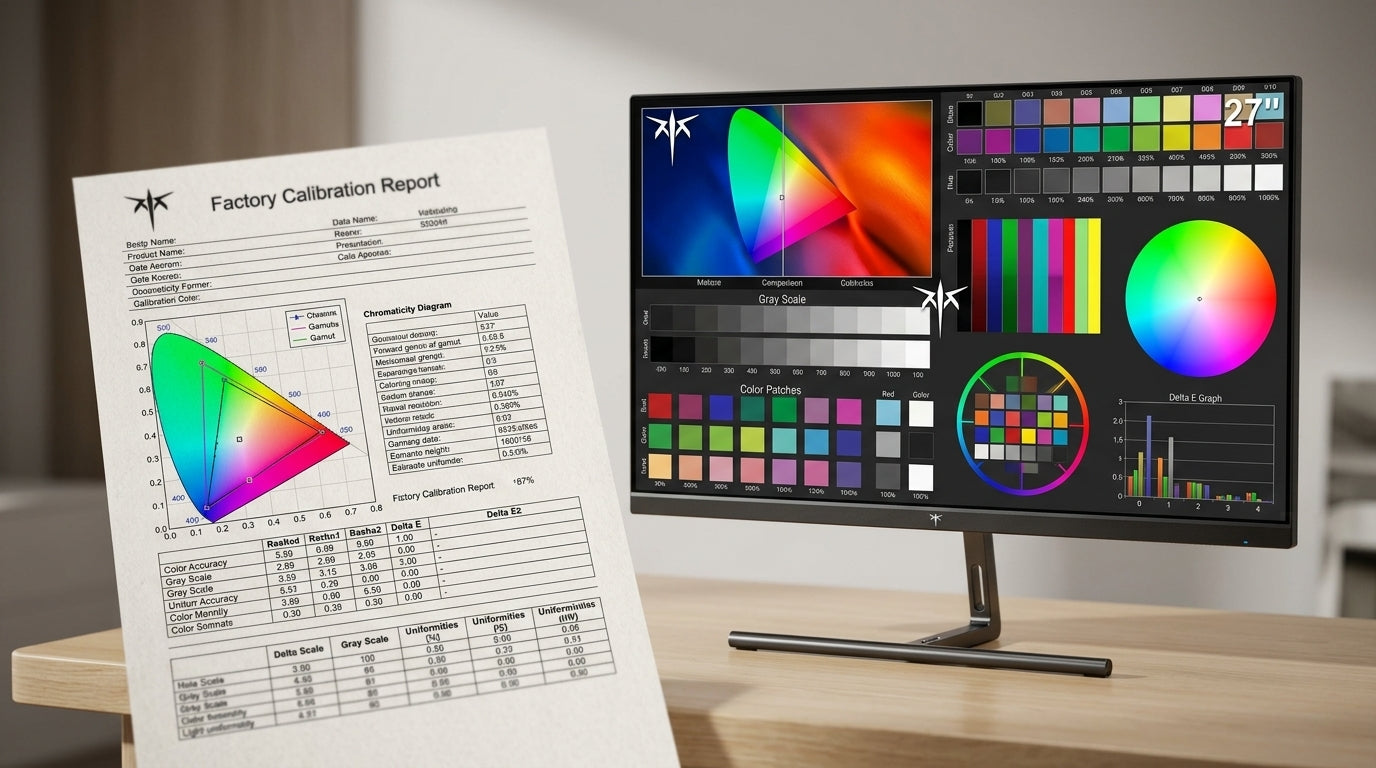
Delta E is a useful specification here. Under 2 is generally very good for photo, web, and video editing; under 1 is excellent for color-critical work. But do not treat a factory Delta E number as permanent. Displays age, backlights shift, brightness changes, and your room lighting affects perception. A calibration device and a steady editing environment can matter more than chasing a spec sheet victory.
Do You Need 10-Bit Color?
For many fashion photographers, 8-bit color is workable. It can show about 16.7 million colors, which is enough for standard web edits and many client galleries. The advantage of 10-bit color is smoother tonal transitions, especially in gradients, shadows, subtle skin retouching, studio backdrops, and heavily edited files.
A serious photo workflow often benefits 10-bit displays because they can show about 1.07 billion color values, but the whole chain has to support it. The monitor, graphics hardware, connection, operating system, and editing software all need to cooperate. If one part of the chain falls back to 8-bit, the benefit may not appear.
For fashion, prioritize 10-bit after getting the fundamentals right. A true 100% sRGB mode, strong print-gamut coverage if printing, good uniformity, a matte surface, and reliable calibration support will usually improve decisions more than 10-bit alone.
Panel Uniformity Is the Quiet Dealbreaker
Fashion images often use clean backgrounds, seamless paper, studio walls, and large fields of fabric. That makes panel uniformity easy to notice. If the left side of your monitor is warmer than the right, a white blouse may look neutral in one area and cream-colored in another. If the corners are dim, you may brighten a vignette that is not really in the file.
A photo-editing display should be judged on illumination evenness, color gamut, and color consistency across the full screen. A simple real-world test is to display a neutral gray image full screen in a dim room and look for yellow, magenta, green, or brightness shifts. If the panel fails that test badly, wide gamut coverage will not rescue it.

This is also why bigger is not always better. A 32-inch display can be immersive and productive, but larger panels are harder to make perfectly uniform. For many fashion retouchers, a high-quality 27-inch 4K monitor is a better performance-value balance than a cheaper oversized display.
The High-DPI and Spec-Sheet Trap
One detail worth checking before purchase is whether the advertised gamut is the one you actually need. A forum discussion around a 32-inch 4K monitor highlights a common problem: users saw claims around print-gamut RGB coverage, while the cited manufacturer specifications listed 100% Rec. 709, 100% sRGB, and 98% DCI-P3, not 98% coverage of the print-oriented RGB space they expected. The practical lesson is simple: verify manufacturer specifications directly before buying for a print-heavy workflow.
High-DPI users should also think beyond color gamut. Real-world discussions often raise scaling behavior with high-resolution external monitors. A display can have excellent color coverage but still feel wrong for daily editing if interface scaling makes editing panels cramped or text uncomfortable during long retouching sessions.
What to Buy for Fashion Photography
If your work is mostly online fashion, buy a display with 100% sRGB, a reliable sRGB mode, Delta E under 2, good uniformity, an IPS-style wide viewing angle panel, and calibration support. This is the smart baseline for e-commerce, social campaigns, portfolios, and client galleries.
If you print lookbooks, editorial work, wall pieces, or high-end proofs, step up to a photography monitor with 98%+ print-oriented RGB coverage, 100% sRGB, hardware calibration if possible, a matte anti-glare surface, and strong uniformity control. That setup gives you a better view of printable color while still letting you export clean sRGB files for web.

If you shoot fashion stills and video together, look for 100% sRGB, accurate Rec. 709, and 95%+ DCI-P3. Do not grade SDR video in HDR or vivid modes, and do not judge still images through a cinema preset. Use the mode that matches the output.
FAQ
Is 100% sRGB enough for professional fashion photography?
Yes, if your professional delivery is web-first. For e-commerce, social campaigns, online portfolios, and most client previews, 100% sRGB with strong accuracy is more useful than wider gamut coverage used incorrectly. For print-heavy work, it is not enough by itself.
Should I edit fashion photos in a wide print-gamut RGB space?
Use a managed wide-gamut workflow when print quality matters and your monitor can show enough of that space. Export separate sRGB versions for online delivery so browsers and client devices display color predictably.
Is DCI-P3 better than print-oriented RGB?
Not universally. DCI-P3 is excellent for modern screen and video workflows, while broad print-oriented RGB coverage is more relevant for print-focused photography. For a fashion studio doing both print and digital campaigns, the best monitor coverage is broad across sRGB, print-oriented RGB, and P3, but workflow discipline still matters.
The display you need is the one that protects the final image. For fashion photography, start with accurate 100% sRGB, add print-oriented RGB coverage when print is real money, add P3 when modern screen delivery matters, and never let a big gamut number outrun calibration, uniformity, and common sense.