Mini-LED monitor buying guide is most useful when your desk sits near a window or under strong office lighting, because that is where readability becomes the real problem. If glare and washed-out text are already bothering you, mini-LED is often a practical middle ground between a basic office monitor and OLED, but the final choice still depends on size, resolution, ergonomics, and budget.

Why Bright Offices Change Monitor Priorities
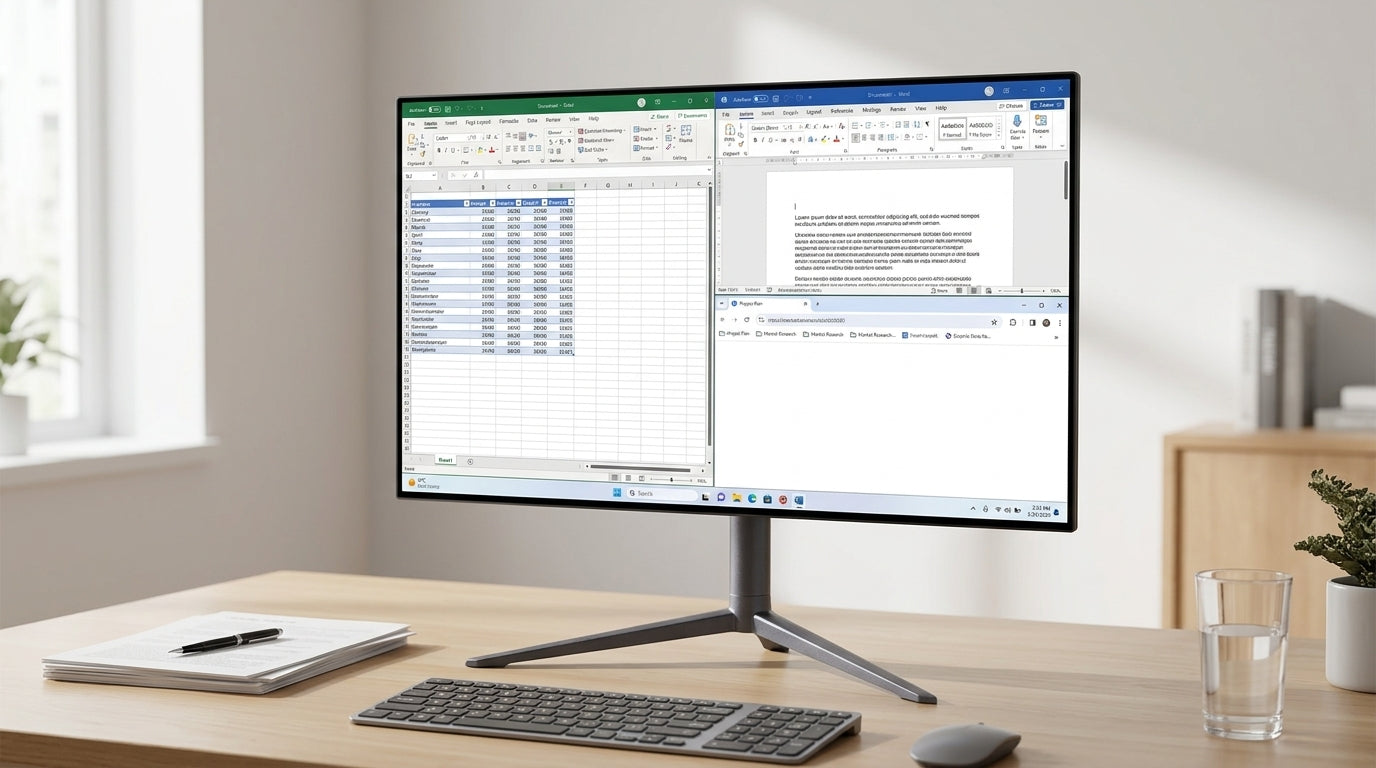
Bright rooms change the buying order. In a dim room, people chase contrast and black depth first. In a bright office, the first question is simpler: can you read the screen comfortably when sunlight or overhead lighting is hitting it? OSHA's guidance on workstation glare and eyestrain is a good reminder that bright windows and overhead lights can wash out images and make people lean into awkward postures just to see text.
That is why a mini-LED monitor for bright offices gets attention. It is not because mini-LED magically fixes every desk problem, but because it usually gives shoppers more brightness headroom and better dimming than a basic office panel. For mixed work and entertainment, that can be the right balance when you want more daytime usability without jumping straight to OLED.
The trade-off is still real. A monitor can be bright enough and still feel wrong if the stand is fixed, the resolution is too low for text, or the screen coating does not handle reflections well. That is the decision layer to keep in mind: first check your room light, then check the panel type, then compare ergonomics and price.
What Mini-LED Does in Bright Rooms
For most office shoppers, mini-LED is about usefulness, not novelty. It uses many small backlight zones, so the monitor can vary light across different parts of the screen. In practice, that can improve perceived contrast and shadow detail compared with a standard edge-lit office display, especially when you are looking at mixed content like spreadsheets, browser windows, and video.

That said, local dimming is a trade-off, not a promise. More zones can help, but zone count alone does not guarantee clean desktop behavior. Small UI elements, cursors, and light text on dark backgrounds can still show blooming or other artifacts in some implementations. For a deeper explanation of the zone-count trade-off, see how local dimming changes black levels.
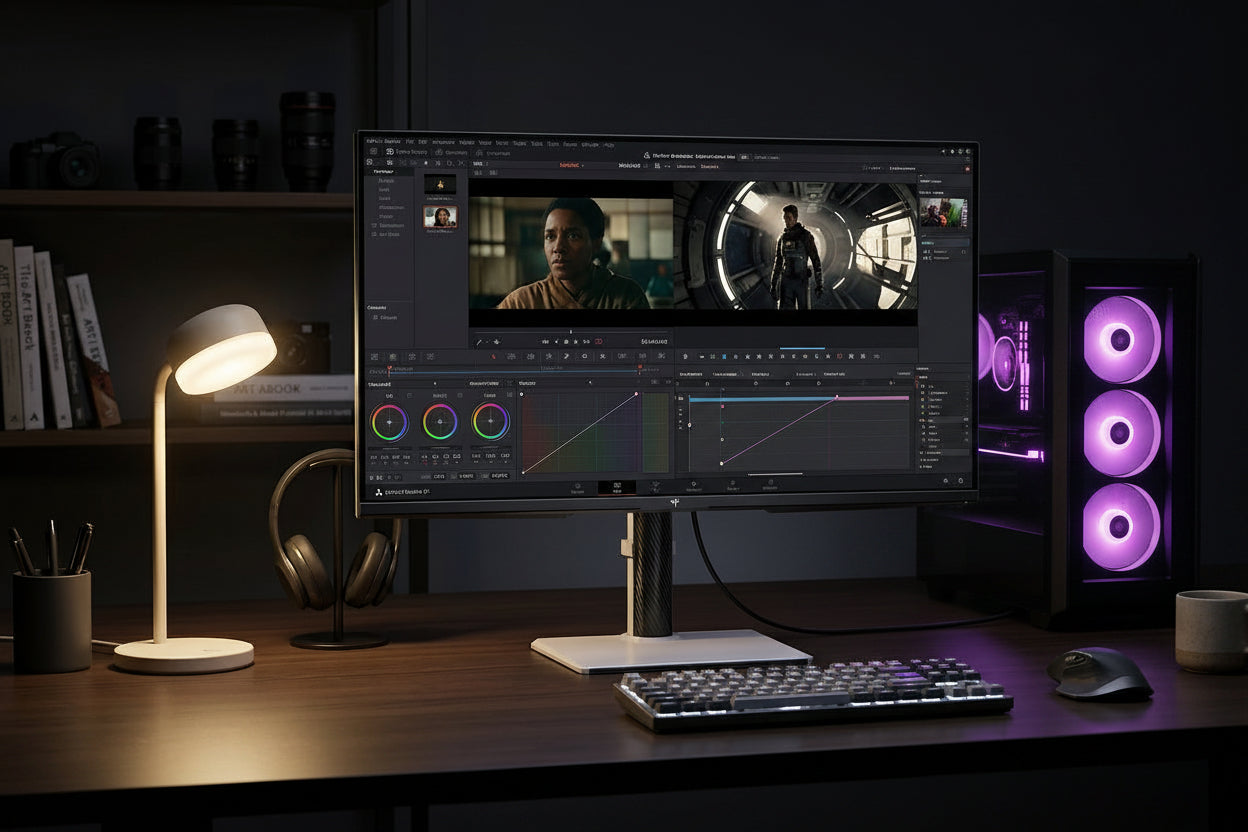
Mini-LED also has a practical editing angle. If you want a quick check on how dimming behaves in real workflows, Mini-LED dimming in editing workflows is a useful follow-up because it focuses on shadow detail, blooming, and SDR/HDR stability.
Brightness and Readability
Peak brightness matters because it gives the screen more headroom against room light. In plain language, that means the image is less likely to disappear when the room gets brighter. But office comfort is not just about peak HDR numbers. SDR brightness, anti-glare coating, and your desk angle matter too. A high number can look impressive and still be awkward if reflections are the real problem.
That is why a mini-LED monitor buying guide should separate "looks bright in the spec sheet" from "stays readable at your desk." If your workday is mostly documents, web apps, and chat windows, you should care more about stable readability than cinematic peak brightness alone. If you want a quick baseline, use brightness as a headroom check, not as the only buying rule.
Local Dimming and Shadow Detail
Local dimming helps mini-LED stand apart from a normal office monitor. When a bright window is open on screen and the rest of the desktop stays dark, zone-based backlighting can improve contrast around that content. That is useful for media, editing, and some games after hours.
The catch is desktop reality. Bright menus, thin text, and moving cursors can expose dimming behavior more than video content does. KTC's own guidance on Mini-LED local dimming for editing work makes the same practical point: test the screen in the kind of content you actually use. For office work, that means browser tabs, spreadsheets, document windows, and the brightness of your room, not just a demo reel.
Anti-Glare, Comfort, and Room Lighting
Anti-glare handling is often what decides whether a monitor feels easy or tiring in a bright office. A well-lit room with a matte coating and a useful stand can be more comfortable than a brighter screen with poor positioning. That is especially true if overhead fixtures create reflections directly across the panel.
The best self-check is simple. Sit at your normal desk position, open a white document and a dark webpage, and look for reflections before you compare refresh rate or HDR labels. If the image is readable only when you lean, tilt, or move your head, the monitor is probably not matched to the room yet.
Mini-LED vs OLED in Bright Offices
For bright-room office use, mini-LED is usually the safer choice than OLED. RTINGS' comparison of mini-LED vs OLED supports that framing for productivity-heavy desks, mainly because mini-LED can hold up better in brighter environments and does not carry the same permanent burn-in concern for static office content.
That does not make OLED a bad product. It just means the best choice flips when the room gets brighter and the desktop stays static for long periods. If your use is mostly dark-room media or gaming, the answer may change. But for a sunny home office, shared office, or desk under strong lighting, mini-LED is often the more practical fit.
Which Mini-LED Tier Fits Your Office?
Use the room first, then the workload. That is the simplest way to avoid overbuying. If you mainly need a readable monitor for documents and browser work, a 1440p mini-LED is usually the most balanced starting point. If you want sharper text or do more mixed work, 4K becomes more attractive. If you switch between work and games often, higher refresh rates matter more than chasing the biggest number on the box.
| Buyer Need | Better Fit | Why It Usually Makes Sense |
|---|---|---|
| Bright office, mixed work, tighter budget | 27-inch 1440p mini-LED | Enough workspace and brightness headroom without paying for 4K |
| Bright office, sharper text, creator-adjacent work | 27-inch 4K mini-LED | Better pixel density for text and detail-heavy tasks |
| Bright office, work by day and gaming after hours | 1440p mini-LED with higher refresh | Better compromise when you care about both motion and readability |
If you want a neutral example of that balance, the M27T6 Mini LED gaming monitor fits the 27-inch 1440p middle tier well. It pairs 2560 × 1440 resolution with 180Hz, 1152 local dimming zones, HDR1400, and a fully adjustable stand, so it suits buyers who want one screen for bright-office work and after-hours play without moving up to 4K pricing.
A useful way to judge it is by what it does and does not solve. The M27T6 can support a bright desk and gives you the flexibility of height, swivel, and pivot adjustment, but it is still a gaming monitor first in the way it is positioned. If your top priority is pure office sharpness, 4K may be the better fit. If your top priority is value plus daytime readability, this is the kind of model worth checking.
When the Recommendation Flips
If your office is bright but your work is mostly spreadsheets, code, or long documents, the 4K tier can be worth the extra spend. The M27P6 4K Mini-LED monitor brings 3840 × 2160 resolution, 160Hz, 1152 dimming zones, HDR1400, and a fully adjustable stand. That combination makes more sense when text sharpness matters as much as HDR-like contrast.
If you care more about motion and slightly lower cost, the M27T6S 200Hz Mini-LED option is the speed-first version of the same broad idea. It keeps the 27-inch 1440p size, adds 200Hz, and still gives you 1152 zones plus an adjustable stand. For buyers who split time between office work and games, that can be the better everyday compromise.
What to Check Before You Buy
A mini-LED monitor buying guide should end with a checklist, because the spec sheet alone does not tell you whether the screen will feel right in your room. Before you buy, check these four things:
- Room light: If windows or overhead fixtures are hard to control, favor mini-LED over OLED for office use.
- Resolution: Choose 1440p for value and 4K when text clarity matters more than speed.
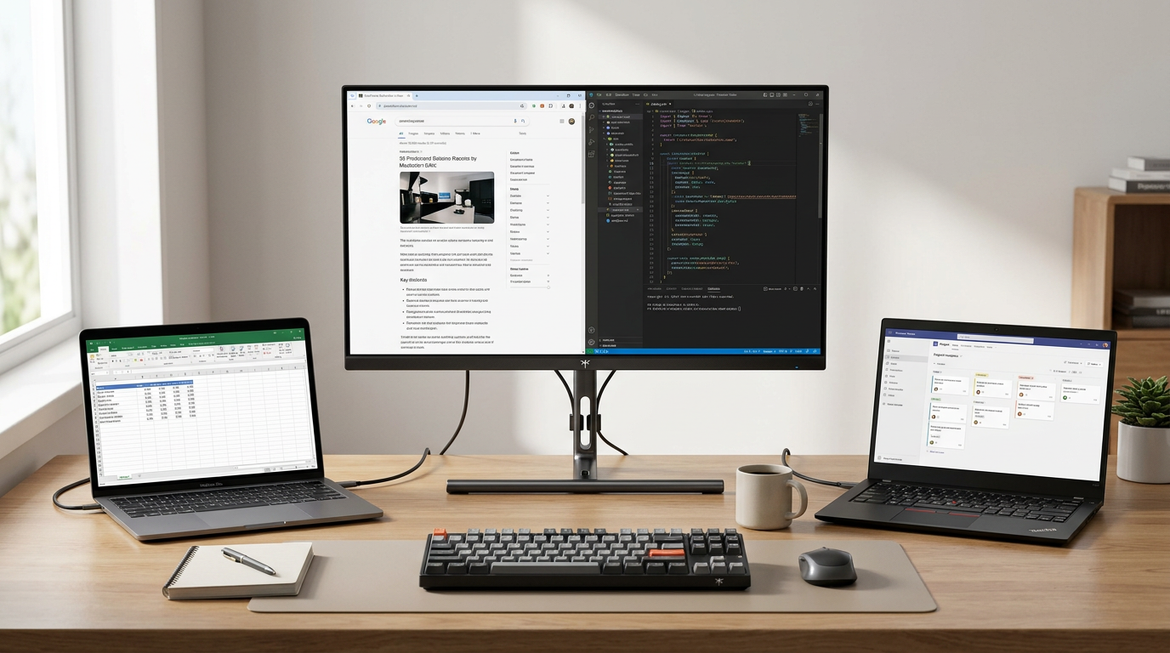
- Ergonomics: A height-adjustable stand helps more than many shoppers expect, especially near windows or reflective surfaces.
- Usage split: If the screen will stay on spreadsheets and web apps most of the day, do not overpay for gaming features you will not notice.
That is also where the M27P6, M27T6, and M27T6S separate cleanly. The 27-inch 1440p models are the value tier, while the 4K model is the sharper premium step. None of them should be treated as a universal best; the right one depends on how bright your desk is and how often you switch from work to entertainment.
If you want a broader place to browse, the All-Mini-LED Monitors collection is the easiest way to compare the current mini-LED range, while the Office Monitor collection is better if you decide that brightness is only part of the problem and ergonomics matter more than HDR.
Final Takeaway
For bright offices, mini-LED makes the most sense when glare control, daytime readability, and mixed use matter more than chasing OLED contrast. Start with your room lighting, then choose 1440p or 4K based on how much text sharpness you need. Compare the M27T6, M27T6S, and M27P6 against your desk setup, then pick the one that matches your workday.
FAQs
Is Mini-LED Better Than OLED for Bright Offices?
Usually, yes, if the desk is bright and the work is static. OLED still has strengths, but mini-LED is generally the safer office choice when you want better daylight readability and less concern about burn-in from spreadsheets, toolbars, or browser tabs.
What Is the Best Budget Mini-LED Monitor for Office Use?
For a budget-minded shopper, the 27-inch 1440p mini-LED tier is usually the right place to start. It gives you the brightness headroom and local dimming benefits of mini-LED without paying for 4K sharpness you may not need.
Do More Local Dimming Zones Always Mean Better Quality?
No. More zones can help contrast, but they are only one part of the experience. Room lighting, backlight tuning, and desktop behavior all affect how the monitor feels in real use, especially when you work with small text and UI elements.
Should I Choose 1440p or 4K for a Bright Office?
Choose 1440p if you want a better value balance and more gaming flexibility. Choose 4K if your daily work is text-heavy and you care more about sharpness than frame rate. In a bright room, resolution matters, but ergonomics and reflections still matter too.
Do I Need a Fully Adjustable Stand for a Bright Desk?
It is not mandatory, but it helps more than many buyers expect. When room light is high, a little tilt or height adjustment can reduce reflections and improve readability without changing the monitor itself.