A mixed use monitor should handle office apps, video calls, streaming, and casual gaming without making you change settings all the time. For most buyers, the best choice is the one that balances text clarity, motion smoothness, and desk comfort for the task they use most.

What Mixed Use Means at a Desk
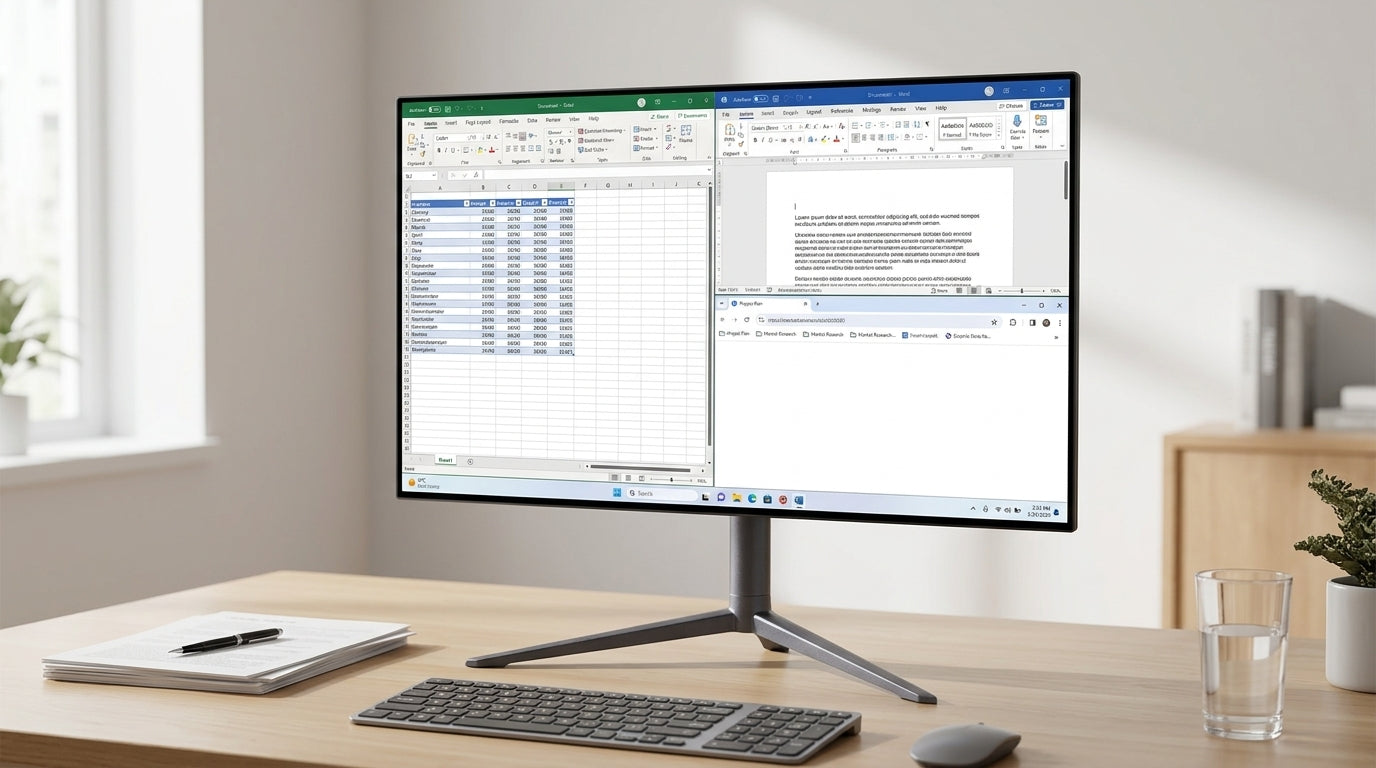
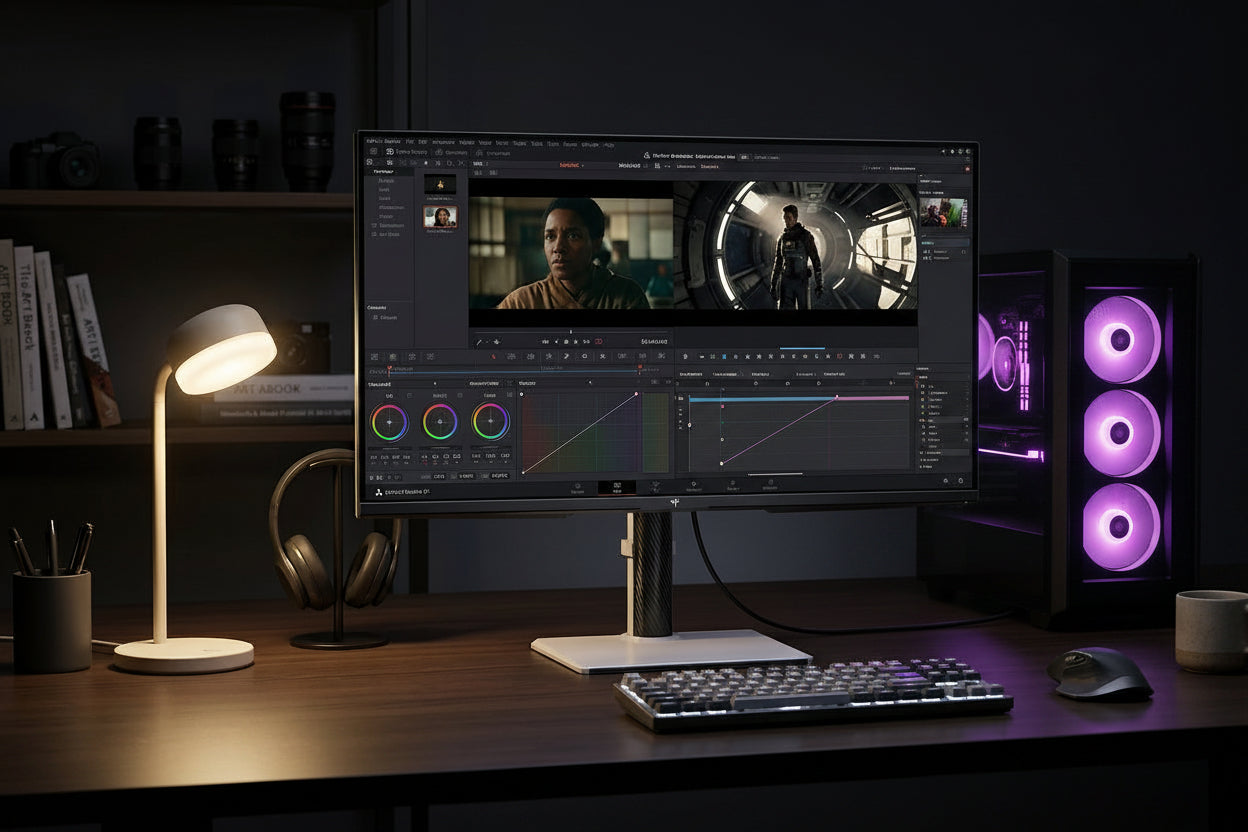
In practical terms, mixed use means one screen that has to serve work and entertainment in the same setup. That usually includes documents, spreadsheets, Zoom calls, Netflix, and games that do not need esports-level speed. The goal is not a perfect all-purpose spec sheet. It is a monitor that feels reasonable in both daytime work and evening use.
A useful mixed use monitor usually sits in the middle of a few trade-offs. Sharper text helps for work, while a faster refresh rate helps scrolling and casual play. Better color and contrast make streaming look more natural, but a screen that is too gaming-focused can be less comfortable for long office sessions. If you want a simple browsing path while you compare options, start with office monitor options.
A good rule of thumb: if the monitor feels right for your most common task, it is probably a better buy than a spec-heavy model that only wins on paper. If your day is mostly calls, docs, and email, keep comfort and clarity first. If your evenings are mostly games, motion and contrast matter more.
The Specs That Actually Matter
For mixed use, the first check is text clarity. That is the part that decides whether charts, code, and browser tabs feel crisp or slightly fuzzy. Intel's monitor buying guidance supports the common 27-inch QHD sweet spot because it balances usable detail with a desk-friendly size. In plain language, that means the screen is large enough to work on comfortably without forcing you to stare at oversized UI elements.

Refresh rate is the next decision. A 100Hz or 120Hz panel can make scrolling and window movement feel smoother than standard office refresh rates, even if you are not gaming hard. That difference is most useful when you switch between browser work, Slack, and casual play. It matters less if you mostly leave static windows open all day.
Color and contrast come after those basics. For normal work and streaming, 99% sRGB is a reassuring floor, not a luxury add-on. Contrast matters if you watch a lot of films or play darker games in a dim room. If your room lighting is tricky, home office brightness is often the bigger comfort issue than one more spec bump.
Ports and stands also change daily convenience. HDMI and DisplayPort support matter if you plan to connect a laptop, desktop, dock, or console. Height adjustment helps if more than one person uses the desk. A tilt-only stand is fine on a fixed setup, but it becomes annoying when the screen sits too high or too low for long workdays.
Match Monitor Types to Your Priorities
Here is the easiest way to think about the main mixed-use profiles. The right call depends on whether you want office-first comfort, a more balanced middle ground, or a faster gaming lean. If you are still comparing value tiers, midrange monitor choices are often where the mixed-use compromise becomes easiest to see.
| Profile | Best For | Strengths | Trade-Offs | Desk Notes |
|---|---|---|---|---|
| 27-inch QHD 100Hz office-first | Work, browsing, and light gaming | Sharp enough for text, smoother than 60Hz, simple fit | Not a motion-first pick | Good on most desks, especially with a laptop dock |
| 27-inch QHD 100Hz to 120Hz balanced | Shared work and entertainment use | A practical middle ground for mixed use | Still not the fastest option for action games | Best when you want one screen to do everything acceptably well |
| 27-inch QHD 144Hz motion-leaning | Casual gaming with everyday work | Better motion feel and stronger entertainment lean | More gaming-forward than office-first models | Good if you game often but still work on the same screen |
| 32-inch 4K desktop replacement | Bigger workspace and sharper desktop detail | Roomier canvas for multitasking | Needs more desk depth and scaling comfort | Better on deeper desks or with arm support |
| Ultrawide multitasking setup | Split windows and side-by-side workflows | Helpful when one screen must replace two | Can be overkill on narrow desks | Check desk width before buying |
If you mostly work and only game occasionally, the office-first or balanced path usually makes more sense. If you care more about how games feel, move toward the motion-leaning path. And if your real need is side-by-side multitasking, ultrawide is worth considering before you pay for extra refresh rate you may not use.
Natural Product Fits for Mixed Use
The cleanest product choice is the one that matches your strongest habit, not the one with the biggest spec headline. For a simple everyday setup, the KTC 27-inch mixed-use monitor is the most straightforward fit. It gives you a 27-inch QHD IPS panel, 99% sRGB, and refresh support up to 120Hz, which makes it a sensible low-friction option for workdays, streaming, and light gaming.
If you want a similar balance with more comfort features, the KTC adjustable home-office monitor is the more flexible pick. It adds IPS, 99% sRGB, HDR10, Adaptive Sync, flicker-free operation, and full ergonomic adjustment. That makes it a better fit for a shared desk or a buyer who expects long sessions and wants fewer comfort compromises.
For buyers who lean more toward gaming feel, the KTC 144Hz hybrid monitor shifts the balance toward motion and contrast. Its 144Hz refresh rate, HVA panel, 4000:1 contrast, Adaptive Sync, anti-glare coating, and blue-light and flicker-free features make it the more entertainment-leaning hybrid. That is a better fit if games matter more than office purity, but it is not the most conservative office-first choice.
If you want to browse a broader gaming-leaning range, the gaming monitor options are useful once you know you want more motion headroom than a basic office display provides.
A few buyers should think about size before specs. A 32-inch panel can feel excellent for multitasking, but it asks more of desk depth and viewing distance. If you sit close to the screen, a 27-inch model is usually easier to live with over a full workday. Ultrawide can be great for split windows, but only if your desk is wide enough to let the layout breathe.
Budget also changes the decision. If you want to stay in a practical midrange and still get room for work-plus-play features, midrange monitor choices are a useful filter. That range usually captures the kind of screen where mixed-use compromises become easier to judge in one place.
Set Up a Mixed-Use Monitor the Right Way
Before checkout, check the basics that cause regret later. Measure your desk depth first, because a screen that is technically the right size can still feel awkward if it sits too close. Then confirm your port match, since HDMI, DisplayPort, and dock compatibility are easy to overlook. If you use a laptop most days, make sure the monitor and cable plan match your dock or adapter.
For comfort, keep the top of the screen at or slightly below eye level, which follows ergonomic guidance from the CCOHS monitor positioning advice. If the display feels harsh in your room, brightness often needs to be lowered rather than left at default. That is why a quick check of home office brightness can matter as much as a spec comparison when the setup feels tiring.
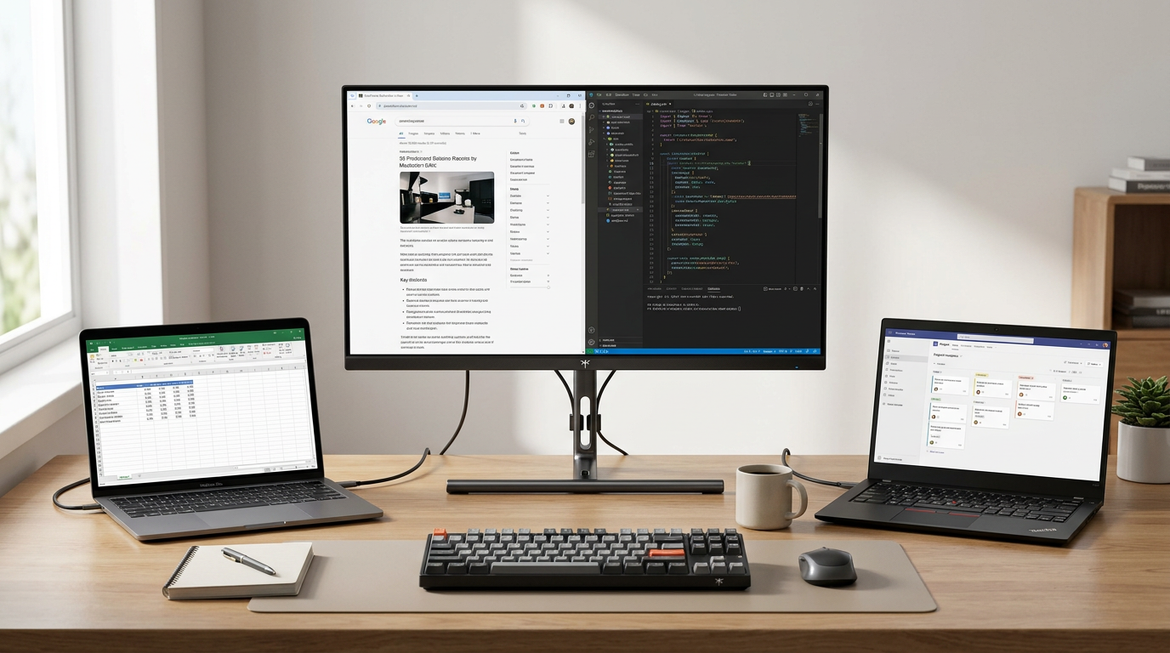
If you want one screen to handle more than one task at a time, monitor distance and Picture-by-Picture setup are both worth a look. The first helps you avoid a cramped viewing distance. The second is useful when you want a split-screen workflow without buying a second monitor.
A simple buying sequence works best: pick the task you care about most, choose the right size and resolution, confirm refresh-rate support, check the stand and ports, then verify desk placement before ordering. If the screen fails that checklist, keep looking.
One more practical check is ownership fit. A monitor can look fine on a spec sheet and still feel wrong if the stand is awkward, the brightness is too strong, or the panel size dominates the desk. Small comforts matter more than they seem during an eight-hour day, especially when the same screen has to work for email, content, and a game after work.
What to Buy If You Want One Screen for Everything
If your day is mostly work and your nights are mostly casual entertainment, start with a 27-inch QHD monitor around 100Hz. That is the safest mixed use monitor profile for most desks because it balances clarity, speed, and cost. Choose the 144Hz HVA path only if gaming feel matters more than office neutrality. Choose 4K or ultrawide only if your desk space and habits justify the extra setup care.
For readers comparing broader ownership value, value tradeoffs is a useful follow-up after you narrow the type. It can help frame why some monitors feel like a better long-term fit even when the headline specs look similar.
If you are still deciding, the simplest answer is usually the right one: pick the screen that makes your most common task easier, not the one that sounds most impressive. A balanced 27-inch QHD model is the safest starting point.