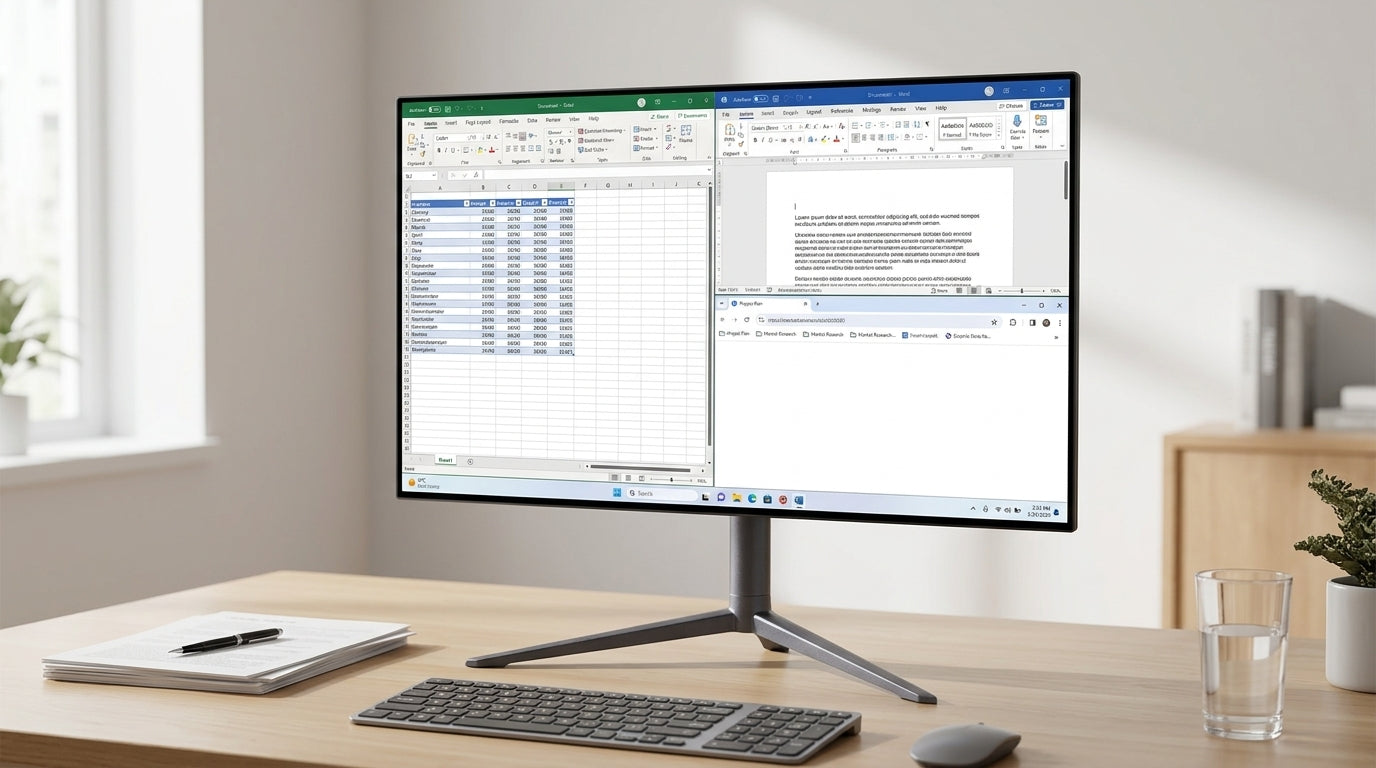
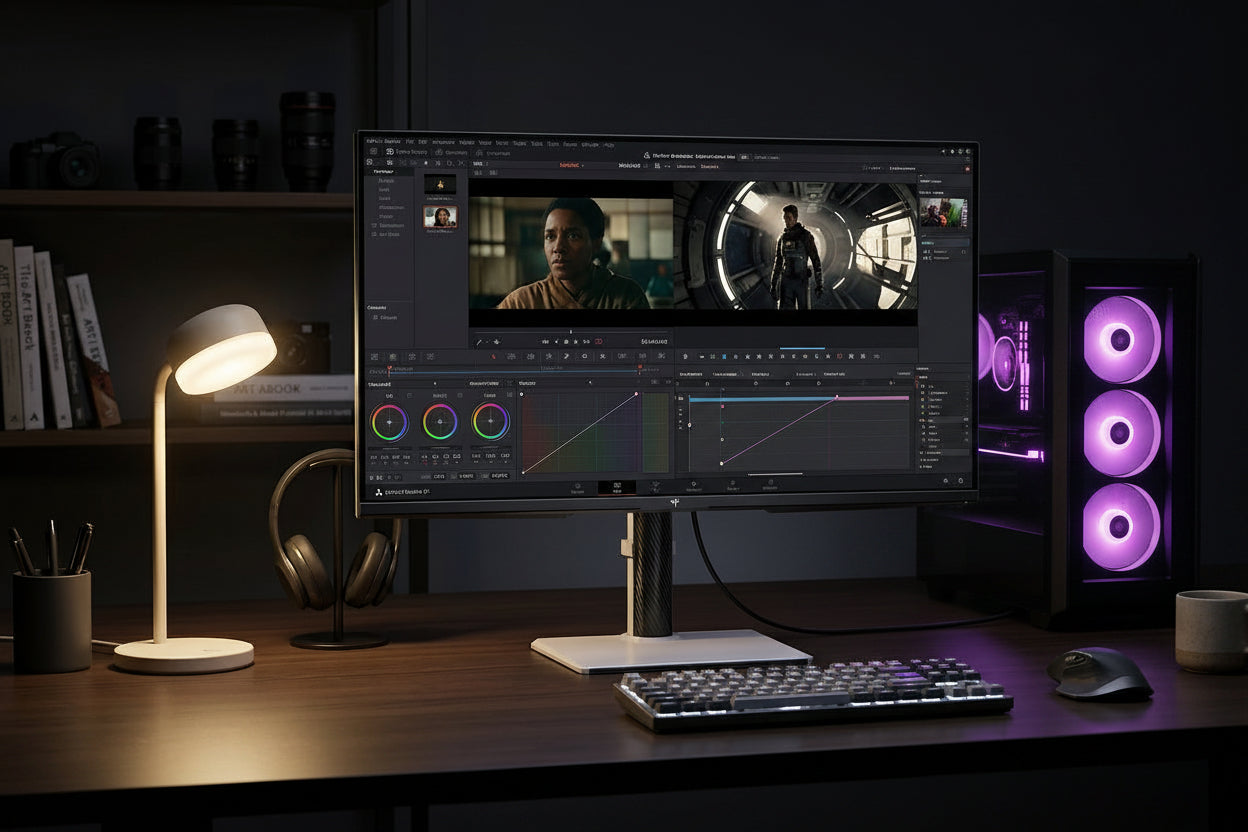
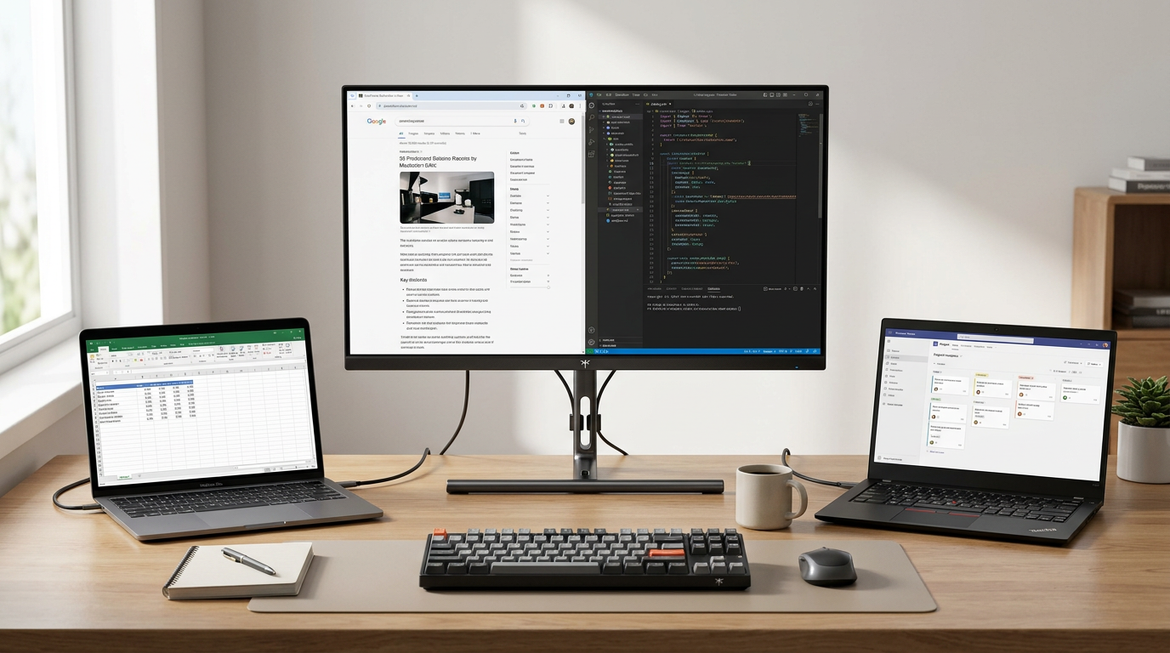
A solid monitor firmware verification checklist treats firmware as a pre-purchase risk check, not an assumption that the display is current. Start by looking for version details, support pages, or release notes, then confirm the exact model and region before you trust any firmware claim. If the listing is silent, count that silence as a warning sign.

What to Confirm First on a Monitor Listing
For most buyers, the fastest check is simple: does the listing mention firmware version, firmware notes, or an update reference at all? Many retail pages do not, and that omission should push you to verify elsewhere rather than assume the monitor ships current.
Treat feature specs like refresh rate, resolution, and port count as separate from firmware status. A fast panel can still have unclear update support. If you want a deeper pre-purchase quality check, it can help to pair this with panel uniformity checks, because image quality and firmware disclosure are different risks.
The safest first pass is this: official listing page, then support page, then manual or downloads area. If none of those surfaces a version or changelog, leave a note in your buying record that firmware status was not disclosed.
How to Check the Firmware Version Before Purchase
Use the official product page first, then move to the support page or manual if the version is not shown on the listing. A clearly labeled firmware version or changelog is more useful than a generic "latest firmware" statement because it gives you something to compare.

- Open the product page and scan for a firmware, support, downloads, or FAQ section.
- If the listing is silent, open the manual or support page and look for version text or release notes.
- Compare the exact model number, because firmware notes for one variant may not apply to another.
- Save the version number, date, and model identifier in a note or screenshot.
- If the support path is unclear, treat that as unresolved information rather than filling in the blank yourself.
That model-match step matters more than it sounds. A monitor family can share a name while still having different panel revisions, regions, or release notes. If the version note does not match the exact unit you are considering, it should not be used as proof.
Which Stability Signals Matter Most
A monitor firmware verification checklist is most useful when it helps you judge the quality of the information, not just its existence. The table below summarizes the signals that usually matter most when you are trying to decide whether a firmware note is worth trusting.
| Signal | What It Tells You | What To Verify | Why It Matters For Buyers |
|---|---|---|---|
| Version date | When the note was posted | Look for a release date or timestamp | Dated notes give more context than vague "latest" language |
| Release notes detail | What changed | Check whether the update explains fixes or changes | Vague notes are harder to interpret before purchase |
| Model specificity | Whether the note matches your exact monitor | Match model number and, if listed, region | Notes for one variant may not apply to another |
| Update path clarity | How the update is delivered | Look for official steps or a support document | Clear instructions reduce setup uncertainty later |
| Support contact path | Whether help is available before checkout | Confirm a real support email or help center | Responsive support lowers ownership uncertainty |
A dated release note is usually more useful than an undated "latest firmware" claim because it gives you a point in time. A note that names the exact model is also stronger than a broad family label.
For readers who want a practical second checkpoint, the linked article on firmware and local dimming behavior is useful background because it shows why some firmware changes matter more than others. It does not replace model-specific verification.
Firmware verification signals checklist
- High priority: Check listing silence, support/manual page, changelog/release notes, model-specific notes, and official support contact.
- Medium priority: Review the same items with moderate detail.
- Lower priority: Use the same items only for quick confirmation.
Which Buyer Types Need the Strictest Firmware Check?
High-refresh buyers should be the strictest because they tend to care about feature stability, not just panel specs. If a listing is vague about firmware, that is a bigger problem for someone buying a performance-sensitive setup than for someone comparing basic office displays. Explore options in the Gaming Monitor collection to see current models.
Creators and productivity buyers should focus on whether the support page documents text behavior, scaling notes, or any display-output guidance that affects long work sessions. If those details are absent, the monitor can still be worth considering, but the uncertainty belongs in your decision, not in the background.
Smart monitor buyers should be even more careful because more software layers can mean more things to verify. If a page does not clearly separate display firmware from app or smart-system updates, ask which part is actually being discussed before you judge the product.
One useful example is the KTC 32" 4K 60Hz Smart Monitor with Google TV in Netflix Audio Licensed, but only as a category example: smart-monitor buyers should verify both display firmware and smart-system support before assuming the software side is settled.
What to Ask Support Before You Add to Cart
When the listing leaves gaps, official support can close the loop before checkout. The goal is not to get a sales pitch. The goal is to confirm the exact model, version, and update path in writing if possible.
Ask these questions:
- Is the listed firmware version current for the exact model and region I am viewing?
- Is any update required before first use, or is the monitor shipping with the current version already installed?
- Where can I find official version notes after delivery if I need them later?
- What is the official way to confirm update support if the retail page does not show a firmware section?
If support cannot answer the model-match question cleanly, that is useful information. It does not automatically make the monitor a bad buy, but it does mean you should weigh the uncertainty against the price, return window, and how much firmware visibility matters to you.
For buyers comparing support quality as part of the purchase, factory-direct service guidance is a helpful companion read because it explains why support responsiveness changes the ownership experience.
Your Final Pre-Purchase Firmware Checklist
Before you click Add to Cart, record the exact model number, any listed firmware version, the page date, and the support contact path. Then confirm the return window and warranty terms in case the firmware details are still unclear after delivery. If you want to keep shopping from the full lineup, All Monitors is the cleanest place to compare options. If not, save screenshots of the listing, support reply, and version note in one folder.
FAQs
Q1. How Do I Check a Monitor Firmware Version Before Buying?
Start with the official product page, then look for support, manual, or downloads links. If you find a version note, capture the exact model and date. If you only see a vague claim like "latest firmware," treat it as incomplete until the support page confirms the same model.
Q2. What If the Listing Does Not Show Firmware Details?
Treat that omission as a risk signal, not proof that the firmware is current. Ask official support for the model-specific version and update path, then save the response. If the seller never answers clearly, that uncertainty should affect your price or return-policy decision.
Q3. Can I Trust a Generic Latest Firmware Claim?
Not by itself. Generic wording is only useful if it is paired with a dated release note or a model-specific support document. Without that, you still do not know whether the note applies to your exact monitor or a different variant in the same product family.
Q4. Why Does Firmware Matter Before Checkout?
Firmware can affect compatibility, feature access, and ownership clarity, especially when a monitor has extra software features or performance-sensitive behavior. The main benefit of checking early is simple: you reduce the chance of discovering an avoidable mismatch after the return window starts shrinking.
Q5. How Should I Save Proof for Later Reference?
Save the product page, support reply, version text, date, and any changelog screenshot in the same folder. A quick order note works too. If the model page changes later, you will still have a record of what was disclosed before purchase.
When a Monitor Is Still a Good Buy Despite Sparse Firmware Notes
Sparse firmware disclosure is not always a dealbreaker. If the monitor otherwise fits your budget, use case, and return window, you can still buy it, but only after you have recorded what was and was not disclosed. That gives you a clean comparison point if you need to verify anything after checkout.
The main rule is simple: if firmware matters to your workflow, make the disclosure gap part of the decision. If it does not matter much, keep the focus on price, panel fit, and support responsiveness. Either way, the checklist turns a vague page into something you can actually judge.
Related Resources
Compare additional models such as the KTC 27" 4K 160Hz/320Hz 90W Gaming Monitor | H27P6 or browse the Office Monitor collection for productivity-focused options.