


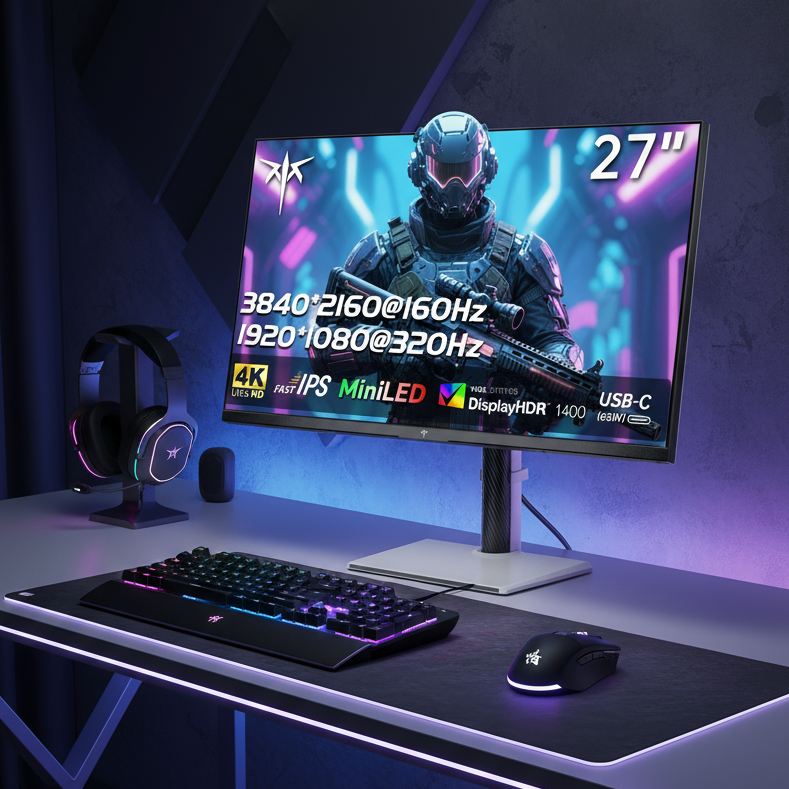
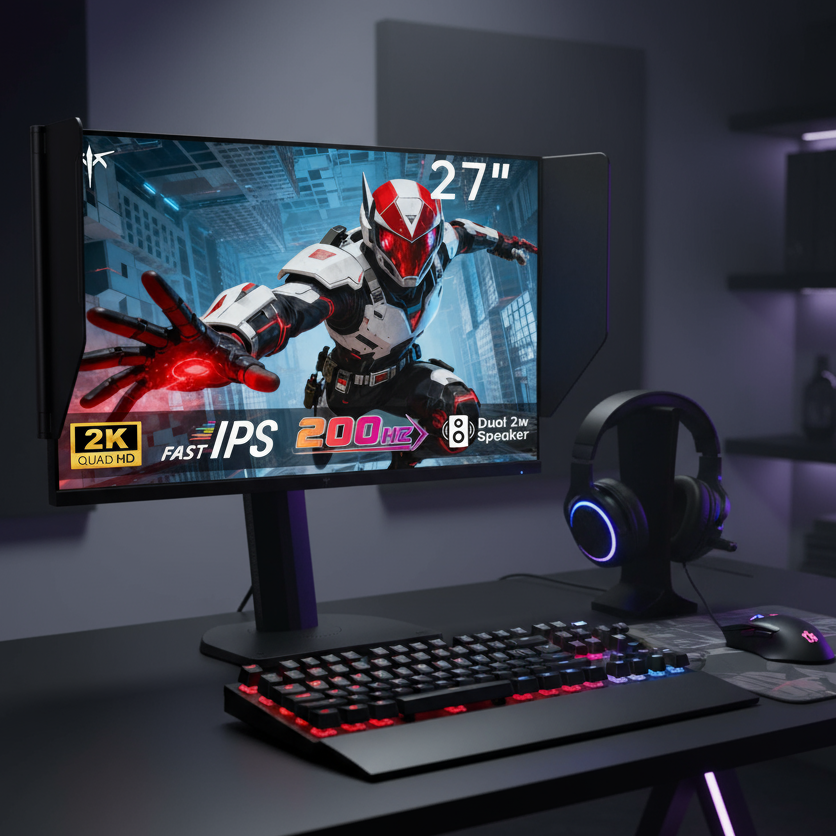
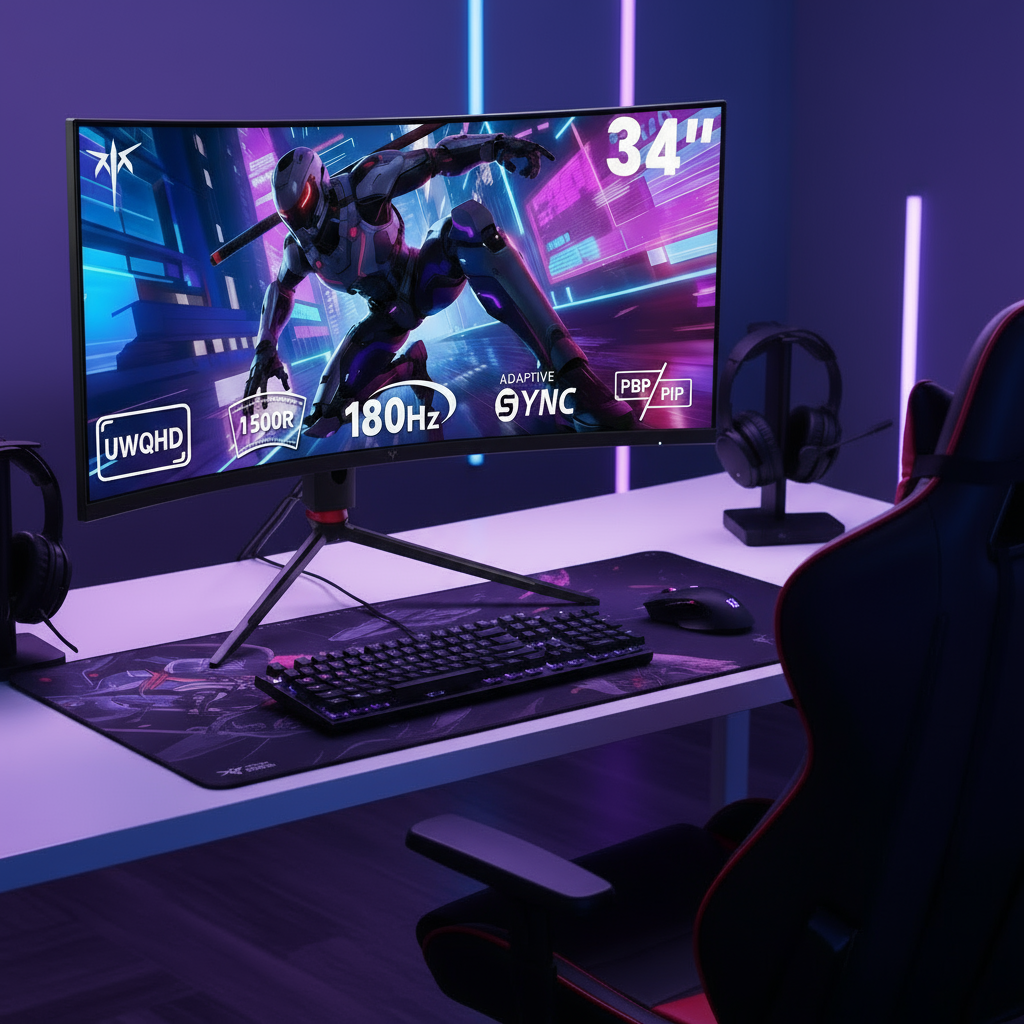


Reading monitor specs like a pro in 2026 lets you cut through marketing hype and pick a display that actually matches your gaming style, room, and budget. Instead of chasing brand names or isolated numbers like "1ms" or "HDR1000," focus on how response-time metrics, brightness tiers, panel behaviors, and resolution interact in real use. This approach helps competitive FPS players avoid ghosting, story-driven gamers get deep blacks without burn-in worry, and hybrid users dodge daily friction that leads to regret.

Beyond the Box: Why Reading Specs Like a Pro Matters in 2026
Most shoppers treat spec sheets as a checklist of big numbers, yet the real performance gaps often hide in how those numbers combine. A monitor with impressive peak brightness can still disappoint in a sunlit room if it lacks enough local dimming zones. Likewise, a panel advertised with ultra-low response time may show visible blur or overshoot once you start moving quickly in-game.
Legacy brands frequently lean on prestige, while direct brands emphasize objective performance. The difference shows up in your gameplay: ghosting in fast titles, washed-out HDR that fails to deliver promised contrast, or mismatched resolution that either wastes your GPU or leaves pixels visible at normal viewing distance. For most buyers upgrading from a basic 60 Hz or 1080p setup, the first self-check is whether the listed specs solve your actual pain point or simply add cost.
Misreading these details commonly leads to post-purchase frustration. Competitive players may overpay for features irrelevant to low-latency needs, while immersive gamers discover their bright-room setup exposes limitations the marketing never mentioned. Treating the spec sheet as a decision tool rather than a scoreboard helps you match capability to scenario and avoid those traps.
The '1ms' Mirage: Why ClearMR is the New Gold Standard
A monitor claiming "1 ms GtG" sounds definitive, yet that number only measures how quickly a single pixel can shift from one shade of gray to another. It does not directly predict how clear moving objects appear on screen. In practice, many such claims rely on aggressive overdrive that introduces overshoot or inverse ghosting visible during fast motion.

VESA's ClearMR standard addresses this by measuring the actual ratio of clear pixels to blurry ones during motion, creating easy-to-compare tiers such as ClearMR 7000 or higher. As the GtG versus MPRT guide from Blur Busters explains, GtG and MPRT capture different aspects: GtG targets pixel transition speed while MPRT reflects how long an image persists, often reduced through backlight strobing that can introduce flicker for some users.
What this means in 2026: A "1 ms GtG" claim now serves mainly as a baseline. For competitive esports where every frame of clarity counts, look for ClearMR 7000 or better. OLED panels deliver an inherent advantage here with response times around 0.03 ms—fast enough that pixel persistence essentially disappears from human reaction time in most gameplay. Fast IPS panels can reach serviceable motion clarity with strong ClearMR ratings, while many VA panels still trade some speed for superior native contrast.
The myth-versus-reality check is straightforward. Marketing often highlights best-case single-pixel speed. Real-world motion clarity depends on the full system: overdrive tuning, refresh rate, and the chosen metric. Prioritizing ClearMR over raw GtG numbers helps you filter monitors that deliver visible blur-free performance instead of just impressive-looking spec lines.
Mini-LED vs OLED: Price and Use-Case Flip Zones
A tiered view of the likely switch points between Mini-LED and OLED across typical 2026 pricing and common use cases.
View chart data
| Category | Mini-LED fit | OLED fit |
|---|---|---|
| <$500 | 3.0 | 1.0 |
| $500-$700 | 2.0 | 2.0 |
| >$700 | 1.0 | 3.0 |
This chart helps visualize the likely flip zones in typical 2026 pricing. Mini-LED is usually the safer value pick below $500, the $500-$700 band is the decision hinge, and OLED becomes more compelling above that range for gaming-heavy buyers, while Mini-LED still fits long productivity or bright-room use.
Understanding HDR Brightness Levels: Why Nits Aren't Everything
Peak brightness measured in nits tells only part of the HDR story. Without sufficient local dimming zones to manage contrast, even a high-nit panel can produce blooming or crushed blacks that ruin the intended cinematic pop in games.
The VESA DisplayHDR performance criteria define verifiable tiers—DisplayHDR 400, 600, and 1000—that combine minimum luminance, color volume, and bit-depth requirements. A monitor simply labeled "HDR support" without certification often fails to meet these in practice, leaving HDR content looking only marginally better than standard dynamic range.
For gamers seeking noticeable depth, target Mini-LED models with at least 576 zones paired with a DisplayHDR 1000 certification. This combination typically delivers the contrast and highlight pop that makes explosions, night scenes, and atmospheric effects stand out. In bright rooms the full-field brightness matters more than peak nits alone; an OLED may hit impressive highlights yet appear dim overall when ambient light raises black levels.
Decision filter: If your play space has windows or strong overhead lights, verify the monitor's sustained full-screen brightness in addition to its peak nit rating. HDR400 remains entry-level and rarely satisfies enthusiasts, so treat it as a marketing checkbox rather than a performance guarantee.
IPS vs VA vs OLED: Choosing Your Panel Strategy
Each panel technology trades strengths that map directly to different playing styles and room conditions. IPS delivers the widest viewing angles and most accurate colors, making it the reliable all-rounder for mixed gaming and desktop work. VA panels excel in native contrast—often exceeding 3000:1—producing deeper blacks with less reliance on local dimming, which reduces blooming in dark-room cinematic titles.
OLED offers per-pixel lighting and response times near 0.03 ms, delivering essentially perfect blacks and the fastest motion clarity available. However, its maximum full-field brightness is lower than most Mini-LED panels, which can make it less ideal in sunlit rooms. Burn-in risk with static UI elements also makes OLED less suitable for users who spend eight or more hours daily at a desktop with fixed taskbars or HUDs.
For 27-inch monitors, 1440p (QHD) sits at the widely accepted sweet spot of roughly 109 pixels per inch. This density provides sharp text and detail without demanding the heavy GPU load of 4K at high refresh rates. 1080p on the same size often looks pixelated at normal desk distance, while 4K can feel like overkill unless you prioritize maximum resolution over frame rate.
Who should choose what: Competitive FPS players usually prefer fast IPS or OLED for minimal input lag and motion blur. Story-driven or horror gamers in controlled lighting often favor VA or OLED for contrast. Hybrid users who also work long hours should weigh burn-in concerns and consider Mini-LED VA panels that mask blooming better than IPS equivalents. Our IPS vs VA Panels guide explores these trade-offs in greater depth for specific titles.
The $600-$700 Boundary: When to Choose Mini-LED vs OLED
Budget acts as a practical hinge between these technologies. Below roughly $500, Mini-LED models typically deliver the strongest HDR performance per dollar thanks to high zone counts and solid sustained brightness. Our KTC Mini LED 27" 200Hz 2K HDR1000 Gaming Monitor (M27T6S) exemplifies this segment, offering 1152+ zones that minimize the need to toggle local dimming for desktop use.
Around the $600–$700 range the decision often flips. Pure gaming enthusiasts may prefer OLED for its instantaneous response and infinite contrast, as seen in the KTC OLED 27" 2K 240Hz/0.03ms USB-C Gaming Monitor (G27P6). Yet users who also log long productivity hours or sit in brighter rooms frequently find Mini-LED the more pragmatic daily driver because it avoids burn-in risk and maintains better visibility under ambient light.
The "Toggle Tax" adds another real-world friction. Many Mini-LED monitors with fewer than 1152 zones require users to disable local dimming during office work to prevent haloing around windows and icons. Monitors that support DDC/CI let software tools automate brightness and mode changes, reducing reliance on clunky OSD joysticks. VA-based Mini-LED panels suffer less from this issue because their strong native contrast hides blooming more effectively than IPS versions.
Practical self-check: Count your daily static desktop hours. If they exceed eight, treat burn-in risk and the toggle tax as disqualifiers for OLED even if the price looks attractive. In bright rooms the same logic favors Mini-LED's higher full-field luminance. Our MiniLED vs. OLED comparison provides further scenario-specific guidance.
For higher refresh needs, consider options from the 240Hz-400Hz Monitors collection or the broader Gaming Monitor lineup that includes both panel types. The All-Mini-LED Monitors and All-OLED Monitor collections let you filter by technology once you have narrowed your priorities.
Common Spec-Sheet Traps and How to Avoid Them
Spec sheets are designed to sell, not necessarily to inform. The most frequent pitfalls include treating any "1 ms" claim as equal, accepting vague "HDR support" without certification, and assuming higher refresh rate always equals better gameplay.
Refresh rate (how many times the panel redraws per second) and frame rate (how many frames your GPU outputs) are separate. A 240 Hz monitor cannot create smoothness beyond what the GPU delivers. Without adaptive sync such as FreeSync or G-Sync, mismatches produce tearing that no amount of raw Hz can fully hide. Our guide on Which Refresh Rate Is Best for Gaming explains the practical thresholds for different genres.
Another trap is assuming response time alone eliminates ghosting. As detailed earlier, ClearMR offers a more reliable benchmark. Similarly, HDR400 monitors rarely deliver the contrast enthusiasts expect; look for the official VESA logo and sufficient dimming zones instead.
Pixel density also matters more than raw resolution. On a 27-inch screen, dropping to 1080p creates visible pixels for many users, while jumping to 4K demands significantly more GPU power for the same refresh rate. The 1440p sweet spot balances both concerns for most setups.
FAQs
What is the difference between GtG response time and ClearMR?
GtG measures a single pixel's color transition speed, while ClearMR evaluates the ratio of clear to blurry pixels across the entire screen during motion. ClearMR is generally more predictive of real gaming clarity, especially in fast-paced titles.
Is HDR400 worth buying for gaming?
HDR400 meets only the entry-level VESA criteria and typically lacks the contrast and sustained brightness for convincing HDR effects. Most gamers see better value by stepping up to a certified HDR600 or HDR1000 Mini-LED panel or accepting SDR on a high-contrast OLED.
Should I buy a 4K monitor for 27 inches?
For most gamers, no. 4K on a 27-inch panel delivers very high pixel density but demands substantially more GPU power to maintain high frame rates. 1440p at this size offers the better balance of sharpness and performance.
Does OLED always beat Mini-LED for motion clarity?
In pure response time and black levels, yes—OLED's near-instant pixel control is superior. However, in bright rooms or for users with heavy static desktop use, Mini-LED often proves more practical due to higher sustained brightness and no burn-in risk.
How do I know if a monitor will have the 'Toggle Tax'?
Check the local dimming zone count and whether it lists DDC/CI support. Monitors under roughly 1152 zones in Mini-LED designs frequently require manual mode switching between gaming and productivity to avoid haloing; DDC/CI support lets software handle those changes automatically.
Is 240 Hz or higher necessary for single-player games?
Not usually. While higher refresh rates improve smoothness, the returns diminish for story-driven titles where visual fidelity and contrast often matter more. Competitive multiplayer benefits far more from 240 Hz and above.
Which panel type is safest for long work sessions on the same monitor?
Mini-LED, particularly VA variants, currently carries lower burn-in risk than OLED when displaying static elements for eight or more hours daily. Combine this with good DDC/CI support to minimize daily adjustments.


