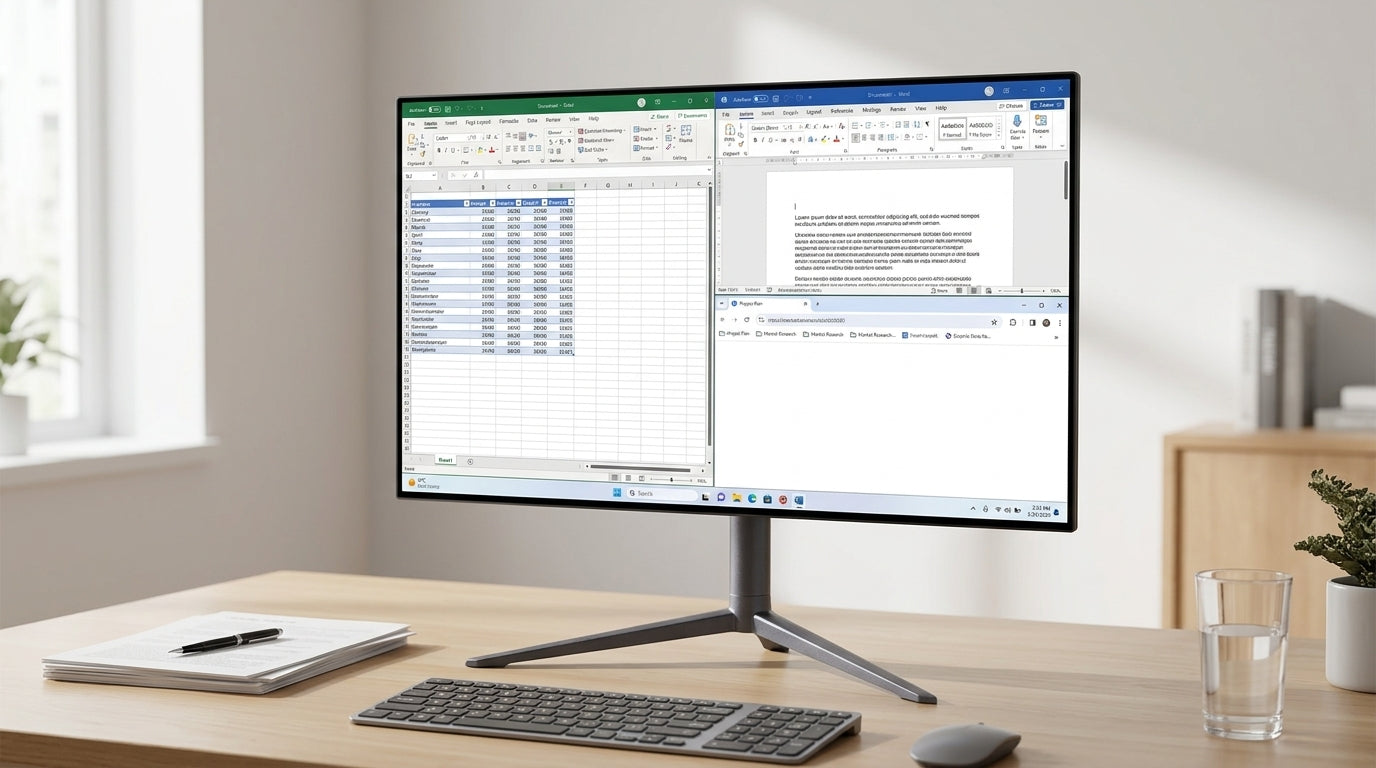
Static desks and small tablets often create fragmented learning spaces in 2026 home classrooms, forcing students to toggle between apps on cramped screens or stay fixed in one corner of the house. A rolling smart display like the MegPad A32Q7 Pro offers mobility and a 32-inch 4K touchscreen that can move between rooms, support split-screen multitasking, and accommodate both children and adults ergonomically.

Why the 'Nomad Classroom' is Replacing Static Desks in 2026
In 2026, many families are shifting away from fixed desks and wall-mounted screens toward mobile learning hubs that adapt to different teaching moments. As this EdSurge report on K-12 edtech trends notes, the 'nomad classroom' trend prioritizes flexibility so lessons can happen in the kitchen during science experiments or the living room for group discussions instead of confining a child to a bedroom corner all day.
Fixed setups often lead to cognitive fatigue and eye strain during long remote sessions because the environment does not change with the activity. A rolling display solves this by letting parents or tutors reposition the screen quickly without rebuilding the entire workspace. This mobility helps maintain student focus and matches varied teaching styles common in homeschooling or hybrid remote education.
The change is especially relevant for households where multiple people share living spaces. Rather than dedicating a permanent desk footprint, a mobile unit can be rolled out for morning classes and tucked away afterward, reclaiming the room for family use.
Beyond the Tablet: Upgrading to a 32-Inch Rolling Display
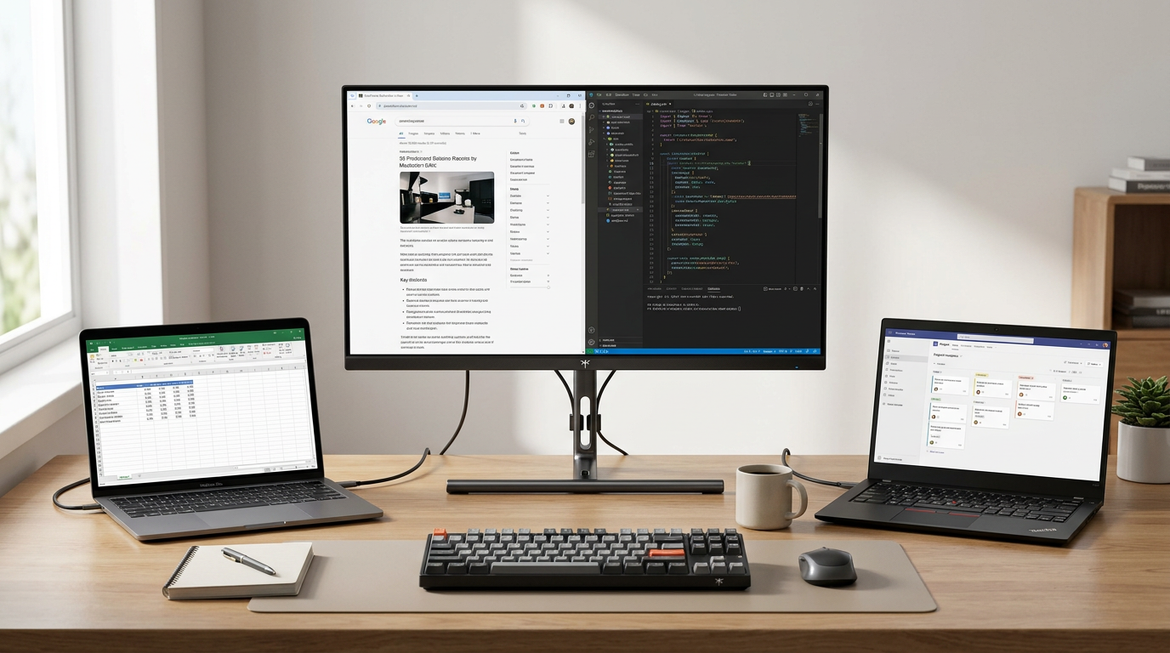
A tablet works for quick checks, but many students hit a 'tablet fatigue' threshold after more than two hours of remote learning. Constant window-toggling on a 10- or 12-inch screen increases cognitive load and mental fatigue, as studies on large-screen productivity indicate that 32-inch and larger displays enable true split-screen multitasking—such as viewing a lecture video while taking notes side-by-side—reducing task-switching costs.
For shared instruction, a tablet forces parents or tutors into awkward proximity. A 32-inch rolling display on a swivel stand allows comfortable side-by-side viewing, making it easier for adults to guide without hovering. This is particularly helpful during tutor-led review sessions or family learning time.
In smaller homes, the rolling format also reclaims space by eliminating a fixed desk footprint. The unit can serve as a temporary study corner and then move to another room, avoiding permanent furniture commitments. However, it still requires adequate floor clearance, so very cluttered spaces may need reorganization first.
The chart below helps visualize typical switch points between a tablet and a 32-inch rolling display across common remote learning scenarios.
When a 32-inch Rolling Display Becomes the Better Fit
A simple decision map showing when a large rolling display is the stronger fit than a tablet for remote learning, plus the stand height band that supports seated students and standing adults across common content types.
View chart data
| Scenario | Low cognitive load | Mixed multitasking | High multitasking | Teacher-led demo |
|---|---|---|---|---|
| Tablet fit | 1.0 | 1.0 | 0.0 | 0.0 |
| 32-inch rolling display fit | 0.0 | 1.0 | 1.0 | 1.0 |
| Stand height band (1131-1331 mm) | 1.0 | 1.0 | 1.0 | 1.0 |
The Role of Google EDLA in Modern Home Classrooms
Google EDLA certification has become the 2026 industry standard for large smart displays in education. It guarantees secure, native access to the Google Play Store and official apps such as Google Classroom and Microsoft 365, which many school districts require.
Without EDLA, parents often face the sideloading trap—hunting for APK files that create security risks and prevent automatic updates. This can lead to version mismatches right before a live class. Browser-based alternatives frequently lack features like pressure-sensitive digital inking or reliable multi-window support that native apps provide.
School IT departments may also block non-certified devices from Workspace accounts due to missing Google Play Protect safeguards. For remote education hardware, choosing an EDLA-certified model like the MegPad A32Q7 Pro helps avoid these maintenance headaches and ensures smoother integration with official learning platforms. That said, even certified devices perform best with stable Wi-Fi across all rooms where they will be used.
Setting Up Your Mobile Home Classroom for Success
Professional home classrooms in 2026 emphasize ergonomics to protect long-term student health and reduce repetitive strain injuries. The MegPad A32Q7 Pro's 4-way adjustable stand with wheels makes this easier by offering a height range from 1131 mm to 1331 mm, which aligns with typical seated eye level for primary students and standing height for parents or tutors.
A 90-degree pivot turns the 32-inch 4K screen into portrait mode for 'infinite scroll' reading of digital textbooks or long coding projects, minimizing neck-craning. The 360-degree swivel wheels let the unit function as a 'roving tutor' that moves between a kitchen table, reading chair, or collaborative floor space without disassembly.
Setup steps for parents typically include:
- Choosing a consistent strong Wi-Fi zone that covers all intended learning areas.
- Adjusting the stand height so the child's eyes meet the top third of the screen when seated.
- Testing portrait and landscape orientations for different subjects.
- Pairing a Bluetooth keyboard or stylus for annotation during lessons.
While the stand reduces many posture-related risk factors, it does not replace the need for regular breaks and proper seating. Very tall adults or very young children may still benefit from additional furniture adjustments.

For more on ergonomic monitor choices in home offices, see our guide to finding the best monitor for productivity and a healthier workspace.
Is a Rolling Smart Display Right for Your Student?
A rolling smart display adds valuable flexibility, but mobility alone does not guarantee improved learning outcomes. Industry guidance stresses that these devices work best when integrated into a stable home ecosystem with reliable Wi-Fi in every room where lessons occur. Without that foundation, frequent disconnections can disrupt flow more than a fixed setup would.
The MegPad A32Q7 Pro functions well as a home command center that shifts from educational apps during school hours to family entertainment or collaboration in the evenings. Its Google EDLA certification, large touchscreen, and adjustable rolling stand make it suitable for homeschool families, private tutors, and households that need room-to-room teaching without permanent desk commitments.
It is generally a strong fit when your routine involves shared instruction, multitasking across apps, or frequent changes in learning location. It may be less ideal if your space is extremely cluttered, your Wi-Fi coverage is inconsistent, or your child's needs are fully met by a smaller tablet for solo use. In those cases, a traditional monitor or basic portable display could be more practical.
Consider testing your current Wi-Fi strength in different rooms and observing how often your student switches between windows on their existing device. These quick checks help determine whether adding a mobile 32-inch display would meaningfully reduce friction in your specific remote education setup.
For additional ideas on versatile displays that serve multiple purposes around the house, explore our Mobile Touch Screen collection.
How Does a Rolling Display Compare to Traditional Whiteboards or Portable Monitors?
Many families wonder whether a rolling smart display can replace a mobile whiteboard or basic portable monitor in home learning. Unlike a traditional whiteboard, the MegPad supports digital annotation, screen sharing, and direct interaction with online platforms without needing separate markers or erasers. Its 4K resolution and touch layer provide clearer visuals for diagrams and video lessons than most analog alternatives.
Compared with smaller portable monitors, the 32-inch size and built-in Android system with Google EDLA reduce the need for extra laptops or cables. The included battery delivers up to 11 hours of use, and the wheeled stand eliminates the hassle of carrying a separate unit between rooms. That combination makes it more practical for tutor-led sessions or parent-supervised work than a basic portable screen that lacks native educational apps or easy mobility.
Still, a rolling display is not a full classroom replacement. It works best as a flexible hub that supplements school-provided tools rather than replacing them entirely. If your lessons rely heavily on specialized software only available on school-issued devices, confirm compatibility before depending on it as the primary screen.
Parents looking for more options in this category can review the full range of smart monitors to match exact size and feature needs.
Practical Tips for Daily Remote Learning with a Mobile Smart Display
To get the most from a rolling display in daily use, establish a short morning routine that includes wheeling the unit to the first lesson location, adjusting height for the student, and connecting to any external peripherals like a stylus or keyboard. Keep the remote control handy for quick volume or input changes during video calls.
During longer sessions, encourage students to use the portrait pivot for reading-heavy subjects and switch back to landscape for collaborative screen sharing. The built-in speakers and microphone support most video platforms, but pairing with a dedicated headset often improves audio clarity in noisier households.
At the end of the day, roll the display to a central charging spot so it is ready for the next morning. This habit prevents battery surprises and keeps the device acting as a true multi-purpose home hub rather than a single-task tool.
For guidance on maintaining touch performance over time, see our article on how to clean a portable touch screen without damaging the capacitive layer.
Is Google EDLA certification required for all remote learning apps?
No, but it removes many practical barriers. Non-certified displays can run some web versions of popular tools, yet they often lack full features, automatic updates, and the security handshakes many districts require. EDLA certification helps ensure smoother, more secure access in 2026 education environments.
How long does the battery last during typical school use?
The MegPad A32Q7 Pro's 9500mAh battery provides up to 11 hours at moderate brightness and volume. Real-world runtime depends on screen content, Wi-Fi usage, and whether the display stays in one spot or rolls frequently. Plan to recharge nightly for all-day reliability.
Can multiple children share one rolling display effectively?
Yes, especially with the adjustable height and swivel stand. The large 32-inch screen allows side-by-side viewing, and portrait mode helps with individual reading assignments. Set clear schedules and height presets so each child can quickly adjust the unit to their needs.
Does the device work well with school-provided software and video platforms?
It does for most mainstream tools once connected to stable Wi-Fi. Native Google Classroom, Microsoft 365, and common video apps run smoothly thanks to EDLA certification. Test any specialized district software in advance, as compatibility can vary.
What should I check before buying a rolling display for home schooling?
Confirm strong Wi-Fi coverage in all planned rooms, measure floor space for the stand's footprint, and consider how often shared viewing occurs. A 32-inch model suits multitasking and collaboration better than smaller tablets, but only if your environment supports easy movement between locations.