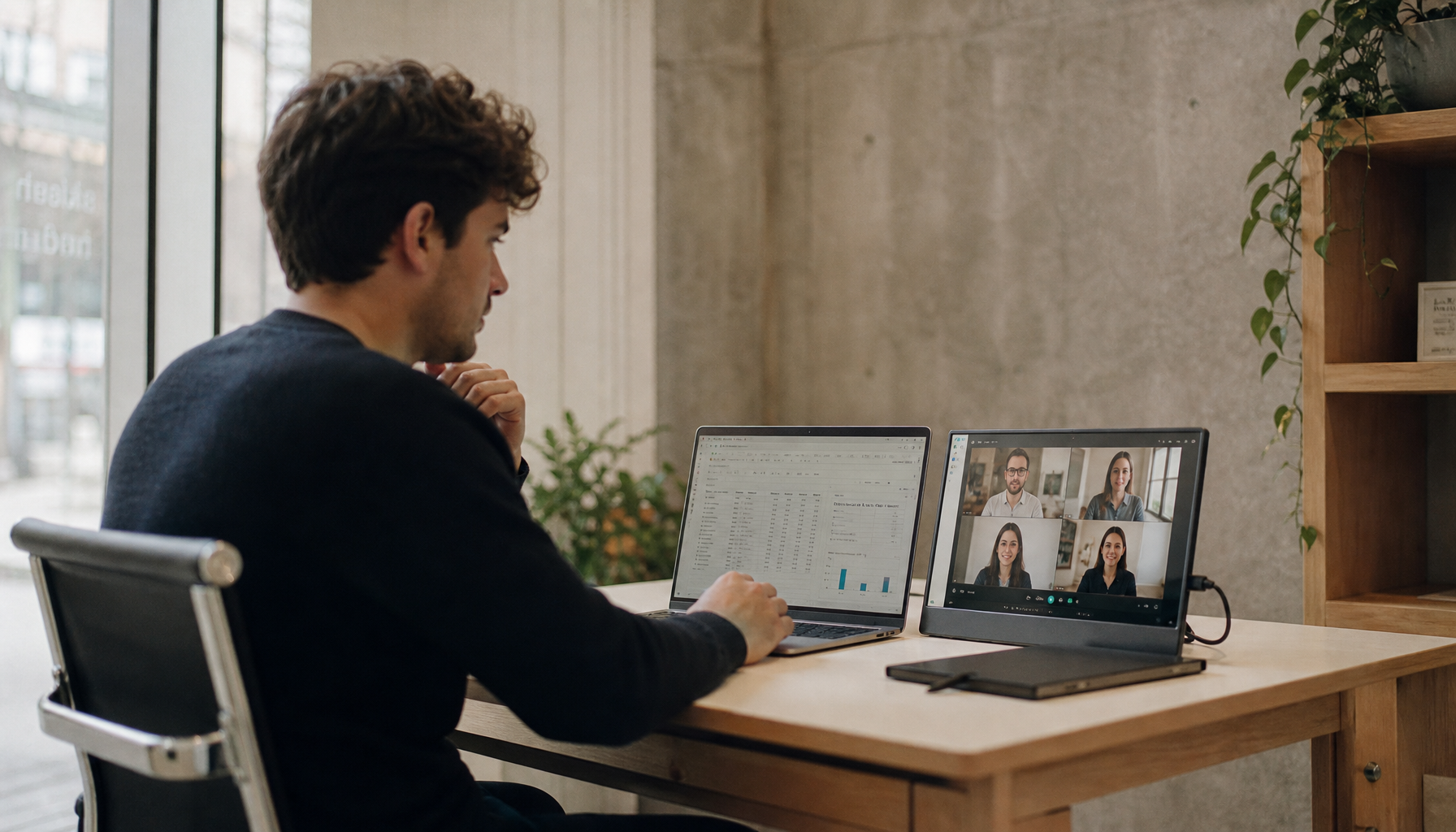
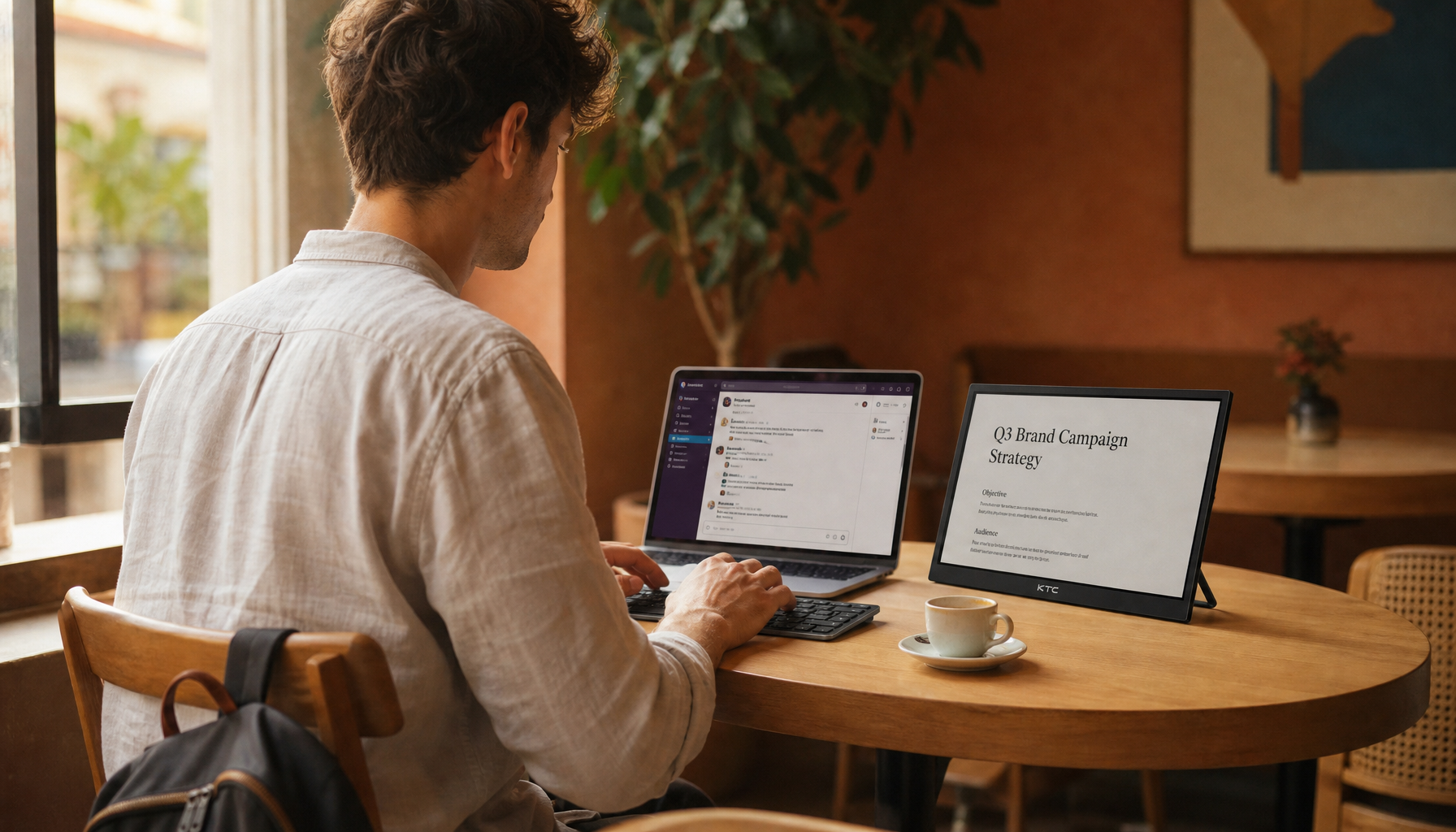
A hybrid work gaming setup feels worth keeping when switching is mostly a single deliberate step, not a mini troubleshooting session. The goal is not perfection. It is a desk that stays ready for work calls and gaming sessions without constant cable swaps, input hunting, or wake-up drama.

Why Desk Switching Feels Frictional
The annoying part of a shared desk usually is not the desk itself. It is the routine friction around wake delays, input changes, cable replugging, and peripheral handoff. That is why a one desk work and gaming without switching hassle setup feels better only when those handoffs stop demanding attention.
In real use, the problem shows up in small moments. You sit down for work and the monitor takes a second too long to wake. You switch to gaming and the input is on the wrong source. Your keyboard is paired to the wrong machine. None of that is dramatic, but it adds up fast when it happens every day.
A good hybrid desk reduces the number of things you touch before you can start. It does not need to be magic. It just needs to avoid repeated replugging, visible recovery steps, and "why is this blank again?" moments. If the desk still needs that kind of attention, it is not really low-friction enough.
The Minimal-Friction Desk Pattern
The cleanest hybrid work gaming setup usually starts with one stable display path and one stable peripheral path. That means you decide which device is the normal work source, which one is the normal play source, and which cables stay fixed. Direct, predictable connections usually cause fewer surprises than a chain of adapters that changes every time you switch.
For many readers, that also means thinking about the desk as a routine, not as a spec sheet. A laptop plus desktop setup can work well when the monitor, USB path, and power routing are planned together. That is where a monitor like the H27P6 can fit as a practical example: it supports 90W USB-C power delivery, 4K at 160Hz, 1080p at 320Hz, and office-and-gaming use. That does not guarantee seamless switching, but it can reduce the number of separate pieces you need to manage.
For most players and remote workers, the best fit is the setup that avoids routine cable changes. If your day starts with a laptop and ends with a desktop or console, the desk should make those two modes feel like different inputs on the same station, not two different stations.

Start With One Stable Display Path
A stable display path is the part that keeps the screen from becoming the bottleneck. On Windows, a sleeping DisplayPort connection can trigger hot-plug detection and force the system to treat the monitor as disconnected, which is why wake behavior can feel inconsistent. Microsoft's explanation of monitor hot plug detection is a useful reminder that the problem is often a signal-handling chain, not just the panel.
The practical takeaway is simple. Keep one direct, reliable video path for your main work mode, and use the alternate path only if it is truly stable in your setup. If the signal path gets too clever, wake and input recovery tend to get worse, not better.
Choose the Right Peripheral Handoff
Keyboard and mouse sharing can save time, but only when the handoff is predictable. A basic USB switch can work for some desks, and tools that use DDC/CI input switching can reduce the need to fumble with monitor buttons on Windows. The useful part is not automation for its own sake. It is cutting one more manual step from the routine.
A simple switch is often easier to trust than a fancy chain that promises more than your devices can support. If the monitor, upstream USB path, and source device do not agree on the switching method, the desk quickly stops feeling seamless. In that case, a more basic handoff is usually the safer choice.
Match the Desk Pattern to the Buyer Type
Remote workers who game after hours usually want fewer daily steps more than they want maximum customization. Hybrid employees with a laptop for work and a desktop or console for play need the strongest compatibility checks, because port behavior matters more in mixed-device setups. Small-space users benefit from fixed routing and fewer touchpoints, since limited room makes messy cabling more annoying.
The pattern flips when the user values maximum flexibility over routine convenience. If you swap devices often, test comfort with a simpler, more fixed arrangement first. A low-friction desk is one that you stop thinking about after setup.
Monitor, KVM, and Wake Behavior
Wake behavior is where a hybrid desk often succeeds or fails. Windows power settings can contribute to a monitor dropping out during active use, and a lost signal or driver conflict can look like the display itself is at fault. The same kind of system-specific issue can also show up as different colors after sleep, which is why sleep-related color changes are often treated as a handshake or driver issue rather than a broken panel.
A brief black screen during app or input switching is also not automatically a failure. It can be a display-mode or handshake change, especially when the system renegotiates resolution or refresh behavior. KTC's USB-C KVM buying guide is a good reminder to treat USB-C, Alt Mode, PD wattage, and KVM controls as compatibility checks, not guaranteed one-button switching.
If you want a clear rule, use this one: if wake or switch recovery keeps happening in normal use, the setup is too brittle for the promise of a low-hassle desk. If the delay is rare, predictable, and easy to recover from, it may still be good enough.
Wake-From-Sleep Delays
For work sessions, wake delays are mostly a convenience problem. For gaming, they are more disruptive because they interrupt the start of the session. The common causes can sit in the monitor, GPU, driver stack, cable, or OS settings. That is why a monitor-only blame is often too narrow.
This also explains why some users keep chasing a "fix" that never fully lands. If the device chain is the issue, you may need to change the cable path or power behavior rather than only changing monitor settings. The goal is not to eliminate all delay. It is to keep it from becoming a recurring annoyance.
KVM and USB-C Checks That Matter
USB-C video, USB-C charging, and KVM behavior sound similar, but they are not interchangeable. A source device has to support display output for USB-C video to work. The upstream USB path has to be connected correctly for KVM to follow the active input. Those are compatibility checks, not promises.
That is why a product like the H27P6 is best treated as a fit example rather than a universal answer. Its 90W USB-C, dual-mode display, and office-plus-gaming positioning can help a shared desk, but only if your laptop, desktop, cable, and port chain support the same behavior you expect.
What to Verify Before Buying
Before you call a desk setup low-friction enough, check five things in order: source-device output, cable quality, monitor input support, USB upstream path, and sleep settings. That sequence helps you catch the most common causes before they become daily frustration.
If the setup only works after repeated retries, it is not yet a finish line. It is a draft. Treat it that way and keep the routing simpler.
Cable and Power Routing That Stays Clean
- Keep the main video cable on a fixed path so you are not tracing cables every time you switch modes.
- Put the dock or adapter where it stays reachable, because hidden gear is only useful if you do not need to dig for it.
- Plan charging separately from video, especially if your laptop and monitor do not share the same best connection path.
- Leave enough slack for a source switch without forcing the monitor or laptop to move.
- Use one power layout that stays constant, even if the devices on top of the desk change.
- In a small room, reduce the number of exposed touchpoints before you worry about making the desk look minimal.
For a cleaner starting point, the one-cable USB-C desk workflow is a useful reference because it focuses on the routing problem, not just the monitor itself. If you prefer browsing by category, office monitors are often the better fit when the work side of the desk matters more than the gaming side.
Choosing the Right Shared Desk Setup
| Setup pattern | Best fit | Switching friction | Key caveat |
|---|---|---|---|
| Work-first 27-inch QHD or 4K monitor | Users who care most about text clarity and stable office use | Low if the gaming source is secondary and stays cabled | May feel limiting if you want faster competitive play |
| Dual-mode 27-inch mixed-use monitor | Readers who want one display to cover work and play without constant compromise | Usually the best balance when ports and wake behavior are checked first | Depends heavily on device support and cable quality |
| Ultrawide multitasker | People who value desk width and window management more than simplicity | Moderate, because the wider layout can add setup and cable planning | Can be overkill if you want the cleanest possible handoff |
This comparison is less about "best overall" and more about where the switching burden lands. If your routine is mostly laptop by day and gaming PC by night, the dual-mode route is often the most natural fit. If your priority is work-first stability, gaming monitor options or a simpler office-focused display may be the cleaner move. If you want to compare wide layouts, ultrawide displays make more sense when multitasking is the main reason to upgrade.
Shared Desk Patterns and Switching Burden
A practical comparison of common hybrid desk patterns, showing where switching stays simple and where setup complexity tends to rise.
Show comparison table
| Setup pattern | Switching burden | Cable touchpoints | Wake consistency | Peripheral handoff |
|---|---|---|---|---|
| Work-first monitor | Low | Low | Usually good if direct-connected | Moderate |
| Dual-mode mixed-use | Low | Low | Depends on device chain | Low when KVM or USB path is stable |
| Ultrawide multitasker | Moderate | Moderate | Depends on input chain | Moderate |
Final Checks Before You Commit
- Confirm the source device can output the resolution and refresh rate you actually plan to use.
- Test wake from sleep, then test a real game or work app switch, not just the monitor menu.
- Make sure the USB-C, HDMI, or DisplayPort path is the one you meant to use.
- Verify that peripherals follow the active source the way you expect.
- If the desk still needs repeat troubleshooting, simplify the cable path before adding more features.
- Keep the setup you can live with every day, not the one that only looks impressive on paper.
If you want one clean rule, use this: choose the simplest configuration that stays stable in your actual routine. A hybrid desk should make work-to-play switching feel routine, not fragile. If it does that, it has done its job.
FAQs
Can One Monitor Handle Both Work and Gaming Well?
Yes, if your ports, cables, and source devices match the way you actually switch. A single monitor can work very well for both jobs when you are willing to check wake behavior, input support, and refresh expectations before buying.
What Causes a Monitor to Wake Slowly After Sleep?
Slow wake is often tied to the source device, cable, driver, monitor input behavior, or power settings rather than the panel alone. That is why the fix usually depends on the whole chain, not just the display.
Why Does the Screen Go Black for a Moment When Switching Inputs or Apps?
A brief black screen can happen during a mode change or handshake change and does not always mean hardware trouble. If it is short and predictable, it is often just part of the signal renegotiation.
Can a KVM Setup Reduce Daily Replugging on a Hybrid Desk?
It can, but only when the monitor's USB path and the source devices actually support the behavior you want. Treat KVM as a compatibility check, not a guaranteed one-press fix.
What Should I Check Before Buying a Monitor for One Desk Work and Play?
Check source-device output, input support, cable quality, USB-C or KVM requirements, and wake behavior in the kind of work and game sessions you really use. That keeps you from buying a monitor that looks flexible but feels fussy in daily use.