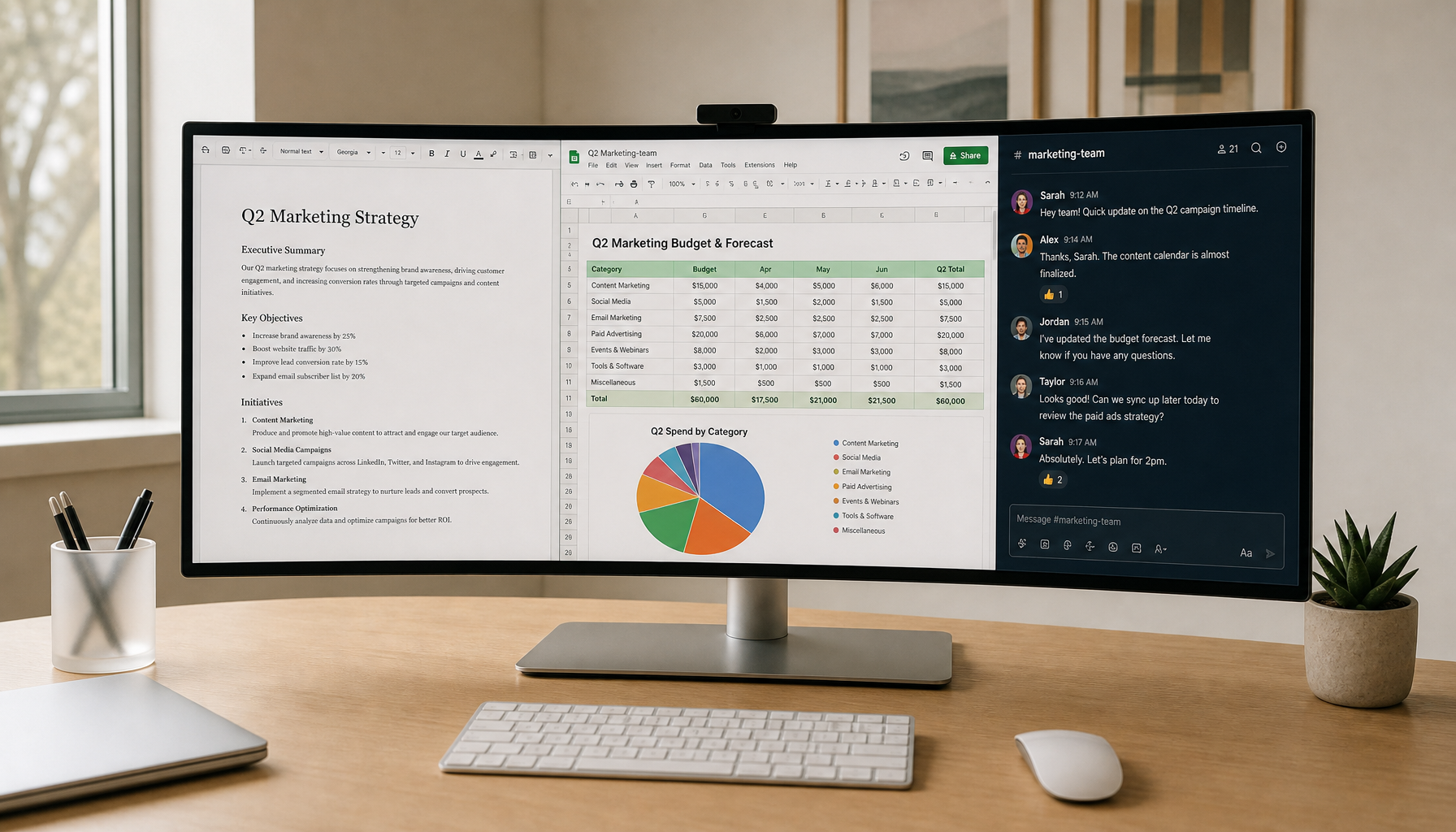
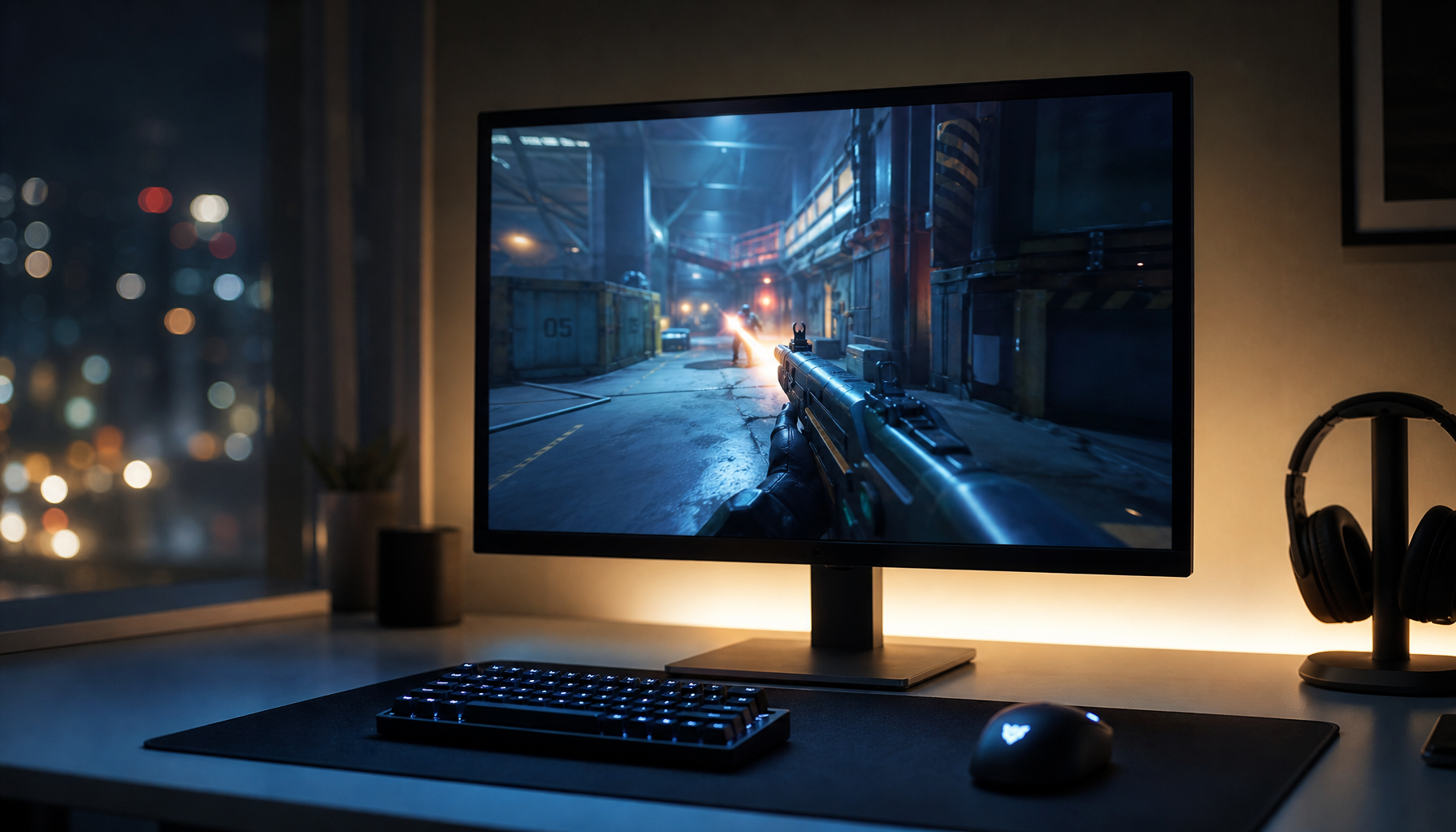
For Mac users who prioritize sharp text and UI clarity on a 27-inch desk, a 5K monitor typically delivers the more satisfying experience, while Windows users and those who value HDR often find a strong 4K Mini-LED option provides better overall balance without the extra cost.

The 2026 Resolution Debate: Why 4K vs 5K Matters Now
Buyers choosing between 4K and 5K monitors in 2026 face a practical question: does the added pixel count justify the price difference for their operating system and daily tasks? Many users consider a 5K display when they want maximum text sharpness on macOS, while others lean toward high-performance 4K models when they need stronger contrast or higher refresh rates on Windows. The decision hinges on how each OS renders those pixels and what percentage of the workflow involves static interfaces versus motion content.
Two monitors illustrate the main paths. The KTC H27P3 targets creators who want native 5K resolution on a 27-inch panel. The KTC M27P6 offers 4K Mini-LED performance with high peak brightness and local dimming. Both sit at premium price points, so understanding the real-world differences helps avoid overspending on resolution alone.
Pixel Density and the 'Retina' Threshold: Why 218 PPI is the Magic Number
Pixel count and pixel density determine how much workspace you actually gain and whether individual pixels remain visible at normal viewing distances. A 5K panel at 5120x2880 contains 14.7 million pixels, roughly 77 percent more than a 4K panel's 8.3 million. On a 27-inch screen this translates to 218 PPI versus 163 PPI, giving 5K a clear advantage in fine detail.

The "Retina" threshold describes the distance at which pixels blend into smooth lines for most viewers. At a typical 27-inch desk distance, 4K pixels can still appear slightly distinct to discerning eyes, while 5K pixels generally disappear. This difference matters most for text-heavy work where edge definition affects readability over long sessions.
Retina Viewing Distance by Resolution at 27 Inches
5K reaches the Retina threshold at a closer distance than 4K, making it sharper for typical desk use.
Show data table
| Resolution | PPI | Retina Distance (inches) |
|---|---|---|
| 4K | 163 | ~27 |
| 5K | 218 | ~20 |
The macOS Scaling Tax: Why 5K is the 'Gold Standard' for Mac Users
macOS is optimized for specific pixel densities that allow clean 2x integer scaling. A 27-inch 5K monitor hits the target density exactly, so every logical pixel maps to four physical pixels without intermediate math. This produces crisp text and sharp interface elements when set to a 1440p-sized workspace.
On a 4K monitor the same scaled setting forces macOS to render a virtual 5K framebuffer first and then downscale it. The extra step can introduce minor text softening and adds GPU load. Users who spend most of their time in code editors, design software, or document work often notice the difference during long sessions and prefer the native 5K route.
For MacBook Pro or Mac Studio owners who want this clarity without moving to higher-cost alternatives, the H27P3 provides a direct match. It also supports a secondary 1440p@120Hz mode when faster motion is needed.
Windows 11 Scaling: Why 4K is Often the Smarter Value for PC Users
Windows 11 handles fractional scaling more efficiently than macOS. Options such as 125 percent or 150 percent let users enlarge interface elements without forcing a full virtual framebuffer render. This flexibility makes 4K monitors feel sharp and responsive on typical 27-inch desks while preserving headroom for higher refresh rates.
A 5K monitor on Windows often requires 200 percent scaling to reach a comfortable size, which reduces the effective workspace back to roughly 1280x720 logical pixels. Many users find 150 percent scaling on 5K looks nearly identical to 4K at 150 percent while losing the refresh-rate and HDR advantages available on 4K Mini-LED panels. As a result, Windows users frequently achieve better overall value by allocating budget to contrast and speed rather than raw pixel count.
The official Microsoft documentation on high-DPI development confirms that fractional scaling works natively in Windows 11 without the same overhead seen on other platforms.
Creative Workflows: When to Prioritize 5K Resolution vs. 4K Mini-LED HDR
Creative decisions often split along a simple ratio. When more than two-thirds of the work involves static text, timelines, or tool palettes, the extra pixels of 5K improve real-estate efficiency and reduce eye strain. When video grading, HDR review, or motion content exceeds roughly 30 percent of the day, the higher peak brightness and local-dimming zones of a 4K Mini-LED panel become more noticeable.
The H27P3 delivers strong color coverage and Delta E accuracy suited to photography and design. The M27P6 reaches 1400 nits HDR peak with 1152 dimming zones, giving deeper blacks and more impact for HDR deliverables. Users who toggle between SDR productivity and HDR review may prefer the simpler workflow of a single high-quality 4K panel rather than managing multiple modes.
For those comparing color-critical options, the guide on what Delta E values actually mean explains how to evaluate accuracy claims across different panels.
The Final Decision: Is 5K Worth the Premium for Your Desk?
Mac users whose primary tasks center on text and interface clarity will usually see the clearest benefit from 5K. Windows users and those who need strong HDR or higher refresh rates typically receive more practical performance from a well-equipped 4K Mini-LED monitor. In both cases the choice depends on the dominant workflow rather than pixel count alone.
If your desk depth keeps the screen near 20 inches and your work is UI-heavy, the H27P3 is the stronger fit. If you sit farther back, use Windows scaling, or spend time with HDR content, the M27P6 or similar 4K models such as the H27P22S offer better balance. Check current pricing and stand ergonomics on the 4K monitor collection and All-Mini-LED Monitors to match your exact setup.
Frequently Asked Questions
How Does macOS Scaling Affect 4K Versus 5K Monitors?
macOS prefers integer scaling at Retina densities. A 5K panel allows perfect 2x scaling, while 4K often requires a virtual framebuffer render that can soften text slightly and increase GPU demand.
What Viewing Distance Makes 5K Noticeably Sharper Than 4K?
At roughly 20 inches a 27-inch 5K panel reaches the point where pixels blend for most viewers. A 4K panel at the same size typically needs closer to 27 inches before the same effect occurs.
Does Windows Fractional Scaling Remove the Need for 5K?
Windows handles 125 percent and 150 percent scaling natively, so many users find 4K at these settings matches or exceeds the usable workspace of 5K at 200 percent while retaining higher refresh rates.
Is 5K Worth It for Video Editing Work?
If most of the day involves reviewing 4K footage at 100 percent scale with toolbars visible, the extra pixels help. When HDR grading or color-critical review dominates, a Mini-LED 4K panel with higher peak brightness often provides more visible quality gains.
Can I Use a 5K Monitor with a Windows Laptop?
Yes, but the scaling behavior differs from macOS. Test 150 percent scaling first; if the interface feels too large or too small, a 4K monitor may deliver a more flexible daily experience.
Should I Prioritize Refresh Rate or Resolution for Mixed Work and Gaming?
Users who split time between productivity and gaming usually prefer 4K panels that reach 144 Hz or higher. The added smoothness often outweighs the extra pixel count of 60 Hz 5K displays for these mixed workflows.