

DisplayHDR certifications define the hardware architecture inside a monitor more than they advertise a single brightness number. The tier you pick determines whether the panel uses native contrast alone or adds full-array local dimming to produce deeper blacks and brighter highlights that actually feel like HDR.

VESA DisplayHDR Tiers Explained: More Than Just a Number
The three main tiers reflect different hardware requirements set by VESA. DisplayHDR 400 is the entry-level certification that guarantees 400 nits of peak brightness but does not require local dimming. Higher tiers add mandatory local dimming hardware and stricter sustained-brightness rules.
VESA's updated CTS 1.2 standard now requires even DisplayHDR 400 monitors to reach 90 percent DCI-P3 color coverage, so newer budget panels deliver wider color than older models. The real distinction remains the backlight: 400-tier screens rely on the panel's native contrast ratio, while 1000 and 1400 tiers mandate hardware dimming zones that create true dynamic range.
For most buyers the practical question is whether they need the extra hardware. What Is the Real Difference Between Native and Emulated HDR on Gaming Monitors? explains how emulated HDR on a 400-tier display adds brightness without improving shadow depth.
The Local Dimming Divide: Why HDR 400 and HDR 1000 Feel Different
HDR 400 monitors achieve their certified brightness through the panel itself, typically delivering around 1000:1 contrast on IPS screens. Without local dimming zones, bright highlights and dark shadows share the same backlight, so blacks appear gray in dark scenes.

DisplayHDR 1000 and 1400 certifications require full-array local dimming or Mini-LED backlights. These systems dim individual zones independently, letting bright objects stay vivid while nearby dark areas stay near black. The result is the "pop" and depth that makes HDR content feel different from SDR.
What 'Local Dimming Zones' Mean in Monitor Backlight Technology shows how zone count and algorithm quality affect blooming. Mini-LED IPS vs. Standard IPS: Is the Advanced Backlight Worth the Upgrade? compares how these backlights change real-world contrast.
According to VESA Certified DisplayHDR Performance Criteria, DisplayHDR 400 has no local dimming requirement, which explains why many users notice limited contrast improvement despite the brightness boost.
HDR 1000 vs. HDR 1400: The Perceptual Depth Gap
The jump from HDR 1000 to HDR 1400 is not simply 400 extra peak nits. HDR 1400 demands a 3.5 times lower black level (0.02 nits versus 0.05 nits) and 900 nits of sustained full-screen brightness instead of 600 nits. These changes matter most in bright rooms or when shadow detail is critical.
For many gamers the black-level improvement is more noticeable than the extra peak brightness. Horror titles and space sims benefit from darker shadows that do not wash out near bright elements. In typical indoor lighting the difference in highlight dazzle is smaller because human perception of brightness follows a logarithmic curve.
Key HDR Tier Differences: Brightness, Black Levels, and Sustained Output
Comparison of certified requirements across DisplayHDR tiers showing the hardware jump from entry-level to professional performance.
Show data table
| Tier | Peak Brightness (nits) | Sustained Full-Screen (nits) | Black Level (nits) |
|---|---|---|---|
| {"Tier":"DisplayHDR 400","Peak Brightness (nits)":"400","Sustained Full-Screen (nits)":"~300","Black Level (nits)":"~0.40"} | |||
| {"Tier":"DisplayHDR 1000","Peak Brightness (nits)":"1000","Sustained Full-Screen (nits)":"600","Black Level (nits)":"0.05"} | |||
| {"Tier":"DisplayHDR 1400","Peak Brightness (nits)":"1400","Sustained Full-Screen (nits)":"900","Black Level (nits)":"0.02"} |
MiniLED vs. OLED: Which Display Technology Wins for Gaming in 2025? discusses when the black-level gains of HDR 1400 approach OLED performance without burn-in concerns.
According to VESA DisplayHDR 1.2 Specification Update Details, the stricter black-level and sustained-brightness rules separate HDR 1400 from HDR 1000 for professional and bright-room use.
The 'Toggle Tax' and Hybrid Use: When Less is More
Aggressive local dimming can create visible blooming around bright UI elements in spreadsheets or documents. Many users switch HDR off during productivity work, then forget to re-enable it for games. This daily friction is often called the toggle tax.
HDR 400 monitors avoid the issue because they lack complex dimming algorithms. They remain in one mode without distracting artifacts, making them practical for mixed office and gaming desks. Higher-tier panels reward dark-room movie nights and cinematic games but may require more manual adjustments.
Does HDR Actually Slow Down Your Gaming Monitor's Response Time? clarifies that any perceived slowdown usually comes from input lag or dimming behavior rather than HDR itself. Users who value set-and-forget simplicity often find HDR 400 sufficient despite lower peak specs.
Which DisplayHDR Tier Should You Choose?
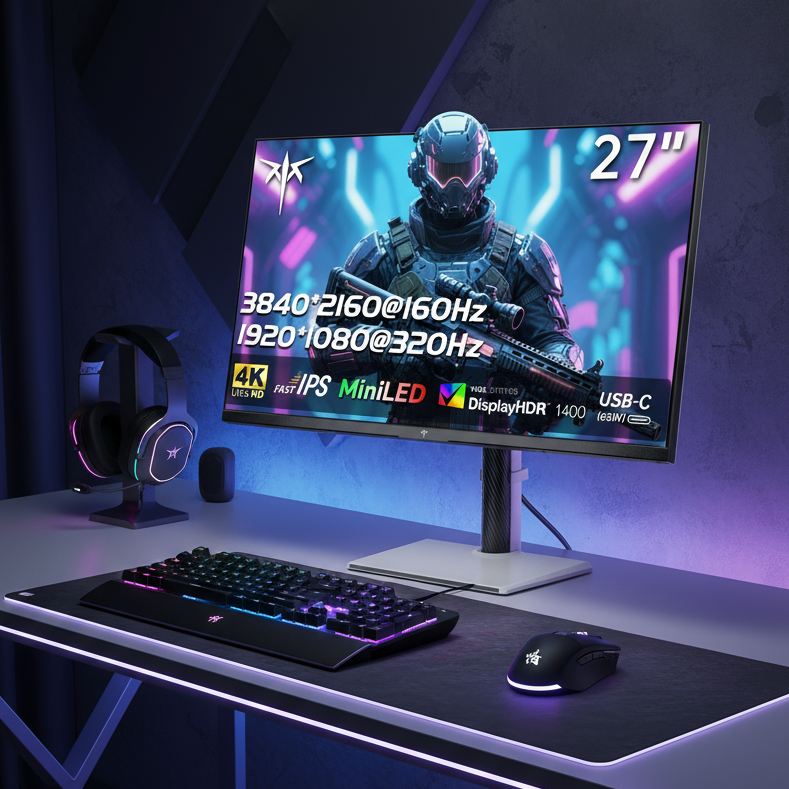
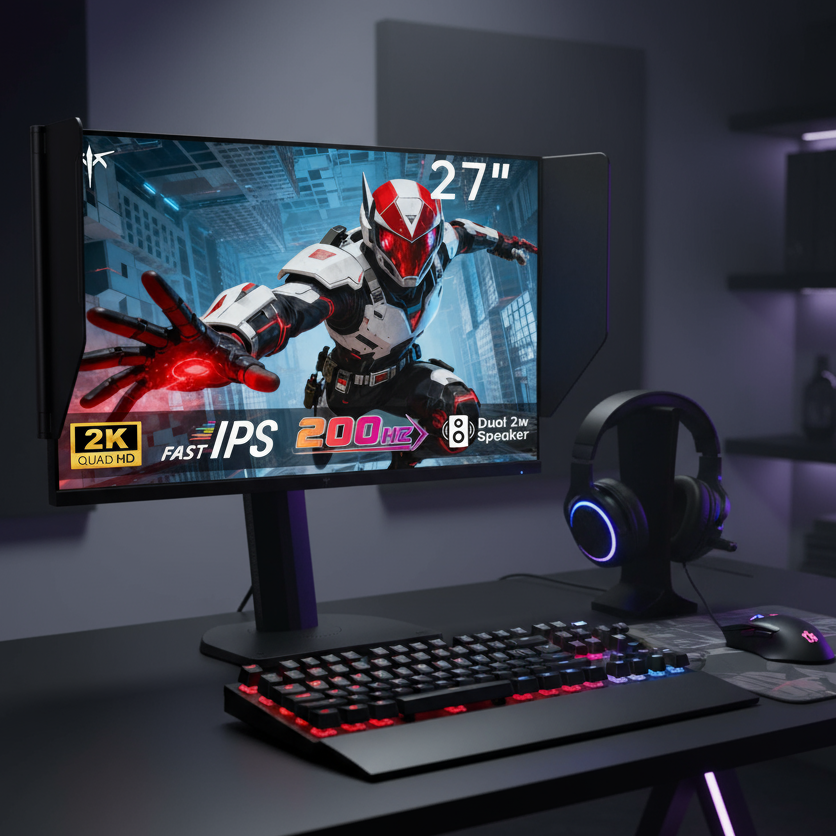
Budget under $300 and mostly SDR or casual HDR use points to DisplayHDR 400 models such as the KTC H27P22S. These deliver sharp 4K resolution and adequate brightness for office work and light gaming without extra cost or mode switching.
For dedicated gaming on a 1440p screen, DisplayHDR 1000 Mini-LED options like the KTC M27T6S balance speed, color volume, and visible HDR impact at a mid-range price. The local dimming adds depth that 400-tier panels cannot match.
Users who need sustained brightness above 800 nits or want closer-to-OLED shadow depth should consider DisplayHDR 1400 panels. The KTC M27P6 offers 4K resolution with 1152 dimming zones for creators and console gamers who work in brighter rooms.
Above roughly $600, OLED models such as the KTC G27P6 often become the stronger choice for pure contrast, even with lower peak nits. Check your room lighting and willingness to manage HDR modes before stepping up tiers.
Questions Buyers Commonly Ask About These HDR Tiers
Does a Higher DisplayHDR Number Guarantee Better Contrast?
No. Peak brightness is only one requirement. Without enough local dimming zones or a strong algorithm, HDR 1000 or 1400 panels can still show blooming that reduces perceived contrast in mixed scenes.
Can I Use HDR 1400 Content on a DisplayHDR 400 Monitor?
Windows will allow the signal, but the monitor cannot reproduce the full range. Highlights will clip and shadow detail will be lost because the hardware lacks the required dimming zones and sustained brightness.
Is HDR 400 Noticeably Better Than SDR for Everyday Use?
It provides a modest brightness increase and wider color on newer panels, yet it does not deliver the dynamic range most people associate with HDR. Many users treat it as an improved SDR experience rather than true high-dynamic-range viewing.
Should Bright-Room Users Always Choose HDR 1400?
HDR 1400 helps when sunlight hits the screen because of its higher sustained output. However, glare and reflections remain limiting factors; an anti-glare coating and proper desk positioning often matter more than the certification tier alone.