









HDMI 2.1a does not increase bandwidth or unlock a new class of resolutions. Its main change is SBTM, an HDR feature that can improve compatibility in some setups but will not matter for every display.
Ever connected a new console or gaming monitor, enabled HDR, and still felt the image looked flat, clipped, or harder to tune than it should be? In real display setups, the biggest upgrade from HDMI 2.1 to 2.1a is not more speed but potentially less HDR guesswork on compatible gear. This article explains whether 2.1a changes anything for your monitor, office display, TV, or portable screen.

HDMI 2.1a vs. 2.1 at a glance
The core spec change is simple: HDMI 2.1a keeps the same 48 Gbps ceiling as HDMI 2.1, so it does not add higher headline bandwidth, a higher basic cable class, or a new native jump beyond the familiar 4K at 120 Hz and 8K at 60 Hz targets. If your buying decision is based only on resolution and refresh rate, 2.1a is not a new performance tier.
What changed is SBTM, or Source-Based Tone Mapping. The HDMI 2.1a breakdown and the broader HDMI version summaries in broader HDMI version summaries point to the same larger reality: HDMI revisions can add features without changing the connector or the basic one-cable experience for audio and video. Here, the point of 2.1a is more precise HDR coordination between the source device and the display, not a new transport pipe.
That distinction matters because many shoppers assume every letter bump means more raw speed. In this case, it does not. If your display already handles 4K at 120 Hz well over HDMI 2.1, moving to 2.1a does not suddenly make motion smoother, make text sharper, or add 8K capability by itself.
What SBTM actually does
SBTM is best understood as HDR assistance from the source. The 2.1a explanation describes the HDMI 2.1 family as increasingly dependent on negotiation between the source, the display, and the cable, and SBTM fits that pattern by giving the source device a bigger role in matching HDR output to the display’s real brightness behavior.
In practical terms, that can help when a console, PC, or streaming box knows more about the content it is sending than the display does. Instead of leaving all tone-mapping decisions to the monitor or TV, the source can help determine how highlights, midtones, and shadow detail are mapped. On a bright gaming monitor in a sunlit office, that may mean fewer blown-out highlights in HDR menus or a more balanced picture without as much manual tweaking.

This matters most in mixed-use setups where one screen handles games, streaming, desktop work, and maybe a second device through the same HDMI input. A portable smart screen or compact office display with limited peak brightness can benefit if the source helps fit HDR content more intelligently to the panel’s limits. It is less dramatic on a well-tuned premium display that already has strong internal tone mapping.
What does not change with HDMI 2.1a
cable certification guidance is the right anchor here: cable certification still matters more than the 2.1a label when you are chasing high-bandwidth modes. HDMI 2.1a does not introduce a new consumer cable tier beyond Ultra High Speed HDMI for the full 48 Gbps class.
That means your display chain still lives or dies by the slowest link. If you have a 4K 144 Hz monitor, a gaming laptop dock, and an older receiver or dock in the middle, the result may fall back well below the numbers printed on the monitor box. In day-to-day use, this is where people lose VRR, 4K at 120 Hz, or stable HDR long before they hit any 2.1a-versus-2.1 limit.

The same goes for gaming extras. HDMI 2.1 cable requirements and other practical comparisons point to the real consumer wins of the 2.1 era: VRR, ALLM, QFT, eARC, and 4K at 120 Hz. Those are HDMI 2.1-era features, and 2.1a does not replace them or automatically improve them.
Does it matter for gaming monitors?
For most gaming monitor buyers, the short answer is only sometimes. HDMI 2.1’s main value for gaming remains higher refresh-rate support, lower-latency features such as ALLM, and smoother frame delivery through VRR. If that is your priority, ordinary HDMI 2.1 already covers the critical ground.
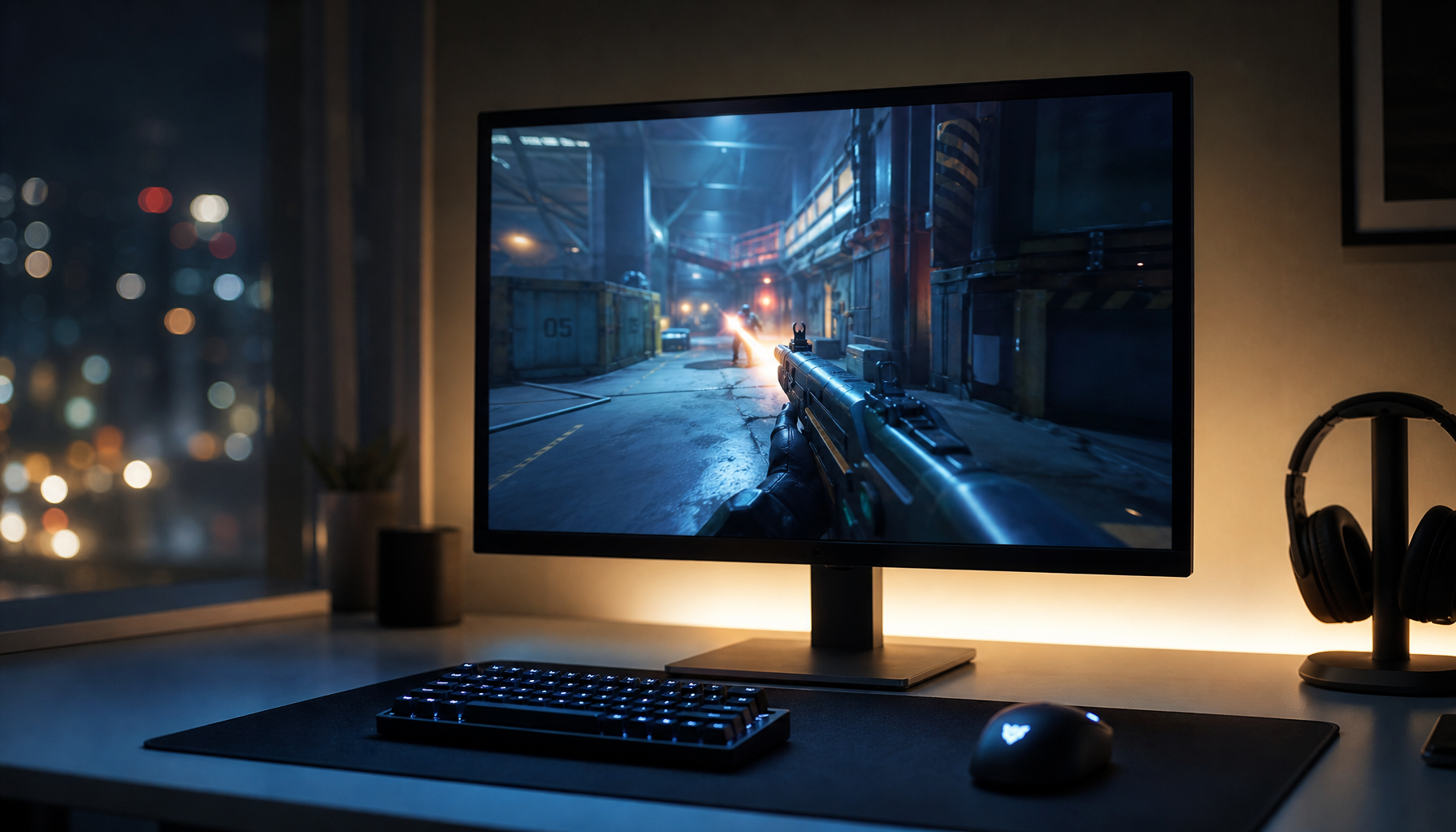
Where 2.1a can help is HDR gaming that feels inconsistent across titles or devices. Imagine a 27-inch 4K monitor connected to both a PS5-class console and a mini PC. The refresh side of the experience is still defined by 2.1 bandwidth and monitor support, but SBTM may reduce HDR calibration friction if both ends support it. That is useful, but it is not the same as a guaranteed picture-quality leap.
Competitive players should stay grounded. If you mainly play shooters at 1440p or 4K with VRR, the better purchase is usually the monitor with lower input lag, cleaner overdrive tuning, and proven HDMI 2.1 port behavior. The 2.1a badge alone is a weak reason to pay more.
Does it matter for office displays and portable smart screens?
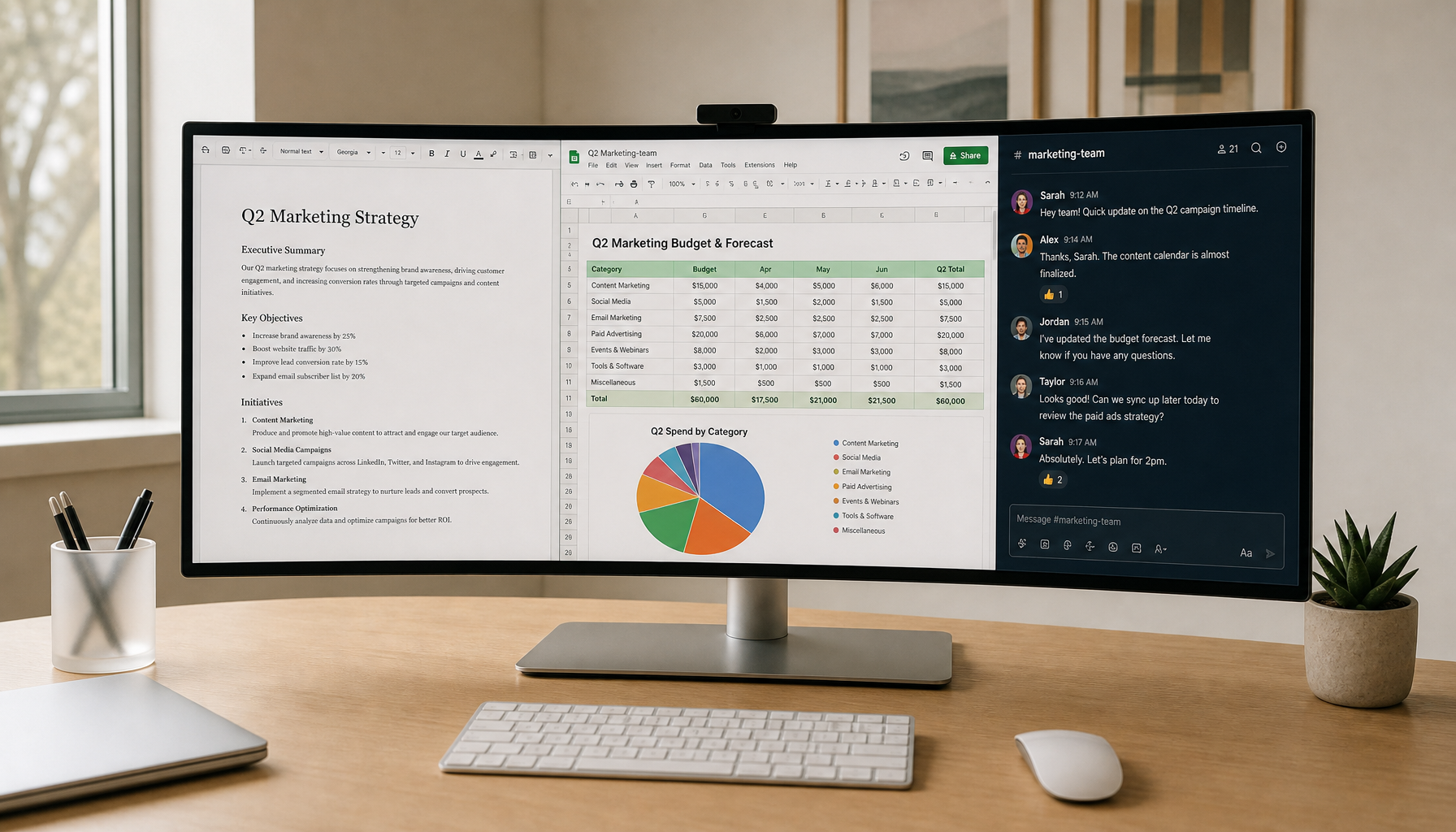
For office productivity displays, the answer is usually no. The real-world point that 4K at 60 Hz remains enough for many movie-focused setups also translates well to productivity: spreadsheets, documents, dashboards, and video calls do not need SBTM or 48 Gbps to feel good.
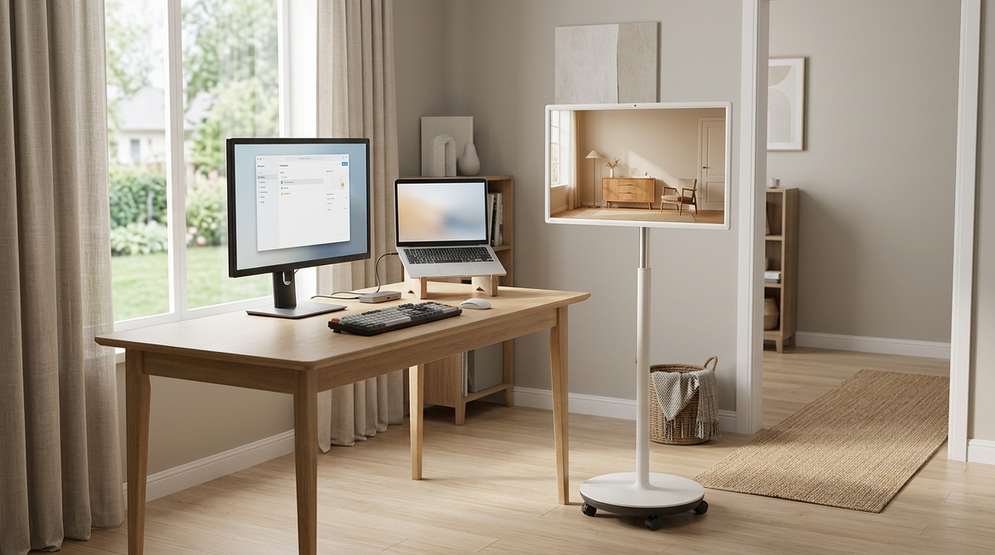
Portable smart screens sit in a more interesting middle ground. If you use one as a travel display for a console, streaming stick, and laptop, source-managed HDR can help because smaller panels often have tighter brightness limits. But if the screen tops out at 1080p or 4K at 60 Hz, then 2.1a is still not the buying priority. Panel quality, brightness consistency, speaker behavior, and power flexibility matter more.
A simple rule from real setup experience is this: if the screen is mostly for work, conferencing, or casual streaming, 2.1a is background noise. If it also serves as a serious HDR gaming display, it becomes a feature worth checking, but still not the first spec to chase.
The buying trap: version labels do not tell the whole story
the broader HDMI ecosystem shows how broad HDMI has become, and that scale creates a familiar problem: labels are easy, but actual implementation is messy. A port marked HDMI 2.1 or HDMI 2.1a does not guarantee every 2.1-era feature is present in full.
This is where many setup problems start. The 2.1a breakdown emphasizes link training, negotiated rates, and real signal limits across the whole path. In plain English, your console, GPU, dock, receiver, cable, and display all have to agree on the same mode. If one device supports only part of the feature set, the chain falls back.
The safest buying habit is to ignore the version badge until you confirm the actual features you need. For a gaming display, that means checking for 4K at 120 Hz support, VRR range, HDR format support, and whether the HDMI ports are full-bandwidth or limited. For an audio-focused setup, it means verifying eARC. For 2.1a specifically, it means confirming that SBTM is implemented on both the source and display sides.

Cable advice that actually affects results
cable certification guidance is more useful than most marketing copy because it keeps the decision practical. If you want the full HDMI 2.1 or 2.1a feature set, use a certified Ultra High Speed HDMI cable. There is no special mainstream HDMI 2.1a cable class you need to hunt down.
Shorter runs are usually safer for reliability, especially with high refresh rates and HDR. A 6 ft certified cable is often the cleanest answer for a desk monitor, console station, or portable display kit. If a setup works at 4K at 60 Hz but breaks at 4K at 120 Hz, the first suspect is often the cable or an intermediate device, not the display panel.
Should you upgrade?
If your current setup already delivers 4K at 120 Hz, VRR, and stable HDR, there is little reason to replace working HDMI 2.1 gear just to get 2.1a. The value-focused advice still holds: match the standard to the use case rather than paying for a spec bump you may never notice.
If you are buying new hardware and the price is close, choosing a display or source with 2.1a support is reasonable, especially for HDR gaming. Just keep expectations calibrated. The meaningful question is not “Is it 2.1a?” but “Does this exact setup support the modes and features I will actually use?”
HDMI 2.1a is a refinement, not a revolution. For performance-driven display buyers, that means the smarter move is to prioritize real port capability, cable certification, and proven HDR behavior, then treat SBTM as a worthwhile bonus rather than the main event.


%20for%20improved%20HDR,%20without%20increasing%20bandwidth.%20Get%20details%20on%20how%20this%20affects%20your%20gaming%20monitor%20or%20TV.
)