Value mini-LED vs premium brand tradeoffs come down to whether you are paying for better panel value or for smoother ownership. If you want HDR impact, bright-room practicality, and a cleaner price-to-performance story, Mini-LED is often the stronger functional choice. If your main concern is support confidence and low-friction service, premium branding can still justify the extra cost. For readers comparing a ktc monitor, the decision usually starts with how much panel performance matters relative to service comfort.
What Mini-LED Changes in Practice
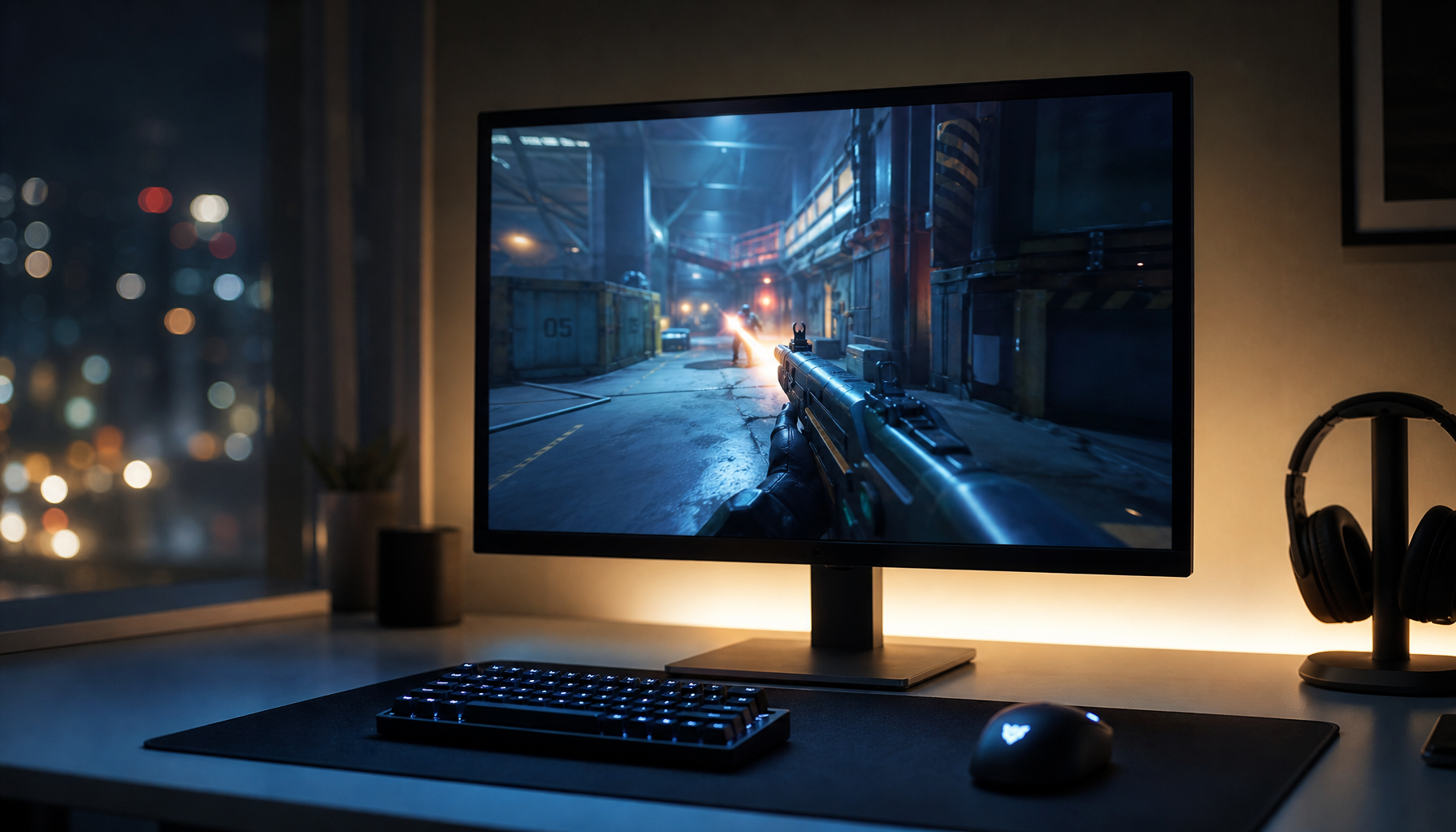
Mini-LED changes the buying conversation because it is not just "a brighter screen." In practice, the appeal is better separation between dark areas and bright highlights, which can make games and HDR content feel more layered. The comparison guide from Gamer Hardware's Mini-LED overview is useful here because it frames Mini-LED as a practical option for bright rooms, not just a spec-sheet upgrade.
For most buyers, that means value mini-LED vs premium brand tradeoffs start with use case, not logo. Bright-room gaming, mixed desktop use, and static UI-heavy work tend to make Mini-LED feel more useful than a tier label would suggest. That does not mean every Mini-LED monitor looks the same. Tuning, panel quality, and inputs still shape the result.
What Mini-LED does not solve is the rest of ownership. A strong backlight cannot fix weak firmware, awkward input behavior, or a stand that does not fit your desk. So the right question is not whether Mini-LED is better in the abstract. It is whether the panel gains matter more than the comfort of buying from a premium name.

Where Value Models Compete Well
Value models compete best when the buyer-visible basics are already strong: resolution, refresh rate, HDR class, stand flexibility, and connectivity. If those pieces match your setup, the brand premium has to prove it is buying you something more than familiarity.

| Purchase Factor | Where Value Mini-LED Often Competes Well | What Premium Branding May Add | Who Should Care Most |
|---|---|---|---|
| HDR impact | Stronger contrast behavior and bright highlights | More polished tuning out of the box | HDR gamers and streamers |
| Motion smoothness | High refresh rates can cover fast play without overspending | Sometimes better preset refinement | PC and console gamers |
| Color work | Wide-gamut panels can cover creative and mixed-use needs | More reassurance around calibration and support | Creators and hybrid users |
| Ergonomic flexibility | Full stands are increasingly common | Better accessory ecosystems in some cases | Desk users who adjust often |
| Connectivity | HDMI 2.1, USB-C, and DP can already cover many desks | Broader port bundles on some premium models | Multi-device buyers |
| Support reassurance | Straightforward return policies can narrow the gap | Advanced exchange and faster replacement expectations | Buyers who dislike downtime |
KTC's own vertical integration pricing story is relevant as context, because it explains how an OEM-direct model can reduce retail markup without changing the basic buying equation. If you are browsing a broader selection, the All-Mini-LED Monitors collection is the natural place to compare 4K clarity, 2K speed, and different HDR tiers side by side.
The key filter is simple: if the value model already covers your resolution, refresh, and stand needs, the premium option has to justify its extra cost through ownership comfort. If it does not, the price gap can feel like brand tax rather than a better fit.
Where Premium Brands Still Lead
Premium brands still make sense when the ownership experience matters as much as the panel. A monitor is not only a display; it is also firmware behavior, warranty handling, and how much hassle you expect if something goes wrong. XDA's look at monitor wake-time and firmware behavior is a good reminder that software polish can change how a monitor feels every day, even when panel specs look similar.
That matters most if downtime is expensive for you or if you are sensitive to setup friction. Premium-brand price is often paying for support logistics, faster replacement expectations, and a more familiar purchase path. Those are ownership benefits, not automatic proof of better picture quality.
Another reason people still pay more is confidence. If you do not want to think about panel variance, service response, or whether a monitor will feel "finished" on day one, premium branding can be rational. It is less about winning every spec and more about reducing regret.
KTC's factory-direct QA article, the panel lottery follow-up, helps explain why some value buyers feel comfortable taking that route anyway. It does not erase every ownership concern, but it shows why support and QA are now part of the real comparison, not just after-sales fine print.
Which KTC Model Fits Your Budget
KTC's Mini-LED lineup is easiest to judge by use case. The right model is not the "best" one in the abstract. It is the one that matches how you play, how sharp you want the image, and how much you care about HDR headroom versus motion speed.
The 27-inch 4K option, KTC Mini LED 27" 4K 160Hz HDR1400 Gaming Monitor | M27P6, is the premium KTC path for buyers who want sharper desktop text, console-friendly 4K, and a stronger HDR spec mix. Its listed facts include 1,152 local dimming zones, HDR1400 brightness, 160Hz refresh, and full ergonomic adjustment. That makes it a sensible fit when you want the more premium-feeling KTC option without moving into a different brand tier. It also sits in the Above $400 Monitors collection, which is the right bucket if you are comparing it against premium-brand pricing directly.
If you want the middle ground, KTC Mini LED 27" 180Hz 2K HDR1400 Gaming Monitor | M27T6 is the most balanced pick. It gives you 1440p resolution, 180Hz motion, HDR1400 brightness, and a fully adjustable stand. That is a strong fit for PC gamers who want Mini-LED contrast and fast motion without paying for 4K sharpness they may not use every day.
For speed-first buyers, KTC Mini LED 27" 200Hz 2K HDR1000 Gaming Monitor | M27T6S leans toward motion and value. Its Fast IPS panel, 200Hz refresh, and full stand make it better for players who care more about fluid play than HDR1400 branding. The tradeoff is simple: it is the more budget-conscious Mini-LED choice, not the most aggressive HDR spec in the group.
A practical way to read these three is this: M27P6 for 4K clarity, M27T6 for balanced HDR plus 1440p gaming, and M27T6S for faster 2K play at the lowest stretch. That is the cleanest way to judge value mini-LED vs premium brand tradeoffs inside one lineup.
How to Decide Without Overpaying
- Start with the main job. If you mostly play cinematic games, stream, or use a bright desk setup, Mini-LED usually gives you more visible value. If your top concern is ownership comfort, premium branding starts to look more rational.
- Decide whether 4K sharpness or 1440p speed matters more. That one choice eliminates a lot of wasted browsing.
- Match HDR to the way you actually use the screen. HDR1400 makes more sense when you care about strong highlights and darker scene separation. HDR1000 can still be a good fit if motion speed matters more.
- Judge the brand premium honestly. A useful rule of thumb from KTC's filter-based monitor shopping guide is that if an OEM-direct option is more than roughly 20% cheaper, the savings may be enough to absorb slower support or less polished software.
- Pick the model that leaves the fewest unresolved questions. If you want the broadest KTC Mini-LED path, compare the lineup in Gaming Monitor and verify inputs, return terms, and warranty details before checkout.
That threshold is a guideline, not a rule. If the price gap is smaller, premium-brand reassurance becomes easier to justify. If the gap is larger, value mini-LED vs premium brand tradeoffs usually tilt toward the cheaper model unless support friction would cost you real time or money.
FAQs
How Do I Know If a Value Mini-LED Monitor Is Enough?
It is usually enough when you want HDR impact, strong contrast, and fast gaming performance without paying extra for brand familiarity. If the panel specs and return policy already cover your needs, the premium tier has to offer something you will actually feel.
What Are Buyers Paying Extra for in Premium Monitor Brands?
Mostly ownership comfort. That can include more familiar support, faster replacement expectations, and a smoother software or wake-up experience. It does not automatically mean better image quality, so the extra cost should be tied to your risk tolerance.
Can Mini-LED Replace OLED for Mixed Gaming and Desk Use?
Often it can be a practical alternative, especially in bright rooms or when static UI elements stay on screen for long periods. The tradeoff is that different panel types still have different strengths, so it is better to compare use case than assume one universal replacement.
Why Does the Same Mini-LED Tier Cost So Differently Across Brands?
Price gaps can come from distribution, support structure, quality control, and brand markup, not just from the visible spec sheet. That is why two monitors with similar panel claims can feel very different at checkout.
Can a Lower-Priced KTC Mini-LED Be the Better Buy for Gaming?
Yes, when the model matches your resolution, refresh-rate, and stand needs, and you are comfortable checking the warranty and return terms first. In that case, the lower price can be the smarter buy rather than a compromise.
Final Takeaway
For most shoppers, value mini-LED vs premium brand tradeoffs come down to this: buy the panel that fits your room and games first, then pay extra only if support comfort is worth it to you. KTC's Mini-LED lineup makes the value case clearly enough that premium branding is no longer the default answer. If you are still undecided, compare the three KTC tiers, then check the return policy before you commit.