If you are comparing the best monitor for bright room OLED vs Mini-LED, start with the room, not the panel. In daylight-heavy desks, a Mini-LED monitor is usually the safer choice, OLED makes more sense when light is controlled, and IPS remains the practical baseline for office-first buyers.

Why Bright Rooms Change Monitor Choice
A bright room changes how a monitor feels before it changes how it measures. Window spill, overhead lighting, and screen reflections can make a display look flatter, less contrasty, and harder to read even when the spec sheet looks strong. That is why the best monitor for bright room OLED vs Mini-LED question starts with ambient light, not with refresh rate hype.
In real use, the problem is usually not one thing. It is a mix of glare, placement, and how long the screen stays visible during the day. If your desk sits near a window or under strong ceiling lights, you should check glare handling first and panel type second. If the room is easier to control, the panel trade-off shifts.
For a deeper look at how window light affects shadow detail, see why window light crushes detail. If you want the Mini-LED side of the bright-room question, this brightness guide explains the settings and placement factors that matter most.
How OLED, Mini-LED, and IPS Behave in Bright Rooms
Here is the quick bright-room fit check: Mini-LED is the safer choice when ambient light is the main concern, IPS is the practical office baseline, and OLED is more limited in daylight-heavy setups.
| Panel Type | Bright-Room Strengths | Bright-Room Trade-Offs | Best-Fit Room Conditions | Buyer Priority |
|---|---|---|---|---|
| Mini-LED | Stronger daylight readability, better HDR headroom, good mixed-use flexibility | Can still need setup care for reflections and desktop comfort | Bright window desks, mixed lighting, hybrid work and play | Keep visibility first, then look at HDR |
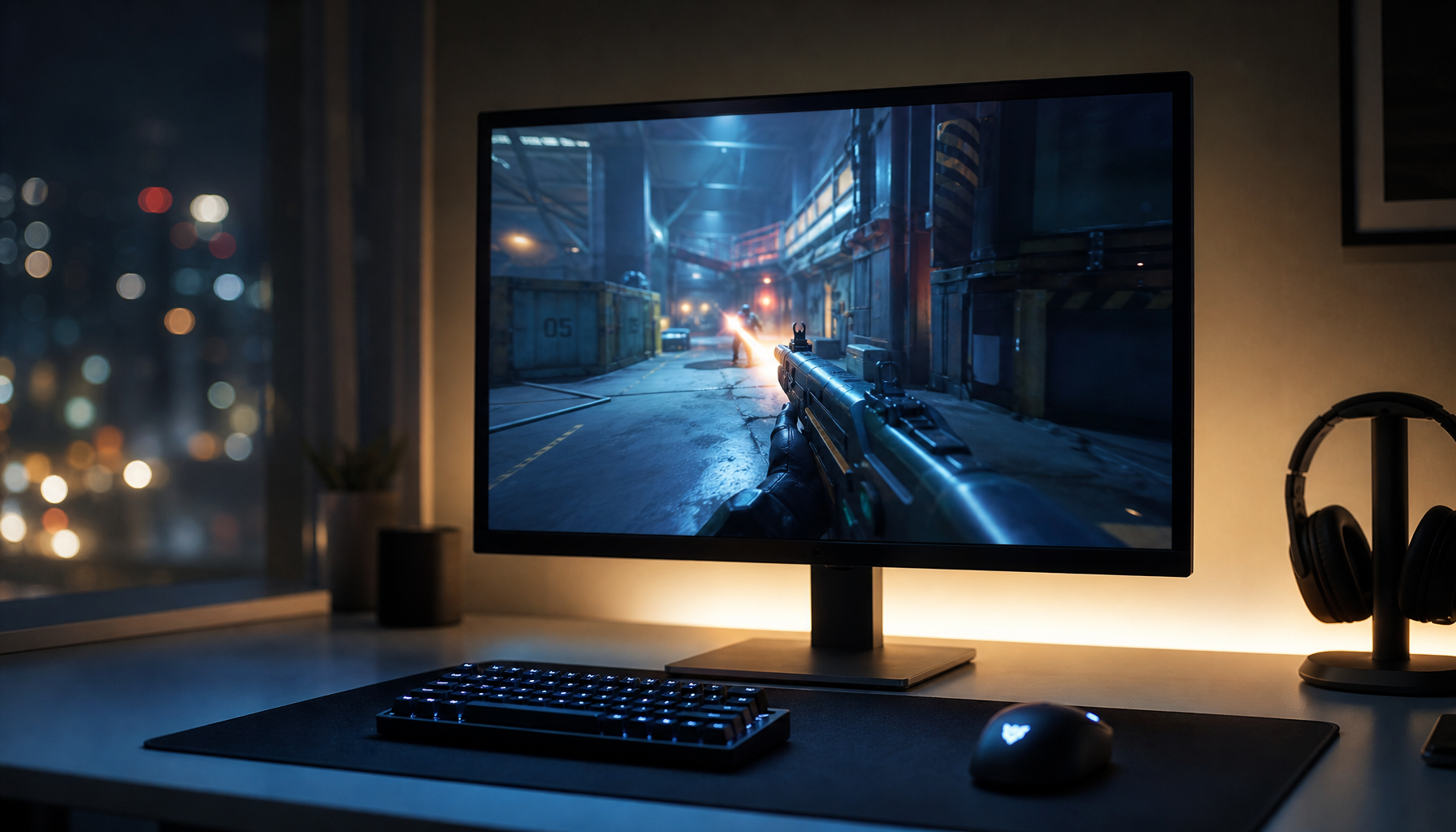
| OLED | Deep blacks, strong contrast, great dark-room image quality | Daylight can flatten the image and reflections are harder to ignore | Controllable rooms, night gaming, premium contrast focus | Choose it when light control is realistic |
| IPS | Familiar office clarity, wide viewing consistency, low-friction daily use | Less premium HDR punch and less contrast drama | Office desks, study setups, mixed budget buyers | Choose it for dependable readability |
Mini-LED is generally the brighter-room winner because sustained brightness helps it stay readable when the room is not ideal, and DisplayHDR 1400 is built around high peak brightness and local dimming. That does not make it automatically better for every desk, but it does make it easier to live with under daylight. For a broader side-by-side look, RTINGS’ Mini-LED vs OLED review also notes that Mini-LED monitors are generally better for bright rooms because they can get significantly brighter than OLEDs.
OLED can look excellent in controlled light, yet bright-room use can expose two frictions at once: reflections and ABL, which can make the image feel flatter when the room is bright. RTINGS’ OLED vs IPS overview makes a similar point about OLED being less suited to bright rooms than IPS. IPS sits in the middle as the familiar workhorse. It is usually the most predictable choice for office-heavy use, even if it is not the most dramatic HDR option.
If you want to compare category paths, browse Mini-LED options or OLED models without locking into a single product too early. For office-first setups, the Office Monitor collection is the easier baseline to sanity-check first.
OLED vs Mini-LED for Daylight Desks
For a bright desk, Mini-LED usually wins the first pass. That is the simplest rule for the best monitor for bright room OLED vs Mini-LED decision, and it holds best when the screen sits near a window or under strong room lighting. OLED becomes the stronger premium choice only when the room light is controlled enough that its contrast advantage can actually show up.
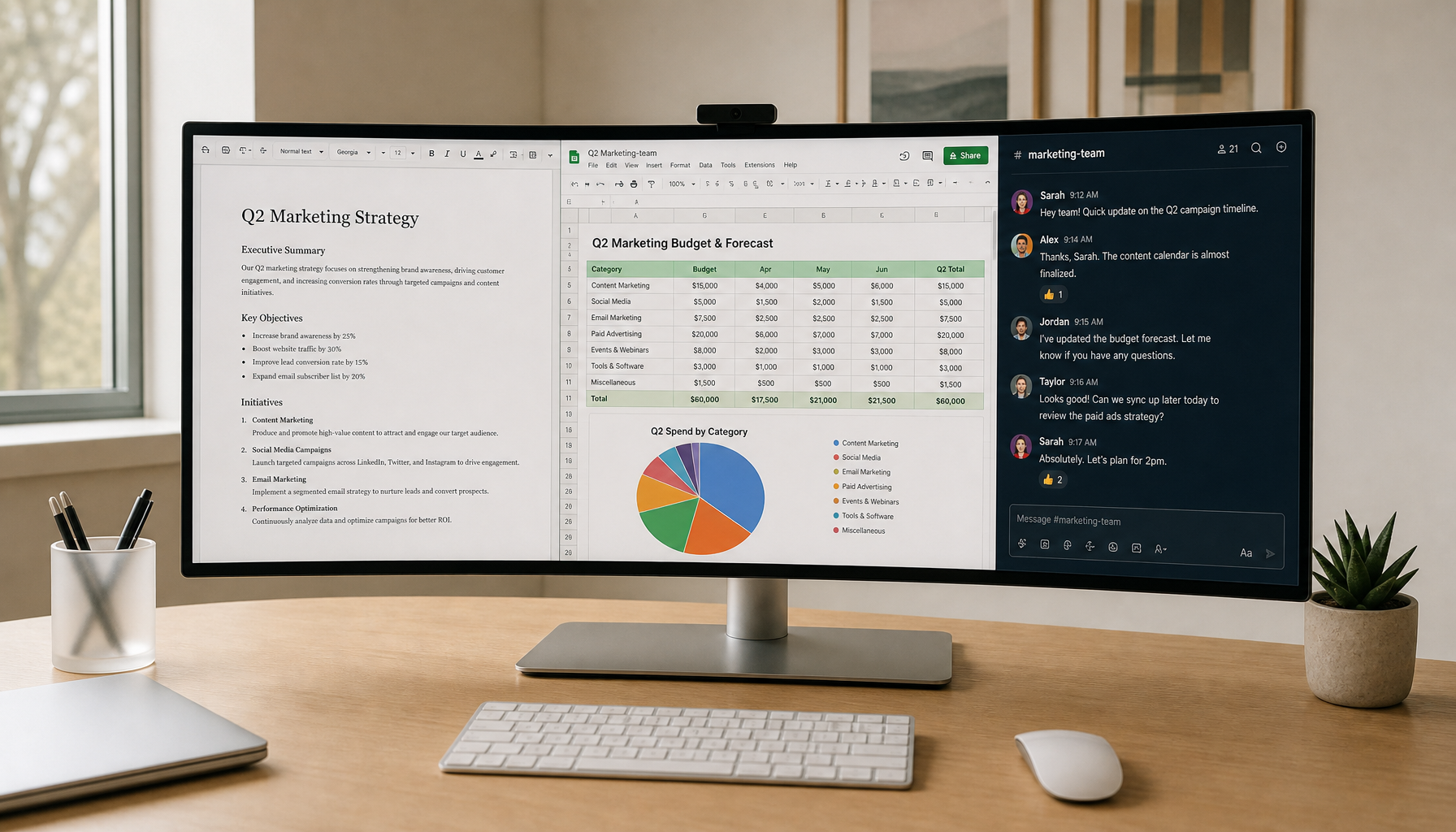
In mixed work-and-gaming setups, the real issue is not only image quality. Text work, spreadsheets, menus, and browser tabs ask for steady readability, while gaming asks for contrast, motion, and HDR impact. That is why many buyers regret picking a panel for one half of the day and ignoring the other half.
The practical caution with OLED is simple: if your desktop stays full of static UI, toolbars, or long work sessions, the trade-off gets less attractive. If you want a deeper mixed-desk walkthrough, the hybrid work and gaming guide is a useful next stop, and OLED burn-in prevention is worth reading before you commit.
For a concrete Mini-LED example, KTC M27P6 is the most straightforward bright-room fit in this group. It pairs Mini-LED backlighting with HDR1400, 1,152 dimming zones, 4K, and a fully adjustable stand, which makes it easy to position in a room where light control is not perfect.
If your room is brighter most of the day, that kind of setup is the safer path. If your room is controllable and gaming matters more than office endurance, the OLED G27P6 becomes more appealing. It gives you 240Hz, 0.03ms response, and USB-C, but it is still the model I would shortlist only after checking how much daylight hits the desk.
Mini-LED also has a balanced middle-ground option in M27T6S, which is easier to justify if you want strong bright-room behavior without stepping all the way to a 4K model. That is often the better compromise for mixed desks where the display has to do work, games, and everything in between.
Mixed Work and Gaming Trade-Offs
A mixed desk needs a screen that stays readable at noon and still feels rewarding at night. In that scenario, Mini-LED is usually the most practical premium path because it keeps more daylight flexibility than OLED while still giving you stronger HDR than a basic office panel. If you are comparing the Mini-LED monitor route against OLED for a shared desk, this is the trade-off that matters most.
OLED is still viable, but only when the room light is more controllable and the buyer cares more about contrast and motion than about having the easiest daytime work screen. If you spend most of the day in documents, email, or dashboards, the daylight penalty matters more than the dark-room upside.
Where IPS Fits If Budget Matters
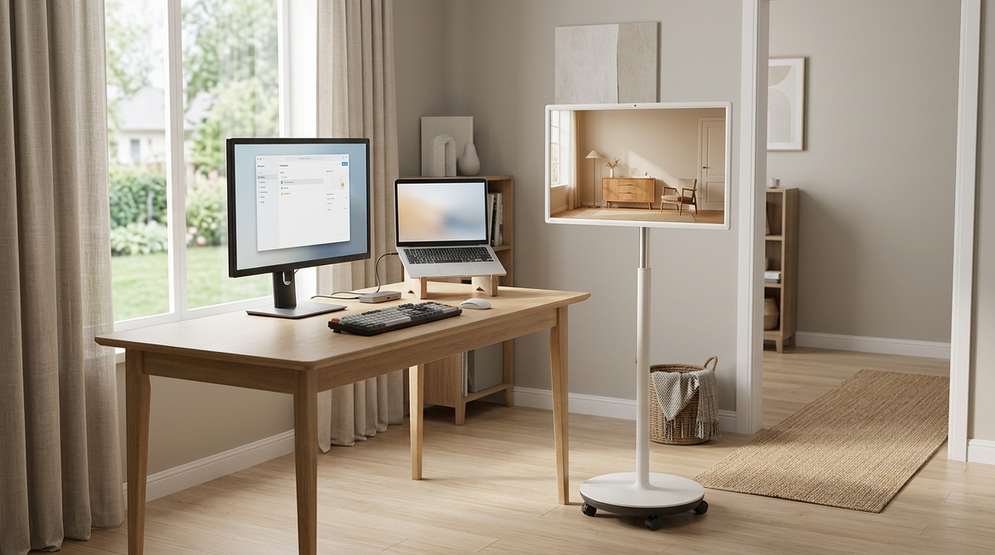
IPS is the sensible fallback when the buyer wants predictable office visibility more than premium contrast. It is not the most dramatic choice, but it is often the least stressful one for a bright home office.
For readers who want a low-risk office baseline, a model like H27T27 can make more sense than chasing OLED specs that will not be fully visible in the room. If you want a larger fixed office canvas, H27P27 is another straightforward office-first reference point.
Which Panel Fits Your Room and Workflow
Use the room condition that dominates most of the day. If the desk is bright most of the time, the answer usually starts with Mini-LED. If the room is easier to darken and the screen is mainly for gaming, OLED moves up. If the main goal is office comfort with fewer surprises, IPS stays relevant.
Bright Window Desk
For a desk near a window, prioritize glare handling and usable brightness before you chase contrast numbers. Mini-LED is usually the first family to check because it is more forgiving when sunlight or window spill raises the black floor. IPS is the backup if you want simpler office use. OLED only belongs here if you can control the light well enough that reflections are not the main problem. That is also why a Mini-LED monitor is often the cleaner starting point for bright window setups.
Overhead-Lit Home Office
If your room is lit mostly by lamps or ceiling fixtures, the choice depends on what the desk does. For documents, email, and spreadsheets, IPS often remains the easiest answer. For a hybrid desk that also gets serious gaming time, Mini-LED is the smarter upgrade because it adds HDR flexibility without pushing you into OLED's daylight trade-offs.
Mixed Work and Gaming Setup
This is the hardest case because one screen has to do two jobs. If the room is bright during work hours, Mini-LED is usually the cleanest compromise. If the room is controllable and gaming is the real priority, OLED becomes more attractive. The wrong move here is buying for only one use and then living with the other one every day.
Lower-Light Room With Premium Priorities
OLED is most convincing when the room is dark enough that its contrast can stand out. In that setting, the panel's strengths feel obvious: deep blacks, strong motion clarity, and an image that looks more dramatic in games and video. That is the scenario where the best monitor for bright room OLED vs Mini-LED question can flip.
If you want a premium Mini-LED reference for this middle ground, M27P6 is the more room-friendly choice, while G27P6 is the more contrast-focused one. The right answer depends on which condition you actually live with most of the day. A Mini-LED monitor is still the safer premium pick if the room changes from morning to evening.

Final Bright-Room Buying Checklist
- Check whether the monitor will sit near a window, under ceiling lights, or in a room you can darken.
- Decide whether your desk is mostly office work, mostly gaming, or a true hybrid setup.
- Favor Mini-LED if daylight is common and you want the safer all-around bright-room path.
- Favor OLED only if you can control reflections and you care more about dark-room contrast than daytime comfort.
- Use IPS when the priority is dependable office readability and lower decision risk.
- Make sure the stand or mount lets you angle the screen to reduce glare.
If you want the shortest version: Mini-LED is usually the better bright-room pick, OLED is the premium dark-room pick, and IPS is the practical work-first pick. That is the simplest way to shop the best monitor for bright room OLED vs Mini-LED question without getting pulled into spec-sheet noise.
FAQs
Is OLED or Mini-LED Better for a Bright Room?
Mini-LED is usually the safer choice when daylight or overhead lighting is a daily reality. OLED becomes more attractive when the room is easier to control and you want the strongest contrast and gaming image quality.
Does Glare Matter More Than Panel Type?
Often, yes. A monitor that sits in the wrong spot can feel worse than a lesser panel in a better location. If the screen catches window reflections directly, placement and angle can change the experience more than a spec upgrade.
Can IPS Still Make Sense for a Bright Office Desk?
Yes. IPS is often the easiest value choice for office-heavy desks because it gives you steady readability and familiar behavior without asking you to pay for HDR features you may not notice during work.
Why Do OLED Screens Feel Different in Daylight?
OLED can look outstanding in darker rooms, but bright room light can make its advantage less obvious. Reflections and brightness limiting can make the picture feel less punchy during the day, especially on mixed desks.
What Should I Check Before Buying for a Window-Side Desk?
Check the monitor's position relative to the window, whether the stand lets you tilt or swivel it, and how often you will work in full daylight. If the room is bright most of the time, Mini-LED or IPS is usually the safer starting point.
Bright-Room Bottom Line
Mini-LED is the most forgiving choice for daytime desks, OLED is the better contrast-first pick for controlled rooms, and IPS remains the practical office fallback. If you want a more focused bright-room path, start with the Mini-LED collection and compare it against OLED only after you know how much light hits your desk.