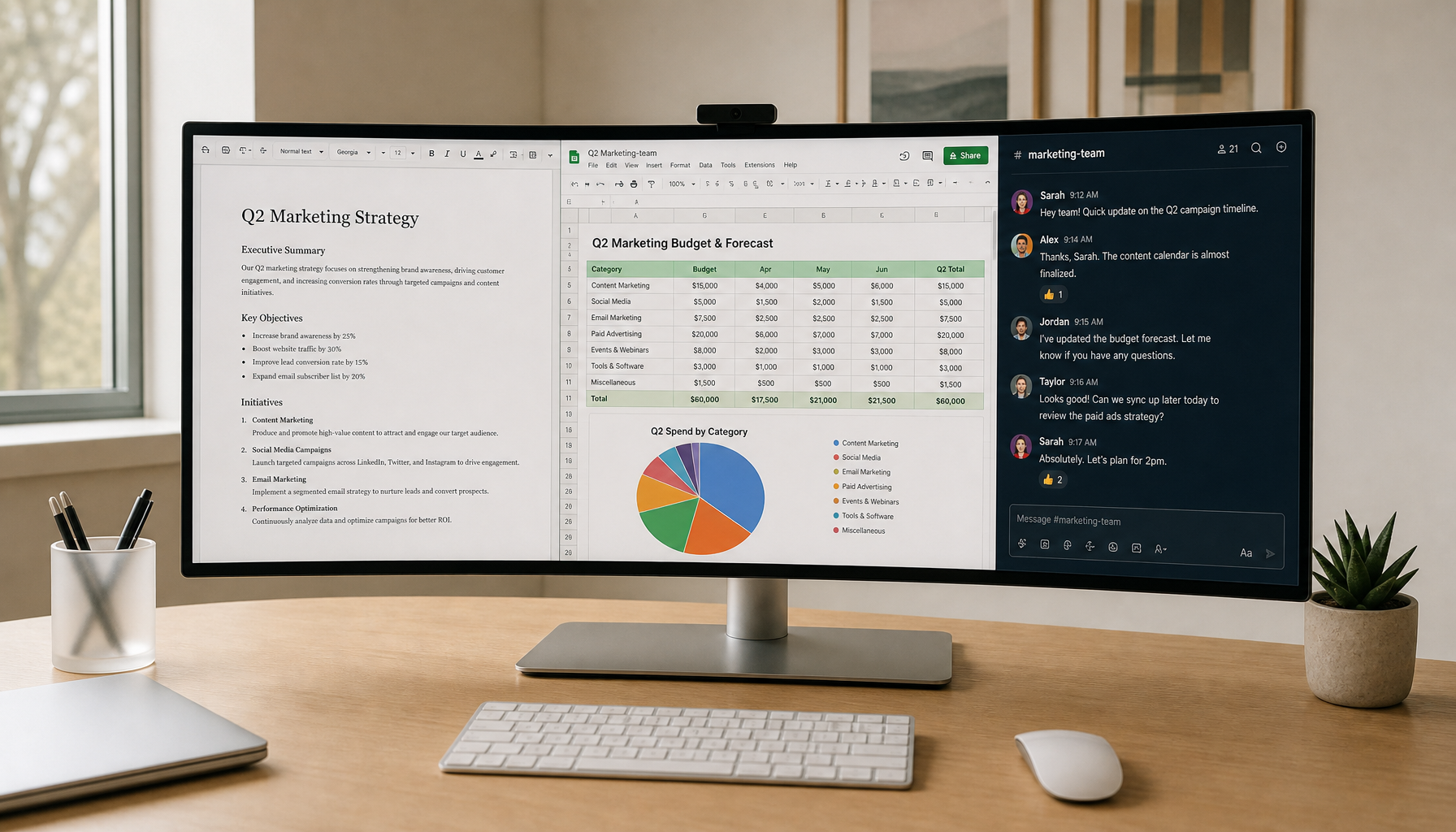
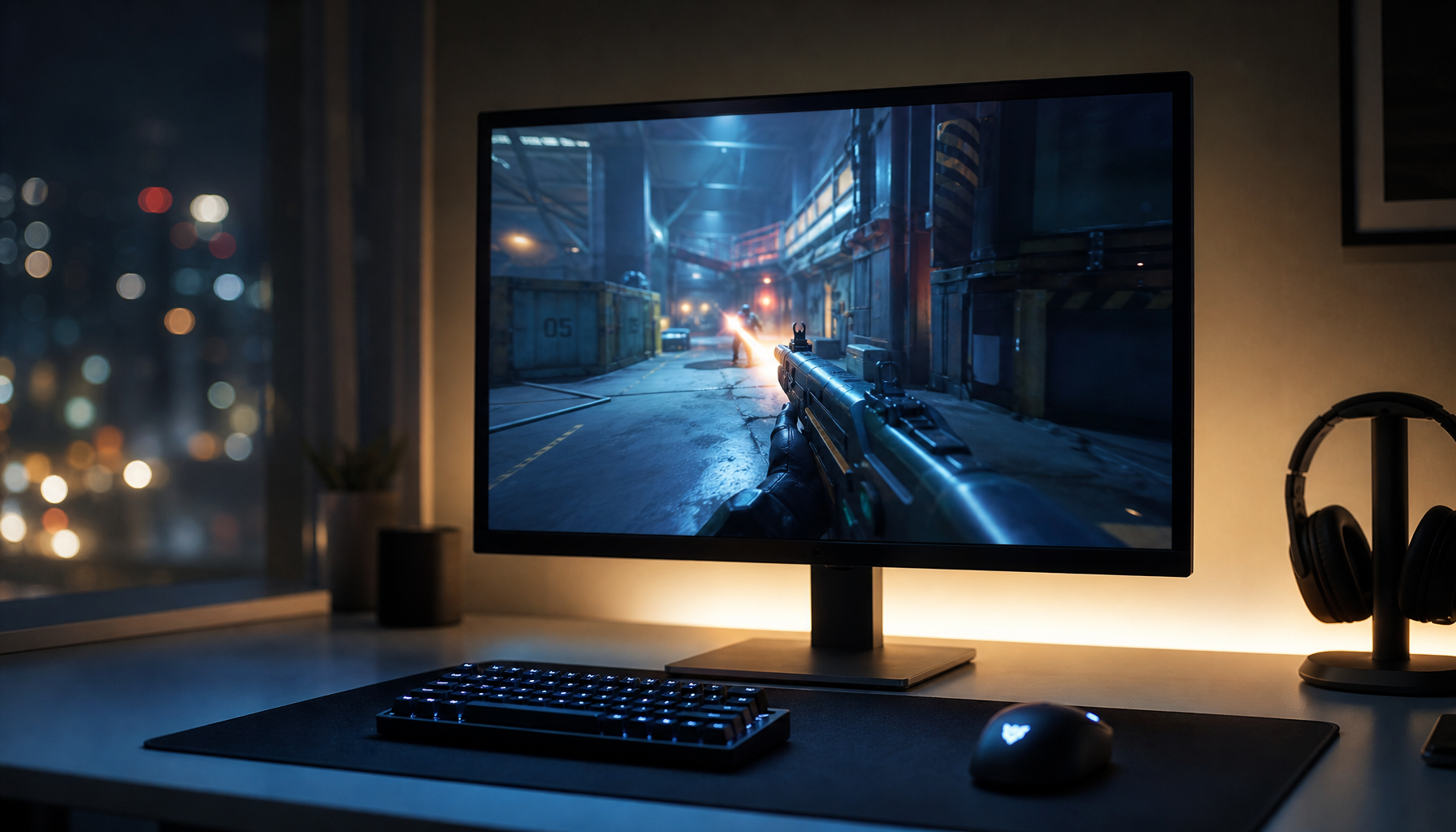
A value Mini-LED monitor is often enough if you want strong brightness, local dimming, and HDR impact without paying for premium-brand refinement. Premium Mini-LED makes more sense when you care about tuning polish, support confidence, or a higher-resolution step-up, but it is not an automatic win in every scene.
Value vs. Premium: The Buyer Decision
The real choice is not "good" versus "bad." It is whether you want the lower upfront cost of a value-oriented Mini-LED lineup or you want to pay more for a little extra refinement, support, and feature depth.
For gaming, console play, and mixed desk use, that distinction matters more than brand reputation alone. A value Mini-LED monitor can deliver the bright HDR punch most shoppers want, while a premium model may feel more polished in how it handles dimming, setup, and support.
What usually flips the decision is your room and your expectations. In bright rooms, a value Mini-LED can be a strong fit if you mainly want impact and visibility. In darker rooms, or if you are sensitive to halos, firmware behavior, or long ownership, premium may feel worth the stretch.
One useful rule: if you are buying for impact per dollar, start with value Mini-LED. If you are buying for refinement per dollar, compare premium Mini-LED more carefully.
Where Value Mini-LED Cuts and Where It Does Not
Mini-LED is most compelling when it gives you high brightness and local dimming without pushing the price into premium territory. The catch is that the difference between a decent value model and a premium model is often less about the backlight itself and more about how the whole monitor is tuned.
Panel technology and blooming control matter here. A higher-contrast HVA panel can hide halos more effectively than an IPS panel in some dark scenes, even before you count zone behavior. That is why raw zone count is helpful, but not enough by itself.
Panel Consistency and Uniformity
This is where value buyers usually feel the most uncertainty. The concern is not just whether the monitor looks good out of the box. It is whether the panel looks even across the screen, stays free of obvious defects, and ages in a way you can live with.
A smart arrival check is part of value buying, not a sign that the category is bad. Use a panel consistency checklist to look for dead pixels, uneven backlight behavior, and obvious uniformity issues while you are still inside the return window.
HDR and Local Dimming Behavior
Mini-LED's biggest upside is still the same: better contrast and stronger HDR highlights than a basic monitor. But the result depends on more than the number on the box. The dimming algorithm determines how well the monitor avoids haloing, crushed shadows, or distracting flicker around bright objects.
That is why a premium model may feel more refined even when the headline brightness looks similar. It is also why a lower-priced model can still look very good if the panel type and dimming behavior are well matched to the content.
How dimming zones behave is the part buyers tend to underestimate. More zones can help, but the tuning behind them often decides whether the picture feels clean or merely bright.
If you want a deeper look at how zone counts affect real-world HDR, this mini-LED dimming zones guide is a useful follow-up.
Longevity, Heat, and Ownership Wear
Long-term value is not only about the display surface. Heat and usage patterns also matter because backlight wear and uniformity drift can build slowly over time, especially if you run high brightness often. A backlight lifespan overview explains why heavy use can shorten the comfort margin even if the monitor still works fine.
That does not mean a value Mini-LED is fragile. It means high brightness has a physical cost, and premium models may buy you more margin in tuning, support, or confidence rather than a guaranteed lifespan jump.
Support terms matter here too. Warranty, shipping, and return policy are part of ownership value, not just the panel spec sheet. Premium Mini-LED refinement often shows up in better firmware polish and more controlled dimming behavior after launch, but that should be treated as a tendency, not a promise.

Mini-LED Specs That Matter Most
This is the simplest way to compare value and premium models without getting lost in marketing language. Use the table as a checklist for what usually changes the experience and what you should verify before checkout.
| Buying factor | Why it matters in real use | Usually easy to verify? | What it means for the value vs premium choice |
|---|---|---|---|
| Local dimming zones | More zones can help control HDR contrast and blooming | Yes | Helpful, but not decisive on its own |
| HDR peak brightness | Affects how bright highlights can look | Yes | Useful for impact, but not the same as sustained brightness |
| Panel type | Changes how halos, contrast, and dark scenes behave | Yes | Can matter as much as zone count |
| Refresh rate | Helps motion feel smoother in games | Yes | Buy for the frame rates you actually use |
| Color coverage | Matters more for creators and color-sensitive work | Yes | Premium may help, but value can still be enough |
| Ergonomics | Affects comfort for daily desk use | Yes | Often a better deal than chasing extra nits |
| Warranty and support | Reduces ownership risk | Usually yes | One of the clearest reasons to stretch |
| Return policy | Protects you against panel lottery disappointment | Yes | Important for value buys especially |
If you are comparing options in the gaming monitor category, do not let one spec carry the whole decision. A better stand or clearer return policy can matter more than a small spec bump, especially if the screen will sit on your desk every day.
For budget thresholds, the above $400 monitors category is the natural place to compare premium Mini-LED against other upper-tier options. That is useful when you want to see whether the extra spend buys a real upgrade or just a different feature mix.
If you want to understand how brightness, local dimming, and HDR fit together before you choose, the Mini-LED buying guide is a useful background read.

How the Current KTC Lineup Fits Different Buyers
The current lineup is easiest to judge by use case, not by prestige. If you want the value starting point, KTC M27T6 is the cleaner 1440p choice for buyers who want local dimming, HDR1400 brightness, and a 27-inch desk footprint without moving to 4K pricing. Its HVA panel and 180Hz refresh make it a sensible fit for bright-room gaming and mixed use.
If you want a faster QHD option, KTC M27T6S leans toward speed and color breadth. The 200Hz class refresh, Fast IPS panel, and factory-calibrated color make it better for buyers who split time between gaming and creator tasks. It is not automatically a better long-term buy, but it is a stronger fit when motion smoothness and color work both matter.
The premium step-up is KTC M27P6. It adds 4K resolution, 160Hz refresh, HDMI 2.1, DisplayPort 1.4, USB-C with 65W power delivery, and a fully adjustable stand. That combination makes sense for console players, high-end PC users, and mixed work buyers who want sharper text and more flexibility at the desk.
The ownership terms are part of the value story too. These models are sold with a 3-year warranty and 30-day returns, which helps reduce the risk of a Mini-LED purchase where panel fit can matter as much as specs. For a lower-priced model, that safety net is especially useful.
If you are still comparing displays for mixed use, the broader gaming display range can help you separate Mini-LED priorities from plain refresh-rate shopping.
For a closer look at one of the common ownership questions, this backlight uniformity guide explains why heat and high brightness can slowly affect how a screen ages.
In plain terms, the value Mini-LED monitor is the better starting point if you mostly want HDR impact at a sane price. The premium model is the better starting point if you know you will use the higher resolution, need the more flexible input mix, or care enough about the step-up to pay for it.
A Simple Way to Decide Before You Buy
- Decide where you will use it most. Bright rooms and mixed gaming usually favor value Mini-LED. Dark-room precision and support-sensitive buyers may justify premium.
- Check the panel type and refresh rate. If your games or work do not benefit from the higher-end mode, do not pay for it.
- Verify the return policy, warranty, and shipping timing before checkout. Those details matter more on a Mini-LED purchase than on a basic office monitor.
- Inspect the monitor as soon as it arrives. Look for uniformity, dead pixels, and obvious backlight problems while you can still return it.
- Pay attention to heat and brightness habits. High brightness is useful, but the monitor's long-term behavior depends on how hard you run it.
The short version is this: choose value Mini-LED unless you can name the premium feature that will actually change your day-to-day use. If you can name it clearly, premium may be worth it. If not, the cheaper model usually protects your budget better.
FAQs
How Do I Know If a Value Mini-LED Monitor Is Enough?
It is usually enough when you want bright HDR, local dimming, and good gaming motion without paying for extra resolution or brand polish. If your use is mostly gaming, console play, or mixed desk work, a value Mini-LED monitor often clears the bar as long as the return policy and panel quality are acceptable.
What Tradeoffs Matter Most Between Value and Premium Mini-LED?
Panel consistency, local dimming behavior, warranty/support, and the quality of the stand or feature set matter more than brand status. Premium is more defensible when you want refinement. Value is more attractive when you mainly want the Mini-LED effect at a lower price.
Why Do Some Lower-Priced Mini-LED Monitors Still Look Great?
Because Mini-LED can deliver strong contrast and bright highlights even when the model is not premium. The real difference is often tuning and execution. A well-matched panel and a decent dimming algorithm can look impressive even at a lower price tier.
Can a Premium Mini-LED Monitor Be Worth the Extra Money?
Yes, if you will use the higher resolution, better connectivity, or more controlled HDR behavior. It is easiest to justify when your room is demanding, your work is mixed with gaming, or you are sensitive to blooming and want more refinement from the start.
How Should I Judge Long-Term Value Before Buying?
Look at warranty, return policy, shipping speed, and your own usage pattern, not just peak brightness. Long-term value is mostly about how well the monitor matches your desk, your lighting, and your tolerance for panel variation.
Final Takeaway
Value Mini-LED wins when you want the Mini-LED effect without overpaying for refinement you may never notice. Premium Mini-LED wins when you know you will use the extra resolution, tuning, or support confidence. If you want a practical rule, buy the cheaper model unless you can point to a specific premium feature that changes how you will use the screen.