

Apps usually reopen on the monitor where their last window position was saved, but that memory can break after a restart, cable change, driver reset, or display-order shift. The fix is to make your system, graphics settings, and each app agree on which screen is primary, where it sits, and what layout should be restored.
The System Is Restoring the Last Known Window Position
Many apps remember their previous size and screen location. If you closed a browser, launcher, editor, or game on your side display, your system may try to bring it back there after reboot.
That behavior gets messy when a monitor wakes late, a dock reconnects slowly, or the system temporarily sees only one screen. In multi-monitor setups, apps can also reopen based on saved geometry rather than where your mouse or focus currently is, a pattern seen across desktop environments in dual-monitor window placement.
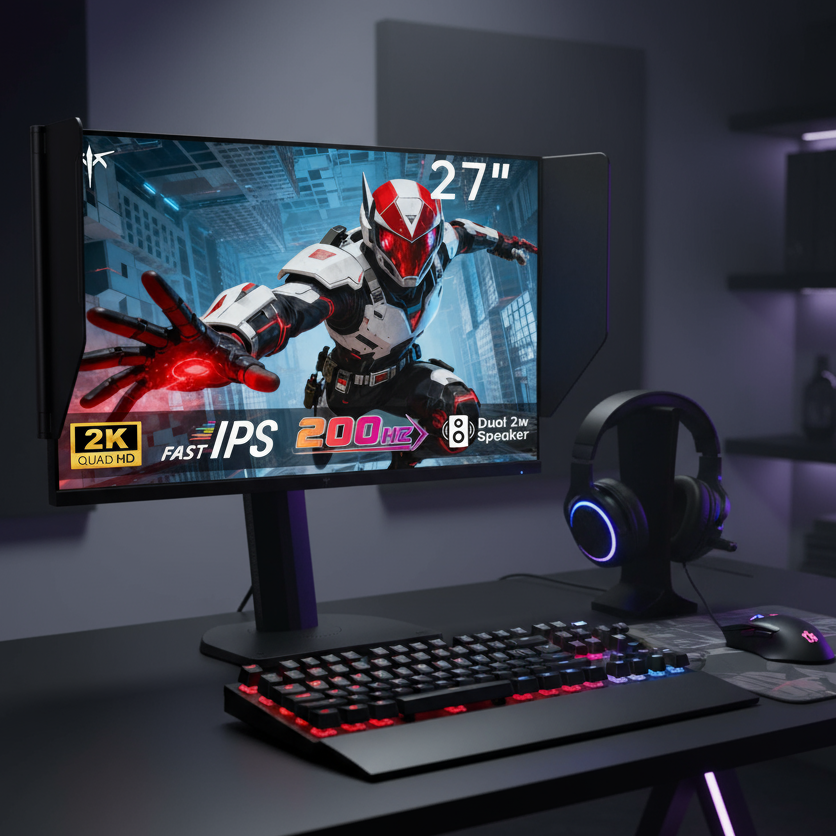
For a performance desk, this matters. Your 27-inch QHD gaming panel should not steal your email app every morning, and your portable smart screen should not become the default home for full-screen apps just because it connected first.
Your Primary Display or Layout Changed
The most common system-side cause is a changed primary monitor. If your preferred screen is not set as the main display, apps, taskbar behavior, games, and launchers may favor the wrong panel.
Open Settings > System > Display, select your preferred monitor, then enable Make this my main display. Use Identify and drag the display boxes so they match your real desk layout; a wrong left/right order can make windows feel like they are jumping unpredictably.

Also confirm you are using Extend mode, not Duplicate mode. For productivity and color-sensitive work, extended desktops give each display its own role, while duplicated displays can waste workspace and complicate calibration, especially in dual-screen workflows.
Quick Fixes That Usually Work
Start with the low-friction resets before touching drivers. These steps solve most wrong-monitor-after-restart cases without adding software.
- Move the app to the correct monitor, close it there, then reopen it.
- Press Windows + Shift + Left/Right Arrow to move the active window.
- Set the preferred monitor as primary in Display settings.
- Disconnect the secondary monitor, restart, then reconnect it.
- For games, choose the target display inside the game’s video settings.

Some apps need a stronger nudge. One practical method is to close all instances, open the app, move it to the desired display, press Windows + Shift + Enter, close it, and reopen it; this can influence an app’s default opening monitor.
When It Is a Driver, Cable, or Dock Problem
If windows move around after every reboot, look beyond app memory. A loose HDMI cable, flaky adapter, slow USB-C dock, or driver update can make your system rediscover monitors in a different order.

Check that each screen is set to its native resolution and refresh rate. A 144 Hz gaming monitor paired with a 60 Hz office display is fine, but each panel should run at its own supported spec; mismatched settings can cause blur, stutter, or odd behavior in multi-monitor problems.
Use DisplayPort or direct USB-C where possible for high-refresh gaming monitors. Low-grade adapters can be the weak link, especially with 1440p, 4K, high refresh rates, or laptop docking stations.
Build a More Reliable Multi-Screen Layout
For a stable setup, assign each monitor a job. Put your fastest panel as the primary gaming screen, your most color-accurate display for creative work, and your portable screen for chat, notes, dashboards, or reference windows.
If you launch the same app stack every day, layout tools can help. Custom snap areas and saved multi-app layouts reduce the need to manually rebuild your desktop after every restart; this is especially useful for multiple monitors.
Some programs ignore system placement rules and use their own launch logic, so the best fix may be inside the app’s settings rather than the display settings.