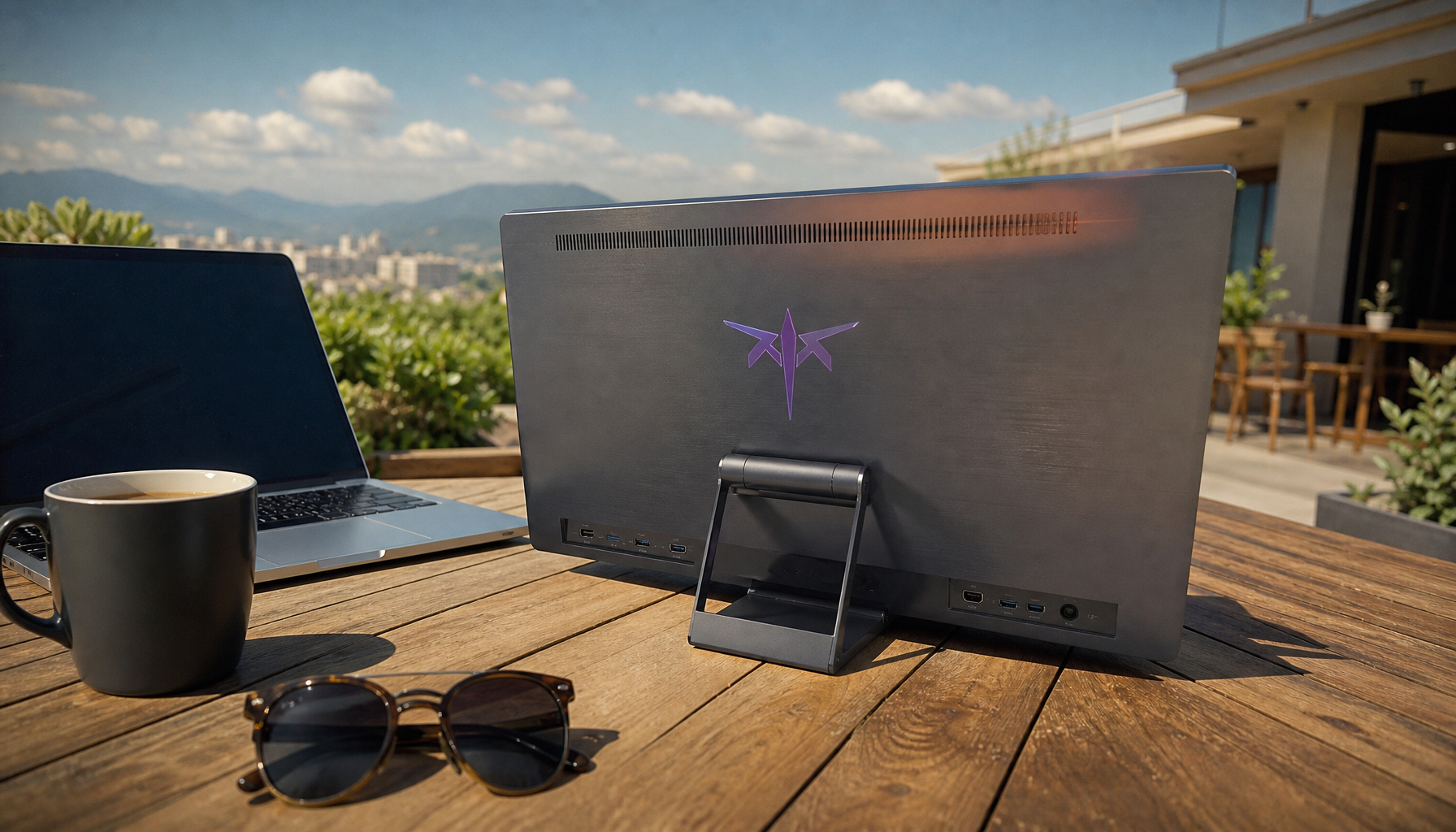
Console digital video/audio output can reach a gaming monitor, but object-based surround audio usually will not come out of the monitor’s speakers or headphone jack. For immersive audio, route the console to an object-based-surround-capable soundbar, AV receiver, or headset path instead of relying on the monitor as the audio endpoint.
You plug a console into a fast 4K gaming monitor, the picture looks sharp, and then the audio is missing, delayed, or stuck in basic stereo. In real desk setups, the difference between a direct monitor audio path and an external audio chain can mean anything from clean sync to drift of 300 ms after about 1.5 minutes. Here is how to decide whether your monitor can pass, decode, or quietly limit console digital audio before you spend money on the wrong cable, soundbar, or display.
Digital Audio on Gaming Monitors Is Not the Same as Object-Based Surround Support
Most gaming monitors can accept audio over a digital video/audio connection because that connection carries video and audio together. That does not mean the monitor can decode object-based surround audio, and it does not mean the headphone jack can output anything beyond stereo analog audio. A monitor’s digital video/audio spec is often marketed around resolution, refresh rate, HDR, VRR, and input lag; its audio section may be limited to “speaker,” “headphone out,” or “audio out,” which is not enough to confirm immersive audio support.
A useful real-world example is a console-to-monitor desk setup where a console was connected to a 27-inch gaming monitor by a digital video/audio connection, while a computer used a separate video connection. The intended path was console digital audio into the monitor, monitor line-out into the computer line-in, and then headphones from the computer; the monitor had no built-in speakers, and its line-out was the only audio output. In that case, the computer audio could return through the monitor line-out, but the console audio did not play through the same port, even with headphones plugged directly into it, showing that monitor line-out behavior can vary by input source and internal routing.
Pass, Decode, and Output Are Different Jobs

A gaming monitor may do one, two, or none of these audio jobs:
- Accept digital audio from the console.
- Decode the audio into sound through built-in speakers.
- Convert audio to stereo analog through a 3.5 mm headphone jack.
- Pass audio onward to another device through a return-audio channel, optical, or another digital video/audio route.
Object-based surround audio is not just “better stereo.” It requires a compatible source, a compatible transport path, and a compatible endpoint. If the endpoint is a basic monitor speaker system or a 3.5 mm headphone jack, the realistic expectation is stereo output, not object-based surround.
Why the Monitor’s Headphone Jack Is Usually the Limit

A 3.5 mm monitor output is analog stereo. It can be useful for plugging in desktop speakers or wired headphones, but it cannot carry object-based surround metadata to a soundbar or AV receiver. If your goal is positional audio through a surround speaker setup, treat the monitor’s headphone output as a convenience feature, not as an immersive-audio connection.
For buyers comparing gaming monitors, this matters more than it looks on a spec sheet. A 32-inch 4K 144 Hz monitor may be excellent for console video, but its audio hardware can still be simpler than a midrange TV. That tradeoff appears often when players compare a TV and a gaming monitor for console use, such as a 43-inch 4K TV versus a 32-inch 4K gaming monitor for console and computer gaming, where the monitor versus television decision is really about the whole video and audio chain, not just screen size.
What Actually Determines Object-Based Surround Audio Support?
The audio endpoint determines object-based surround support more than the monitor does. If the final device playing sound is a compatible AV receiver, soundbar, or headset system, the setup can support immersive audio. If the final device is the monitor’s small speakers or headphone jack, it usually cannot.
For a console gaming monitor setup, the strongest rule is simple: send immersive audio directly to the device that can decode it. That usually means console digital video/audio output to an AV receiver or soundbar first, then video out to the monitor, or console digital video/audio output to the monitor for video while using a separate console-supported headset or audio output path. The best option depends on whether your audio device can preserve the same video features you bought the monitor for, including 4K, 120 Hz, HDR, VRR, and low input lag.

Newer Digital Video/Audio Connections Help Video, but They Do Not Guarantee Immersive Audio
A newer digital video/audio connection on a gaming monitor is mainly a video buying signal: 4K at high refresh rates, VRR, and other bandwidth-sensitive features. It does not automatically mean the monitor can decode object-based surround audio, and it does not automatically mean the monitor can pass those formats to another device. A monitor can have excellent high-bandwidth video support and still offer only stereo speakers or a stereo headphone jack.
The important questions are more specific: Does the monitor have a high-bandwidth return-audio channel? Does the soundbar or receiver support 4K 120 Hz passthrough? Does the console support the selected audio format for the game or app you are using? Does the monitor’s audio menu mention bitstream passthrough, or only volume and mute?
Return-Audio Channels Matter for Soundbars
Return-audio channels are display-to-audio-device return paths. On TVs, they are common. On gaming monitors, they are much less common. Without a high-bandwidth return-audio channel, a monitor is often a poor hub for a console plus soundbar setup because it may not be able to send high-bandwidth audio formats back to the soundbar.
If your monitor lacks a high-bandwidth return-audio channel, do not assume “digital audio out” exists just because the console sound enters the monitor over a digital video/audio connection. Many gaming monitors are designed as video endpoints first. Their audio features are often meant for basic speakers, desktop headphones, or temporary troubleshooting, not full home-theater routing.
Best Console Audio Routing Options for Gaming Monitors
The best path depends on what you are trying to preserve: refresh rate, VRR, HDR, low latency, surround speakers, or a simple desk setup. A clean audio chain also helps prevent sync problems. Console AV sync troubleshooting often starts with one digital video/audio cable from the console directly to the display, then adds devices one at a time because external devices can add delay.
For a high-refresh-rate monitor, the risk is that an older soundbar, digital switch, or AV receiver may cap the video signal. For example, a console and monitor may both support 4K at 120 Hz, but a middle device may only pass 4K at 60 Hz or may drop VRR. In that case, routing audio through the monitor may keep the picture fast but limit audio; routing video through the receiver may improve audio but reduce display features.
Setup |
Object-Based Surround Potential |
Video Feature Risk |
Latency Risk |
Best For |
Console digital video/audio output directly to monitor, monitor speakers/headphone jack |
Low |
Low |
Low to medium |
Simple stereo desk audio |
Console digital video/audio output to soundbar/AVR, then digital video/audio output to monitor |
High if the audio device supports it |
Medium to high |
Medium |
Surround speakers with one digital chain |
Console digital video/audio output to monitor, separate wired or wireless headset audio |
Medium, depending on headset support |
Low |
Low |
Competitive play and private listening |
Console digital video/audio output to monitor, audio extractor to speakers |
Medium, format-dependent |
Medium |
Medium to high |
Older speakers or monitors with weak audio |
Console digital video/audio output to TV with a high-bandwidth return-audio channel to soundbar |
High |
Low to medium |
Medium |
Living-room console gaming |
Controller headphone output |
Low |
Low |
Low |
Quick wired stereo audio |
Recommended Setup for a 4K 120 Hz Gaming Monitor

For a console connected to a 4K 120 Hz gaming monitor, start with a digital video/audio cable directly from the console to the monitor and confirm the video mode first. Then choose audio based on your goal. If you want the least hassle, use a console-compatible wired or wireless headset. If you want real speaker-based object-based surround audio, use a soundbar or AV receiver that can pass the same video signal your monitor supports.
Do not buy a high-refresh-rate monitor expecting its headphone jack to become a surround audio output. A practical buying test is to look for three separate confirmations: the monitor supports your target video mode, the audio device supports your target audio format, and every device between them supports the required digital video/audio features. If one of those three fails, the setup will fall back to stereo, lose video features, or introduce delay.
Recommended Setup for Ultrawide and Portable Monitors
Console support for ultrawide monitors is limited because many consoles are designed around standard TV aspect ratios. In that case, audio routing should be kept even simpler: prioritize a direct digital video/audio video link and use a headset or external audio device that does not depend on the monitor’s audio output. This avoids stacking an aspect-ratio compromise on top of an audio-format compromise.
Portable monitors are even more likely to have basic audio. Their built-in speakers are useful for travel, but they are not a serious object-based surround endpoint. For hotel-room or dorm-style console gaming, a wired or wireless headset, controller-connected headset, or compact digital-audio solution is usually more predictable than expecting the portable monitor to pass advanced surround formats.
Avoiding Audio Lag While Preserving High Refresh Rates
Immersive audio is not worth much if the sound drifts behind the image. Monitor-based console setups should be tested in layers: direct video and direct audio first, then higher refresh rates, VRR, HDR, switches, receivers, soundbars, and wireless devices. A support workflow for console displays recommends starting with direct digital video/audio output, built-in speakers or wired headphones, and no soundbar, receiver, wireless headset, digital switch, or extractor because audio lag can originate anywhere in that chain.
Refresh rate changes can also make small delays more noticeable. At 60 Hz, each frame lasts about 16.7 ms; at 144 Hz, each frame lasts about 6.9 ms; at 240 Hz, each frame lasts about 4.2 ms. When you are playing on a fast gaming monitor, a 100 ms audio delay is not a minor technical detail; it can feel visibly disconnected in rhythm games, racing games, shooters, and dialogue-heavy cutscenes.
A Practical Sync Test

Use a repeatable test instead of guessing. First, set the console to 60 Hz and connect it directly to the monitor with one digital video/audio cable. Use the monitor’s built-in speakers or wired headphone jack only for the baseline test. If sync is stable for several minutes, switch to 120 Hz, then enable VRR, then add the soundbar, receiver, audio extractor, or headset one device at a time.
This sequence matters because sync drift can be gradual. Reports of console display sync issues include drift reaching about 300 ms after roughly 1.5 minutes, and in some cases 1 to 2 seconds after several minutes, which means a quick 10-second menu test may miss the problem. Leave a game, video, or rhythm test running long enough to catch slow drift before blaming the console or replacing the monitor.
Use Low-Latency Mode Before Adjusting Lip Sync
Turn on low-latency mode before fine-tuning audio delay. Display processing such as sharpening, dynamic contrast, motion smoothing, and comfort features can add video-side delay, which then makes the audio path harder to judge. Once the direct path is stable, use lip-sync controls on the soundbar or receiver only to correct the final external audio chain.
If one monitor drifts and another stays synced with the same console and cable, the likely issue is the display’s digital signal handling, audio routing, or processing behavior. That is a strong reason to read monitor reviews carefully when buying for console use, especially if you plan to switch between computer input and console input at the same desk.
Buying Guidance: What to Check Before You Choose a Monitor
When shopping for a gaming monitor for console use, separate video requirements from audio requirements. For video, check digital video/audio bandwidth, resolution, refresh rate, HDR behavior, VRR support, input lag, and whether the console can use the monitor’s aspect ratio properly. For audio, check whether the monitor has speakers, a headphone jack, a return-audio channel, audio extraction behavior, and clear format support.
A common mistake is assuming that a monitor with a digital video/audio input, speakers, and a premium gaming label will handle the same audio duties as a TV. Many monitors are excellent at fast video and mediocre at audio routing. If object-based surround audio is a priority, the audio device should be chosen as deliberately as the display.
Spec Sheet Terms That Matter
Look for explicit wording, not assumptions. “Digital audio over video input” means the monitor can receive sound. “2 W speakers” or “5 W speakers” means basic built-in audio. “Headphone out” means stereo analog output. “Return-audio channel” means the display may send audio back to a soundbar or receiver, but you still need to confirm supported formats.
For serious console setups, the cleanest shopping filter is this: choose a monitor for the video experience and choose a separate audio endpoint for immersive sound. If the soundbar or receiver sits between the console and monitor, confirm that it passes 4K 120 Hz, HDR, and VRR if those are part of your setup. If it cannot, either use a headset path or consider whether a gaming TV with a high-bandwidth return-audio channel is a better fit.
Desk Setup Example
A practical 32-inch 4K monitor setup might use console digital video/audio output directly to the monitor for 4K 120 Hz and VRR, plus a console-compatible headset for chat and spatial audio. That keeps latency low and avoids depending on the monitor’s audio output. A living-room style setup might instead use console digital video/audio output into a high-bandwidth AV receiver, receiver video output to the monitor, and a full speaker system for object-based surround audio.
For a mixed computer-and-console desk, be careful with input switching. The referenced case shows a setup where the computer used one video connection, the console used another digital video/audio connection, and the user expected the monitor’s line-out to behave consistently across sources. That kind of routing is convenient when it works, but it should not be the foundation of an object-based surround audio plan.
Action Checklist for Console Digital Audio on a Gaming Monitor
- Confirm the audio endpoint: Decide whether sound will come from monitor speakers, a 3.5 mm jack, a headset, a soundbar, or an AV receiver.
- Check the monitor’s audio ports: Look for speakers, headphone out, or a return-audio channel; do not treat ordinary digital video/audio input as audio passthrough.
- Test direct digital video/audio output first: Connect console to monitor with one digital video/audio cable and use wired monitor audio for the baseline.
- Lock in video settings: Verify 4K, 120 Hz, HDR, and VRR before adding audio devices.
- Add one device at a time: Introduce the soundbar, receiver, switch, extractor, or wireless headset separately.
- Watch for slow drift: Test for several minutes, not just a few seconds.
- Use the right endpoint for object-based surround audio: Route audio to a compatible soundbar, AV receiver, or supported headset path instead of the monitor headphone jack.
FAQ
Q: Can a gaming monitor play object-based surround audio from a console through its built-in speakers?
A: Usually no. Most gaming monitor speakers are basic stereo speakers, even when the monitor accepts digital audio. Unless the monitor explicitly states object-based surround decoding support, assume its built-in speakers are for simple stereo playback.
Q: Can the monitor headphone jack output object-based surround audio to external speakers?
A: No in practical terms. A 3.5 mm headphone jack is stereo analog output, so it cannot pass object-based surround metadata to a soundbar or AV receiver. Use a digital video/audio connection to a compatible audio device, a return-audio channel where available, or a console-supported headset solution.
Q: Do I need a high-bandwidth return-audio channel on a gaming monitor for object-based surround audio?
A: You need a high-bandwidth return-audio channel only if you expect the display to send audio back to a soundbar or receiver. Many gaming monitors do not include one, so a better setup is often console to soundbar/AV receiver to monitor, as long as that audio device preserves your target video features.
Key Takeaways
Gaming monitors are usually better video endpoints than audio hubs. A digital video/audio connection can bring console audio into the monitor, but immersive formats such as object-based surround audio depend on the full chain: console output, digital signal path, audio device support, and the final speaker or headset system.
For most players, the best high-refresh-rate setup is console digital video/audio output directly to the monitor for video and a separate console-compatible headset or high-bandwidth soundbar/AV receiver for audio. If you want the simplicity of one display-centered audio system, verify return-audio support and format passthrough before buying; if the spec sheet only lists speakers or headphone out, plan for stereo.
References
- Tom’s Hardware Forum, “Audio passthrough issues with new monitors”
- KTC, “Fix Console Audio & Video Sync on Monitors & Displays”
- KTC, “Fix Console Audio & Video Sync on Monitors & Displays”
- PC Gamer Forums, “Monitor vs Television, Help Me Decide”