Your USB-C port’s maximum resolution depends on the source device, DisplayPort Alt Mode or Thunderbolt support, DisplayPort version, DSC support, cable rating, adapter limits, monitor capability, and whether bandwidth is shared with USB data or multiple displays.
Is your 4K monitor stuck at 30 Hz, or does your portable screen stay black even though the cable fits perfectly? A five-minute check of the port symbol, laptop spec sheet, cable rating, and display settings can prevent you from buying the wrong dock, adapter, or monitor. Here is the practical way to know what your USB-C connection can actually drive before you build a desk or gaming setup around it.
USB-C Is the Connector, Not the Capability
The biggest trap is assuming every USB-C port is equal. USB-C describes the small reversible connector, while the features behind that connector can vary from basic charging to high-speed data, video output, laptop charging, or all of them together. USB Type-C can be used with USB 2.0, USB 3.2, USB4, and Thunderbolt, so the port shape alone does not prove video support.
For display use, the key feature is DisplayPort Alternate Mode, often written as DP Alt Mode or DisplayPort over USB-C. This allows the USB-C connection to carry a native DisplayPort video signal to a monitor, hub, or adapter. Without it, a USB-C to HDMI cable may physically connect but still produce no image.
Thunderbolt is the clearer signal when you have it. A Thunderbolt 3 or Thunderbolt 4 USB-C port typically supports video output and offers more display flexibility than a basic USB-C port. For a high-refresh gaming monitor, a 4K productivity display, or a portable smart screen, that distinction matters more than the connector shape.
Start With the Port Symbol, Then Confirm the Spec Sheet
The fastest first check is the marking beside the USB-C port. A DisplayPort-style “DP” logo usually indicates video over USB-C. A lightning-bolt symbol indicates Thunderbolt, which is generally a strong sign that the port can output video. Some manufacturers use a monitor icon or a custom symbol, but these should be treated as clues rather than proof.

The decisive source is the exact model’s technical specification page. Search the full laptop model number, not just the marketing family name. Look for phrases such as “USB-C with DisplayPort,” “DP Alt Mode,” “Thunderbolt 4,” or “USB4 with DisplayPort.” USB-C monitors can combine video, audio, charging, and data through one cable, but only when the computer, monitor, and cable all support the required functions.
For example, two 14-inch laptops may both have two USB-C ports. One port may support charging and data only, while the other supports Thunderbolt. If you connect a 4K monitor to the wrong side, your operating system may show no display at all, even though the cable and monitor are fine.
Translate Standards Into Real Resolution
Once video support is confirmed, the next question is bandwidth. Resolution is not just “4K or not.” Refresh rate, color depth, HDR, multiple displays, and USB hub data all consume bandwidth.
For many everyday USB-C monitor setups, a basic DP Alt Mode port can drive one 4K display at 60 Hz when the device and cable support it. But if the connection is also carrying USB 3 data through a monitor hub, available video bandwidth can drop. That is why some setups fall back to 4K at 30 Hz when a keyboard, webcam, and external storage are connected through the monitor.
Multi-monitor adapters make the bandwidth issue even clearer. A USB-C MST adapter does not create extra graphics bandwidth; it splits the DisplayPort signal supplied by the host. A DisplayPort 1.2 host may top out around dual 1080p at 60 Hz through that type of adapter, while DisplayPort 1.4 with DSC can support dual 4K at 60 Hz when the computer, adapter, cables, and displays all line up.
Connection capability |
Practical expectation |
USB-C with no DP Alt Mode |
No native video output |
USB-C with DP Alt Mode |
Often one external display, commonly up to 4K depending on device |
DisplayPort 1.2 over USB-C |
Good for 1080p and many 1440p setups; 4K may be limited in some shared-bandwidth cases |
DisplayPort 1.4 with DSC |
Stronger path for 4K 60 Hz, high refresh, and dual-display setups |
Thunderbolt 3 or 4 |
Better bandwidth and more predictable support for demanding displays |
Check the Cable Before Blaming the Monitor
The cable is part of the display pipeline. A charge-only USB-C cable can power a device but will not carry video. A low-spec cable may connect but limit refresh rate, fail with HDR, or become unstable when a hub is active.

For a performance display, use a cable rated for the job. If you are targeting 4K 60 Hz or higher, look for USB-C cables that explicitly support video, DisplayPort Alt Mode, USB4, or Thunderbolt. For docking monitors, also check power rating. A monitor that provides 65 W may be enough for many thin laptops, while a gaming laptop or 16-inch workstation may still need its original charger.
This is where a clean desk can become a performance compromise. A USB-C monitor may offer video, charging, and hub ports over one cable, but the best result depends on power delivery, display bandwidth, and peripheral load working together. If your external SSD slows down while the monitor runs at full resolution, the connection is probably sharing lanes between video and data.
Match the Adapter to the Display Goal
Adapters have limits too. A USB-C to HDMI adapter rated for 4K 30 Hz will not become a 4K 60 Hz adapter because the laptop is powerful. Likewise, a dual-display dock cannot exceed the video signal the host sends into it.
For gaming monitors, USB-C to DisplayPort is often the stronger route because DisplayPort is commonly used for high refresh rates and adaptive-sync displays. For TVs and conference rooms, USB-C to HDMI is convenient and widely compatible. USB-C monitor buying decisions should account for video, charging, hub speed, and cable rating together, not as separate checkboxes.
If you are buying for a 1440p 144 Hz gaming display, do not settle for a generic “4K compatible” adapter description. Confirm the exact resolution and refresh rate. If you are buying for dual 4K office displays, confirm MST support in the operating system you use, and remember that some systems handle MST hubs differently, sometimes mirroring instead of creating two independent extended desktops with certain adapters.
Use the Operating System as a Reality Check
After connecting the display, verify what the system actually negotiates. Open your display settings and check the active resolution and refresh rate. If a 4K 60 Hz monitor only shows 30 Hz, test a better cable, a different USB-C port, or a direct USB-C to DisplayPort connection. System information tools and display settings can also reveal whether the monitor is detected at its expected resolution.

Do not ignore the monitor’s native resolution. A 1680 x 1050 office monitor should look sharp at 1680 x 1050, not 1024 x 768. When the system offers only low resolutions through a VGA adapter, the issue may be analog signal handling, adapter limits, or poor EDID detection rather than the monitor itself. A digital path through HDMI, DisplayPort, or USB-C usually gives the graphics system cleaner information.
Portable Smart Screens Need the Same Checks
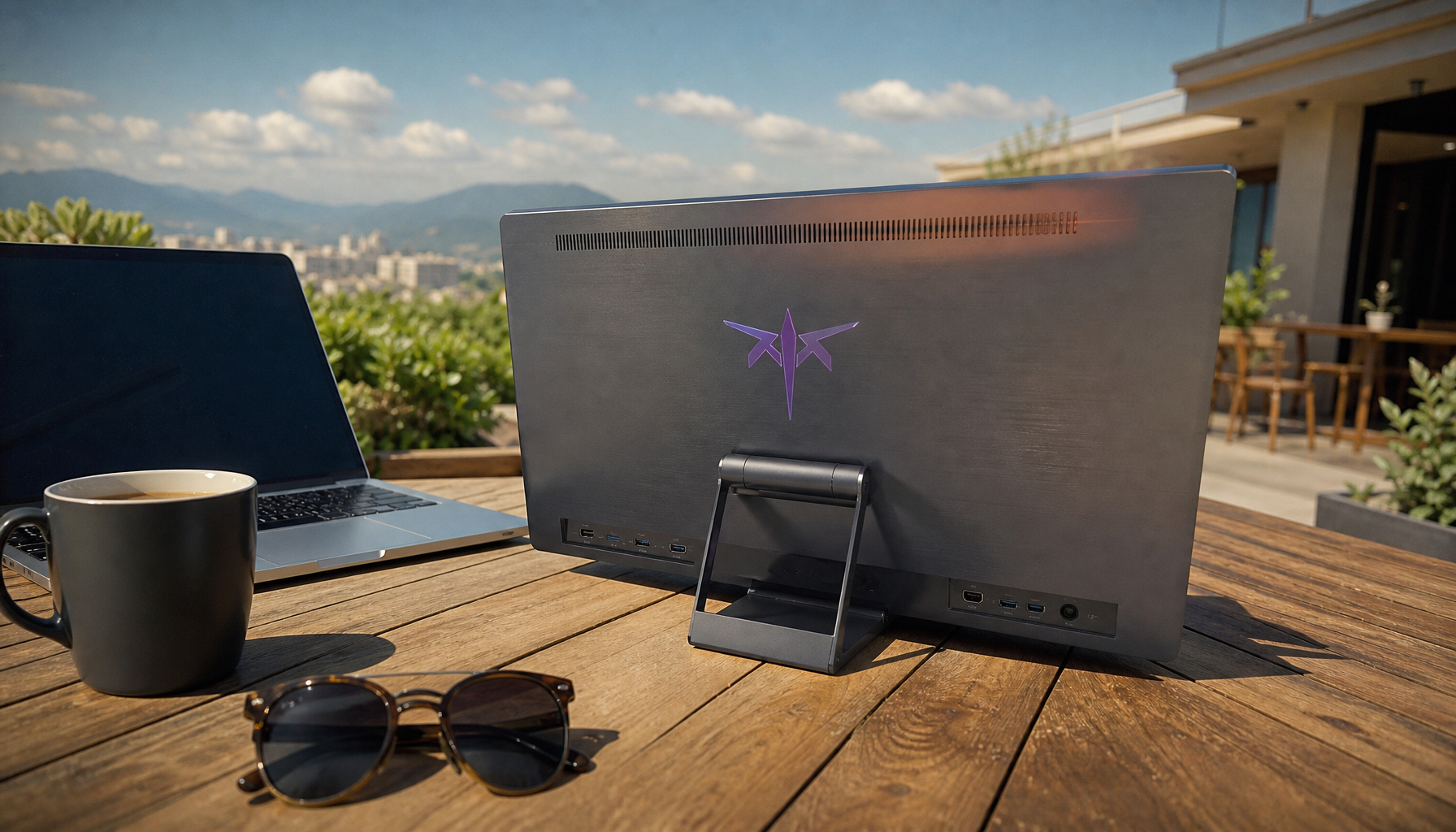
Portable USB-C displays are especially sensitive to assumptions. Many are marketed as one-cable screens, but that only works when the laptop’s USB-C port supports video and the display receives enough power. Portable monitor USB-C display setups are attractive because they reduce travel bulk, but a weak cable or data-only port can turn a smart second screen into a blank panel.

If the portable display supports DP Alt Mode, use the included cable first. If it uses DisplayLink instead, expect driver installation and different performance characteristics. DisplayLink can be useful for laptops without native USB-C video, but it is not the same as a direct DisplayPort Alt Mode signal for gaming latency or color-critical work.
A Reliable Decision Path
The practical sequence is simple. Confirm that the laptop port supports DP Alt Mode, Thunderbolt, or USB4 with DisplayPort. Confirm the monitor’s target resolution and refresh rate. Confirm the adapter or dock’s exact output rating. Confirm the cable supports video and enough bandwidth. Then connect the display and verify the negotiated resolution in the operating system.
If any one link is weaker than the goal, that weakest link defines the result. A 4K 144 Hz monitor, a Thunderbolt laptop, and a low-grade USB-C cable will still behave like a low-grade connection. A premium cable will not add video support to a data-only USB-C port. A dual-display dock will not overcome a host that only supplies enough bandwidth for one high-resolution stream.
FAQ
Can USB-C always output video?
No. USB-C can carry video only when the port supports DisplayPort Alt Mode, Thunderbolt, USB4 video capability, or a software-based display technology such as DisplayLink with the right hardware and driver.
Why does my 4K monitor only run at 30 Hz?
The likely causes are limited DisplayPort bandwidth, an older adapter, a cable that is not rated for the target mode, shared USB hub bandwidth, or HDMI hardware that tops out at 4K 30 Hz.
Is Thunderbolt better than regular USB-C for monitors?
Usually, yes. Thunderbolt uses the USB-C connector but offers higher and more predictable bandwidth for docks, multi-monitor setups, and high-resolution displays. Regular USB-C can still work well, but its capabilities vary much more by device.
Does a USB-C monitor charge every laptop?
No. The monitor’s power delivery rating must match the laptop’s needs. A thin office laptop may run comfortably from 65 W, while a gaming or workstation laptop may need 90 W or more and may still require its original charger under heavy load.
The real maximum resolution is not printed on the USB-C shape; it is negotiated by the entire chain. Treat the port, protocol, cable, adapter, monitor, and operating system as one display system, and you will get the sharpest, fastest image your hardware can reliably deliver.