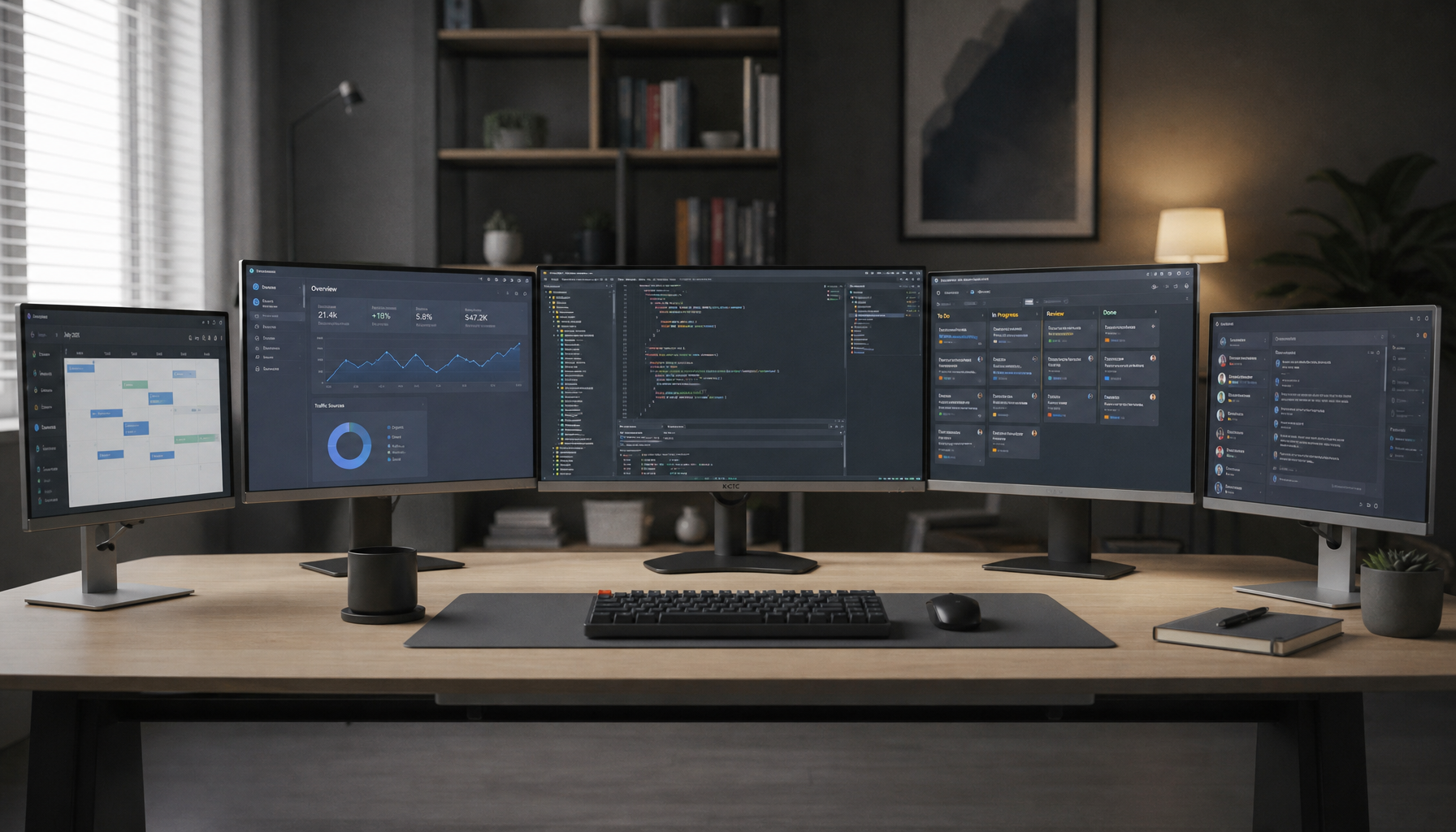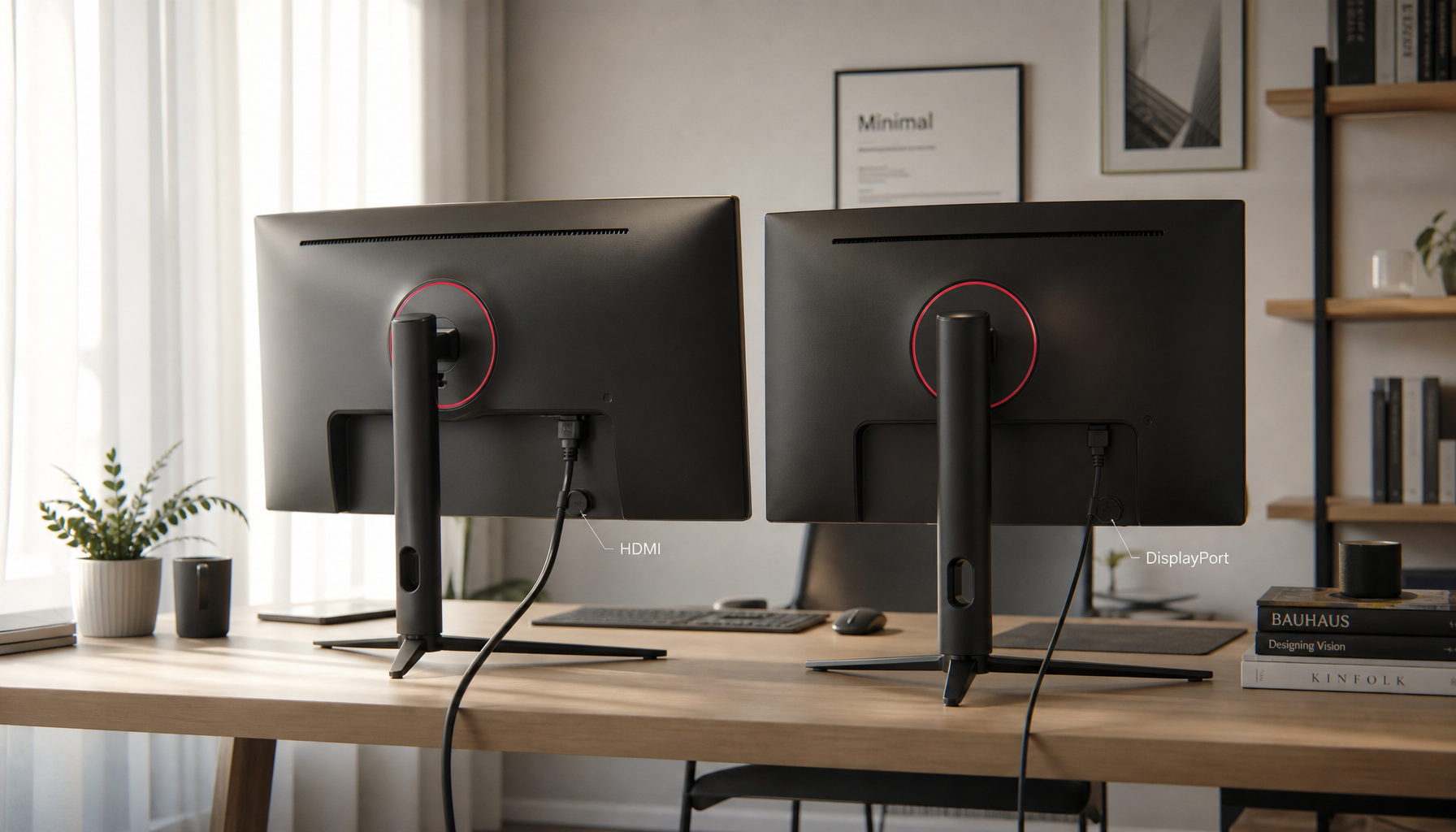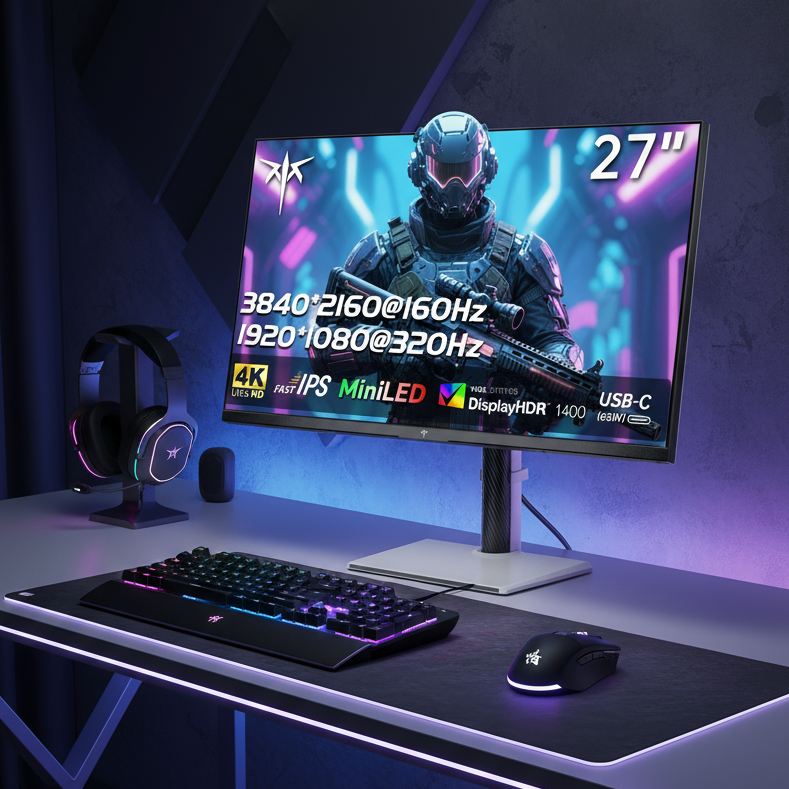


DisplayPort HBR2 and HBR3 determine how much video data can move between your GPU, dock, cable, and monitor. HBR2 is the practical floor for 4K at 60 Hz, while HBR3 supports higher-refresh 1440p, sharper ultrawides, and many 4K high-refresh modes when the full signal chain supports it.
Link Rate Is the Real Ceiling
DisplayPort performance is not decided by connector shape alone. It depends on link rate, lane count, color depth, compression, and the display’s own timing limits.
HBR2 runs at 21.6 Gbps of raw bandwidth and is associated with DisplayPort 1.2. HBR3 reaches 32.4 Gbps and arrived with DisplayPort 1.3-class capability, so cable guidance is better framed around VESA bandwidth certification than around “DP 1.2 cable” or “DP 1.4 cable” labels.
After overhead, usable video data is lower than the headline number. That is why two monitors with the same resolution can demand very different bandwidth if one runs 8-bit SDR at 60 Hz and the other runs 10-bit HDR at 144 Hz.
What HBR2 Can Realistically Drive
HBR2 is still valuable for office productivity, coding, trading desks, and standard 4K work. A properly supported HBR2 connection is enough for 4K at 60 Hz, and VESA notes that certified DisplayPort cables support HBR2 for 4K 60 Hz.

In practical setups, HBR2 usually handles 1080p high refresh, can often support 1440p at 144 Hz depending on timing and color depth, and remains the core choice for 4K at 60 Hz. It can also support multi-monitor MST setups, but the available bandwidth is shared across displays.
Where HBR2 starts to feel tight is in modern gaming and creator workflows. 4K above 60 Hz, HDR, 10-bit color, and high-refresh ultrawide panels can quickly exceed what the link can carry cleanly.
What HBR3 Adds for Gaming and Pro Displays
HBR3 gives DisplayPort significantly more headroom, which matters most when every frame and every bit of color data counts. It is the link-rate class behind many DP 1.4-era high-performance monitor modes.

A key example: DisplayPort 1.4 has 32.4 Gbps of raw bandwidth, with about 25.92 Gbps available for video after overhead. Demanding modes such as 4K at 144 Hz with 10-bit color can exceed native bandwidth without help from DSC.
That is where Display Stream Compression matters. DSC is designed to be visually lossless, letting monitors run higher refresh rates, HDR, and deeper color within the available pipe. For gamers, that can be the difference between dropping to 120 Hz and keeping a 144 Hz or 165 Hz mode active.
Why Your Cable, Dock, and OSD Still Matter
A monitor advertised with a DisplayPort version does not guarantee every desired mode will appear automatically. The GPU, USB-C dock, cable, monitor input setting, and firmware all have to agree.
Some displays need their DisplayPort input mode changed in the on-screen display before higher resolutions appear. Support documentation notes cases where setting the monitor to DisplayPort 1.2 or the correct input mode is required to unlock expected output behavior.

A “DP 1.2” or “DP 1.4” label is a starting point, not proof of the active link rate. Verify the negotiated mode in your GPU control panel, monitor OSD, or diagnostics.
How to Choose the Right Link Rate
For a dependable productivity screen, HBR2 is enough when your target is 4K at 60 Hz or a modest multi-monitor setup. For competitive gaming, HDR creation, 4K high refresh, or premium ultrawide immersion, prioritize HBR3 or newer.
Use this buying logic:
- Choose HBR2 for 4K at 60 Hz office and general creative work.
- Choose HBR3 for 1440p high refresh, ultrawide, and 4K gaming.
- Use DP8K-certified cables for HBR3 and DSC-heavy setups.
- Check the whole chain: GPU, dock, cable, port, monitor, and settings.

The value move is simple: do not overpay for cable mythology, but do not under-spec the one link that decides whether your premium monitor runs at its full resolution, refresh rate, and color depth.