




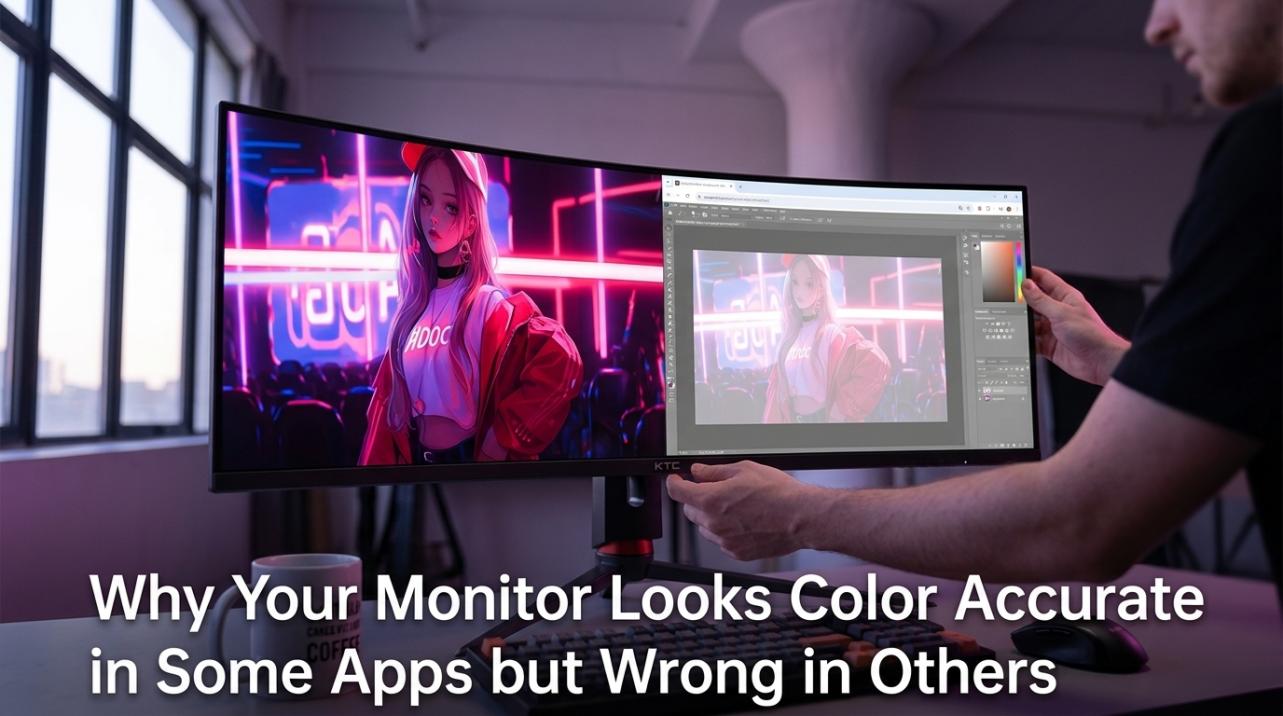
Picture-by-Picture (PBP) lets you display two completely separate video sources side-by-side on one monitor at the same time. Unlike desktop window snapping that only organizes windows from a single computer, PBP works at the hardware level so you can run a Windows PC next to a MacBook, or a gaming console beside a work laptop, without needing a second screen.

This approach proves especially useful for remote workers juggling corporate and personal machines, content creators monitoring multiple feeds, or gamers who want live chat visible while playing. However, it only delivers good results when your monitor is wide enough and you correctly configure resolutions and connections.
What Is Picture-by-Picture (PBP) and Why Does It Matter?
PBP is a hardware-integrated feature that allows a monitor to receive and display video signals from two or more distinct sources simultaneously, physically partitioning the screen into side-by-side sections. This differs from software tools such as Windows Snap or macOS Split View, which only rearrange windows from one computer. With PBP you can genuinely use two independent systems on the same display.
The primary benefit appears when you need to work across platforms. A Mac user can keep their design software open on one half while monitoring email or a build log on a Windows machine on the other half. The same holds for streamers running OBS on one source while gaming on another, or office users comparing spreadsheets from two different accounts.
For most users with ultrawide monitors 34 inches and larger, PBP delivers more usable workspace than a single computer with virtual desktops. Check whether your monitor is at least 34 inches wide before relying on PBP for daily dual-source work. Smaller screens often produce narrow or tall zones that feel cramped.
Should Your Next Gaming Monitor Be an Ultrawide? A Gamer's Guide
Hardware Prerequisites: Ports, Cables, and Connectivity
PBP mode requires a separate physical video cable for each input source. A single cable cannot carry two independent signals. You will typically connect one source through HDMI and the second through DisplayPort or USB-C.
Many KTC monitors simplify the laptop side with 90W USB-C power delivery. Models such as the G27P6 and H49S66 let you run a MacBook or compatible laptop with video, power, and data over one cable while the second source uses a standard HDMI or DP connection. Always use high-quality, certified cables rated for the desired refresh rate on both inputs to avoid dropped frames or signal instability.
Before buying, confirm your two source devices have compatible output ports and that the monitor supports the combination you plan to use. Most modern KTC gaming and productivity monitors include at least one HDMI 2.0/2.1 port plus DisplayPort and USB-C with DisplayPort Alt Mode.
How a USB-C Monitor Can Streamline Your Workspace
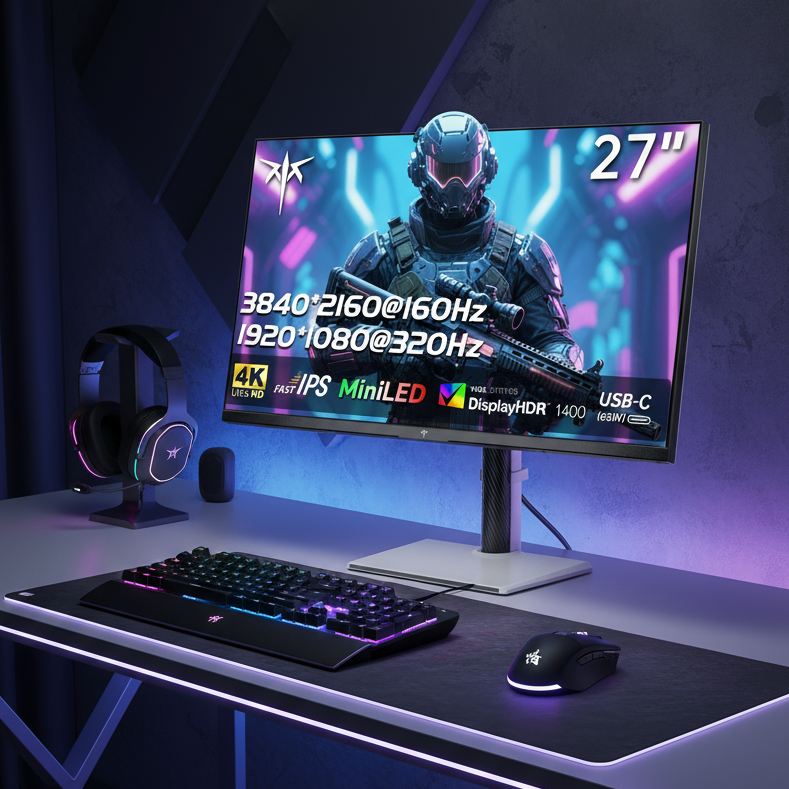
KTC OLED 27" 2K 240Hz/0.03ms USB-C Gaming Monitor | G27P6
The 'No-Stretch' Resolution Guide: Fixing Aspect Ratio Distortion
Many users turn on PBP and immediately notice stretched or squashed images. The operating system tries to fill the entire screen with the native resolution instead of matching the physical pixel area allocated to each half.
The resolution you set in Windows or macOS must match the exact pixel dimensions of each PBP zone. A 49-inch DQHD (5120x1440) monitor splits neatly into two perfect 2560x1440 (16:9) zones. A 34-inch WQHD (3440x1440) monitor creates two 1720x1440 zones that form an approximately 10.7:9 aspect ratio. A 27-inch QHD monitor produces two 1280x1440 “tallboy” zones.
Use these custom resolutions when the default full-screen option distorts content. On Windows, tools such as Custom Resolution Utility (CRU) create the necessary profiles. On macOS, BetterDisplay makes it easy to define and switch non-standard resolutions.
PBP Resolution Cheat Sheet
Choose these exact output resolutions per source to avoid stretching on common monitor sizes in PBP mode.
View full table
| Monitor | Full Native | PBP Zone 1 | PBP Zone 2 | Recommended Setting |
|---|---|---|---|---|
| 27-inch QHD (2560x1440) | 2560x1440 | 1280x1440 | 1280x1440 | 1280x1440 per source |
| 34-inch WQHD (3440x1440) | 3440x1440 | 1720x1440 | 1720x1440 | 1720x1440 per source |
| 49-inch DQHD (5120x1440) | 5120x1440 | 2560x1440 | 2560x1440 | 2560x1440 per source |

As this BetterDisplay GitHub repository demonstrates, macOS users gain reliable control over custom resolutions needed for many PBP setups.
PBP vs. PIP: Choosing the Right Mode for Your Workflow
PBP and Picture-in-Picture (PIP) serve different purposes. PBP divides the screen into two equal or near-equal side-by-side zones, giving both sources full attention. PIP places one source as a smaller overlay window inside the main image, which works better for passive monitoring.
Choose PBP when you actively work with both sources at the same time, such as comparing documents, running a primary application while watching a secondary dashboard, or managing two computers simultaneously. PIP suits scenarios where one feed only needs occasional glances, like a security camera, chat window, or sports stream.
PBP generally consumes more screen real estate but delivers better productivity for dual-tasking. PIP preserves more of the primary source’s resolution and aspect ratio but limits the secondary view to a smaller area.
Vertical vs. Horizontal: How to Build the Ultimate Dual Monitor Productivity Setup
Advanced Optimization: KVM, VRR, and External Switches
Once both sources display correctly, controlling them with one keyboard and mouse becomes the next challenge. Many monitors include a built-in KVM switch, yet switching focus often requires navigating several layers of the on-screen display menu. Expect three to five button presses each time you want to change which computer receives keyboard and mouse input.
Enabling PBP typically disables variable refresh rate (VRR) technologies such as G-Sync or FreeSync and high dynamic range (HDR) on both inputs. Gamers should therefore treat PBP as a productivity mode rather than a competitive gaming solution. Revert to single-source mode when maximum frame rate smoothness matters.
Many users find a simple external USB switch more convenient than the monitor’s internal KVM. A $30–$50 USB-C or USB-A KVM switch often toggles input faster and avoids repeated OSD navigation. For passive monitoring where you rarely switch control, the built-in KVM works adequately.
Maximizing Your Workspace with KTC’s Ultrawide PBP Technology
The KTC 49-inch DQHD model stands out as the strongest native PBP performer because its 5120x1440 panel splits cleanly into two 2560x1440 (16:9) zones without custom resolution work. For users who want the cleanest dual-computer experience, this monitor removes most of the usual friction.
Smaller ultrawide models still support PBP effectively once you apply the correct resolutions. Check the monitor’s OSD menu under the “Setup,” “System,” or “Input” section to enable PBP and select the two active sources. Most KTC gaming and productivity displays place the toggle in an intuitive location after a firmware update.
Using PBP can replace a traditional dual-monitor setup for many people, resulting in a cleaner desk, fewer cables, and better ergonomics. Before purchasing, verify that your planned source devices output compatible signals and that you accept the trade-offs around VRR and occasional resolution tweaking.
KTC 49" DQHD 180Hz 1000R Curved Gaming monitor丨H49S66
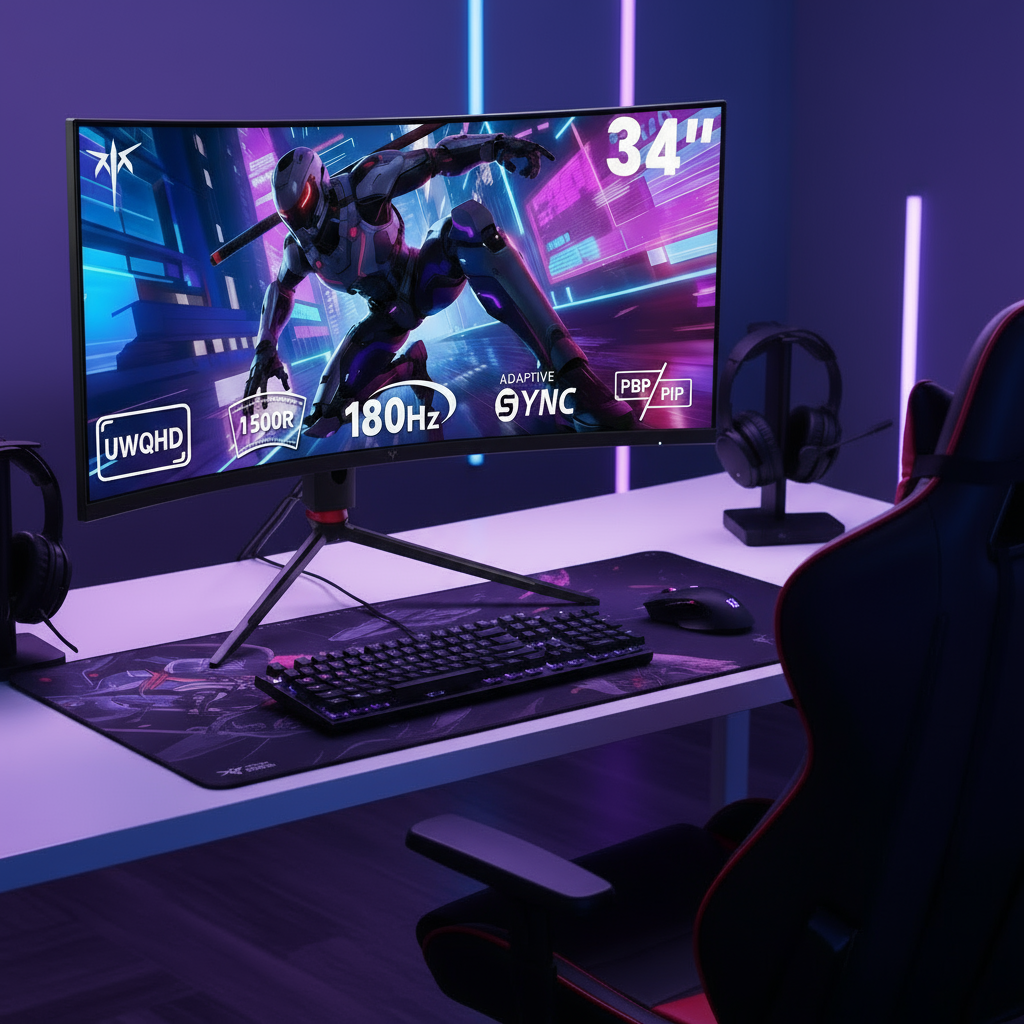
KTC 34" 2K 180Hz/1ms 1500R Curved Gaming Monitor | H34S18S
Frequently Asked Questions
Does PBP work with any two computers?
PBP works with any two devices that output video through compatible ports (HDMI, DisplayPort, or USB-C). The monitor must support the resolution and refresh rate combination from both sources simultaneously. Confirm port availability and bandwidth on your specific monitor model before purchasing.
Why does text look blurry or stretched in PBP mode?
The operating system defaults to the monitor’s full native resolution instead of the half-width zone created by PBP. Setting a custom resolution that matches each zone’s exact pixel count, such as 1720x1440 on a 34-inch ultrawide, usually resolves the issue.
Can I still use G-Sync or FreeSync while in PBP?
Most monitors disable variable refresh rate when PBP is active. Treat PBP primarily as a productivity feature and switch back to single-source mode for competitive gaming sessions where low latency and smooth frame pacing matter most.
Is an external KVM switch necessary?
An external switch offers faster input toggling than most built-in monitor KVMs that require deep OSD navigation. For occasional use the internal KVM suffices, but heavy multitaskers often prefer a dedicated USB switch for smoother workflow.
Which monitor size works best for PBP?
A 49-inch super-ultrawide provides the most comfortable equal 16:9 zones. 34-inch ultrawides work well after custom resolution setup, while 27-inch models create taller, narrower zones best suited for code-plus-chat or dashboard layouts.
Does PBP reduce the maximum refresh rate?
PBP can limit the combined bandwidth, so both sources may run at lower refresh rates than the monitor’s single-input maximum. Check your monitor’s specifications for exact supported rates in dual-input mode.



%20lets%20you%20display%20two%20completely%20separate%20video%20sources%20side-by-side%20on%20one%20monitor%20at%20the%20same%20time.%20Unlike%20desktop%20window%20snapping%20that%20only%20organizes%20windows%20from%20a%20singl...
)