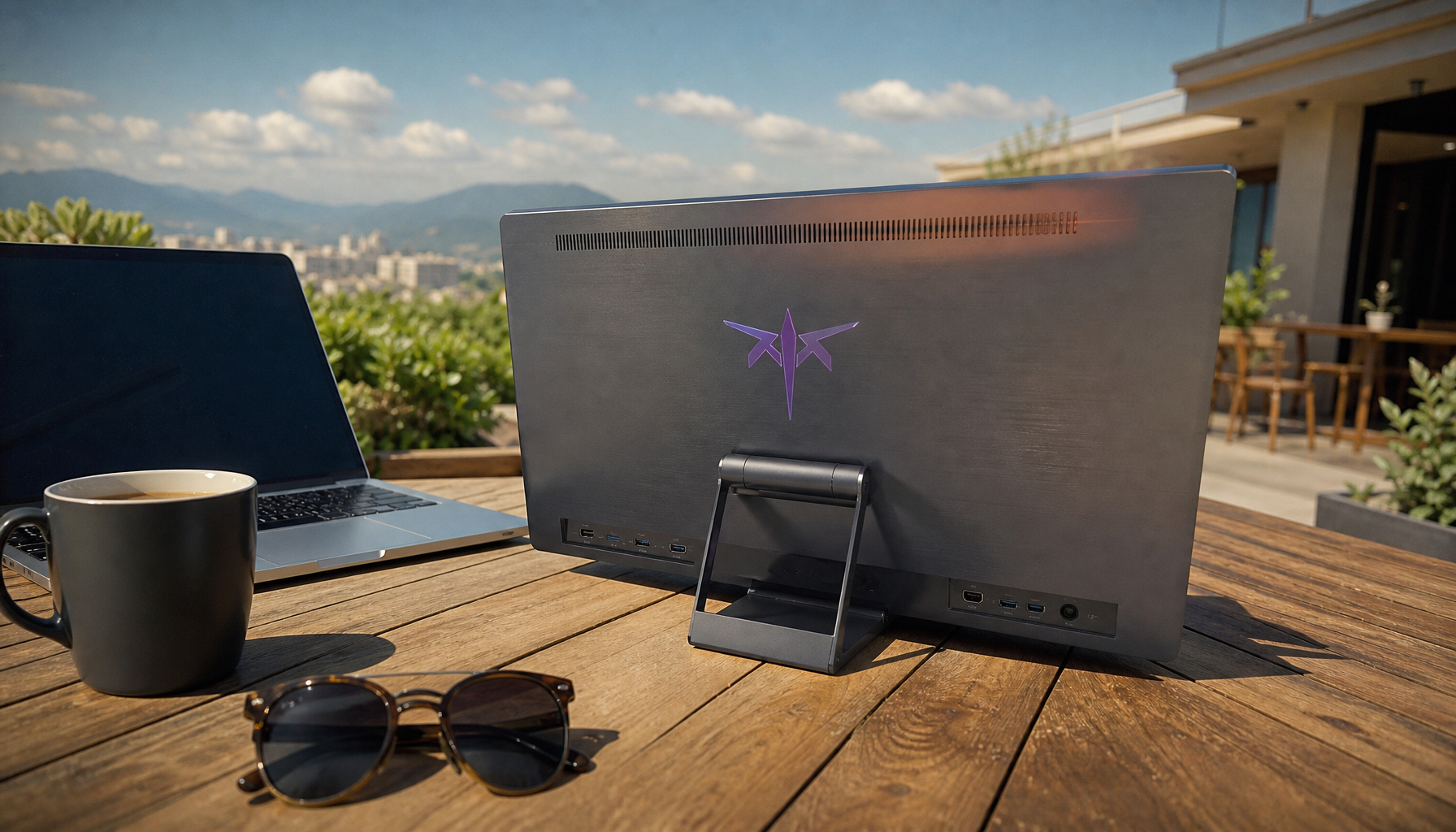
Start with the gentlest method: power the display down, lift loose dust away from bezels and vents, and keep moisture and pressure away from openings. The goal is to move debris out of the device, not deeper into it.
Are you staring at dust packed into the seam around your monitor and wondering whether one wrong swipe will shove it straight into the panel or cooling path? In real setups, the safest routine is also the most repeatable: dry microfiber for the display area, controlled airflow or a soft brush for vents, and no direct spray on the screen or chassis. That gives you a simple way to clean edges, corners, and ports without trading a dirty bezel for trapped debris or moisture damage.
Why bezel edges and vent openings need a different approach
A display screen is one cleaning surface, but the bezel gap, speaker grille, button cutout, and ventilation port behave more like tiny dust traps. That matters because the wrong motion can turn harmless lint into an internal problem. Dry microfiber cleaning advice starts from the safest baseline of dry microfiber and frequent light cleaning, which is the right mindset here: when buildup stays light, you rarely need force.
In practice, the trouble starts when people clean these areas as if they were a flat pane of glass. A hard sideways wipe across the bezel seam can roll grit inward. A wet cloth can wick moisture toward the panel edge. A blast of air from too close can pack dust deeper into vent channels instead of lifting it out. Warnings about liquid seepage into edges reinforce the same risk by cautioning against direct liquid application and moisture reaching internal components.
For gaming monitors, office displays, and portable smart screens, those openings are not cosmetic details. The bezel gap affects how clean the display looks and, on touch-enabled units, can even affect how responsive the edge feels. Vents matter because they help move heat away from internal boards and power components. Dust there is not just ugly; over time, it can interfere with airflow.
What “clean without pushing debris inside” actually means
The goal is not to scrub every opening until it looks factory-new. The goal is directional cleaning. You want dust to move out and away from the device, not inward or downward through seams.
That means starting with the display powered off and unplugged, which several screen-cleaning sources treat as standard safety practice. A dark screen also makes dust easier to see, and it reduces the temptation to press harder on smudges that show up only under glare. The rule to apply solution to the cloth supports the same basic principle: direct spray is exactly how fluid reaches openings and coatings.
A useful working definition is simple: safe edge cleaning uses low moisture, low pressure, and an outward path. If your cloth, brush, or air stream would force lint toward a seam, the angle is wrong.
The safest cleaning sequence for bezels and vents
Start dry, and start above the opening
The most reliable first pass is a clean, dry microfiber cloth on the flat screen and outer bezel, followed by a second dry section of the cloth around the edge. The gentlest possible cleaning method is the right starting point at the bezel line. If the dust is loose, a dry cloth often removes it without turning it into mud.
When cleaning around a thin gaming-monitor bezel, avoid dragging the cloth across the seam like a windshield wiper. A better move is to wipe from the bezel face outward, then lift the cloth. On a portable smart screen with side vents, tilt the device so gravity helps, then brush or air the vent from the top down rather than from the side. That small change helps keep loosened dust from falling deeper into the housing.

Use a soft brush or controlled air for vent slots
Vents and grille openings usually need a tool that can lift dust without stuffing it in. Low-suction cleaning for edges and corners mentions a handheld vacuum with a soft brush attachment, while other screen-cleaning advice supports soft brushes or compressed air for exterior vent cleaning when the device is unplugged. The common principle is gentle extraction, not force.
If you use compressed air, distance and angle matter more than people think. The air should skim across the opening or blow from an angle that encourages debris to exit. Blasting straight into a port from close range is exactly how fine dust gets driven into corners you cannot reach. For a rear vent on an office display, one or two short passes from a few inches away are safer than holding the nozzle at the grille and emptying half the can.

A soft, clean brush can be even better for stubborn edge dust because it breaks the static grip without adding moisture. For a vent with visible fuzz at the lip, loosen it with the brush first, then lift it away with low suction or a short burst of air. That two-step approach is slower, but it is far less likely to compact debris.

Add minimal moisture only on the outer surfaces
Smudges on the bezel itself may need a barely damp cloth, but the cloth should be dampened away from the device and never be wet enough to leave droplets. The no-direct-spray rule for screens and the warning against liquid near edges both become even more important near seams, buttons, and ventilation slots.
A good test is simple: if squeezing the cloth would produce visible moisture, it is too wet for edge work. Around a lower bezel with menu buttons, use the corner of the cloth rather than the whole pad, and wipe parallel to the button surface instead of pressing into the gaps. That removes skin oil and dust from the visible area without feeding moisture into the switch openings.
What to avoid, even if it seems faster
The fastest way to damage a display is to treat it like household glass. Advice against ordinary window cleaners warns that they can break down protective coatings, while warnings about streaking screen products caution against common liquids and products such as Windex. Around bezels and vents, harsh cleaners create another problem: residues can collect in edges and then migrate when the device warms up.
Paper towels, tissues, and rough cloths also create risk because they can scratch the surface or shed lint into openings. Lint-free cloth advice for LCD surfaces and screen-care advice for microfiber use point in the same direction. The material matters because a cloth that sheds turns a cleaning job into a debris problem.
There is also a judgment call around alcohol. Some sources allow limited isopropyl alcohol for certain stubborn cases, while others warn that alcohol can scar finishes or cause clouding over time. The safest takeaway is straightforward: unless the manufacturer explicitly approves it for that surface, alcohol should not be your routine answer for bezel seams or screen edges. The disagreement likely reflects differences in screen coatings, finish types, and use cases rather than a universal rule.
A simple method for different display types
Gaming monitors
Fast panels often have narrow bezels, rear vents, and styling that creates more dust-catching grooves. Clean them often and lightly. Frequent light cleaning advice makes sense here because a monitor near a keyboard, mouse pad, and open desk collects skin oil and dust quickly. A two-minute weekly pass is better than a hard monthly scrub.
Office productivity displays
Office monitors tend to collect less dramatic grime on the panel but more buildup on the top edge, stand neck, rear casing, and cable area. Dust buildup in vents and ledges shows why routine cleaning often misses the hidden areas. For a dual-monitor desk, wiping the easy front surfaces is not enough; the top rear vent line and the cable-side venting deserve attention too.
Portable smart screens and touch displays
Touch surfaces pick up oils faster, and compact bodies often place speaker holes, charging ports, and cooling paths close together. That makes moisture control even more important. Use as little moisture as possible, keep the device tilted so loosened debris falls away from the ports, and stop if grime has become tacky enough that you feel tempted to dig into seams.
When a little dust becomes a real performance issue
Dust around a bezel is mostly a cosmetic and hygiene issue. Dust inside a vent path can become a thermal and signal-stability issue over time. Cleaning ports during connection checks is a useful reminder that debris is not always harmless. A dirty port lip or vent opening may not hurt performance today, but it can contribute to heat retention, flaky contact, or harder troubleshooting later.
A practical threshold is simple: if the dust is visible from a normal sitting distance, or if vent buildup forms a fuzzy line along the grille, it is time for a controlled dry cleaning pass. If you cannot remove it without pressing into openings, stop and switch to a softer tool or get service help rather than forcing it.
The tradeoff between speed and safety
Quick cleaning feels efficient, but display care rewards restraint. Dry microfiber is slower on stuck residue, yet it carries the lowest risk. Air and brushes clean vents more effectively, but only when used gently and from the right angle. Minimal moisture helps with oily bezel marks, but it creates the biggest penalty if it reaches the inside.
That tradeoff is why the best routine is not the strongest one. It is the one you can repeat every week without wearing coatings, scratching glossy trim, or driving lint into the cooling path. Frequent, light cleaning consistently beats occasional aggressive cleaning.
A clean bezel and a clear vent line are not just cosmetic wins. They preserve airflow, keep the screen looking sharper at eye level, and reduce the chance that your next quick wipe turns into trapped dust, streaks, or an avoidable repair.