Portable monitor glare is usually best fixed by changing screen angle and seat position first, then adding the right screen finish, brightness level, or accessory. Near windows, brightness helps visibility, but it does not remove reflections by itself.
Have you ever opened a 15- or 16-inch portable monitor at a co-working desk and watched it turn into a mirror as soon as the sun shifts? In real shared-workspace setups, the fastest improvement usually comes from moving the screen to a right angle from the window, sitting farther from the glass, and pairing that layout with a matte or anti-glare display. This guide shows which changes matter most, which monitor specs actually help, and when accessories are worth carrying in your bag.

Why Portable Monitor Glare Gets Worse Near Windows
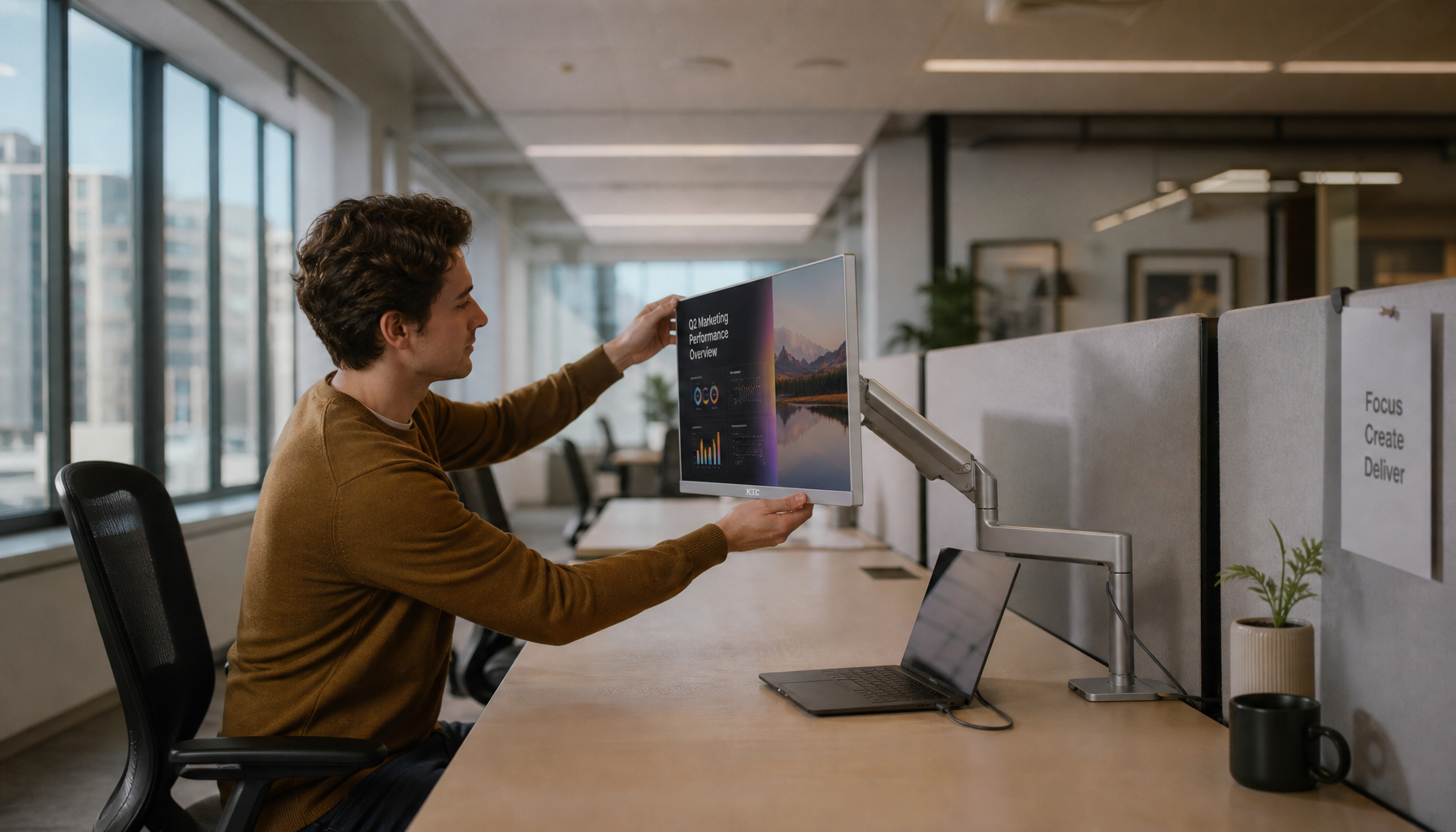
Bright windows or lamp reflections can make a display hard or even impossible to see, and portable monitors are especially exposed because they are small, light, and often propped up on shallow kickstands. In a co-working space, that usually means the screen sits low on the desk, catches a direct reflection from a window wall, and forces you to choose between bad visibility and awkward posture.
Glare is easy to confirm when you can see reflections of windows, lights, or even your own face on the screen. A common real-world pattern is a glossy portable monitor looking fine in a dim meeting room, then washing out at a hot desk near a west-facing window around midafternoon. Turning up brightness can make the image punchier, but if the reflected window is still brighter than the displayed content, the reflection keeps winning.
Reflections and eye adaptation both matter
Intensity and the direction of light are the main lighting problems for screen work, not just total room brightness. When you glance at a bright window and then back to the display, your eyes briefly lose visibility while they readapt. That is one reason a portable monitor can feel worse near a window than the same monitor in the center of the room, even when the panel itself has not changed.
Start With Placement Before You Buy Anything
The best basic setup is to sit at right angles to windows and stay at least 3 feet away. For portable monitors, that usually means placing the laptop and second screen so neither one directly faces the glass. If you can choose a desk, pick the one where the window is beside you, not in front of you or behind you.

In practice, this is the highest-value change because it costs nothing and works across business displays, gaming-oriented portable monitors, and travel screens alike. A 16-inch panel that looks unusable when facing a bright window can become perfectly workable once it is rotated so the reflected image falls toward the side instead of straight back at your eyes.
Use the “hand test” and tilt carefully
A simple way to find the offending light source is to block it with your hand or a folder. If the screen suddenly becomes readable, you have confirmed a glare problem rather than a color or resolution problem. From there, tilt the monitor just enough that it reflects the ceiling or darker floor instead of the window.

Physical tilt changes are a practical fix, but they can hurt readability or posture if pushed too far. The goal is not to chase a perfect reflection-free angle at any cost. Keep the screen center roughly 10 to 20 degrees below straight-ahead gaze, and only use enough tilt to break the reflection pattern.
Matte Finish, Anti-Glare, or Glossy: What Actually Helps?
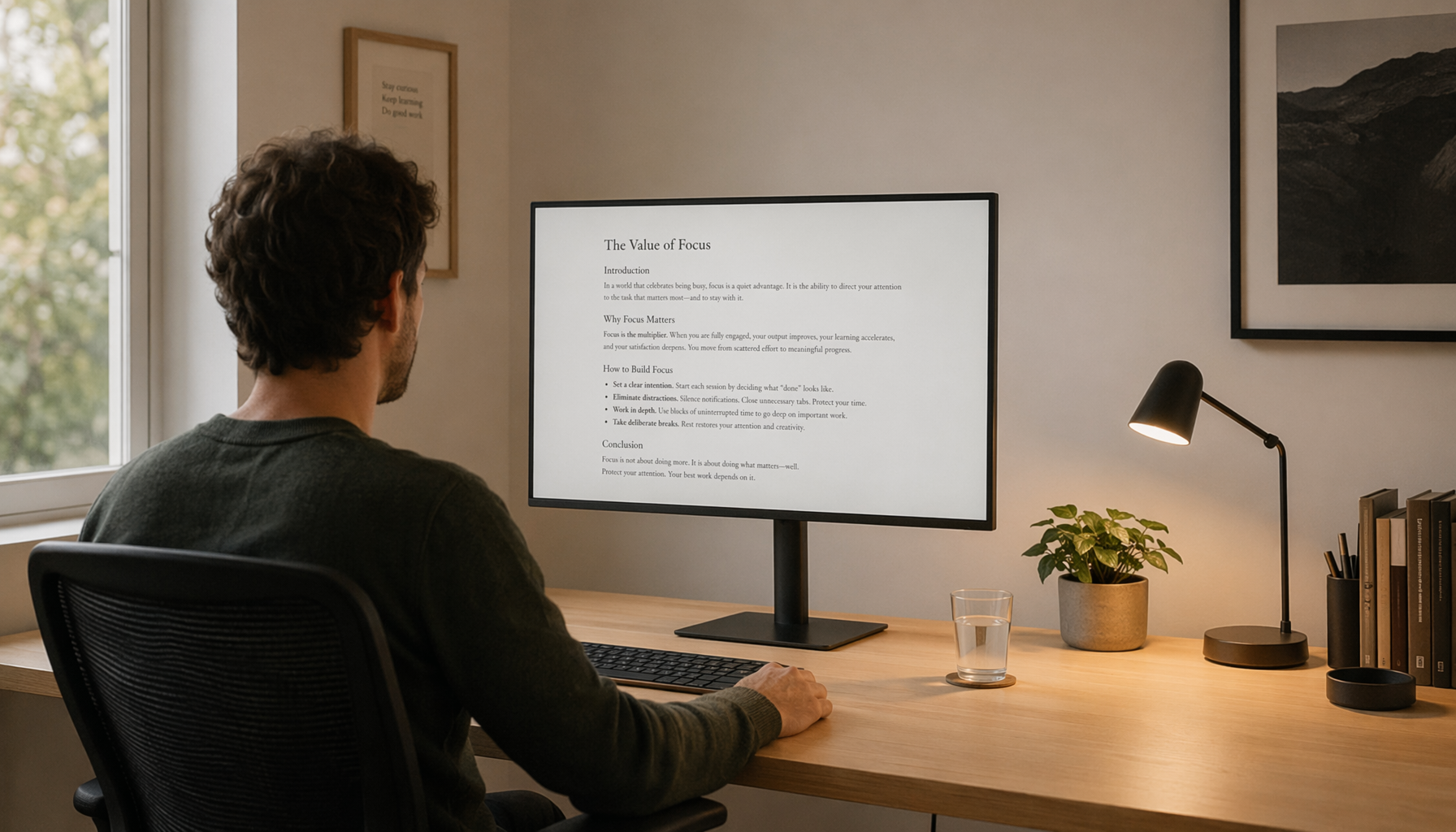
Matte screens reduce glare by diffusing light, which is why they are usually the safer pick for co-working spaces. The tradeoff is a slight loss of crispness or contrast compared with glossy panels. For long writing, spreadsheets, coding, and browser-heavy work, that tradeoff is usually worth it.

Glossy portable monitors still have a place. They can look more vivid in controlled lighting, and some touch-first models use glossy glass by design. But near large windows, a glossy finish often turns color punch into reflection problems. That is why a monitor that feels great in a hotel room may feel frustrating at a shared desk by the glass wall.
Anti-glare and anti-reflective are not the same
Anti-glare coatings spread reflected light, while anti-reflective coatings dim reflections while keeping a smoother surface. For portable monitor buyers, that means matte anti-glare is usually the safer general-purpose option, while anti-reflective treatments can preserve a cleaner-looking image if the implementation is strong enough.
Real product examples reinforce that point. A product is noted for strong anti-glare, while a product is acceptable indoors but less convincing in brighter conditions. If you regularly work near windows, matte or clearly stated anti-glare handling should rank above touch support or ultra-thin styling.
How Much Brightness Do You Really Need?
Brightness matters most in bright rooms or when windows and lights sit opposite the display. For indoor co-working use, portable monitor guidance clusters around three practical ranges: about 250 to 300 nits for normal offices, 300-plus nits for cafes and typical shared workspaces, and 400-plus nits for brighter seats near large windows.
That does not mean you should buy the brightest panel available without thinking. Higher brightness improves visibility in bright light but also increases power consumption. On a USB-C portable monitor, that can mean shorter laptop battery life or the need for pass-through power during longer sessions.
Use brightness to support contrast, not to replace glare control
Over 300 nits is a good value for overcoming glare in most cases, but brightness alone cannot beat direct sunlight on the panel. Controlled-viewing standards discussed in display calibration circles put typical monitor white around 80 to 120 nits in dark, controlled environments and around 140 to 160 nits in daylit rooms, while also warning that direct sunlight on the screen is not recommended at all https://hub.displaycal.net/forums/topic/what-monitor-brightness-is-recommended/.
That is why a well-positioned 330- to 360-nit portable monitor often feels better than a brighter glossy screen placed badly. For example, a product measures about 363 nits, and a product was measured a little over 360 nits despite a higher claim. Those numbers are generally workable indoors if the window is managed, but neither class of monitor is ideal for direct sun hitting the screen.
Which Accessories Earn Space in Your Bag?
Monitor visors, anti-glare screens, and circular polarized filters are standard ways to reduce visible reflections. In shared spaces where you cannot change blinds or overhead lights, these accessories can be more realistic than expecting the room to adapt to you.
The most useful accessory depends on how fixed your environment is. If the problem is occasional and mild, a simple hood or visor may be enough. If you work in glass-heavy spaces every week, a dedicated anti-glare filter makes more sense. In one real example from a bright conference room, the final solution was replacing the reflective display with a matte-finish monitor, which is a strong reminder that coatings usually matter more than software tweaks.
When higher-end display tech is justified
Optical bonding reduces internal reflections and improves contrast, but it is more common in specialized daylight-viewable or sunlight-readable displays than in mainstream portable monitors. For most co-working users, that level of hardware is overkill. But if your job repeatedly puts you next to floor-to-ceiling glass, it may be worth prioritizing business-class portable monitors with stronger reflection handling over cheaper consumer models.
Portable Monitor Options Compared for Window-Heavy Workspaces
Option |
Best for |
Typical brightness target |
Glare benefit |
Main tradeoff |
Matte portable monitor |
Daily co-working use near windows |
Reduces obvious reflections the most |
Slightly softer image than glossy |
|
Glossy portable monitor |
Controlled indoor lighting, touch-heavy use |
300+ nits |
Better color pop in ideal light |
Reflections are much more visible |
Anti-glare filter |
Shared desks where you cannot control the room |
Works with existing monitor |
Cheap, portable glare reduction |
Can reduce clarity |
Overhead light or window spill from one direction |
Any |
Blocks specific light sources |
Extra bulk in your bag |
|
Higher-brightness model |
Bright co-working spaces with daylight |
400+ nits preferred |
Improves visibility through ambient light |
More power draw, does not remove reflections |
Daylight-viewable specialty display |
Extremely bright environments |
400 to 700 nits with optical work, or 1,000+ nits for direct sun |
Best visibility in harsh light |
Cost, weight, battery impact |
Practical Next Steps
If you work from co-working spaces regularly, treat glare control as part of your buying criteria, not just a setup problem. The best portable monitor for a bright shared office is usually not the prettiest panel on a spec sheet. It is the one with a matte or effective anti-glare finish, enough brightness to stay readable around 300 to 400-plus nits, and a stand or kickstand that lets you fine-tune angle quickly.
A gaming-focused portable monitor can still work well here, especially if it offers a faster refresh rate and solid brightness, but reflection handling should come before refresh rate if your seat is near glass. A 240Hz or 300Hz panel is wasted if the screen looks like a mirror at 2:00 PM.
Action checklist
- Choose a desk where the window sits beside you, not directly in front of or behind the screen.
- Keep your setup at least 3 feet from the window when possible.
- Use the hand test to find the exact light source causing the reflection.
- Tilt the portable monitor slightly so it reflects the ceiling or floor instead of the window.
- Prioritize matte or anti-glare finishes over glossy panels for co-working use.
- Look for at least 300 nits, and aim for 400-plus nits if you often work in brighter shared spaces.
- Carry a slim anti-glare filter or visor if you cannot control blinds, partitions, or overhead lights.
FAQ
Q: Why does my portable monitor still glare even at maximum brightness?
A: Higher brightness improves visibility in bright rooms, but it does not remove reflected window images. If the screen is facing the glass or sitting too close to it, the reflection remains. Fix placement and screen finish first.
Q: Is matte always better than glossy for a portable monitor?
A: Matte usually handles bright shared spaces better, especially for text-heavy work. Glossy can look sharper and more vivid in controlled lighting, but near windows it is more likely to show distracting reflections.
Q: What brightness should I shop for in a co-working space?
A: More than 300 nits is a solid baseline for overcoming glare in most indoor situations. If you often sit near large windows, 400-plus nits is a safer target, but you still need good positioning and reflection control.
References
- Video Displays, Work, and Vision - a platform
- Preventing Visual Discomfort
- How to avoid background reflection Computer display
- Sunlight Readable Monitor
- Which monitor brightness is recommended?
- a product - Technology & Innovation
- Portable Monitors That’ll Revolutionize Your Workspace—Here’s How!
- Portable Monitors: The Game-Changer for Work and Collaboration
- a platform: Why are monitors matte and laptops glossy and not the other way around?
- Best Portable Monitors for 2026 - a platform