For a reliable black and white conversion preview, set your monitor to its native resolution, control brightness and contrast, use a neutral display mode, and judge tones with a histogram or tonal reference instead of trusting the screen alone.
Does your black and white edit look rich on your monitor, then turn muddy, flat, or harsh elsewhere? A disciplined display setup gives you a testable benefit: clearer separation between shadows, midtones, and highlights before you commit the conversion. This workflow helps your preview match the final intent more consistently.
Why Black and White Preview Accuracy Matters
Black and white preview is not just color turned off. A monochrome image can mean a single-color image, a grayscale image, or a digital conversion built from red, green, and blue channel values. That matters because two colors that look distinct in full color can collapse into nearly the same gray tone after conversion.
In practice, the monitor becomes your tonal decision tool. You are no longer judging whether a sky is blue enough or skin is warm enough; you are judging whether the subject separates from the background, whether shadow texture survives, and whether highlights still carry detail. For gaming monitors, office displays, and portable smart screens, the goal is the same: make the preview honest enough that you do not overcorrect.
The most useful mindset comes from photography. A monochrome preview helps remove color distraction so lines, shapes, light, texture, and composition become easier to evaluate. On a monitor, that same principle applies to editing: the preview should reveal structure, not flatter the image with boosted contrast or hidden shadows.
Start With Native Resolution and Correct Scaling
Native resolution is the foundation because it is the resolution the panel is designed to show most sharply. A 4K display at 3840 x 2160 gives much finer tonal edge detail than a lower-resolution office screen, while a 1440p panel can still be effective when the screen size and viewing distance are sensible. Work-monitor guidance consistently treats resolution as a core factor because sharper displays improve clarity during long sessions.
If your black and white preview looks slightly soft, do not start by adding sharpening. First, check whether the monitor is running at native resolution. Then set operating system scaling so interface text is comfortable without forcing the image viewer to display the photo at an odd zoom. For a 27-inch 4K monitor, 125% or 150% scaling is common; for a 27-inch QHD monitor, 100% or 125% may feel more natural depending on eyesight and desk depth.
A simple real-world check is to open a high-detail image at 100% zoom and inspect fine hair, fabric, or architectural lines. If edges look smeared before you edit, your display setup is weakening your judgment. Fix resolution and scaling first, then evaluate contrast.

Control Brightness Before You Judge Contrast
Brightness is where many black and white previews go wrong. A screen that is too bright makes shadows look more open than they really are, while a dim screen can push you into over-brightening the edit. For everyday office lighting, a quality work monitor often offers around 300 to 350 nits of brightness, but that does not mean you should run it at full output all day.
Set the display bright enough to show shadow gradation without making white backgrounds glow. In a bright room, raise brightness and reduce glare. In a dim room, lower brightness so your eyes are not adapting to the screen as a light source. If you edit beside a window, move the display so glare comes from the side rather than directly behind you or behind the monitor.

Contrast ratio also matters because it controls the gap between dark and bright tones. A contrast ratio around 1000:1 is suitable for many professional tasks, while image specialists may prefer higher contrast for deeper tonal separation. The catch is that excessive monitor contrast can trick you into producing a conversion that looks dramatic only on your own screen.
Choose the Right Panel Behavior for Tonal Work
Panel type influences how black and white previews feel. IPS panels are strong all-around choices because they usually provide stable viewing angles and balanced color behavior. VA panels often produce deeper blacks and stronger contrast, which can make monochrome images feel richer. OLED panels can deliver very deep blacks and vivid image depth, but static editing interfaces create a burn-in concern over time.
Gaming-monitor guidance makes the tradeoff clear: IPS panels tend to balance color, viewing angles, response times, and refresh rates, while VA favors deep blacks and OLED adds premium contrast with burn-in risk. For black and white conversion work, speed is less important than tonal stability unless you are also using the display for competitive gaming or high-refresh creative review.

If you use a portable smart screen, be more conservative. Portable displays can be excellent for field review, travel editing, or client previews, but they may have narrower brightness ranges and less ergonomic adjustment than a desktop monitor. Treat the portable screen as a secondary confidence check unless you have verified that its grayscale behavior closely matches your primary monitor.
Set a Neutral Display Mode, Then Avoid Enhancements
Most monitors ship with presets such as Standard, Movie, Game, FPS, Reader, sRGB, or Eco. For black and white conversion preview, start with the most neutral mode available, usually Standard, Custom, or sRGB. Avoid modes that lift shadows, add edge enhancement, boost dynamic contrast, or change black levels for game visibility.
Black equalizer features can be useful in games because they reveal opponents in dark scenes, but they are risky for image conversion. They make shadows look more open than they are. Dynamic contrast has the opposite problem: it may deepen blacks and brighten whites scene by scene, making it harder to judge a stable tone curve.
A practical desk test is to use the same grayscale ramp on every display you own. You should be able to distinguish near-black steps without the first few patches crushing together, and near-white steps without the last patches merging into one block. If your gaming monitor makes the ramp look punchy while your office display shows smoother transitions, edit on the smoother display and use the gaming screen only as a secondary viewing test.
Use RAW, Histograms, and Preview Discipline
The strongest black and white workflow keeps color information available until the final conversion. In photography, the recommended capture method is to use monochrome preview while still saving RAW, because the RAW file keeps the color data even when the screen preview appears black and white. That gives you freedom to adjust channel weighting later instead of locking yourself into one baked grayscale interpretation.
On the display side, use the histogram as your reality check. A monitor preview can be biased by brightness, room lighting, panel contrast, and viewing angle. The histogram tells you whether shadows are clipped, highlights are blown, or most tones are compressed into the middle. This is especially important when editing low-key portraits, night city scenes, product photos on white backgrounds, or architectural images with hard light.

A reliable working rhythm is to make the conversion, pause, check the histogram, then return to the image and judge visual intent. If the preview looks powerful but the histogram shows crushed blacks, decide whether that loss is intentional. If the preview looks safe but the histogram is bunched up, add local contrast or adjust the channel mix rather than blindly increasing global contrast.
Build a Multi-Display Setup Without Confusing Yourself
A second monitor can improve productivity, but it can also introduce inconsistency. Dual-monitor setups are useful because they let you keep references, file browsers, scopes, chat, or notes off the main image display. A dual-monitor setup works best when the primary display has the strongest resolution, refresh rate, brightness control, and color consistency.
For black and white conversion, make one screen the judgment display. Put the image preview there every time. Use the secondary monitor for tool panels, thumbnails, exports, messaging, or a full-color reference. If both screens are active editing displays, match brightness, contrast, resolution scaling, and viewing height as closely as possible.
Multi-monitor guidance also highlights the productivity value of moving secondary content into peripheral vision, which reduces app switching and keeps the main display focused. In a real editing bay, that means your primary 27-inch or 32-inch display can show the image cleanly while a side screen holds the histogram, layer stack, folder view, or client notes.
Ergonomics Affect Tonal Judgment More Than You Think
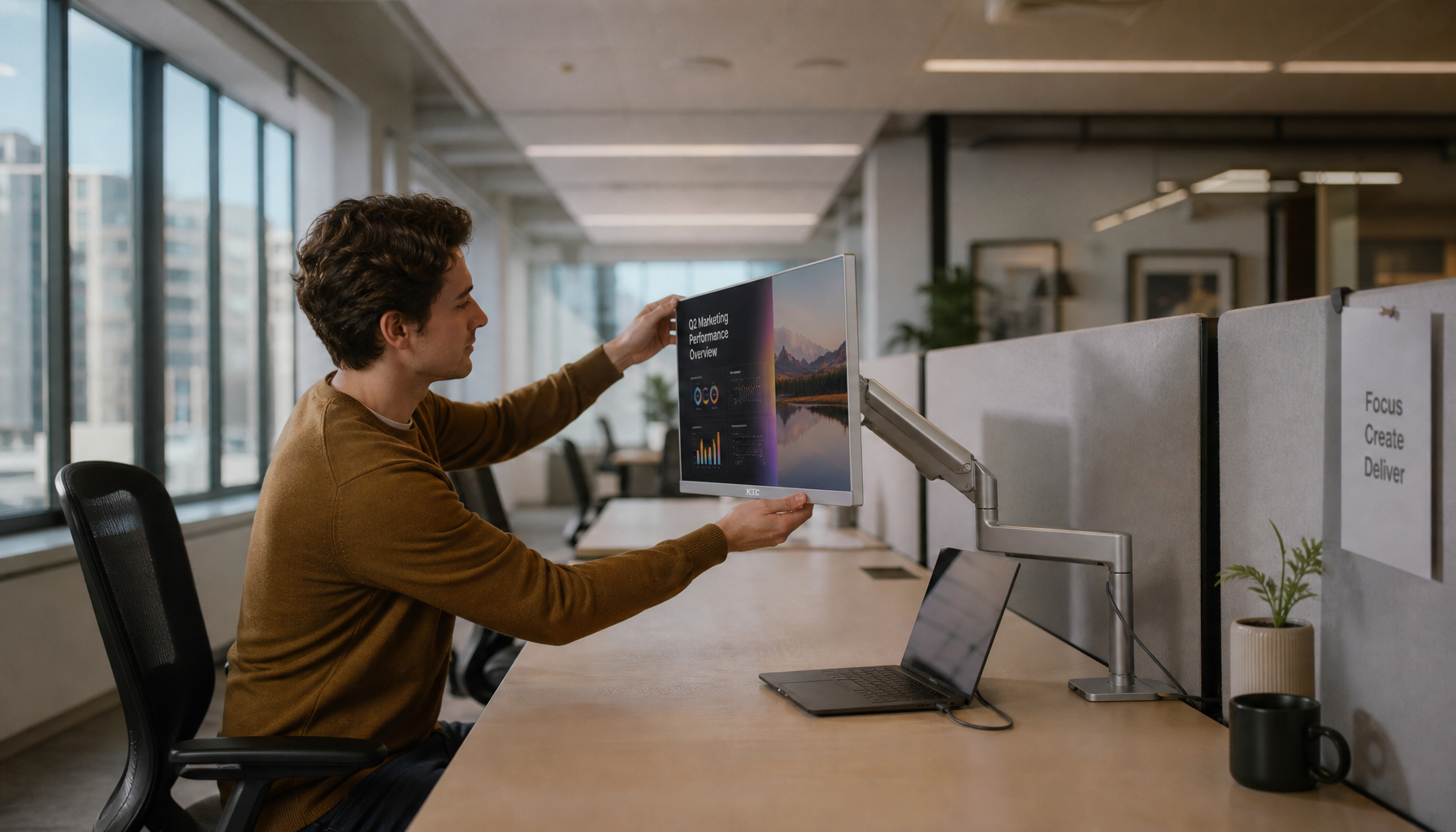
A display that is too high, too low, or angled poorly changes how you see contrast, especially on panels with weaker viewing angles. Height, tilt, swivel, and pivot adjustments are not comfort luxuries; they keep your eyes aligned with the panel’s best viewing zone. Work-monitor advice emphasizes adjustable stands because long screen sessions affect posture, fatigue, and visual comfort.
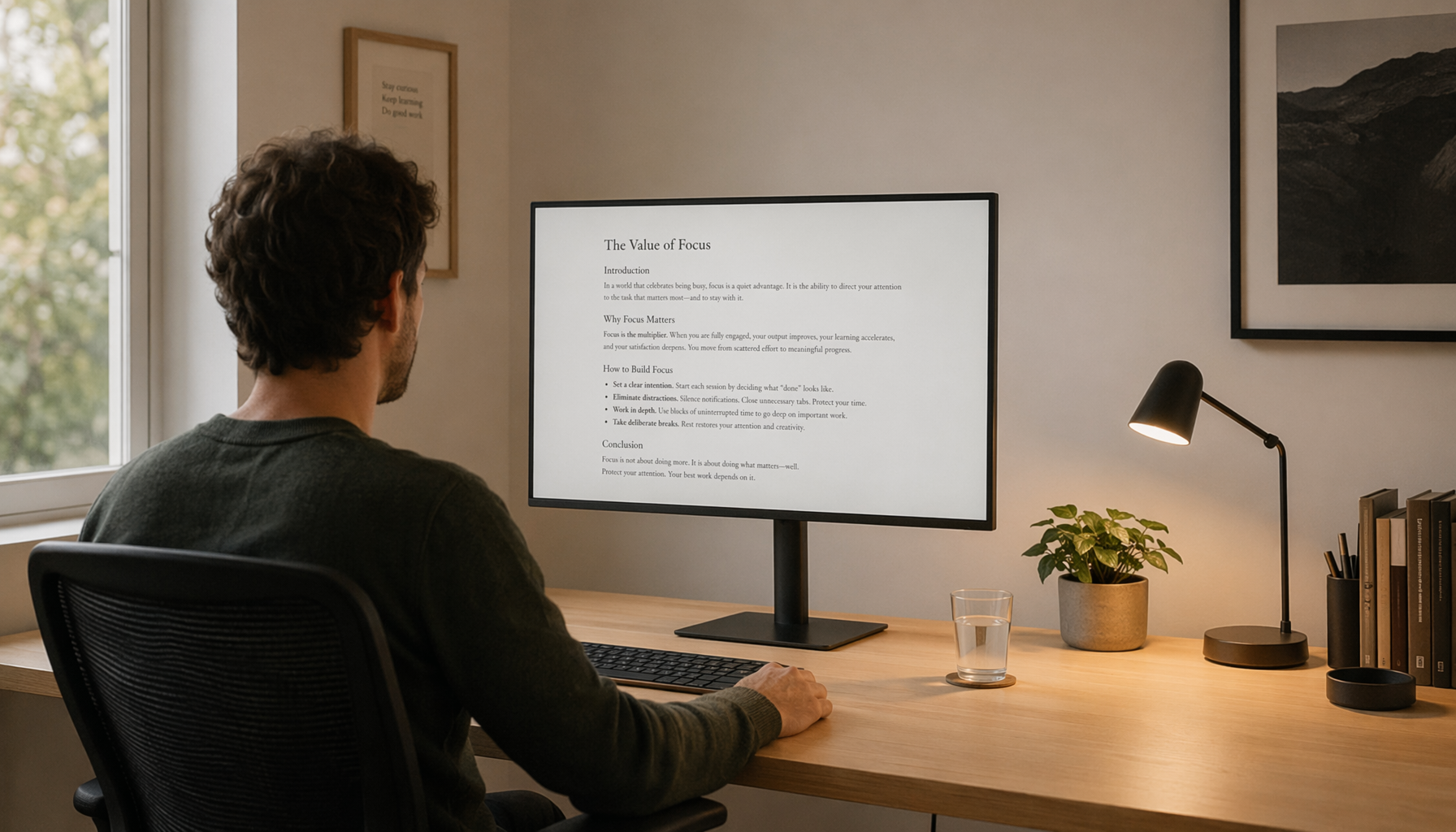
Set the top edge of the screen at or slightly below eye level, then sit far enough back to see the whole image without scanning aggressively. For a 27-inch monitor, a desk depth around 2 ft or more usually feels more controlled than a shallow desk. If you work on long portrait images, rotate the display when useful, but remember that your tonal judgment should still happen from a centered, stable viewing position.
Portable smart screens need the same discipline. Do not judge a conversion with the screen lying flat on a desk or tilted under overhead light. Prop it up, reduce reflections, and keep your eyes close to perpendicular to the panel.
Pros and Cons of Black and White Preview Modes
Black and white preview modes are powerful because they simplify the decision. They make subject separation, shape, texture, and light easier to read. They are especially helpful for landscape, architecture, abstract work, product photography, document cleanup, and any image where color distracts from structure.
The downside is that monochrome preview can hide color-channel problems. A red object and a green object may look similar in grayscale until you adjust the conversion mix. A dramatic monitor preset can make an image look finished before the file has enough tonal information. Some software or utilities can also trigger grayscale display modes unexpectedly, so if the whole operating system suddenly goes monochrome, check accessibility settings and third-party display tools before assuming the image file changed.
There is also a performance nuance in design and 3D software. Monochrome display modes are not always simple wireframes; in some CAD and modeling tools, they can include surfaces and shadowing rather than just black lines on white. For CAD or modeling work, test performance with representative files instead of assuming monochrome mode will always be lightweight.
A Practical Setup Workflow for Accurate Preview
Begin with the physical setup. Place the monitor where glare is controlled, align the top edge near eye level, and use a stable viewing distance. Then connect through the best available port and cable for your display, especially if you need high resolution or high refresh rate for mixed gaming and creative work.
Next, set native resolution, appropriate scaling, and the highest stable refresh rate your setup supports. Refresh rate will not change still-image tones, but a smoother display is easier to live with when you scroll, compare, and switch between apps. For hybrid users who edit by day and game by night, this keeps the setup responsive without compromising visual work.
Then choose a neutral display preset and turn off dynamic contrast, black equalizer, sharpness boosts, blue-light-heavy night modes, and aggressive game presets while editing. Set brightness for the room, check a grayscale ramp, and confirm that near-black and near-white steps remain visible.
Finally, open your image in color, create the black and white conversion, and compare tonal separation with the histogram visible. If you are working from camera files, keep RAW data available. If you are editing for print, client review, or cross-device delivery, check the export on at least one secondary screen, but make final tonal decisions on the most consistent display.
FAQ
Should I edit black and white on an OLED monitor?
OLED can be excellent for deep blacks and immersive contrast, but it is not automatically the safest editing choice. Static toolbars, timelines, and desktop elements can create burn-in risk, and the very deep blacks may tempt you into darker edits. Use OLED confidently for review and premium visual work, but keep brightness controlled and verify shadow detail carefully.
Is a gaming monitor good for black and white conversion?
A gaming monitor can be very good if it has a stable panel, native-resolution sharpness, and neutral display settings. Turn off game-specific visibility tools while editing. Features designed to win dark scenes are not the same as features designed to judge tonal accuracy.
Do I need a 4K monitor?
You do not need 4K for every black and white workflow, but higher resolution helps with edge detail, texture, and fine tonal transitions. A 27-inch QHD monitor is a strong value choice, while 4K is better for detailed photo editing, large documents, and mixed creative productivity.
Accurate black and white preview is a display discipline, not a single setting. Lock down resolution, brightness, contrast, panel behavior, and room ergonomics, then let the histogram keep your eyes honest. The result is a conversion that holds its shape beyond your own desk.