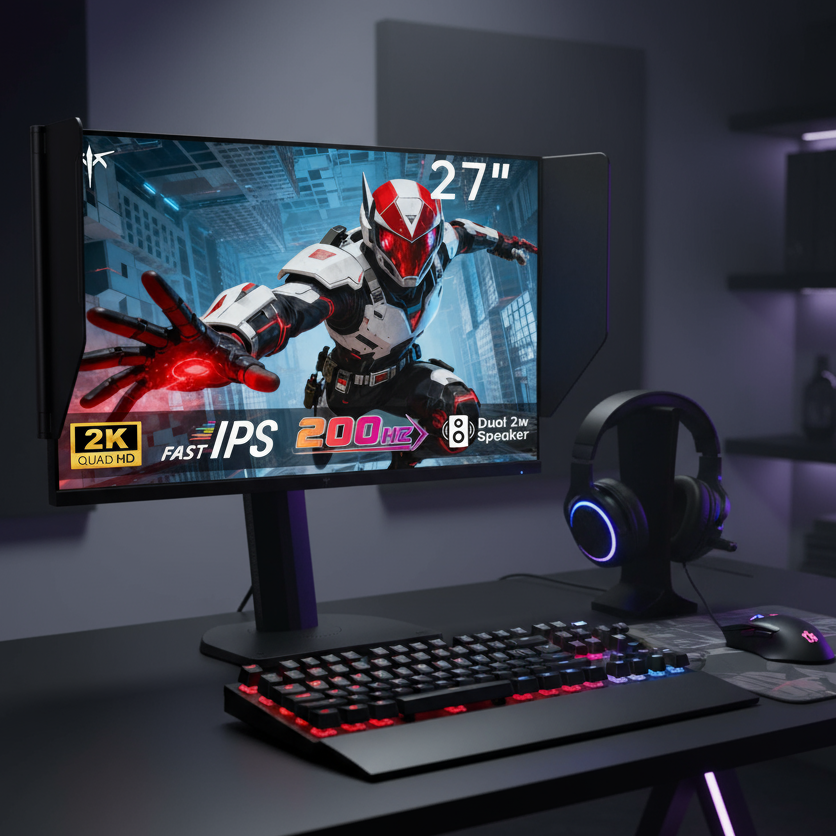
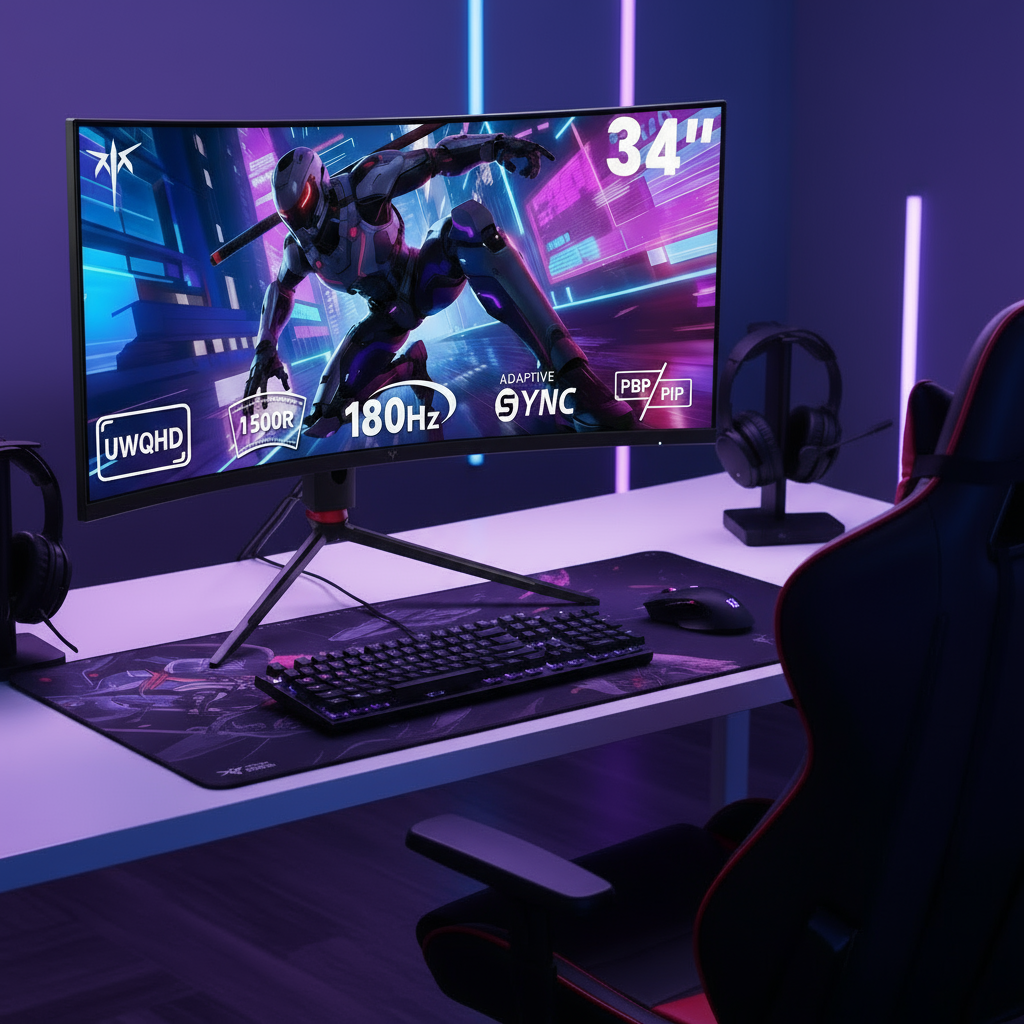




Yes, but only when the KVM, cables, ports, adapters, and monitor all support the exact signal you want. A strong KVM can preserve 4K high refresh, HDR, VRR, and USB control cleanly; a weak link can force lower refresh rates, black screens, flicker, or lost HDR.
Bandwidth Decides the Real Answer
High refresh rate and HDR are not simple on/off features. They are bandwidth demands.
A 4K 144Hz HDR signal asks much more from the chain than 1080p 60Hz. That chain includes the GPU output, cable, KVM input, KVM output, monitor port, and any adapter in between.

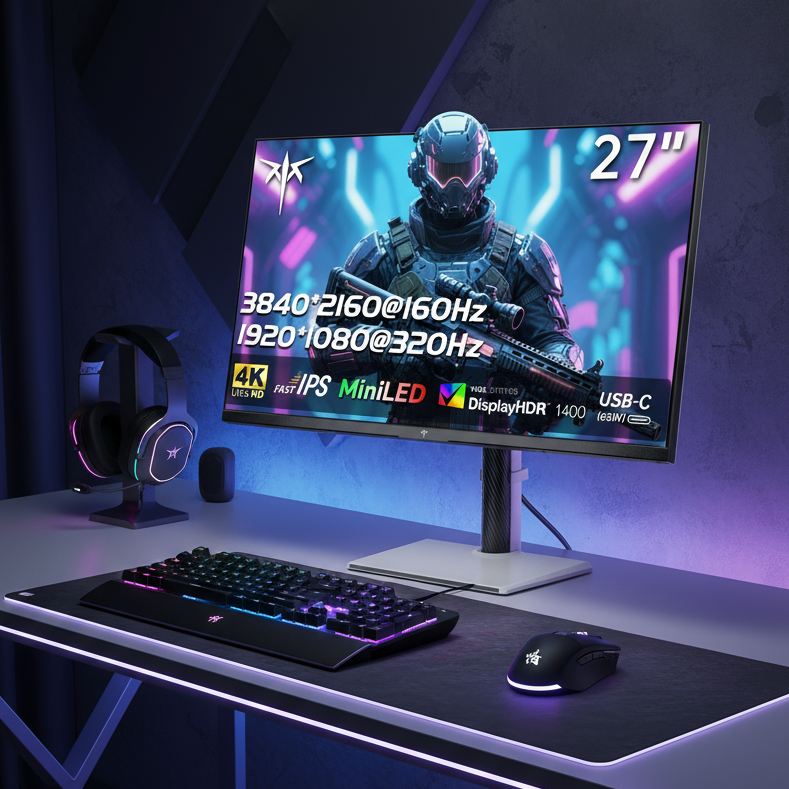
For modern gaming and creator setups, look for HDMI 2.1 or DisplayPort 1.4-class support. HDMI 2.1 KVMs are designed for demanding modes such as 4K at 120Hz and 8K-class workflows, while DisplayPort 1.4 models often target 4K high refresh and multi-monitor desktops.
The key is not the biggest number on the box. It is the exact mode: 1440p 240Hz, 4K 144Hz, 4K 120Hz HDR, or whatever your monitor actually runs.
Where Signal Degradation Happens
Most KVM failures are not mysterious. They usually come from bandwidth limits, poor cable quality, incorrect adapters, or incomplete display handshakes.
Artifacts, flicker, color distortion, screen tearing, blank screens, and incorrect scaling can appear when a KVM mishandles signal integrity or display identification data. EDID is especially important because it tells the computer which resolutions and refresh rates the monitor supports; poor EDID handling can make the system fall back to the wrong mode, as noted in display identification data.

Cable length also matters. With passive DisplayPort switching, the full route from GPU to monitor behaves like one long signal path. In high-refresh setups, staying around 10 ft total or less is a practical reliability target, especially if the KVM does not actively regenerate the signal.

Adapters are another common bottleneck. A DisplayPort-to-HDMI adapter may be directional, USB-C must support DisplayPort Alt Mode, and low-quality adapters can cap resolution, refresh rate, or HDR before the KVM is even involved.
HDR Needs More Than a Bright Monitor
HDR requires compatible hardware across the entire path. If the KVM or cable cannot pass the needed HDMI or DisplayPort standard, HDR may disappear from the operating system, games, or creative apps.
For HDR, the KVM should explicitly support HDR formats and the required video standard. Older HDMI or DisplayPort hardware may still show an image, but not the deep color, metadata, or bandwidth needed for HDR at high refresh.
This is where spec matching matters. A KVM advertised as “4K” may only mean 4K 60Hz SDR. For a premium gaming monitor or color-focused display, confirm HDR, refresh rate, chroma support, and HDCP pass-through before buying.
Some KVMs preserve the raw signal better by avoiding heavy processing, but that also makes cable quality and total cable length more important.
How to Choose Without Losing Performance
Treat the KVM like a performance component, not a desk accessory. A value-oriented setup is the one that keeps your monitor running at its native capability without constant troubleshooting.
Use this quick checklist:
- Match the KVM to your exact resolution and refresh rate.
- Choose HDMI 2.1 or DisplayPort 1.4/2.1 for demanding displays.
- Use short, certified cables with minimal adapters.
- Confirm HDR, VRR, adaptive sync, and HDCP support if needed.
- For dual monitors, give each display its own video path.
Multi-monitor users should be extra careful. A dual-display setup needs two video connections from each computer to the KVM, not one shared cable, and the switch must support the full performance mode on every active display. Multi-monitor KVM guidance consistently emphasizes matching monitor count and refresh rate before judging price.

Bottom Line
A high-quality KVM can pass high refresh rate and HDR signals without visible degradation when every part of the chain meets the spec. For gaming, editing, trading, streaming, and power-office workflows, the best KVM is the one that makes switching computers feel like a direct monitor connection: full refresh, full color, stable HDR, and no surprise dropouts.