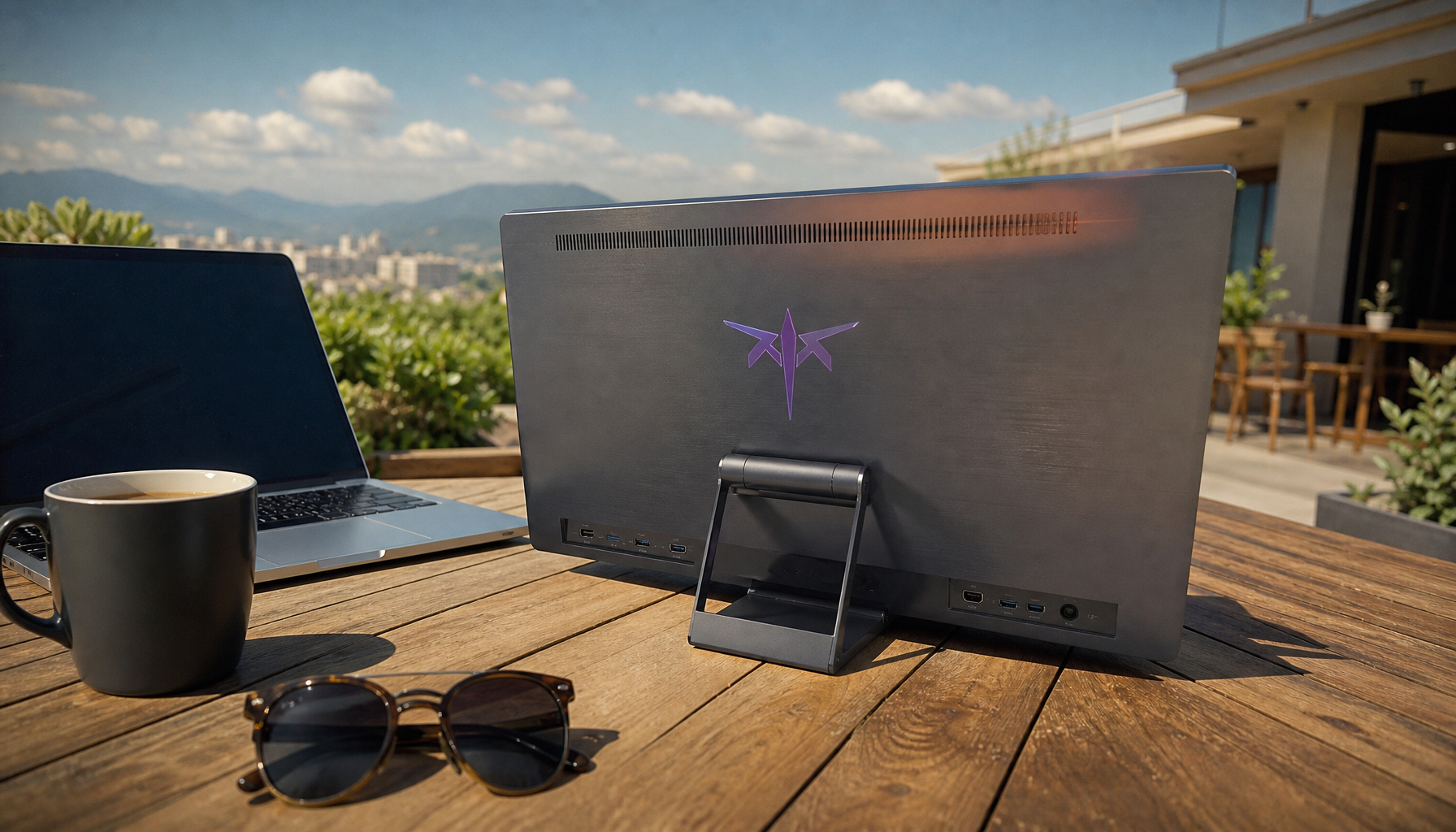
A USB-C monitor single cable setup works when your laptop supports video over USB-C, your monitor can supply enough power, and your cable is built for video, data, and charging. If any one of those pieces is missing, expect extra adapters or separate charging instead of a true one-cable desk.

Start With the Three Checks
Before you buy anything, check the laptop, the cable, and the monitor in that order. That sequence saves you from the most common regret: assuming that a USB-C plug shape alone guarantees video and charging.
- Confirm that your laptop's USB-C port supports video output. The VESA DP Alt Mode overview explains why a USB-C port can look right but still lack display output.
- Check the monitor's USB-C input and its Power Delivery wattage. USB Power Delivery is what lets the monitor charge the laptop up to the monitor's stated limit.
- Use a certified full-feature cable rated for video, data, and the charging level you need.
- If even one of those three parts is missing, the setup may still work, but usually not as a clean single-cable dock.
- For a quick compatibility follow-up, see How to Determine If Your Laptop Supports the Full Capabilities of Your USB-C Monitor.

A useful rule of thumb is this: if your laptop is already charge-limited or the port spec is unclear, plan on a separate charger until you verify the full path. That is especially true for hybrid-work laptops that ship with different wattage adapters by configuration.
How USB-C Carries Video, Power, and Data
For most buyers, the confusing part is that one connector can do several jobs, but only if the whole chain supports them. A USB-C monitor single cable setup is really three features working together: video, charging, and peripheral data.
DisplayPort Alt Mode in Plain English
DisplayPort Alt Mode is the feature that lets USB-C carry video. In plain language, it means the laptop can send a monitor signal over the same USB-C port you use for charging or accessories.
The catch is that not every USB-C port includes Alt Mode. So if a port charges a phone or passes data but does not support video, the monitor may stay black even though the cable fits. That is why the laptop spec sheet matters more than the connector shape.
Power Delivery Wattage and Charging Limits
USB Power Delivery is the charging side of the setup. The monitor can only charge the laptop up to its stated wattage, so a 65W USB-C docking monitor is often fine for light office work on many ultrabooks, but it can feel underpowered if your laptop normally expects a larger charger.
What this means in practice is simple: if you mostly browse, write, and use office apps, lower wattage may be enough. If you do heavier multitasking, charge through travel, or want the monitor to replace a larger brick, more wattage gives you more headroom.
Data Pass-Through for Peripherals and Hubs
Data is the third piece. If you want the monitor's downstream USB ports, keyboard, or mouse to behave like a light dock, the monitor and cable need to support more than video alone.
That is why a setup can still feel incomplete even when the screen lights up. You may get picture and charging but no useful USB passthrough, which is usually the point where people add a hub and lose the simplicity they wanted.
What Breaks the Chain in Real Setups
The weak link is usually one of four things: the laptop port, the monitor input mode, the cable rating, or the monitor's power budget. The USB Type-C Specification is a good reminder that the port family alone does not tell you which functions are actually active.
If you want the easiest path, start with a direct cable to a monitor that explicitly supports USB-C video input and enough PD for your laptop class. If you want the safest path, assume nothing until the first picture and charge test both pass.
MacBook Setup Steps
MacBooks can be very clean to dock, but they are also unforgiving when the input mode or scaling is off. For a USB-C monitor single cable setup, start simple and add features only after the display is stable.
- Connect the monitor directly to the MacBook with one full-feature USB-C cable.
- Select the monitor's USB-C input if it does not switch automatically.
- Wake the Mac and confirm it sees the display in system settings.
- If you get a black screen after sleep, reseat the cable before changing other settings.
- Try a lower initial resolution or refresh rate if the image appears only intermittently.
- Once the picture is stable, adjust scaling so text size feels right for your desk distance.
- Compare the monitor's PD rating with the Mac's usual charger wattage if charging looks slower than expected.
A MacBook-specific gotcha is that the display may be recognized but still look awkward because of scaling, sleep recovery, or color handling. If that happens, a productivity-focused monitor path may be easier to live with than a high-speed gaming panel, especially when text clarity matters more than refresh rate. For a related setup lens, see Best Monitor for Productivity: 4K, 5K, USB-C, and Color Accuracy.
Windows Setup Steps
Windows laptops are often more flexible on paper, but they still fail the same way if the port lacks video support or the first connection path is too complicated. The best first test is always the simplest one.
- Connect the monitor directly to the laptop before adding a dock or adapter.
- Open display settings and confirm the external monitor is detected.
- Leave the initial resolution and refresh rate conservative until the picture is stable.
- If Windows shows no signal, try a second USB-C port if the laptop has one.
- If the laptop charges but the display does not appear, treat that port as possibly power-only until proven otherwise.
- Add keyboard, mouse, and other docking features one at a time after the display works.
In real use, the biggest Windows frustration is not usually the monitor itself. It is that users change too many variables at once, then cannot tell whether the issue is the cable, the port, or the display mode. If you want a better explanation of that friction, Why Your Laptop Plus External Monitor Setup Feels Awkward is a useful companion read.
OSD and Cable Settings to Check
Even a compatible laptop and monitor can fail if the on-screen display or cable setup is wrong. This is where many no-signal complaints come from, because the hardware is fine but the handshake is not.
Input Source and USB-C Mode
The monitor input has to match the port you used. If the screen stays blank, first confirm that the monitor is actually set to USB-C or Type-C input instead of HDMI or DisplayPort.
That sounds basic, but it is one of the fastest fixes. People often assume the monitor will auto-detect everything, then spend time troubleshooting a cable that was never the problem.
Resolution and Refresh Rate Limits
Resolution and refresh rate are limited by the weakest link in the chain. That may be the laptop, the cable, or the monitor's USB-C implementation.
For a stable first test, start at a lower mode and work upward. If the image flickers or drops out, that is a sign to reduce the refresh rate or simplify the signal path before chasing a more advanced setting.
Cable Certification and Length
A certified full-function USB-C cable is the safer choice for docked use. The USB cable certification guidance exists because bargain cables can look fine but still fail when video, charging, and data all need to run together.
Length matters too. A longer cable is not automatically better. If the run is longer than needed or the cable is low quality, you can get the kind of unstable video that makes a clean desk feel less reliable than a simple HDMI setup.
Power and Hub Settings That Affect Stability
If the monitor has USB hub functions, treat them as part of the setup load. More functions over the same cable can increase the chance that a marginal cable or port becomes flaky.
A practical approach is to get the video and charging stable first, then add peripherals. That keeps the troubleshooting tree short and makes it easier to know whether a problem is power, input, or data.
Fix No Signal and Slow Charging
The most useful troubleshooting habit is to start with the least complex fix. Most USB-C monitor single cable setup problems can be narrowed down without replacing the monitor.
- Reseat both ends of the USB-C cable and confirm the monitor is on the correct input.
- Lower the initial resolution or refresh rate if the image only appears sometimes.
- Test a second USB-C cable that is rated for both video and the wattage you need.
- Check whether the laptop is awake, in sleep recovery, or set to output only on a specific display mode.
- If charging is slow, verify whether the monitor's PD rating is below the laptop's preferred charger wattage.
A good decision sentence here is: if the laptop charges but never shows video, treat the port as a video-compatibility problem first, not a power problem. If the monitor shows video but charging drifts or slows under load, the wattage ceiling is probably the real limit.
Choose the Right Monitor Path
The right monitor path depends less on brand and more on how much charging headroom you need. That is why a 65W USB-C monitor and a 90W USB-C monitor are not interchangeable for every buyer.
Scenario Matrix for Common Desk Setups
| Scenario | 65W USB-C PD Fit | 90W USB-C PD Fit | Separate Charger Likely | What To Check First |
|---|---|---|---|---|
| MacBook light work | Usually a good fit | Good fit with extra headroom | Less likely | Confirm video output and scaling behavior |
| Windows ultrabook docking | Often a good fit | Better if the laptop charges slowly | Depends on workload | Check port video support first |
| Mixed office and creator use | Sometimes enough | Usually the safer choice | Possible if workload is heavy | Compare workload to charger rating |
| Higher charging headroom needed | Usually not ideal | Better starting point | More likely if laptop draws more power | Verify whether the monitor can replace your charger |
For readers who want a simple browsing path, the 4K Monitor collection is the easiest category place to start, because the right fit often depends on resolution, refresh rate, and how much desk space you are trying to save.
If you want a concrete example of a one-cable monitor with 65W USB-C PD, the KTC Mini LED 27" 4K 160Hz HDR1400 Gaming Monitor | M27P6 is a relevant check point. It is best treated as a fit example for buyers whose laptop and workload stay within that charging range, not as a universal answer for every MacBook or Windows laptop.
Final Setup Checklist
Verify laptop USB-C video support first. Match the monitor PD rating to your actual charger needs rather than the highest number listed. Choose a certified full-feature cable and keep the desk run short. Test video output before adding any peripherals or hubs. If those four checks pass, the single-cable path usually stays reliable for daily hybrid work.
FAQs
Q1. How Do I Know If My Laptop Supports USB-C Video Output?
Look for DisplayPort Alt Mode, Thunderbolt video support, or a manufacturer statement that the USB-C port handles external displays. USB-C shape alone does not prove video output, so the spec sheet or manual is the safest place to confirm it.
Q2. What Wattage Do I Need for a USB-C Monitor to Charge My Laptop?
Use the monitor wattage as a ceiling, then compare it with your laptop's normal charger. If the monitor is below that level, it may still charge, but it can be slower or fall behind during heavier use.
Q3. Can One USB-C Cable Handle Video, Charging, and a Keyboard or Mouse?
Yes, if the laptop, monitor, and cable all support video, Power Delivery, and data. The weak link is usually the cable or the laptop port, so a full-feature cable matters more than most buyers expect.
Q4. Why Does My MacBook Sometimes Act Differently From My Windows Laptop?
MacBooks and Windows laptops can handle sleep, scaling, and external display detection differently. Even with the same cable, one system may wake cleanly while the other needs a cable reseat, a lower initial mode, or a settings tweak.
Q5. What Cable Should I Buy for a Reliable Single-Cable Setup?
Choose a certified full-function USB-C cable rated for the video and charging level you need. Avoid charge-only cables and bargain extras for docked use, because they are the most common reason a setup works only part of the time.
Related Resources
Explore more setup guidance and monitor options that match common single-cable workflows:
- KTC 27" 4K 160Hz/320Hz 90W Gaming Monitor | H27P6
- DisplayPort Alternate Mode Over USB-C: How Video, Data, and Power Share the Same Lanes
- How to Identify If Your USB-C Monitor’s Power Delivery Is Sufficient for Your Workflow
- Why USB-C to USB-C Display Connections Sometimes Flicker or Drop Signal
- KTC 49" DQHD 180Hz 1000R Curved Gaming monitor丨H49S66
- Ultrawide & Portable Displays
- Premium Display Signal Cables for Gaming & Productivity Monitors
- Gaming Monitor