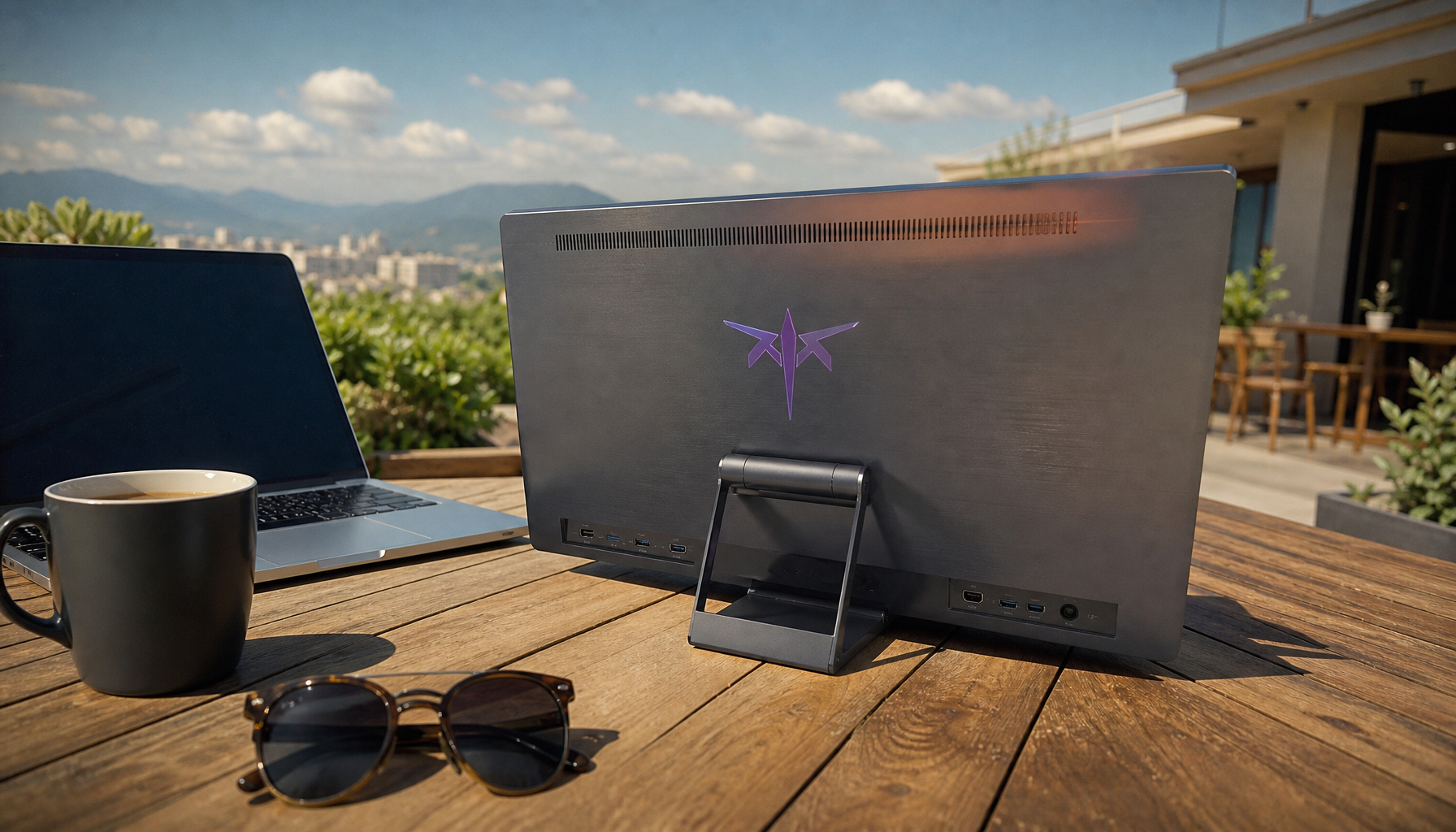
Your USB-C monitor has enough Power Delivery when its wattage meets or exceeds your laptop’s real charging demand during your heaviest normal workload, with extra headroom for battery recovery and connected peripherals.
Is your laptop slowly draining while plugged into a one-cable monitor setup? A 65W USB-C display can be perfect for office work, while a 140W model is a better match for many higher-performance laptops. The right check takes only a few spec lookups and one practical stress test. You’ll learn how to read the wattage, verify the port, and decide whether your monitor can truly replace a charger or dock.
Why USB-C Power Delivery Matters
USB-C has made monitor desks cleaner, but the connector can be misleading. A USB-C port may carry video, data, charging, or only some of those features. USB Power Delivery, often shortened to USB PD, is the charging protocol that lets a USB-C connection negotiate higher power levels instead of simply acting like a basic data port.
That distinction matters because a monitor can look like a docking station while still falling short as a power source. USB-C Power Delivery is separate from the USB-C connector itself, so the shape of the port does not prove charging capability. For a productivity display, that means your cable may run the screen but fail to keep your laptop battery stable. For a gaming or creator laptop, it may charge at idle but lose ground during rendering, gaming, exporting, or multi-display work.
Start With the Monitor’s Power Delivery Rating
The first number to find is the monitor’s USB-C Power Delivery output, usually listed as 45W, 60W, 65W, 90W, 96W, 100W, or 140W. Independent testing of USB-C monitors notes that many models sit around 65W to 90W, while higher-end options can reach 140W and the broader specification can go higher. A budget office USB-C display may offer 65W, while a premium docking-style model may offer 140W.
A practical example makes the difference clear. A lightweight 13-inch business laptop that ships with a 45W or 65W charger will usually be comfortable on a 65W monitor for writing, browser work, spreadsheets, video calls, and light photo edits. A 16-inch performance laptop that ships with a 100W, 140W, or larger charger may run on a 65W monitor, but the battery can still drop when the CPU, GPU, screen brightness, and USB accessories are active at the same time.

Monitor USB-C PD Rating |
Best Fit |
Likely Limitation |
45W |
Thin ultraportables and tablets |
Slow charging under load |
65W |
Mainstream office laptops |
Weak for high-performance laptops |
90W to 100W |
Premium productivity laptops |
May still trail gaming or workstation chargers |
140W |
Larger creator and power-user laptops |
Better headroom, usually higher monitor cost |
Match Power Delivery to Your Real Workflow
A monitor’s PD rating should not be judged only against idle charging. It should match the way you actually use the machine. Office productivity is usually forgiving: email, cloud apps, documents, calls, dashboards, and light multitasking rarely pull laptop power as aggressively as gaming, compiling code, AI workloads, video export, or 3D rendering.
For mixed-use desks, compare the monitor wattage with the laptop’s original charger. If your laptop came with a 65W charger and the monitor supplies 65W, you are in the right zone. If the laptop came with a 100W charger and the monitor supplies 65W, expect slower charging and possible battery drain during demanding work. If the laptop came with a 140W charger and you care about sustained performance, a 140W USB-C monitor or the original charger is the more reliable power path.
This is especially important for gaming displays and high-refresh workflows. Competitive gaming guidance consistently emphasizes matching the display to system performance; a high-refresh monitor only helps when the PC can feed it enough frames. The same logic applies to power. A laptop pushing an external display, peripherals, and high frame rates needs more energy than the same laptop writing a document. Gaming monitor choice depends on system capability, and Power Delivery is part of that capability when the monitor is also your charger.
Confirm the USB-C Port Supports the Right Functions
Power is only one part of the one-cable promise. Your laptop’s USB-C port must also support the features you expect, especially DisplayPort Alternate Mode for video and USB PD for charging. A monitor can offer excellent power output, but your laptop port still needs to accept charging over USB-C. Likewise, a laptop can charge over USB-C but require a separate HDMI or DisplayPort cable if that port lacks video output.
The most reliable check is the laptop manufacturer’s technical specifications. Look for wording such as USB-C charging, USB Power Delivery, DisplayPort Alt Mode, or USB4. DisplayPort Alternate Mode lets USB-C carry video like a DisplayPort cable, which is critical when you want a monitor to handle image, data, and charging through one connection.
Symbols near the port can help, but they are not enough on their own. A lightning icon may indicate charging or a high-bandwidth port, while a DisplayPort mark may indicate video. Documentation is still the authority because manufacturers use labels differently, and some laptops include several USB-C ports with different capabilities.

Check the Cable Before Blaming the Monitor
A weak or wrong cable can make a good USB-C monitor behave badly. Some USB-C cables are meant mainly for charging, some are built for data and video, and some support higher current levels than others. If your monitor supports 90W or 140W but the cable is limited, the system may negotiate a lower power level or fail to deliver stable video and charging together.
Use the cable that shipped with the monitor when possible. If replacing it, buy a cable that explicitly supports the wattage, video mode, and data speed you need. For a premium docking monitor with 4K, high refresh, Ethernet, USB hub features, and strong Power Delivery, a vague “USB-C charging cable” is not specific enough. Certified high-bandwidth USB-C cables are often the cleaner choice for demanding setups.

Run a Real-World Power Test
Once the specs look right, test the setup under your normal workload. Charge the laptop to around 50% to 80%, connect it to the monitor with the intended cable, and use your heaviest routine for 30 to 60 minutes. For an office user, that might mean a video call, browser tabs, a spreadsheet, cloud storage sync, and a second app open. For a gaming or creator user, it may mean launching the game, editor, render, or benchmark you actually use.
The result is easy to interpret. If battery percentage rises slowly or stays stable, the monitor’s Power Delivery is sufficient for that workload. If the battery falls while plugged in, the monitor is not supplying enough power for sustained use. If it charges when idle but drops under pressure, the setup is acceptable for light work but not enough for performance sessions.
For a more technical confirmation, a USB-C power meter or PD tester can show negotiated voltage, current, and wattage. USB Power Delivery testers are designed to evaluate whether USB ports and chargers meet expected charging behavior, which is useful when a laptop, monitor, or cable is not behaving as advertised.

Understand the Pros and Cons of Monitor-Based Charging
The biggest advantage is desk efficiency. A USB-C monitor can reduce cable clutter, replace a basic dock, charge the laptop, connect peripherals, and drive the display through one connection. For office productivity, that reliability matters every day because plugging in becomes a single motion instead of a small routine of power bricks and adapters.
The trade-off is that monitor charging is not always as strong as the original laptop charger. A 65W USB-C monitor is clean and efficient for mainstream work, but it is not a universal power station. High-performance laptops may limit performance, charge slowly, or drain under load. Premium monitors with stronger Power Delivery also cost more, so the value question is whether the monitor is replacing only a display cable or replacing a charger, hub, and dock together.
When 65W Is Enough and When It Is Not
A 65W USB-C monitor is usually a smart value for mainstream office laptops, ChromeOS laptops, compact ultraportables, tablets, and portable work setups. It fits the user who wants fewer cables, a clean desk, stable video calls, and solid productivity without running heavy sustained workloads.
A 90W to 100W monitor is the better middle ground for premium productivity laptops, heavier multitasking, light creative work, and users who keep several peripherals attached to the monitor hub. A 140W monitor makes more sense when the laptop is larger, newer, performance-oriented, or expected to run demanding workloads while charging from the display. Premium 140W Power Delivery models are better connectivity options for users who want the monitor to behave more like a full dock.
FAQ
Can a USB-C monitor damage my laptop if the wattage is too high?
No, not when USB Power Delivery is working correctly. The laptop and charger negotiate power, so a 140W-capable monitor does not force 140W into a laptop that only requests less. The real risk is usually the opposite: buying a monitor that supplies too little power for the laptop’s workload.
Why does my laptop say it is charging but still lose battery?
That usually means the monitor is supplying some power, but not enough for the laptop’s current demand. A 65W feed may cover idle work and light browsing, then fall behind when the processor, graphics, external display, and peripherals are all active.
Does a high-bandwidth USB-C port mean better charging?
Not automatically. High-bandwidth USB-C standards can provide strong video and data performance, but you still need to check the monitor’s Power Delivery wattage and the laptop’s charging requirements. Treat the port standard as a connectivity advantage, then verify power separately.
Final Check
A sufficient USB-C monitor is not the one with the cleanest cable promise; it is the one that holds your laptop steady during the work that matters. Match the monitor’s PD wattage to your laptop charger, confirm USB-C charging and video support, use the right cable, then run a real workload test. If the battery stays stable under pressure, your one-cable setup is ready for serious daily use.