Some display cables are directional because they contain active electronics, signal conversion chips, or fiber-optic transmitters and receivers that move video from a specific source to a specific display.
Directional Cables Are Usually Active, Not Broken
A basic passive HDMI or DisplayPort cable is mostly a tuned electrical pathway. If both ends use the same connector type and the cable is truly passive, direction usually should not matter.
Directional behavior appears when the cable does more than carry pins from end to end. A USB-C to DisplayPort cable, for example, may be built to take video from a USB-C laptop and send it to a DisplayPort monitor, but not the reverse. That is why a unidirectional USB-C to DisplayPort cable can support demanding modes like 4K at 240 Hz while still failing from a DisplayPort PC to a USB-C screen.

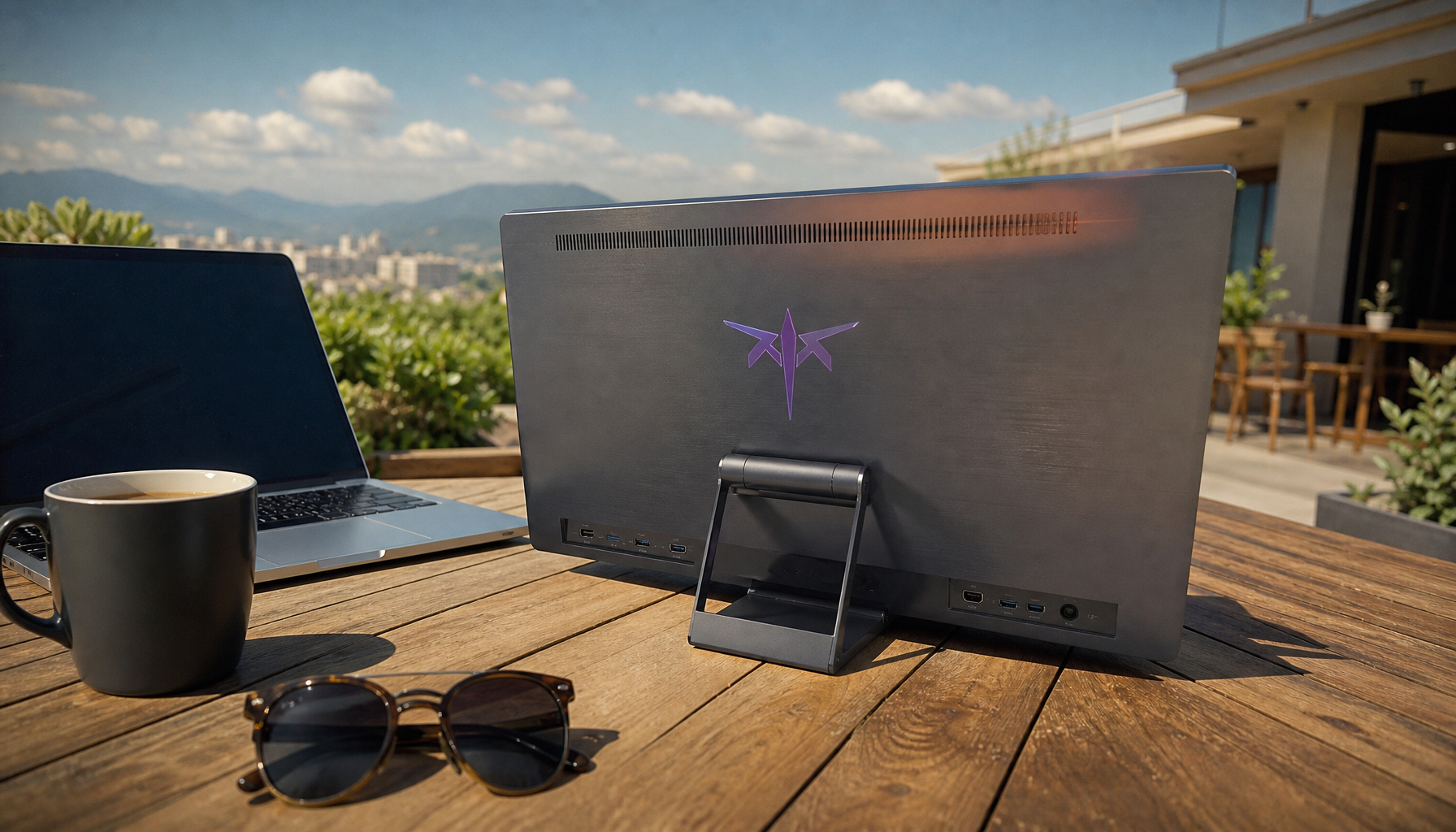
This matters most in performance setups. A gaming monitor, docking station, or portable smart screen may use familiar connector shapes, but the actual signal flow is controlled by the cable electronics and the ports behind them.
USB-C Makes Direction More Confusing
USB-C is physically reversible, but that does not mean every USB-C cable or USB-C port supports every function. USB-C can carry video only when the device supports the right alternate mode, such as DisplayPort Alt Mode.
That is the common trap: the plug fits, the cable looks capable, and the monitor still stays black. A USB-C monitor cable may support video, charging, and data, but compatibility still depends on the connected devices supporting those same features. Some USB-C monitor cables advertise 4K at 120 Hz, 8K at 30 Hz, 240 W charging, and 20 Gbps data, but those numbers are not unlocked by the connector alone.
For portable smart screens, this is especially important. One USB-C port on a laptop may support charging only, while another supports display output. Same shape, different capability.

DisplayPort, HDMI, and Adapters Do Not All Convert Both Ways
DisplayPort is a packet-based digital display interface designed for high bandwidth, audio, video, and multi-monitor features like MST, according to the packet-based digital display interface. HDMI and DisplayPort, however, do not speak the same native language.
Some DisplayPort ports support Dual Mode DisplayPort, often called DP++, which can output HDMI-like signaling through a simple adapter. The reverse path, from an HDMI source to a DisplayPort monitor, usually needs an active converter because HDMI cannot become DisplayPort through wiring alone.
That is why “DP to HDMI” and “HDMI to DP” are not interchangeable labels. For office productivity displays, this can be the difference between a clean dual-monitor rollout and a set of adapters that only work at one desk.
Cable Quality Still Matters, But Not Like Analog
With modern digital display cables, a more expensive cable does not gradually make the image sharper. The signal works, drops out, flickers, corrupts, or fails. VESA notes that a certified DisplayPort cable is the safer choice because certified cables are tested for required bandwidth and reliability, especially for demanding display modes like 4K and multi-stream setups through certified DisplayPort cables.
Directionality is also common in longer active or fiber-optic cables. These may have a “Source” end and a “Display” end because the transmitter and receiver are physically different. That design helps preserve high-bandwidth signals across longer runs, but it removes the convenience of flipping the cable.

If a cable works one way and not the other, it may be perfectly healthy. It may simply be doing exactly what its internal design allows.
Quick Buying Checks Before You Plug In
Use these checks before buying for gaming, office, or portable display setups:
- Match signal direction: source device to display input.
- Check labels: look for “Source,” “Display,” or “unidirectional.”
- Confirm USB-C video support, not just charging.
- Prefer direct cables over adapter chains.
- Choose certified cables for high refresh rates.
For a 4K 144 Hz or ultrawide gaming monitor, treat the cable as part of the performance system, not an afterthought. For office displays, prioritize reliability and repeatability. For portable smart screens, confirm both power and video behavior before assuming one USB-C cable can do it all.