Two identical monitors can feel slightly different because input lag depends on firmware, picture mode, refresh timing, scaling, source settings, heat, and measurement method. A careful side-by-side test can show whether the difference comes from the display or the rest of the signal chain.
Does one of your matched monitors feel sharper while the other makes aiming, typing, or cursor movement feel a half-step late? A practical side-by-side test can separate true display delay from PC, cable, mode, and measurement noise, so you know whether to tune settings, exchange a unit, or stop chasing a difference that is below real-world visibility.
The Short Definition: Input Lag Is Not Response Time
Input lag is the delay between your action and the visible result on screen, while response time describes how quickly pixels change once the display has started updating. That distinction matters because a monitor with a “1 ms” response-time claim can still feel delayed if its processing path is slow; input lag is the total delay you actually feel when clicking, aiming, dragging a window, or typing.

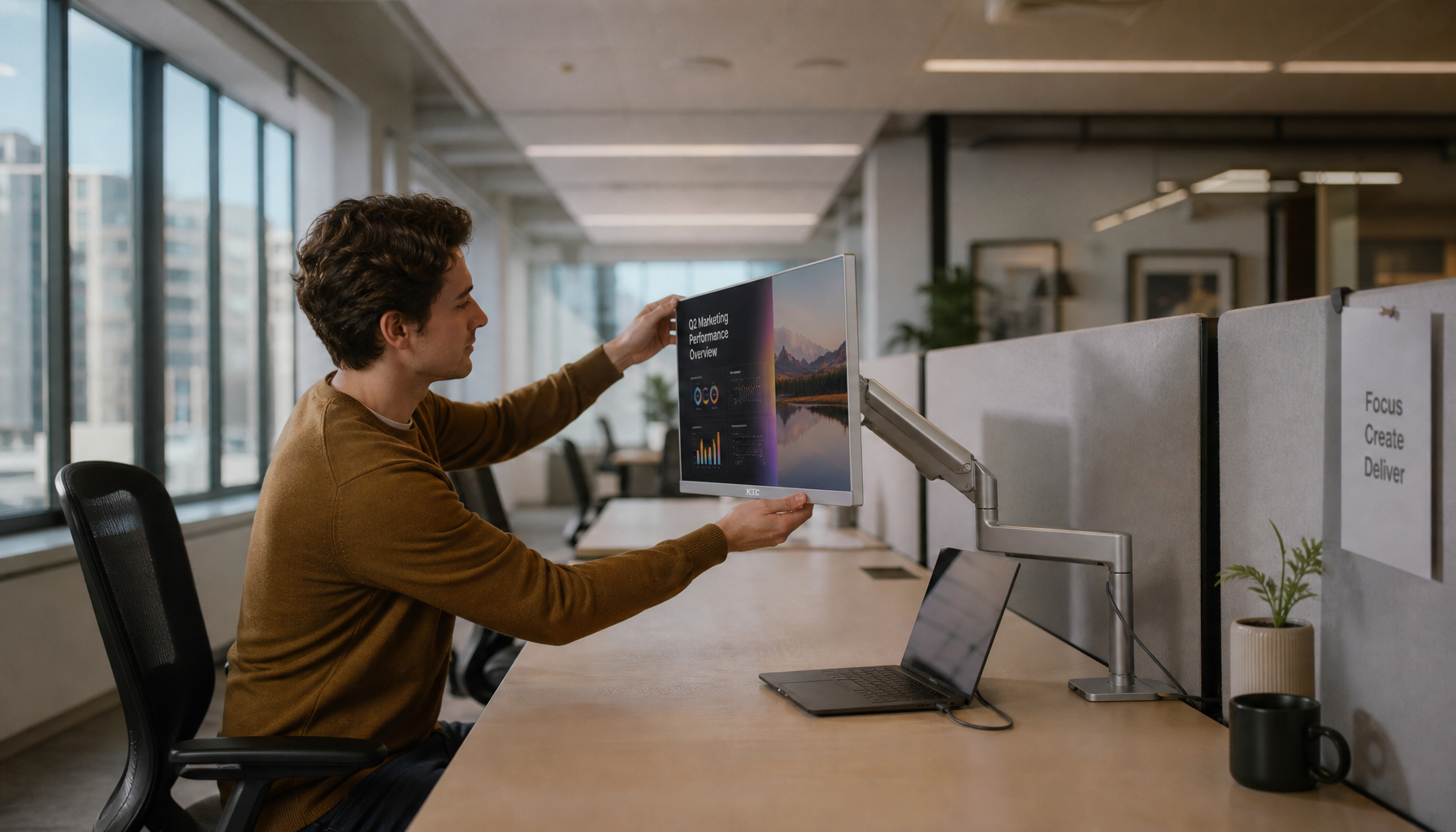
For gaming, that delay can break rhythm in shooters, fighting games, racing games, and competitive titles. For office work, it usually shows up as a cursor that feels heavy, a spreadsheet that trails your scroll, or a portable smart screen that feels less direct than your laptop panel. Sensitivity changes by use case, but diagnosis starts the same way: isolate the monitor from the rest of the chain.
Why Identical Batch Monitors Can Still Differ
Factory Tolerances Are Real, Even When the Model Number Matches
Two displays from the same production batch are built to the same design target, not cloned at the electrical level. Components such as scaler chips, timing controllers, memory, panel electronics, and backlight systems operate within accepted tolerances. If both units pass quality control, one may still complete signal processing slightly faster than the other.
The important point is scale. For many modern gaming monitors, the difference between two good samples is often small enough that the PC pipeline, refresh rate, and test method can hide or exaggerate it. Testing data suggests that different screen sizes with the same model number usually have nearly identical input lag, which supports the practical view that design and mode matter more than batch variation in most cases.
For example, if one 144 Hz monitor begins updating one frame earlier than another, that is about 6.9 ms at the frame level. If the difference is only a fraction of a refresh cycle, it may feel meaningful in a flick shot but nearly invisible when editing documents or moving between browser tabs.
Firmware and Internal Processing May Not Be Identical in Practice
Even identical-looking monitors can behave differently if firmware revisions, service menu defaults, or internal calibration data differ. A monitor’s display latency can be affected by processing, scaling, image enhancement, scanout behavior, and pixel transitions; Game Mode often reduces display-side processing by cutting unnecessary enhancement layers.
This is where “same batch” can mislead buyers. One unit may ship with a slightly different firmware build or a different default picture mode after reset. One may have noise reduction, dynamic contrast, sharpening, HDR handling, local dimming, or a non-native scaling path active. Those options are usually marketed as visual improvements, but they can add work before the frame appears.
For a competitive setup, the faster unit is often the one with fewer image-processing steps enabled. For an office productivity display, the better unit may be the one with clearer text, stable USB-C behavior, and ergonomic comfort, even if its latency is a few milliseconds slower.

Refresh Rate, VSync, and Frame Timing Can Make Twins Look Unequal
The Monitor May Not Be the Source of the Difference
End-to-end input lag includes the peripheral, USB path, CPU, GPU, game engine, render queue, refresh interval, display processing, and pixel transition. Input processing can pass through the CPU and GPU before the next rendered frame appears, with system rendering and processing often adding far more delay than a fast monitor’s internal electronics.
This is why swapping ports matters. If Monitor A is connected at 240 Hz and Monitor B is connected at 120 Hz, they are not being tested equally. If one is running native resolution while the other is being scaled by the monitor, the slower result may come from scaling rather than panel variance.
A simple calculation makes this clear. At 60 Hz, a full refresh interval is 16.67 ms. At 120 Hz, it is 8.33 ms. At 144 Hz, it is about 6.9 ms. At 240 Hz, it is about 4.17 ms. If your “identical” monitors are not locked to the same refresh rate and timing path, the comparison is already compromised.
VSync Can Add Delay Before the Monitor Ever Receives the Frame
VSync can make motion look smoother by aligning frame delivery with the display refresh, but it may increase latency because frames wait before presentation. A measurement study found that disabling VSync generally minimizes latency, while enabling it improves fluidity at the cost of added delay.
That does not mean VSync is always wrong. For story-driven games, office presentations, and video playback, smoothness may be worth more than the lowest possible latency. For esports, rhythm games, and fighting games, a low-latency path with VRR, a stable frame-rate cap, or a tuned fullscreen mode is usually more responsive.
Picture Modes and Scaling Are Common Hidden Causes
The fastest preset is usually Game, FPS, Instant, or a similarly named mode. Slower presets are often Standard, Cinema, HDR-heavy, or modes with extra image treatment. On console and PC displays, picture mode can affect input lag because sharpening, enhancement, HDR paths, strobing, black frame insertion, and scaling may add processing.
If two monitors from the same batch feel different, reset both and configure them identically. Use native resolution, the highest shared refresh rate, the same color mode, the same overdrive level, the same adaptive sync setting, and the same cable type where possible. Then test again.
Setting Area |
Lower-Lag Choice |
Possible Trade-Off |
Picture mode |
Game, FPS, or Instant |
Less image enhancement |
Resolution |
Native panel resolution |
UI scaling may need adjustment |
Sync behavior |
VRR or tuned frame cap |
Requires compatible GPU and display |
Image processing |
Minimal enhancement |
Less punchy showroom look |
Connection |
Stable full-bandwidth connection |
Cable quality matters |
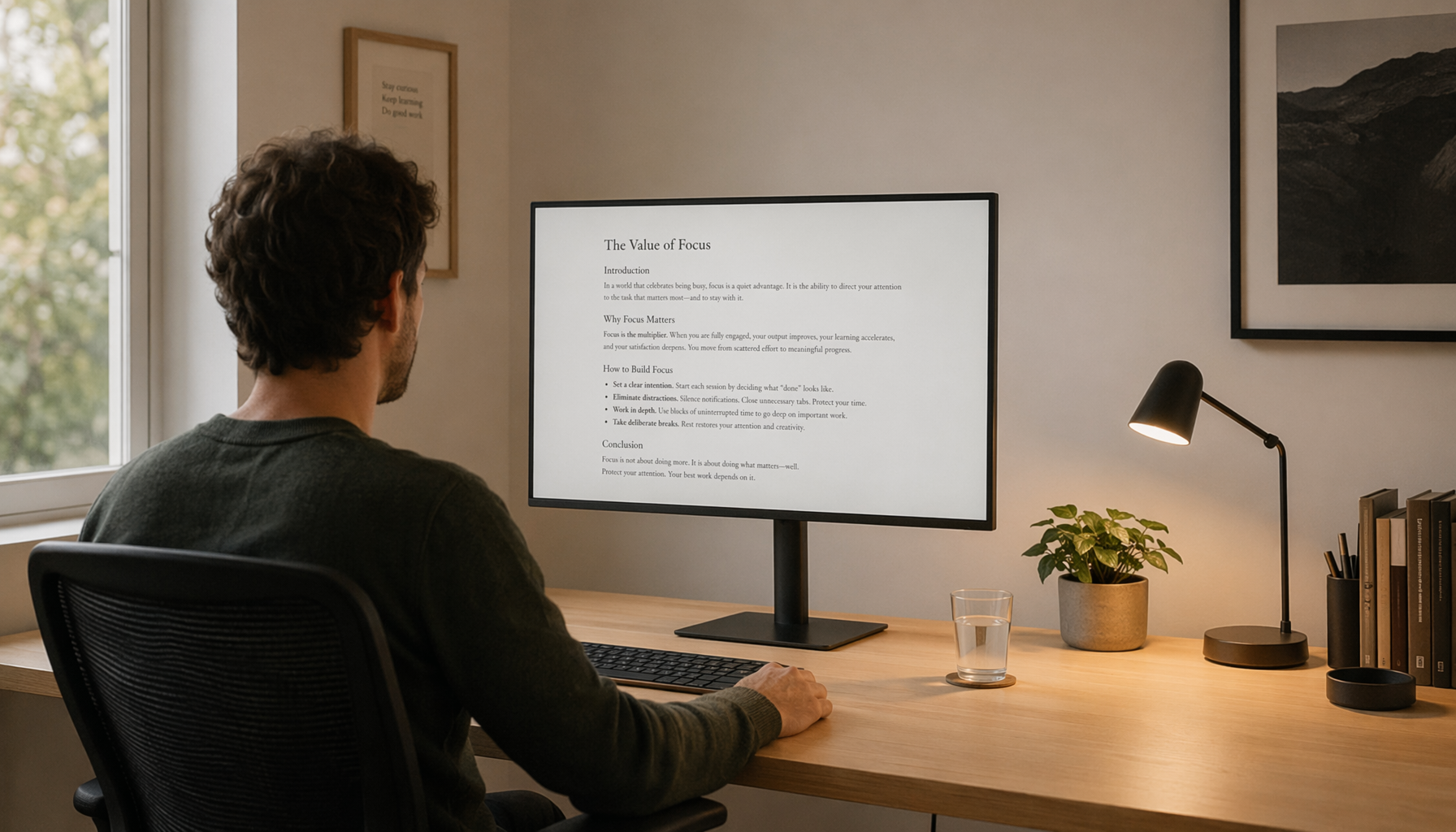
For office monitors and portable smart screens, do not chase gaming latency at the expense of usability. A home-office setup should still prioritize viewing distance, height adjustment, text clarity, and stable connectivity; an ergonomic monitor is valuable because many workers stare at screens for long sessions, and 20 to 24 inches from the eyes is a practical starting range for comfort.
Measurement Noise Can Look Like Batch Variation
Home latency testing is useful, but it is easy to overread one result. One at-home method records a keyboard LED and screen reaction with a high-speed camera, then counts frames; the same method recommends repeating tests several times and averaging results because single runs vary.
That matters when comparing two identical displays. If one run shows Monitor A at 9 ms and Monitor B at 13 ms, that may be real, or it may be camera timing, screen position, refresh phase, animation judgment, or PC load. A better test repeats the same condition several times, swaps cables and ports, then swaps monitor positions. If the same monitor remains slower after the swap, the display is more likely responsible.

The cleanest practical comparison is not “how fast is this monitor in absolute terms?” It is “does the same monitor remain slower under the same source, same cable, same mode, same refresh rate, and same content?” That question protects you from blaming the panel for a GPU queue, a USB polling issue, or a bad test angle.
Pros and Cons of Chasing the Difference
Lower input lag gives you more immediate control, cleaner timing, and a stronger sense of connection to the screen. In competitive gaming, that can make mouse tracking feel more predictable and reduce the gap between intent and feedback. On a portable smart screen, lower latency can make touch, stylus movement, and secondary-display cursor work feel more natural.
The downside is that the lowest-lag mode may reduce image processing, tone mapping, brightness behavior, or motion features. Aggressive speed settings can also introduce visual trade-offs such as ghosting or inverse ghosting if overdrive is pushed too hard. For productivity, a 4K USB-C monitor with excellent text clarity, stable power delivery, and strong ergonomics may be the better tool than a faster panel with weak office features.
What to Do Before Returning One Monitor
First, put both monitors on factory reset, then manually match every relevant setting. Use native resolution, the same refresh rate, the same input type, the same picture preset, and the same adaptive sync state. Disable heavy enhancement, sharpening, motion smoothing, strobing, and monitor-side scaling while testing.
Next, swap cables and GPU ports. If the lag follows the cable or port, the monitor is not the main issue. If the lag stays with the same physical display, update firmware if the manufacturer provides a supported path, then test again.
Finally, decide by use case. For a pro gaming monitor, a consistent, noticeable delay in the faster modes is a valid reason to exchange the slower sample. For an office productivity display, prioritize text, comfort, connectivity, and reliability unless the lag is obvious during typing, scrolling, or pointer movement. For a portable smart screen, test the exact device path you will use every day, especially USB-C single-cable mode, touch response, and the laptop’s external-display refresh limit.
Closing Judgment
Identical production-batch monitors should be close, but they do not have to feel perfectly identical. Treat input lag as a full signal chain problem first, then a monitor defect question second. The winning display is the one that stays responsive under matched settings while still delivering the clarity, comfort, and immersion your setup actually needs.