


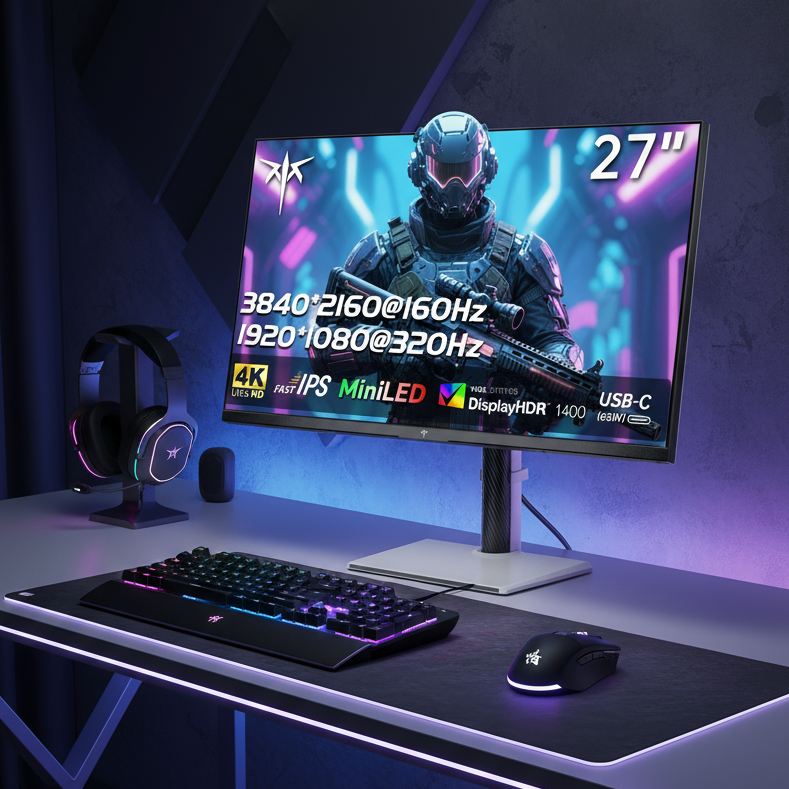
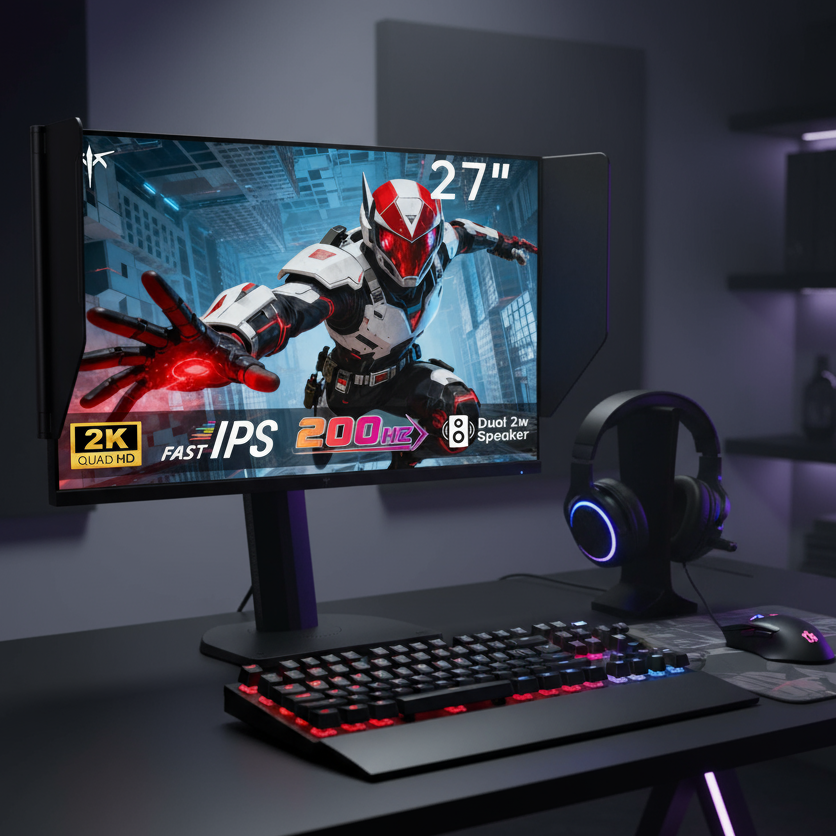
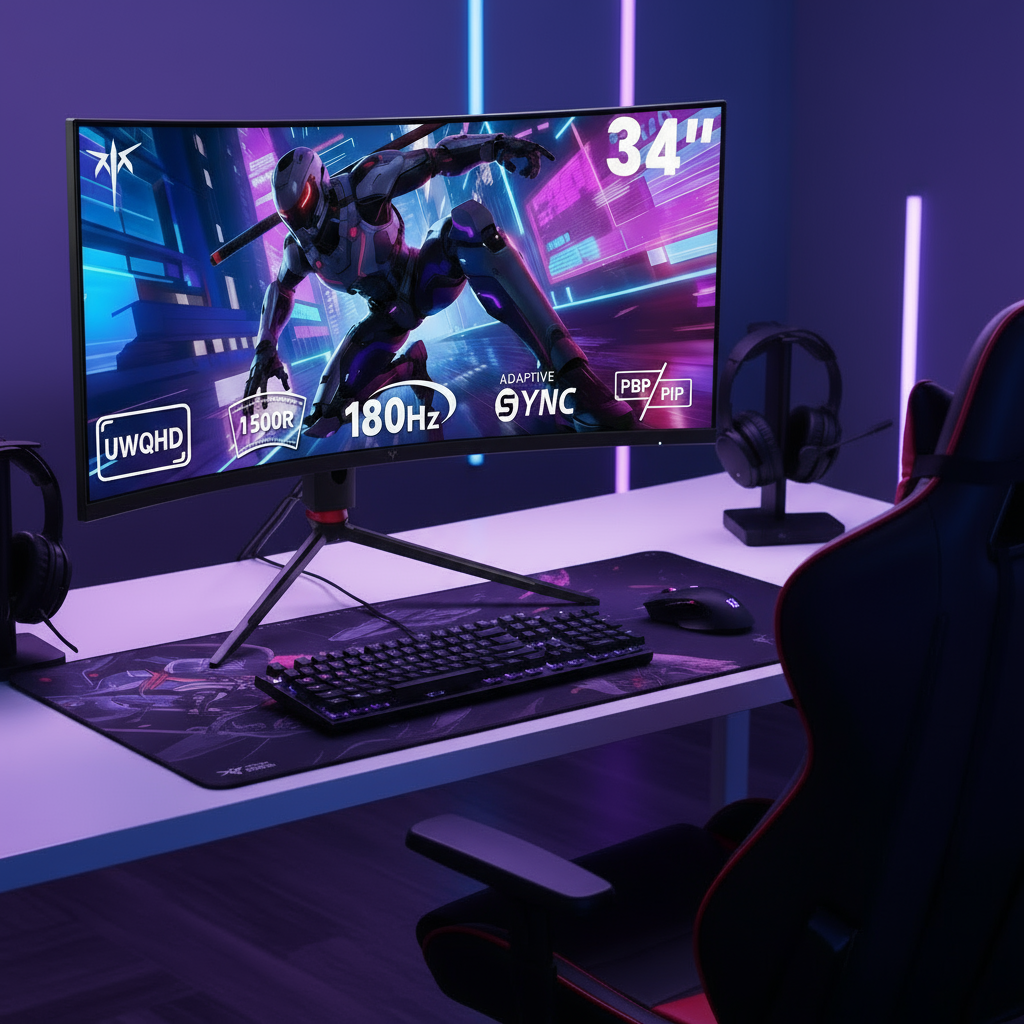


Upgrading from a 60Hz to a 120Hz gaming monitor delivers one of the most noticeable improvements in smoothness and responsiveness you'll experience. The desktop cursor glides like liquid instead of stuttering, scrolling text stays readable, and fast pans in games lose that smeary motion blur. For most gamers playing fast-paced titles, this jump feels mind-blowing—provided your hardware can output enough frames.

Does 120Hz Really Make a Difference for Gaming?
Yes, the difference is immediately noticeable for the vast majority of users, especially those coming from a 60Hz monitor. The first "aha" moment usually happens on the desktop rather than in-game: moving your mouse cursor creates a smooth, continuous line instead of a series of discrete ghost images. Scrolling through webpages or documents feels far less blurry, and in-game camera movements in FPS, racing, or action titles look significantly cleaner.
60Hz remains the legacy standard that many entry-level setups still use, but 120Hz has become the modern baseline for what most gamers describe as truly smooth gameplay. This isn't simply about displaying more frames—it's about how those frames interact with your eyes during rapid motion. The upgrade validates the curiosity many have after watching high-refresh gameplay videos: the real-world feel often exceeds expectations.
For a deeper look at choosing among common options, see our guide on Which Refresh Rate Is Best for Gaming: 60Hz, 144Hz, or 240Hz?.
The End of Motion Blur: How Doubling Refresh Rates Clears the View
120Hz physically reduces motion blur by cutting how long each frame stays visible on screen. At 60Hz, each frame persists for roughly 16.7 milliseconds (calculated as 1,000 divided by the refresh rate). Doubling to 120Hz halves that persistence to 8.3ms, which TFT Central explains directly reduces the width of motion blur by about 50% on standard sample-and-hold displays.
This explains why fast camera pans in shooters or racing games feel "smeary" at 60Hz but much cleaner at 120Hz. The industry now uses the VESA ClearMR standard to measure motion clarity more accurately than refresh rate alone. Higher Clear Motion Ratio (CMR) scores reflect more clear pixels versus blurry ones during movement, and 120Hz typically enables stronger performance in these tests.
The insight module on perception thresholds highlights three everyday examples: a fast-moving desktop cursor turns from ghost images into a fluid line, scrolling text remains readable instead of blurring, and a quick 180-degree turn in an FPS keeps the crosshair anchored without heavy judder. Note that high refresh rates reduce but do not completely eliminate sample-and-hold blur, as our related article on What Is Sample-and-Hold Blur and Why Higher Refresh Rates Don't Eliminate It? details.

Frame Time vs Refresh Rate
60Hz cuts frame time from 16.7ms to 120Hz’s 8.3ms, with smaller gains beyond that as returns diminish.
View chart data
| Category | Frame Time (ms) | Perceived Impact |
|---|---|---|
| 60Hz | 16.7 | 3 |
| 120Hz | 8.3 | 2 |
| 144Hz | 6.9 | 2 |
| 240Hz | 4.2 | 1 |
This chart visualizes the frame time reduction and perceived impact, helping clarify why the 60Hz to 120Hz jump delivers the largest single-step improvement for typical gaming setups.
Faster Reactions: The Hidden Performance Gain of Lower Input Latency
Beyond visual smoothness, a 120Hz monitor reduces the time between your input and seeing the result on screen. The display refreshes twice as often, so it can show new information up to 8.3ms sooner than a 60Hz panel. As NVIDIA's esports guidance notes, higher refresh rates reduce end-to-end system latency, letting players see and react to events several milliseconds faster.
This latency improvement matters most in competitive scenarios where every millisecond counts—spotting an enemy peeking or tracking a fast-moving target. The full system latency includes your mouse, PC, and monitor; a higher refresh rate tightens the visual feedback loop, making controls feel more immediate even if the raw difference is small compared to total human reaction time (typically 150–250ms).
Keep in mind that actual gains depend on your overall setup. The upgrade won't turn casual players into pros, and some users with lower motion sensitivity may need time to fully appreciate the change.
Beyond the Game: Ergonomic Benefits of High Refresh Rates
High refresh rates offer benefits outside pure gaming by reducing eye strain during extended sessions. Using a refresh rate above 70Hz, such as 120Hz, can help minimize perceptible flicker and the headaches or discomfort associated with long-term display use, according to UCLA Ergonomics research on eye strain.
For hybrid users who both game and work on the same monitor, 120Hz makes everyday tasks like scrolling documents, browsing spreadsheets, or editing photos noticeably more comfortable. The reduced flicker and smoother motion lower visual fatigue, which is especially helpful during marathon sessions or when switching between work and play.
This ergonomic advantage makes the upgrade practical even for non-competitive gamers or those using their monitor for mixed purposes.
Hardware Requirements: Can Your PC or Console Handle 120Hz?
Your hardware must output enough frames to take full advantage of a 120Hz monitor. If your GPU is limited to around 60 FPS, the display will still refresh at 120Hz but won't show additional unique frames—though Variable Refresh Rate (VRR) technologies like FreeSync or G-Sync can still eliminate tearing and stuttering. Our guide on What Happens When Your GPU Can't Keep Up With Your Monitor's Refresh Rate? covers these mismatches in detail.
Console players face specific requirements. For PS5 or Xbox Series X at 4K and 120Hz, an HDMI 2.1 cable and port are required, while 1080p or 1440p at 120Hz can often work over HDMI 2.0 if supported. Always verify that your console settings, cable, and monitor are all configured for the target refresh rate—many users buy a high-refresh monitor only to remain capped at 60Hz due to default Windows or console settings.
For smoother variable frame rate performance, consider technologies compared in G-Sync vs. FreeSync: Which One is Better for Gaming in 2025?.
Don't buy a 120Hz monitor if your current GPU consistently struggles to maintain 60+ FPS in your favorite games, or if you primarily play slow-paced titles where motion clarity matters less. In those cases, investing in a better GPU first or sticking with 60Hz (with strong VRR) may be more practical.
Why 120Hz is the Sweet Spot for Most Gamers
The jump from 60Hz to 120Hz represents the single largest improvement most users will experience, halving frame time from 16.7ms to 8.3ms. Moving from 120Hz to 240Hz only saves another 4.1ms, illustrating clear diminishing returns for the average gamer.
This makes 120Hz–180Hz monitors the smartest value for entry-level and mid-range PC or console setups. They deliver the majority of the smoothness and latency benefits without requiring top-tier hardware or carrying the higher cost of 240Hz+ panels. Our 160Hz-185Hz Monitors collection features options well-suited to this sweet spot.
For most players focused on immersion and clarity in FPS, racing, or action games, a 144Hz–180Hz display strikes the best balance. Only dedicated esports competitors chasing every possible edge should consider 240Hz or higher, as the incremental gains shrink while system demands rise.
If you're ready to upgrade, check the KTC 24.5" FHD -180Hz 1ms Wall Mount Gaming Monitor | H25T7 or the larger KTC 27" FHD 180Hz 1ms Wall Mount Gaming Monitor | H27F22. Both deliver the high-refresh performance that makes the 60Hz to 120Hz+ transition truly transformative, with features like 1ms response time and adaptive sync to maximize real-world results. Confirm your hardware can sustain the frame rates before purchasing to avoid disappointment.
Frequently Asked Questions
Is 120Hz worth it if I only play single-player games?
Yes for most users. The smoother motion and reduced eye strain improve immersion and comfort even in story-driven or slower-paced titles. The desktop and UI benefits alone often justify the upgrade for daily use.
Do I need a specific GPU to run 120Hz or 144Hz?
A modern mid-range GPU can typically maintain 100+ FPS in many current games at 1080p or 1440p, which is enough to see the benefits. Older or entry-level cards may require lowering settings or enabling VRR to avoid feeling capped.
What's more important: refresh rate, response time, or VRR?
All three work together. A high refresh rate provides the foundation, but fast response time (ideally 1ms) prevents ghosting, and VRR eliminates tearing when frame rates fluctuate. Check all three when comparing monitors.
Can my eyes even tell the difference above 60Hz?
The human eye does not have a hard 60Hz limit. While flicker fusion occurs around that point, motion blur and latency differences remain perceptible well beyond 60Hz, as demonstrated by visual neuroscience research and everyday user experiences with high-refresh displays.
How do I make sure my new 120Hz monitor actually runs at 120Hz?
After connecting, go into Windows Display Settings or your console's video output menu and explicitly select the 120Hz option. Use a high-quality HDMI 2.0 or 2.1 cable rated for the resolution and refresh rate you want. Test with a frame counter to verify.
Is there a big difference between 120Hz and 144Hz?
The difference is small compared to the leap from 60Hz. 144Hz offers a modest additional reduction in frame time (about 1.4ms), making it a nice incremental step but not essential if your budget is tight.


