


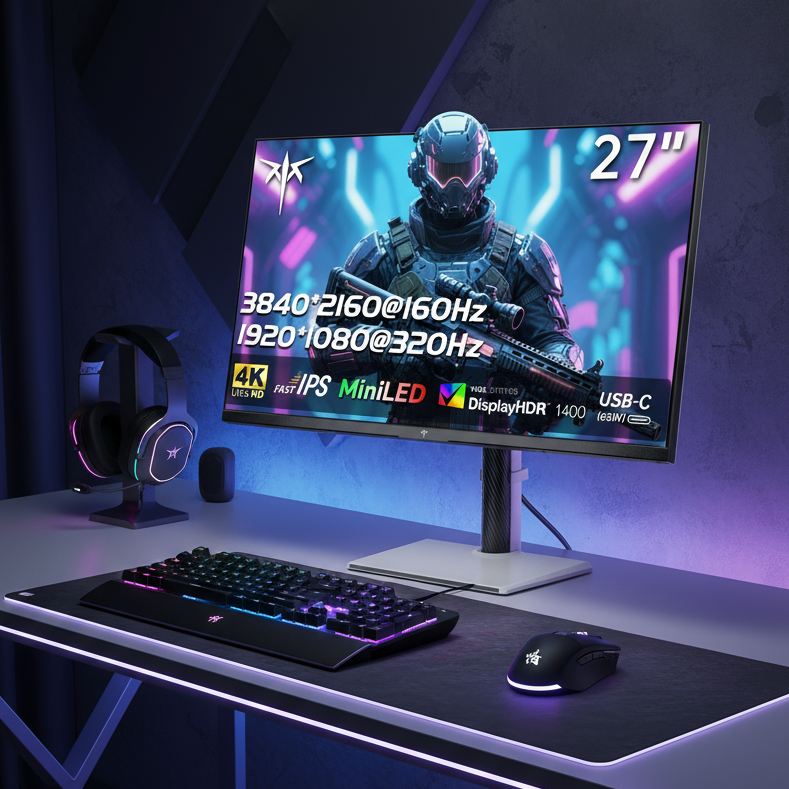
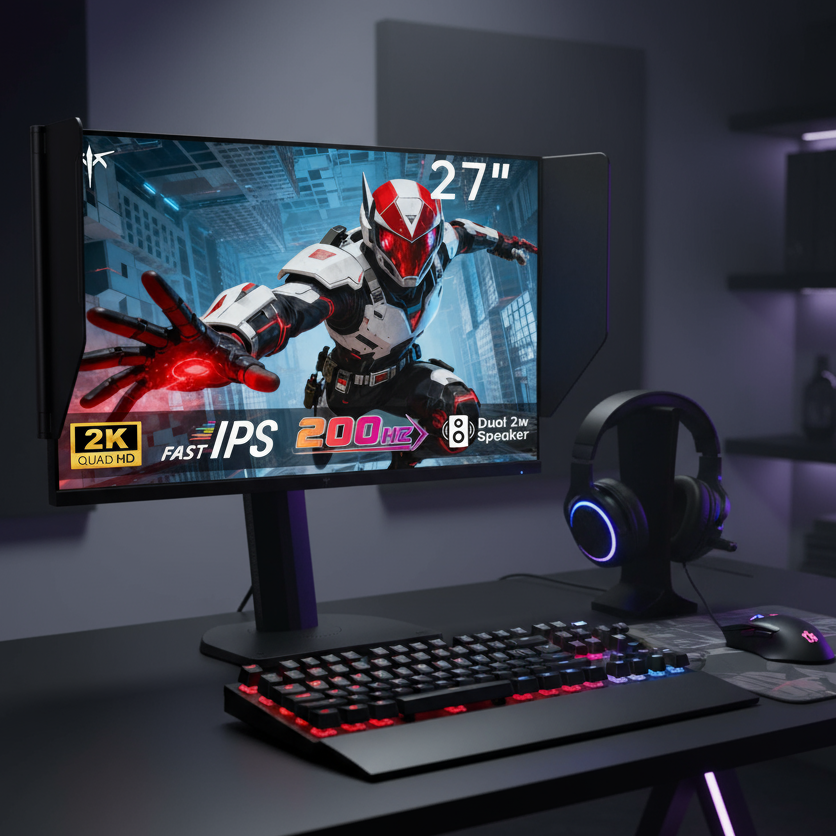


Higher contrast does not create more colors, but it often makes colors look richer, deeper, and more saturated because the eye judges color against nearby brightness and black level.
Does your new monitor look colorful in a dark game but strangely flat in a bright office, even with the same image on screen? A practical setup change, such as choosing the right picture mode and matching brightness to the room, can make color look more vivid without pushing saturation into fake territory. Here is how contrast, saturation, panel type, and calibration work together so you can tune a display for gaming, office work, creative review, or portable use.
Contrast Ratio vs. Color Saturation: The Core Difference
Contrast ratio describes the gap between the brightest white and darkest black a display can produce; a 1000:1 ratio means white is 1,000 times brighter than black. Saturation describes how intense or pure a color appears. They are different display qualities, but your eyes process them together.
A display with weak black levels can make red, blue, and green look less energetic because the surrounding dark areas are not truly dark. That is why higher contrast improves perceived image depth, shadow separation, and image clarity, even when the panel’s actual color gamut has not changed.
A simple example helps. Put the same vivid red icon on a pale gray background, then on a deep black background. The RGB value may be identical, but the version on black usually looks stronger. The color did not become more saturated in the signal; your perception changed because luminance contrast gave the color more visual punch.

Why Higher Contrast Makes Colors Look More Saturated
Color saturation perception depends heavily on black level. When blacks are elevated, the whole image can look washed out. When blacks are deep, the same color can appear cleaner and more dimensional.
This is why VA and OLED displays often feel more immersive than basic IPS monitors in dark movies and games. Many IPS monitors sit around 1000:1 contrast, while VA panels commonly reach around 3000:1, and OLED can produce effectively infinite contrast because pixels can turn off completely. The result is not just darker black; it is stronger separation between colored objects and their background.

The key is perceived saturation, not measured saturation. A monitor can cover 100% sRGB and still look flat if its black level is poor in a dim room. A wide-gamut display can also look overly colorful if it shows standard sRGB content without proper color management. Color gamut refers to the range of colors a display can reproduce, while contrast affects how forcefully those colors stand apart.
Static Contrast Matters More Than Dynamic Contrast
For buying or tuning a monitor, static contrast is the number to respect. It reflects how bright and dark areas can coexist in the same image. Dynamic contrast can look impressive on a spec sheet, but it often depends on changing backlight behavior across scenes.
That distinction matters because real games, spreadsheets, editing timelines, and web pages contain bright and dark elements at the same time. A 1,000,000:1 dynamic claim may not help if the monitor cannot hold dark blacks beside bright UI elements in one frame. Static contrast ratio measures contrast in a way that is usually closer to real viewing than broad dynamic claims.
For gaming, a 3000:1 VA panel can make night scenes and caves feel more layered than a 1000:1 IPS panel. For office work, 1000:1 is usually enough for crisp black text on white backgrounds. For HDR or cinematic grading, the bar rises because highlights, shadows, and color volume all need room to breathe.

Use Case |
Practical Contrast Target |
What You Gain |
Main Caution |
Office productivity |
1000:1 or higher |
Clearer text and balanced readability |
Too much contrast can feel harsh in bright rooms |
Competitive gaming |
1000:1 to 3000:1 |
Better visibility and faster scanning |
Some game modes distort color accuracy |
Cinematic gaming and movies |
Around 3000:1 or higher |
Deeper blacks and stronger perceived saturation |
VA panels may show dark-level smearing |
HDR and color review |
5000:1 or OLED/mini-LED class behavior |
Better depth, highlight separation, and shadow control |
HDR badges alone do not prove real performance |
Contrast Can Improve Vividness, but It Cannot Replace Color Accuracy
A punchy image is not automatically an accurate image. This is one of the most common mistakes when comparing a gaming monitor, an office display, and a portable smart screen side by side.
Delta E measures how far a displayed color is from a target reference. For most professional SDR workflows, average dE2000 under 2 is a practical baseline, while under 1 is preferred for critical color approval. Delta E measures the visible difference between intended and displayed color, so it answers a different question than contrast ratio.
A high-contrast OLED may make a product photo look dramatic, but if it is running in an unmanaged wide-gamut vivid mode, standard web colors may appear oversaturated. A calibrated IPS monitor may look less exciting, but it can be more trustworthy for brand colors, UI work, product listings, and print-oriented review.
The practical rule is simple: use contrast for visibility and depth, use gamut for color range, and use Delta E or calibration data for accuracy. When money, client approval, or product color is involved, “looks better” is not enough.
Panel Type Changes the Relationship
IPS, VA, OLED, and portable panels all shape contrast and saturation perception differently.
IPS is often the safer choice for office productivity, UI design, and general creative work because it tends to offer stable viewing angles and predictable color behavior. Its limitation is black depth. In a dim room, dark scenes may look gray, which reduces perceived saturation even if the colors are technically within gamut.
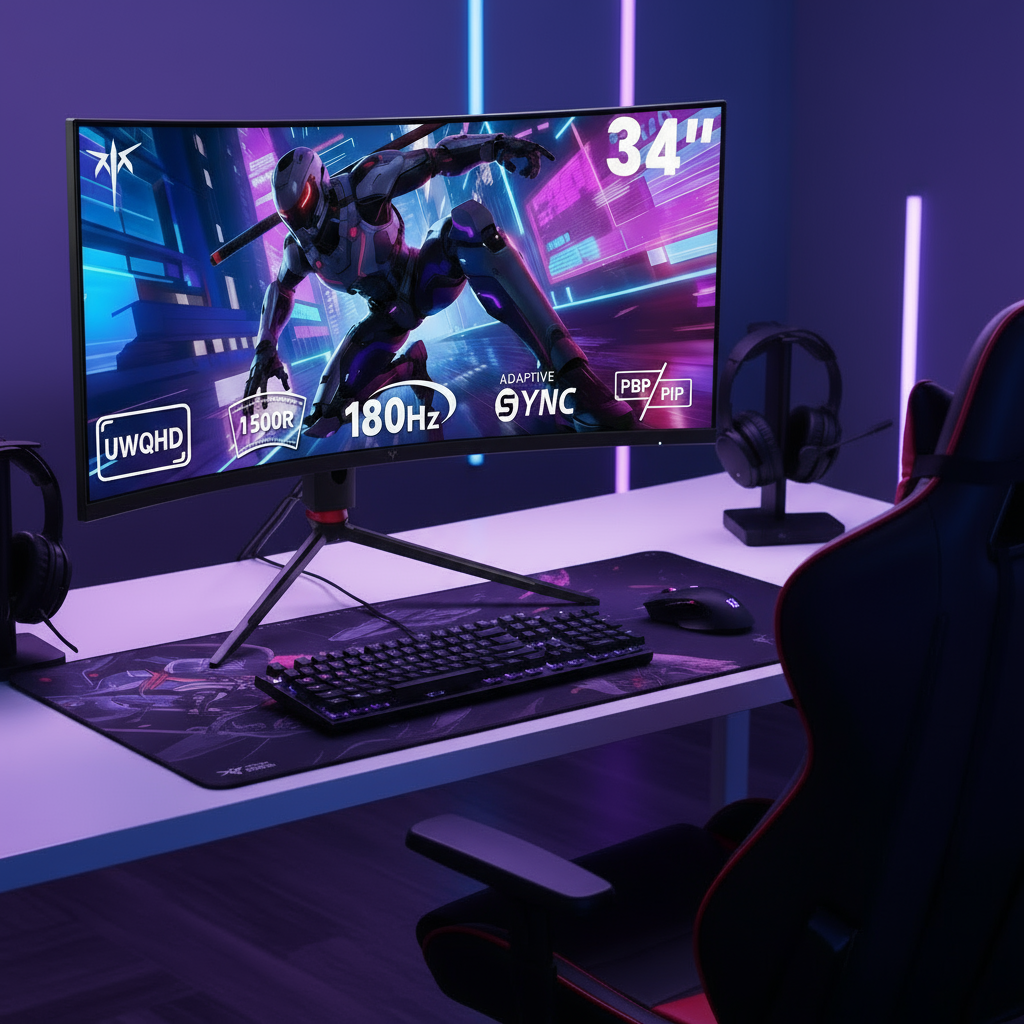
VA usually gives stronger native contrast and deeper blacks. That makes it appealing for cinematic games, movies, and immersive ultrawide setups. One 34-inch VA ultrawide is reported with a 3000:1 static contrast ratio and 90% DCI-P3 coverage, which helps colors look vivid, though standard sRGB content can appear slightly oversaturated on a wide-gamut screen. The 34-inch curved ultrawide also shows the tradeoff: stronger immersion, but possible dark-scene smearing.
OLED delivers the strongest perceived contrast because black pixels can shut off. That can make colors look exceptionally rich in dark content. The caution is reference discipline. OLED panels use self-emissive pixels and can look spectacular, but wide-gamut output still needs proper calibration when color decisions matter.
Display Modes Can Fake Saturation
Many monitors ship with Standard, Vivid, Movie, Game, Reading, Night, or Outdoor modes. These modes do more than change brightness. They can alter contrast, color temperature, sharpness, blue-light output, refresh behavior, and saturation.
Vivid mode is useful for casual media because it often boosts saturation and contrast, but it can reduce text readability and color accuracy. Game modes can improve latency and shadow visibility, but they may brighten blacks or shift colors. Vivid mode boosts saturation in a way that looks exciting but is not neutral.
For daily work, Standard or sRGB mode is usually the cleanest starting point. For competitive gaming, a Game mode may be worth it if visibility matters more than cinematic accuracy. For movie nights, Cinema or Movie mode can make better use of dark-room contrast, especially if the room lighting is controlled.
Ambient Light Can Flatten Both Contrast and Saturation
A monitor’s contrast ratio is not experienced in a vacuum. Room light hits the screen, raises black levels, and makes colors look weaker. This is why the same display can look rich at night and washed out near a sunny window.

Ambient contrast is often more useful than a theoretical spec because it describes how the screen behaves in the real viewing environment. A nominal high-contrast display can lose much of its advantage when glare and reflections lift blacks. Ambient contrast ratio measures contrast under real lighting, which is why desk placement and screen coating matter.
For an office monitor, avoid blasting brightness just to make colors pop. Match brightness to the room, reduce reflections, and keep whites comfortable. For a portable smart screen used near windows, higher brightness helps visibility, but it will not fully restore rich blacks if the screen is reflective.
Practical Tuning for Better Perceived Saturation
Start with the right mode. Use sRGB or Standard for office work, web content, product images, and general color review. Use Game mode when responsiveness and shadow visibility matter. Use Movie or Cinema mode for dim-room entertainment.
Next, set brightness for the room before touching saturation. If the screen is too bright in a dim room, colors may look harsh and fatigue can rise. If it is too dim in a bright room, contrast collapses and colors look weak.
Then adjust contrast carefully. Raising the contrast slider can improve separation up to a point, but pushing it too far can crush highlights, hide near-white detail, or distort color balance. If a white shirt in a video loses texture or a dark game scene turns into black patches, the setting is too aggressive.
Finally, avoid using saturation as the first fix. If colors look dull, check black level, brightness, room glare, picture mode, and color space before increasing saturation. Boosting saturation on a low-contrast or poorly lit setup often creates loud colors without restoring depth.
FAQ
Does a higher contrast ratio mean better color saturation?
Not directly. Higher contrast usually improves perceived saturation because darker blacks make colors stand out more. Actual saturation depends on the signal, gamut, color mode, and calibration.
Is 1000:1 contrast enough?
For office work, web browsing, spreadsheets, and general productivity, 1000:1 is usually adequate. For dark games, movies, and immersive use, around 3000:1 or better is more satisfying.
Should I choose IPS, VA, or OLED for color?
Choose IPS when stable color accuracy and viewing angles matter most. Choose VA when deeper blacks and value-oriented immersion are priorities. Choose OLED when you want premium contrast for HDR, cinema, and gaming, while accepting the need for careful calibration and static-image awareness.
Strong contrast makes color feel alive, but reliable color comes from the full chain: panel type, gamut, calibration, display mode, brightness, and room control. For the best real-world result, buy for your use case, trust static contrast over inflated dynamic claims, and tune the screen for the space where you actually use it.


