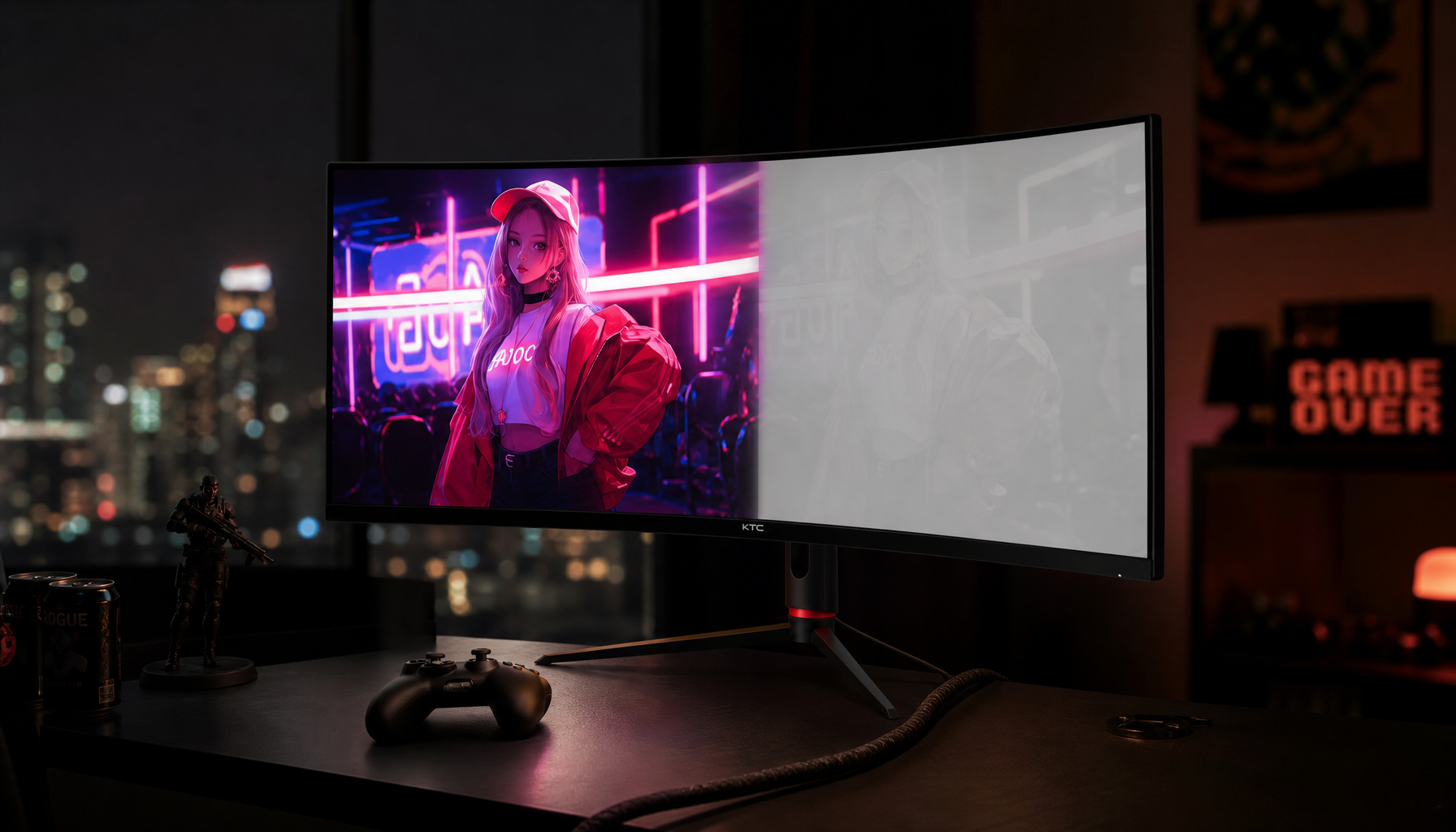
Hardware blue light filtering changes what the display physically emits, while software night mode changes the color signal before it reaches the screen. For sleep protection, both can help, but timing, brightness, room lighting, and the strength of blue-wavelength reduction matter more than the feature label.
Ever finish a late gaming session or spreadsheet push, get into bed, and feel oddly awake even though your brain is tired? In real monitor setup work, the most reliable improvement is testable: warm the screen, lower brightness, dim the room, and stop color-critical work before bedtime so your display stops acting like a daylight signal. You’ll learn when hardware filtering is worth paying for, when software night mode is enough, and how to tune either one without ruining image quality.
Why Blue Light Matters for Sleep Cycles
Blue light is short-wavelength visible light, and the sleep issue is not that blue is “bad” in every context. Daytime blue-rich light can support alertness, reaction time, and mood, while evening exposure can push the body in the wrong direction by suppressing melatonin and shifting circadian timing; that daytime and nighttime split is the key distinction.
Your sleep cycle is not just a block of unconscious time. A typical night moves through lighter NREM sleep, deeper slow-wave sleep, and REM sleep across repeated cycles. If bright, blue-heavy screen exposure delays sleep onset by even a modest amount, the practical cost can be bigger than it looks: a 30-minute delay can compress the first deep-sleep-rich part of the night, while late-night alertness can make it harder to reach consistent REM later.

The mechanism is mostly about timing. The retina contains light-sensitive pathways involved in circadian regulation, and a major scientific review notes that blue light’s effect depends on wavelength, intensity, duration, and exposure time; those circadian regulation factors explain why a bright monitor at 11:30 PM is different from the same monitor at 10:00 AM.
Hardware Blue Light Filtering: What It Actually Changes
Hardware blue light filtering is built into the display system. Depending on the monitor, it may involve a low-blue-light backlight, panel-level spectral tuning, an optical filter, or firmware-controlled low-blue modes in the on-screen display. In practical terms, the monitor itself emits less blue-heavy light before software settings even enter the conversation.

That matters because hardware filtering can be consistent across devices plugged into the monitor. A gaming PC, work laptop, streaming stick, or console can all benefit if the monitor’s low-blue mode is active. For a desk with multiple sources, that reliability is valuable: you are not depending on every operating system, app, or input device to honor the same night setting.
The tradeoff is control. Some hardware modes reduce blue light by warming the picture, but others also lower brightness, flatten contrast, or shift color accuracy. On a productivity display, that may be fine for email and document review. On a pro gaming monitor, it can alter shadow visibility and color cues. On a creator display, it can make photo grading, product color checks, or UI design unreliable after the mode is enabled.
Dedicated low-blue-light displays are now common, and the category appears in mainstream product listings for monitors with blue light filter. The buying question is not whether the feature exists. The better question is whether the monitor lets you control the strength, preserve contrast, avoid flicker, and switch modes quickly.
Software Night Mode: Flexible, Free, and Less Absolute
Software night mode works upstream. Built-in operating system settings, third-party tools, and many phone settings reduce the blue channel and warm the image through software. The screen receives a warmer color signal, so whites become cream, grays shift warmer, and the entire interface looks less daylight-like.
The strength of software is convenience. It is free, schedulable, adjustable, and easy to disable for color-sensitive work. For office users, a scheduled warm shift at sunset is often the highest-value first step because it affects the full desktop without requiring new hardware. For gamers, it can be mapped around play sessions, although competitive players may prefer monitor-level presets to avoid unexpected color changes mid-game.
The weakness is that software does not change the physical backlight by itself. A very bright LED-backlit display can still push a lot of light into your eyes, even if the image is warmer. Eye-care guidance emphasizes that device blue light is more clearly tied to sleep disruption than direct eye damage in typical healthy users, and that sunlight produces far more blue-light exposure than normal screens; that sleep disruption distinction keeps the focus on practical nighttime behavior rather than fear-based specs.
A simple example shows the limitation. If your 32-inch monitor is set to 80% brightness in a dark room, turning on night mode may reduce blue intensity but leave the display glaringly bright. Dropping brightness to 25% and warming the color temperature will usually feel more sleep-friendly than using maximum night mode while leaving the panel blazing.
Hardware vs. Software: The Practical Difference

Factor |
Hardware Blue Light Filtering |
Software Night Mode |
Where it works |
Inside the monitor or screen hardware |
Inside the operating system or app |
Best use case |
Shared displays, consoles, workstations, fixed desk setups |
Laptops, phones, mixed workflows, scheduled evening use |
Main advantage |
Consistent output across inputs |
Free, adjustable, easy to automate |
Main drawback |
Can reduce color accuracy or contrast |
Still depends on screen brightness and backlight output |
Best sleep strategy |
Use low-blue preset plus lower brightness |
Use warm schedule plus lower brightness |
The strongest setup uses both without treating either one as magic. Hardware filtering gives you a stable baseline, while software night mode gives you a schedule. For example, a home office display can run a mild low-blue hardware preset after 8:00 PM, then let the operating system warm the screen further from 9:30 PM onward. That layered approach is especially useful for people who switch from daytime productivity to evening browsing, streaming, or casual gaming on the same screen.
What Protects Sleep Better?
For sleep cycles, the most protective option is the one that reduces evening circadian stimulation enough that you can fall asleep on time. Public health guidance notes that even low levels of light can affect melatonin and circadian rhythm, and blue light suppressed melatonin longer than green light in a cited experiment. That melatonin suppression effect is why brightness control belongs in the same conversation as wavelength control.
Hardware may be better when you want dependable reduction across every input. If you play on console at night, use a docking station, or share a monitor with multiple machines, hardware filtering prevents gaps. It also helps when the display’s firmware offers a well-tuned low-blue mode that keeps text sharp and avoids excessive color distortion.
Software may be better when you need precision during the day and flexibility at night. A designer can keep the display neutral for color work, then schedule a warm shift after the workday. A spreadsheet-heavy office user can use software warming without buying a new screen. A student on a laptop can combine night mode with lower brightness and a cutoff window before bed.
Neither option fully solves the problem if the room is bright. Screens are only one part of evening light exposure. Blue-heavy LED ceiling lights, bright desk lamps, and a TV across the room can keep the visual system stimulated. The review literature also points out that digital-device blue light is generally below acute retinal injury limits, while circadian effects depend heavily on timing and intensity; that timing and intensity framing is more useful than chasing a single “blue light blocked” percentage.
A Display Specialist’s Setup Advice
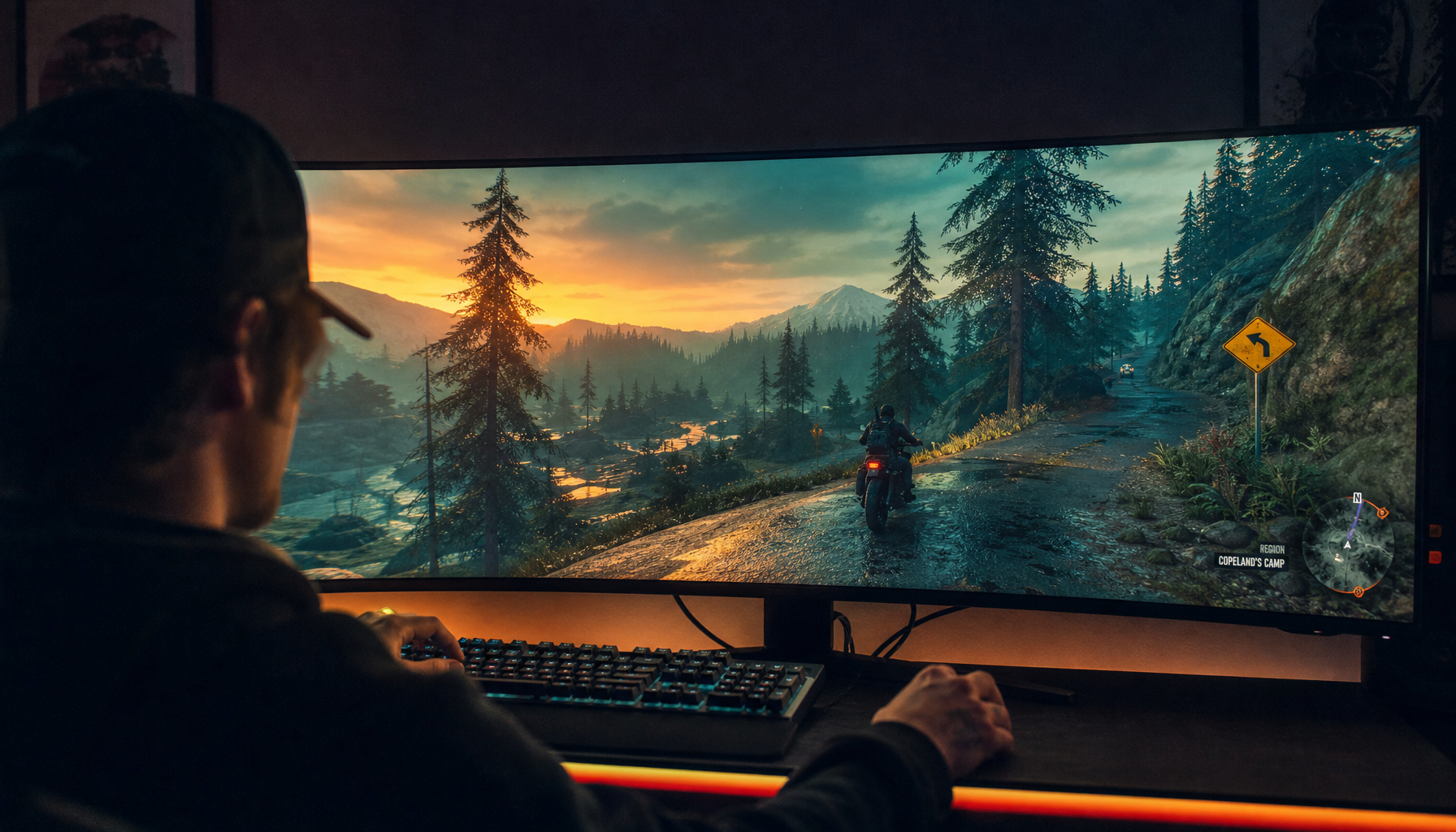
For competitive gaming, create two monitor presets. Keep your normal high-performance preset for daytime play, where motion clarity, contrast, and color separation matter. Build a separate late-night preset with lower brightness, warmer color temperature, and low-blue mode enabled. If the game relies on color-critical cues, test the preset in a non-ranked session before relying on it.
For office productivity, start with comfort and consistency. Set the monitor about an arm’s length away, keep text large enough that you are not leaning forward, and lower brightness until white backgrounds no longer feel like a light source. Then schedule software night mode roughly two to three hours before bed. The goal is not a dramatic orange screen; it is a steady reduction in stimulation while keeping documents readable.

For portable smart screens, prioritize manual control. Many compact displays are used in hotels, bedrooms, airplanes, and late-night second-screen setups. Because ambient light changes constantly, a portable screen should let you lower brightness quickly and switch to a warm mode without digging through menus. If it cannot, software night mode on the connected laptop or phone becomes more important.
For children and teens, use a more conservative approach. Eye-care guidance recommends limiting blue-light exposure near bedtime, especially for children, and favoring indirect lighting or diffusers instead of prolonged direct exposure to bright LEDs; that near-bedtime caution supports a simple household rule: warmer, dimmer, and earlier screen shutoff.
Pros and Cons Without the Hype
Hardware filtering is reliable, input-agnostic, and useful for fixed setups. It can make a monitor easier to live with during long evening sessions and may be the cleaner choice for console gaming or multi-device desks. Its downside is that quality varies by model, and aggressive modes can make a premium panel look dull.
Software night mode is flexible, free, and ideal for scheduled behavior change. It is the fastest upgrade for most people because it works on hardware they already own. Its downside is that it can be bypassed by external devices, apps, HDR modes, screenshots, or color-managed workflows, and it does not automatically solve brightness or room-light problems.
Blue-light glasses and filters sit in between, but evidence is mixed for eye strain. Consumer eye-care guidance recommends proven habits such as breaks, brightness adjustment, zooming text, and eye checks over relying solely on blue-light eyewear, and those proven habits point back to the same conclusion: sleep protection is a system, not one accessory.
FAQ
Should I leave blue light filtering on all day?
Usually no. Daytime blue-rich light can support alertness, so a strong warm filter at 10:00 AM may make the display less accurate without helping sleep. Use mild comfort settings during the day if your eyes prefer them, then increase warmth and lower brightness in the evening.
Does night mode protect my eyes from damage?
For typical screen use, the stronger evidence points to sleep timing and comfort rather than direct eye-damage prevention. A major review found device emissions are well below international safety limits for acute retinal injury, though it also notes uncertainty about lifelong low-level exposure; that acute retinal injury finding is why routine eye comfort should include breaks, blinking, distance, and glare control.
What is the best setting before bed?
Use the warmest setting you can tolerate, lower brightness substantially, dim room lighting, and stop screen-heavy work 30 to 60 minutes before sleep when possible. If you must stay on-screen, use hardware low-blue mode and software night mode together, then avoid bright white apps in a dark room.
Closing
Hardware blue light filtering changes the display’s emitted light; software night mode changes the signal feeding the display. For real sleep-cycle protection, the winning setup is simple and performance-minded: use the monitor’s low-blue tools when available, schedule software warmth at night, lower brightness, and treat the last hour before bed as recovery time for your brain, not another daylight simulation.