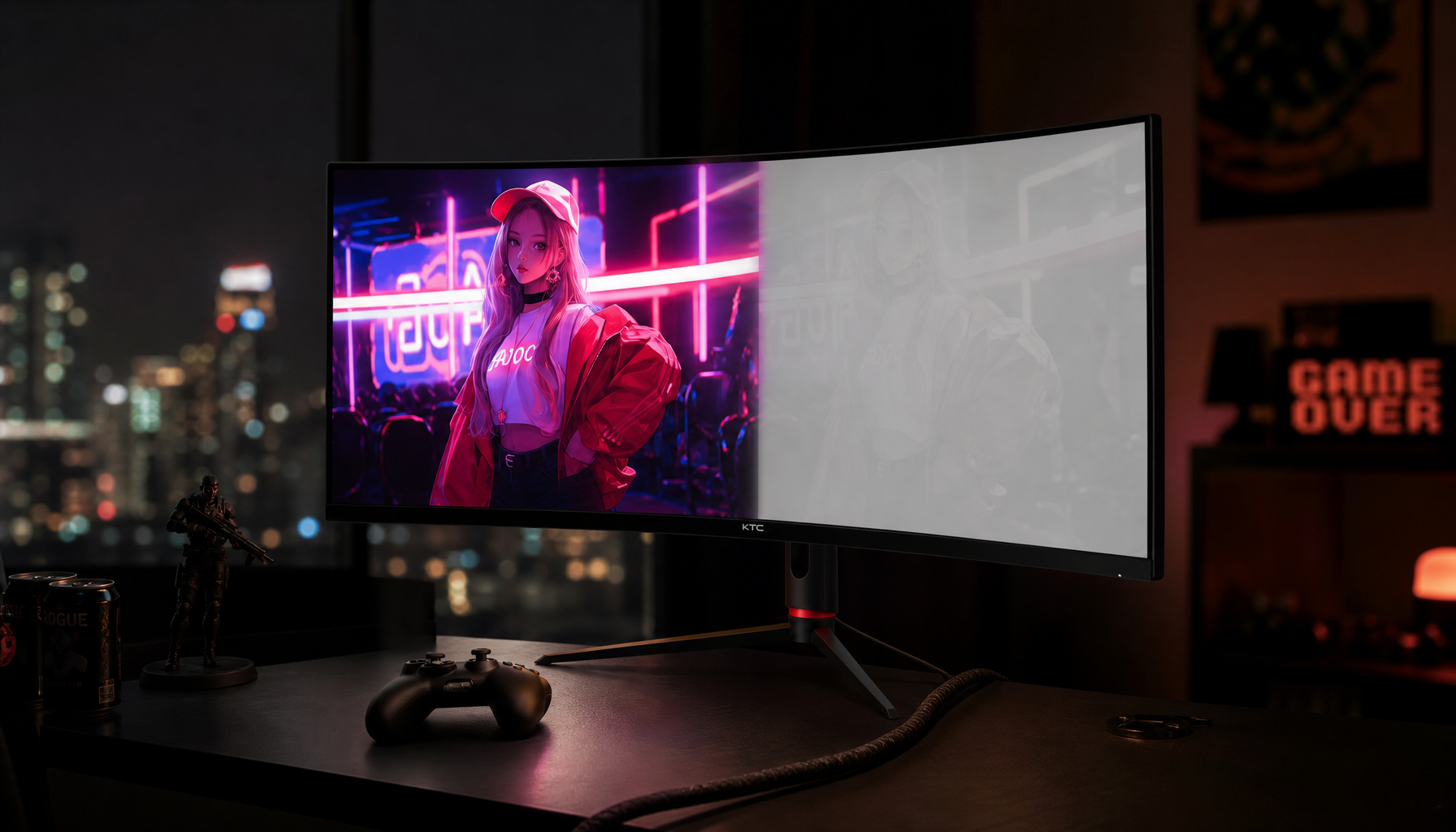
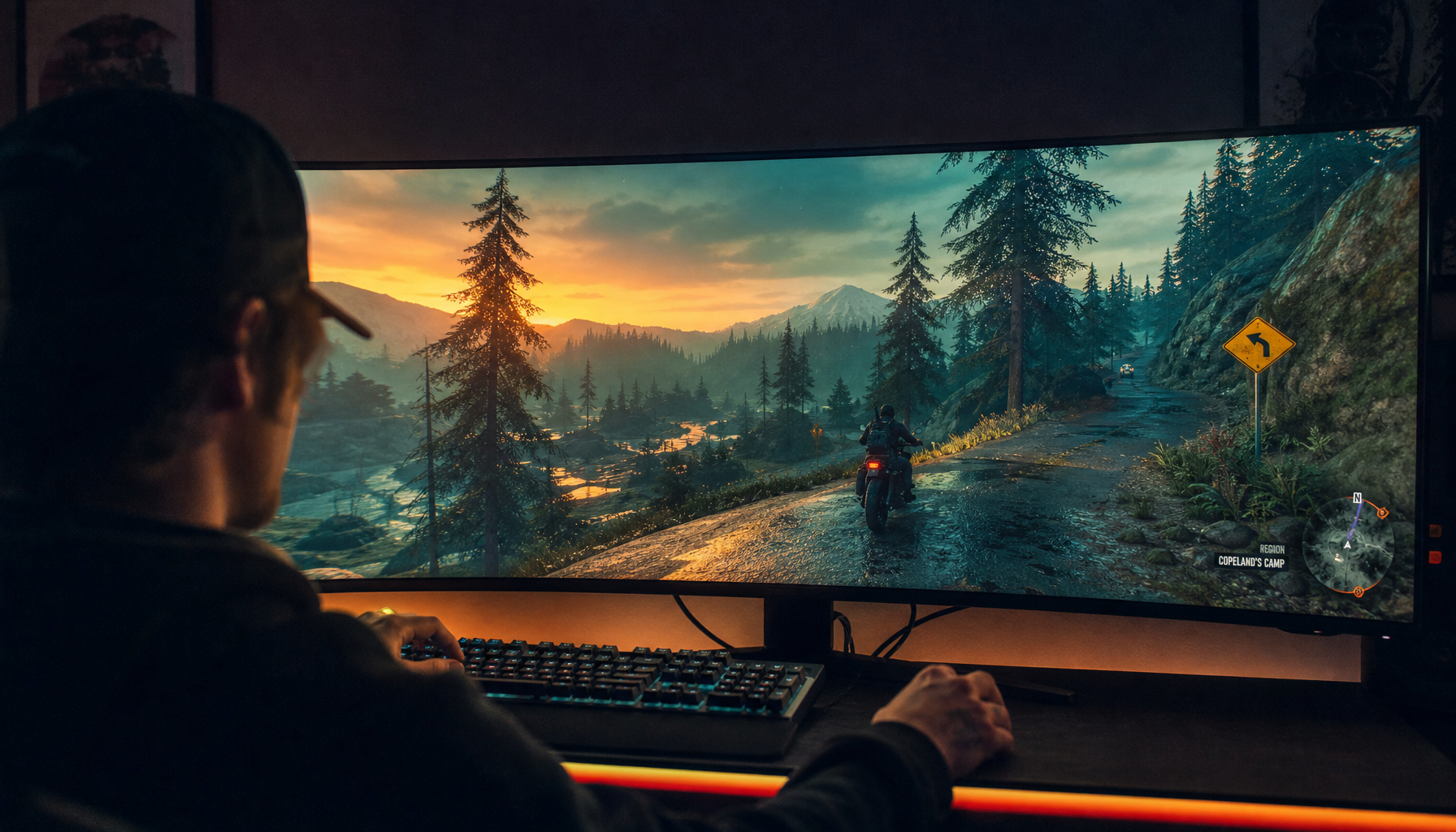
HDR flicker during bright-to-dark or dark-to-bright scene changes usually comes from unstable tone mapping, shifting HDR metadata, local dimming transitions, HDMI bandwidth limits, or the display switching between HDR processing modes.
Does your monitor look flawless in one scene, then pulse, flash, dim, or briefly black out when a game cuts from a dark hallway to a sunlit arena? A structured HDR check helps separate normal mode switching from fixable signal-chain instability before you replace a monitor or graphics card. Here is what is happening, how to test it, and which settings are worth changing first.

Why Scene Changes Expose HDR Flicker
HDR, or High Dynamic Range, gives content more room for bright highlights, deeper shadows, and richer color than SDR. That extra range is powerful, but it also means the monitor has more decisions to make every time the image changes. A quiet night scene, a white loading screen, and a muzzle flash in a dark game do not stress the display in the same way.
The core mechanism is tone mapping. A monitor cannot always reproduce every brightness level requested by HDR content, so it reshapes the signal to fit its real peak brightness, black level, color volume, and local dimming system. The operating system also participates in this process; operating system tone mapping occurs before the desktop image is composed, using display information and content metadata.
Flicker appears when that mapping changes too abruptly, when the signal chain renegotiates, or when the display’s backlight system cannot transition cleanly. In real use, this may look like a quick brightness pulse, a black-screen blink, a washed-out flash, or repeated switching between HDR and SDR states.
The Main Causes of HDR Flicker Between Brightness Levels
Dynamic Metadata Can Trigger Mode or Tone-Mapping Changes
Some HDR formats use metadata to tell the display how to handle brightness. HDR10 uses static metadata for the whole video, while dynamic HDR formats can use more scene-aware or frame-aware guidance. That is useful when done correctly because the display gets better instructions for each scene.
The downside is that bad or inconsistent metadata can cause visible instability. TV support documentation has noted that dynamic HDR files should include metadata in every frame; when some files provide it only at long intervals, the TV can repeatedly switch between HDR modes, causing flicker. That pattern explains why a movie might look stable for several seconds and then flash when a new scene begins, especially from USB playback or poorly encoded files.
For a monitor user, the practical takeaway is simple: if one HDR file flickers but HDR games, streaming apps, and test videos behave normally, suspect the content first. Try another HDR source before changing monitor settings.
Local Dimming Can Pulse During Large Brightness Swings
Many HDR monitors use local dimming zones to make highlights brighter while keeping dark areas dark. That is essential for convincing HDR on LCD displays, but it can also create pulsing if the dimming algorithm overreacts when a scene changes.
A practical example is a space game loading from a dark cockpit into a bright snow map. The monitor may raise the backlight zones aggressively, then pull them back as the tone map stabilizes. On lower-end HDR displays with weak local dimming, the result can look like flicker rather than smooth brightness control.

This is why two monitors with the same HDR logo can behave very differently. The HDR setup process is useful for confirming that HDR is actually active, but certification alone does not guarantee excellent local dimming behavior in every scene.
HDMI Bandwidth and Format Negotiation Can Break Stability
HDR is not just a picture mode; it is a full signal chain involving the graphics card or console, cable, port, receiver, operating system, game, and display. When resolution, refresh rate, bit depth, chroma format, and HDR all push the connection near its limit, flicker can appear as brief blackouts or repeated handshake events.
A media-player community test found that flickering returned when output was set to high-bandwidth HDR formats such as 10-bit or 12-bit 4:4:4 at 24 Hz, while other combinations behaved differently. The HDMI output formats mattered because bit depth and chroma sampling change how much data the cable and ports must carry.
This also shows up in PC gaming. One case described black flickering every few seconds during HDR gaming on a TV, while HDR streaming worked normally. That pattern points away from “HDR is broken” and toward a PC-specific output combination, cable, driver, refresh-rate, or handshake problem.

The Display May Be Switching Between HDR and SDR States
A brief blink when HDR starts or stops can be normal because the display is changing processing modes. Persistent flickering during playback is different. TV support documentation has described screen flicker when HDR playback starts or stops, which supports the idea that mode switching itself can cause a transient visual interruption.
PC apps can also trigger this. Some video players, games, and full-screen modes may cause system HDR to toggle, disable, or reinitialize. When that happens between scenes, the screen may not just dim; it may fully blank for a moment, then return with different color or brightness.
On a PC, first confirm that HDR is enabled for the intended display, especially in multi-monitor setups. HDR settings can differ per display, and a laptop panel, external monitor, and duplicated screen may not behave the same way.
Flicker, Dimming, and Washed-Out HDR Are Not the Same Problem
HDR complaints often get grouped together, but the symptoms point to different causes. A single blink when playback starts usually suggests mode switching. Repeated black flashes suggest HDMI or handshake instability. Bright-area pulsing suggests tone mapping, local dimming, or metadata behavior. A dim desktop after leaving a full-screen app suggests SDR brightness handling rather than scene-based HDR flicker.
Symptom |
Likely Cause |
Best First Test |
One blink when HDR starts or stops |
Normal HDR mode switch |
Test another app and note whether it happens only at start or exit |
Repeated black flashes during gaming |
HDMI bandwidth, cable, refresh rate, or handshake |
Lower refresh rate or bit depth, then retest |
Bright areas pulse during scene changes |
Tone mapping or local dimming |
Try another HDR preset and disable extra processing |
HDR looks gray or washed out |
Mismatched HDR chain or calibration |
Recheck OS HDR, monitor preset, and in-game HDR sliders |
One file flickers, others do not |
Bad HDR metadata or encode |
Test a known-good HDR video or disc |
The distinction matters because the fix path changes. You do not solve a bad HDR file by replacing your graphics card, and you do not solve an HDMI bandwidth failure by adjusting the monitor’s black equalizer.
How to Diagnose HDR Scene Flicker Without Guesswork
Start with the simplest controlled test: use one display, one direct cable, and one known HDR source. Avoid receivers, capture devices, adapters, and duplicated displays until the problem is isolated. On a PC, confirm HDR is active in the operating system and verify that the content is truly HDR, not SDR being stretched into an HDR desktop. A proper HDR test pattern helps because a bright SDR app and real HDR content should not peak at the same brightness.

Next, reduce bandwidth pressure. If you are running 4K at high refresh with HDR, try a lower refresh rate, 10-bit instead of 12-bit, or a less demanding chroma format. For consoles, use the supplied certified cable or a certified replacement, reseat both ends, and try a different HDMI input. Console flickering troubleshooting commonly treats flickering as an unstable HDMI signal rather than a cosmetic glitch, and that framing is correct for monitors too.
Then stabilize the display’s HDR processing. Pick one accurate HDR mode, preferably a Game HDR or low-latency HDR preset for gaming, and avoid switching presets mid-session. Switching monitor HDR picture modes can change tone mapping, luminance behavior, local dimming, and refresh behavior even when HDR itself remains enabled; switching HDR picture modes may also make a display feel less responsive if the refresh rate drops.
Finally, calibrate at the source. System HDR calibration, console HDR setup screens, and in-game sliders for peak brightness, paper white, UI brightness, and black level are safer than forcing SDR-style monitor controls. Many monitors lock brightness, gamma, and contrast in HDR because the display is following a stricter HDR pipeline; locked monitor settings are often intentional, not automatically a defect.
Pros and Cons of Common Fixes
Lowering refresh rate is a strong diagnostic move because it reduces signal bandwidth quickly. The advantage is stability; the downside is latency and motion clarity, especially for competitive gaming. A drop from 120 Hz to 60 Hz roughly doubles scanout time, so it can be noticeable on a fast gaming monitor.
Disabling local dimming can reduce brightness pulsing, especially on edge-lit or low-zone displays. The tradeoff is weaker HDR contrast, more gray-looking blacks, and less impact from highlights.
Using SDR for office work and HDR only for games or movies is often the most reliable productivity setup. The benefit is consistent desktop brightness, cleaner text behavior, and fewer app-to-app transitions. The compromise is that you must toggle HDR when you want the full visual range.
Replacing the HDMI cable is not glamorous, but it is one of the highest-value fixes when the symptom is black flashing. If a scene change pushes the signal into a new bandwidth or metadata state and the cable is marginal, flicker can show up exactly when the image gets more demanding.
When It Is a Hardware Limitation
Some flicker is not user-fixable. Users of earlier high-end laptop and external HDR displays have reported HDR flickering, while later discussion claimed the issue no longer occurred on newer-generation laptop hardware. The thread attributes the difference to a possible display material change, with earlier KSF phosphor film and newer quantum dot film mentioned. That is not a universal diagnosis, but it is a useful reminder: panel hardware, backlight design, and firmware can matter as much as settings.
Budget HDR monitors can also advertise HDR while lacking the peak brightness, black level, local dimming quality, or color volume needed for stable, convincing scene transitions. For buying decisions, prioritize measured HDR behavior over logo presence. A dependable office-and-gaming display should hold refresh rate, accept 10-bit HDR cleanly, provide predictable tone mapping, and avoid aggressive brightness pumping.
A Practical Stable-HDR Setup
For a gaming monitor, use a direct certified cable, enable HDR only on the active gaming display, choose a low-latency HDR preset, verify the refresh rate after HDR turns on, then run OS and game calibration. Do not tune around one unusually dark movie or one over-bright game; calibrate to a stable baseline, then adjust inside the app that needs it.
For productivity displays, keep SDR as the daily mode unless you are watching HDR video, grading HDR media, or playing an HDR game. That avoids desktop dimming surprises and keeps white documents, spreadsheets, and browser windows consistent. When HDR is needed, switch deliberately, test with known content, and return to SDR after the session if your monitor or OS behaves unpredictably.
HDR flicker during brightness changes is usually a system behavior, not a single broken setting. Treat it like a signal-and-processing chain: content metadata, OS HDR state, cable bandwidth, refresh rate, monitor HDR mode, local dimming, and panel capability all have to agree. When they do, HDR scene changes feel cinematic instead of distracting.