If your screen goes black under load, dims on its own, or starts stuttering after it warms up, treat heat as one possible cause, not the only cause.
Have you ever started a game on a 144 Hz monitor, watched the panel go dark a few minutes later, and wondered whether the display, GPU, or cable is actually failing? The fastest fixes usually come from isolating the heat source first, because the symptoms of a hot gaming monitor can look almost identical to a GPU timeout or a weak display-cable link. You’ll leave with a practical way to test the monitor, the PC, and the setup around them before you spend money on a replacement.
Start With the Symptoms That Actually Suggest Heat
A display overheating pattern usually shows up as flickering, unstable image output, ghosting, color shifts, automatic dimming, freezing, or a full black-screen shutdown that clears only after the panel cools down. Those signs matter more than a vague feeling that the monitor is “running hot,” because many high-refresh gaming displays feel warm during long sessions without being defective.
Timing is one of the best clues. In a company support case, a 34-inch 165 Hz monitor was reported to become unusually hot within about 10 minutes, which support described as abnormal for a monitor of that class, especially after the owner had already cleaned vents and left open space around it on a company forum. That kind of fast heat buildup points more strongly to a monitor-side power or internal hardware problem than to normal warmth from extended use.
Placement also matters more than many buyers expect. A monitor mounted above a radiator or active vent can develop hot spots behind the panel even when the room itself feels comfortable, and common LCD operating limits are often around 32°F to 122°F. For ultrawide and portable monitor setups, that rear-air temperature is more important than the thermostat reading across the room.

Separate Monitor Heat From GPU, Cable, and Driver Problems
A black screen during games does not automatically mean the monitor is overheating. In community troubleshooting around 144 Hz gaming issues, users repeatedly pointed to driver timeout events, unstable graphics drivers, GPU heat, loose GPU power, and signal loss over a display cable as more likely causes than a failing panel. That distinction is critical, because replacing the monitor will not fix a GPU that is timing out under load.
The simplest way to separate the fault is to observe what stays alive when the screen goes dark. If audio continues, the PC may still be running while the display loses signal; if the monitor power light stays on but the image disappears, that again leans toward signal-path or GPU trouble instead of a full monitor shutdown. A troubleshooting sequence recommends checking cables and ports first, then matching resolution and refresh rate to the panel, then updating or reinstalling the graphics driver before blaming the display hardware.
Heat can still be on the PC side rather than the monitor side. CPU temperatures above about 176°F on a regular PC, or above about 185°F on a gaming CPU for extended periods are strong overheating signals, and the symptoms include lag, freezes, crashes, shutdowns, and louder fans. If your monitor blacks out only when the GPU or CPU is under heavy load, monitor the system temperatures during the exact workload that triggers the issue.

Test the Setup Before You Change Hardware
A questionable monitor setup near heat sources should be tested the same way you would test a PC cooler: change one variable at a time. Move the display away from radiators, vents, windows with direct sun, or enclosed shelving. Leave at least about 1 ft of clearance above the heat source and keep open space behind and below the monitor so rear exhaust air is not trapped.
Brightness and refresh rate are the next easy variables. In that support case, support specifically suggested lowering refresh rate from 165 Hz to 120 Hz or 60 Hz to see whether heat generation dropped on a company forum. That is a useful real-world test for gaming monitors, because higher refresh targets increase panel and processing activity, and full brightness adds more thermal load over a long session.
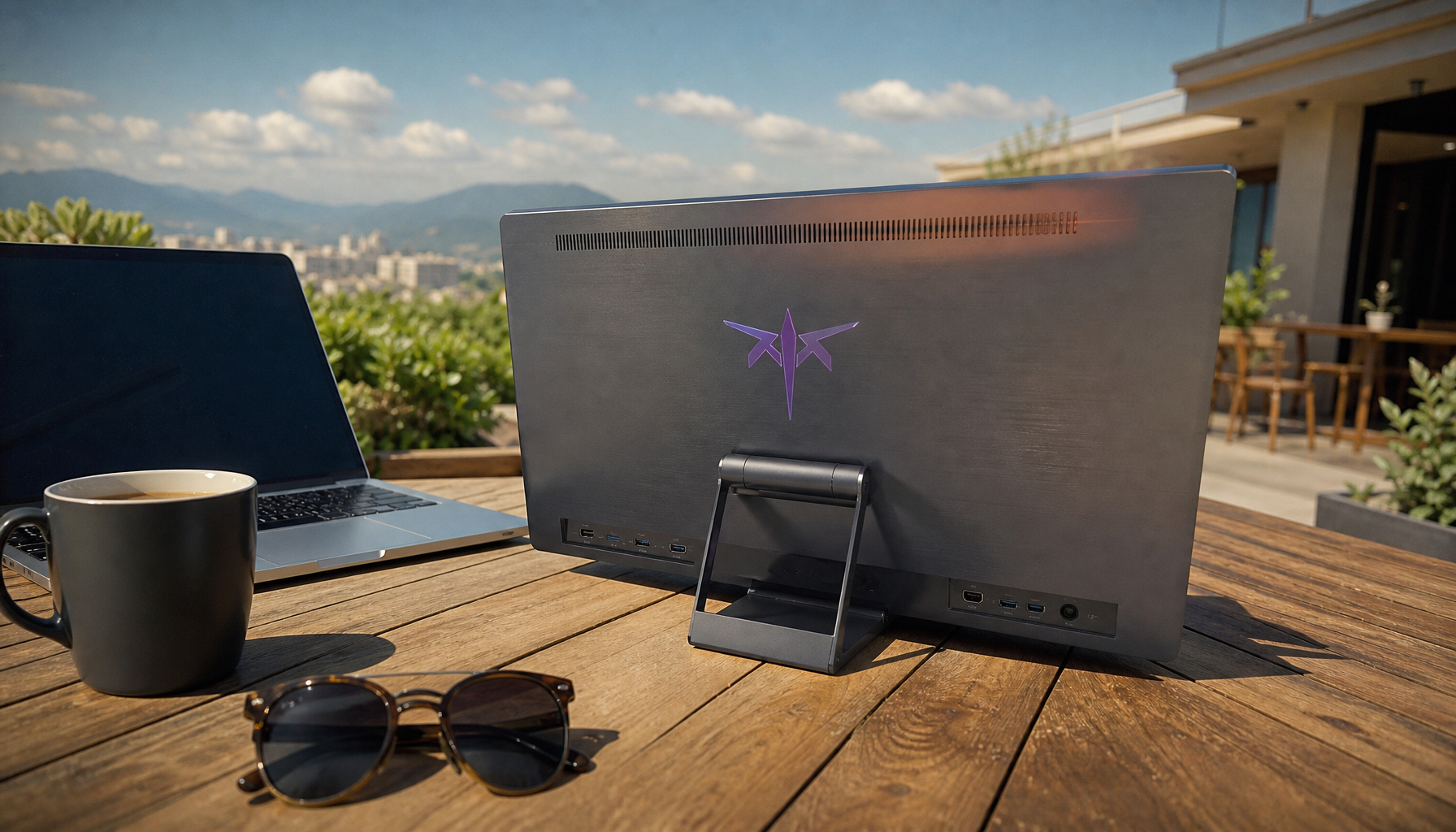
Enclosed installations can be worse than open desk setups. A monitor overheating thread described failures linked to poor rear ventilation, flush mounting, and insufficient breathing space behind the panel. The practical fix was simple: vent openings at the top and bottom, more rear clearance, and in some cases a small fan to move air. The same principle applies to portable monitors used in stands, sleeves, or tight travel workstations.
Run a Short, Repeatable Isolation Test
A useful temperature check process starts with monitoring CPU behavior in real workloads, not just BIOS idle readings. Use a hardware tool that records minimum and maximum values while you game, edit video, or run the exact workload that causes the display to fail. If the screen drops out while CPU and GPU temperatures stay controlled, that pushes suspicion back toward the monitor, cable path, dock, or power brick.
Then reduce the display workload in a controlled order. Start by cutting refresh rate, then lower brightness, then disable adaptive sync if you use it, then swap the display cable and port. A gaming-monitor black screen checklist also includes restoring default clocks if the system is overclocked and resetting the monitor to factory settings. Each step tells you whether the trigger is thermal load, unstable signal timing, or software state.

For high-refresh panels, capture whether the fault is tied to a specific mode. In one troubleshooting thread, blackouts were reported more often at 144 Hz, and users pointed to both driver resets and cable quality at 1440p/144 Hz. If the same monitor is stable at 60 Hz for hours but fails quickly at 144 Hz or 165 Hz, that is a strong clue that the problem sits in either the panel’s higher-load operating mode or the signal path needed to sustain it.
Know When the Power Path Is the Real Problem
A monitor that gets abnormally hot very quickly can be reacting to bad power delivery rather than poor room airflow. Company support recommended testing the monitor directly from a wall outlet or a high-quality surge protector and checking whether the power brick or cable itself was overheating. That advice is especially relevant for large ultrawide displays and portable monitors that rely on compact external power adapters.

Power-cycling can also mimic thermal shutdown. In one hardware forum case, a display turned off after about 5 seconds, then back on after another 5 seconds, repeating in a loop. The owner had previously reduced brightness to stop the issue, which suggests heat or power stress, but when minimum brightness no longer helped, the likely problem had moved beyond a simple setting adjustment.
If your monitor uses USB-C power, a dock, or a travel adapter, test it with the manufacturer-recommended power source before drawing conclusions. Portable monitors are especially easy to misdiagnose because an underpowered adapter can cause dimming, unstable brightness, or shutdowns that feel like overheating but are really power starvation under load.
Use the Results to Decide Between Fixing, Replacing, or Buying Smarter
A monitor-side overheating issue becomes more likely when the panel shows heat-linked dimming, flicker, or shutdown even after you have improved airflow, lowered brightness, reduced refresh rate, changed cables, and confirmed that CPU and GPU temperatures are normal. At that point, repair or replacement is more rational than endless software tweaking, because repeated overheating can permanently degrade brightness, color accuracy, contrast, power components, and overall lifespan.
For buyers comparing gaming monitors, ultrawides, and portable displays, the lesson is not “avoid big or fast panels.” It is to avoid bad thermal conditions around them. A 34-inch ultrawide running 144 Hz or 165 Hz has more reason to be tested carefully for ventilation and power quality than a basic office monitor, especially if it sits close to a wall, above HVAC output, or inside a tight desk shelf.
When you shop, favor designs that leave real rear clearance, avoid flush-mounted furniture traps, and use reliable power accessories. If a monitor becomes room-warming hot within minutes, dims itself during normal use, or repeatedly blacks out after heat buildup while other variables test clean, that is not a buying-guide edge case. It is a return or warranty case.
Practical Next Steps
Use this checklist before you replace a monitor:
- Verify whether the screen loses image while the monitor stays powered on, or whether the monitor itself fully shuts down.
- Log CPU and GPU temperatures during the exact game or workload that triggers the blackout.
- Lower refresh rate and brightness for one full session, then compare stability against your normal settings.
- Reseat or replace the display cable, and test a different port or a different PC if available.
- Move the monitor away from vents, radiators, direct sun, and flush wall mounting; add rear breathing space.
- Test with the original power adapter or directly from a wall outlet or quality surge protector.
- Reset the monitor to factory settings and return any GPU or CPU overclocks to default.
FAQ
Q: Can a monitor really shut itself down from heat?
A: Yes. Some displays dim, flicker, or shut down as a protective response when internal temperatures rise too far, especially if vents are blocked, brightness is high, or the monitor sits in a hot, enclosed area.
Q: Does a higher refresh rate make overheating more likely?
A: It can. High-refresh modes such as 144 Hz or 165 Hz increase display workload, and several troubleshooting cases improved when refresh rate was reduced. That does not prove every high-refresh issue is thermal, but it makes thermal testing worthwhile.
Q: How do I know it is the GPU instead of the monitor?
A: If the problem appears only during gaming, audio keeps playing, the system logs driver resets, or the monitor stays powered while losing signal, the GPU, driver, or cable path is more likely than a true monitor overheat.
References
- A brand: How to Check CPU Temperature
- A platform: Monitor Randomly Going Black
- A platform: Screen going black for a few seconds randomly in games
- A brand: Safe Monitor Mounting Above a Radiator or Vent
- A company Support Community: monitor overheating
- A company: Symptoms, Causes, and Solutions for Overheating in LED Displays
- A company: Symptoms, Causes, and Solutions for Overheating in LED Displays
- A platform: Overheating graphics card responsible for monitor losing signal?
- A hardware forum: Screen Flicker When Setting Refresh Rate Above 60hz
- A hardware forum: Monitor Keeps Turning On And Off
- A forum: Monitor Overheated