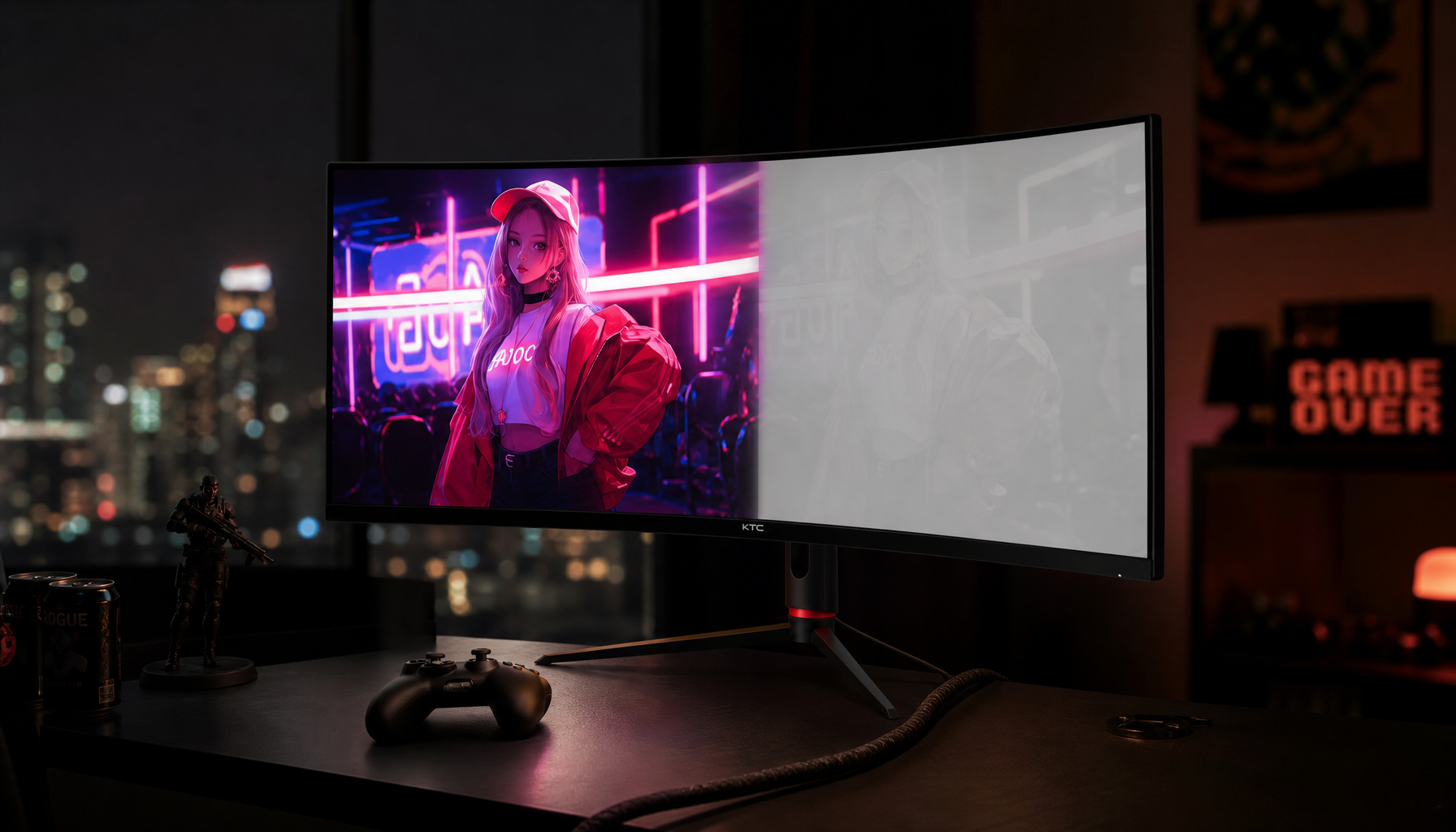
Local dimming behaves differently in SDR and HDR because the display receives different brightness instructions, uses different picture modes, and often applies separate backlight algorithms for each signal type.
Does your Mini-LED monitor look punchy in HDR games but uneven, dim, or halo-prone on the SDR desktop? With the right SDR and HDR setup split, you can usually improve black depth, reduce blooming, and keep spreadsheets, games, and movies from fighting the same settings.
Local Dimming, in Plain English
Local dimming is a backlight control system used by LED LCD, QLED, and Mini-LED displays. Instead of lighting the entire panel at one fixed level, the monitor divides the backlight into zones and dims darker parts of the image while keeping bright areas illuminated. That is why a night sky, a white cursor, and a bright explosion can all stress the system differently.
A standard LCD panel does not create light by itself; it relies on LEDs behind or around the screen, and HDR LCDs improve contrast by brightening and dimming that backlight in response to content. OLED and MicroLED work differently because each pixel emits its own light, so they do not need zone-based dimming in the same way.
The core benefit is clear when it works well: darker blacks, brighter highlights, and more perceived depth. The tradeoff is just as real. Because one dimming zone controls many pixels, a small bright object can lift the surrounding backlight and create a halo. Subtitles, mouse cursors, stars, health bars, and white UI panels are classic stress tests.

Why SDR Often Looks Worse With Local Dimming On
SDR content is mastered for a narrower brightness range. A desktop app, browser page, spreadsheet, or standard video usually assumes stable screen brightness, not aggressive zone-by-zone backlight changes. When local dimming is forced onto SDR, the monitor may dim large areas around dark UI, brighten around white windows, or shift luminance as you move the cursor.
That is why many Mini-LED monitor owners notice a strange “breathing” effect in office use. A black code editor with a white mouse pointer may trigger one zone to brighten while the surrounding area stays dim. Move a white document across the screen and the backlight may chase it. This is not necessarily a defect; it is the dimming algorithm trying to create HDR-style contrast from content that was not designed for it.

For office work, web browsing, documents, and standard desktop apps, SDR use is generally better with local dimming off and brightness uniformity enabled when available. That matches what many monitor testers and calibrators see in daily use: SDR productivity benefits more from consistency than from maximum contrast.
Why HDR Needs Local Dimming More
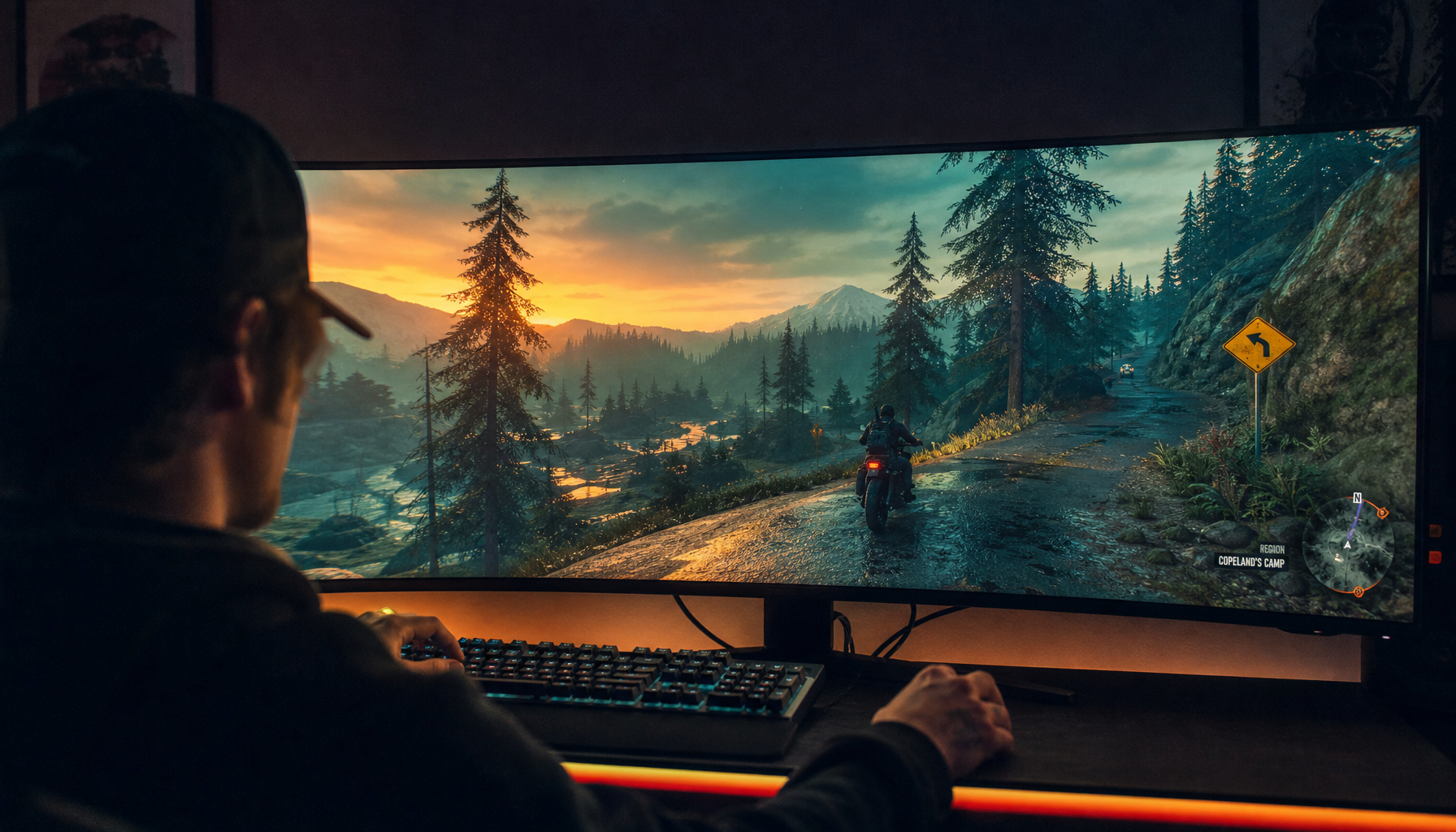
HDR asks the display to show a wider brightness range. A game scene may contain a dark cave, a torch, metallic reflections, and a bright sky in the same frame. Without strong backlight control, an LED LCD display has to compromise: either lift the blacks so the highlight can shine, or cap the highlight so the blacks do not wash out.
HDR also uses tone mapping, which reshapes the HDR signal to fit the display’s real brightness and contrast limits. Tone mapping matters because a 1,000-nit or 4,000-nit mastered movie still has to fit a monitor that may sustain far less brightness across the full screen. Local dimming gives the tone-mapping system more room to maneuver, especially in scenes with bright highlights against dark backgrounds.
This is why HDR and local dimming usually belong together. A Mini-LED monitor with hundreds or thousands of zones can dim the cave wall while pushing the torch brighter, creating the visual separation HDR is meant to deliver. Without local dimming, many HDR LCD monitors look like brighter SDR: more luminous, but not necessarily deeper or more dimensional.

SDR Versus HDR Behavior at a Glance
Scenario |
Best Local Dimming Tendency |
Why It Happens |
Practical Setting Direction |
Often off |
Static white windows and cursors can cause halos or brightness shifts |
Use uniformity or standard brightness controls |
|
SDR movies |
Depends on room and panel |
Some dimming can deepen blacks, but aggressive dimming may crush shadow detail |
Try low or medium if available |
HDR movies |
Usually on |
HDR highlights need backlight headroom and deeper blacks |
Use local dimming high or balanced mode |
HDR gaming |
Usually on, but test latency mode |
Game mode can alter dimming quality or speed |
Use HDR game mode and adjust in-game peak brightness |
Subtitles on dark scenes |
Mixed |
Subtitles can light up zones and create halos |
Lower dimming strength or subtitle brightness if possible |
The Hardware Makes a Big Difference
Not all local dimming is the same technology wearing the same name. Edge-lit dimming, direct-lit global dimming, full-array local dimming, and Mini-LED can behave dramatically differently. A cheap edge-lit display may dim broad vertical bands, while a full-array Mini-LED display can control a much finer grid behind the panel.
Full-array local dimming generally gives LCD displays their strongest contrast because the LEDs sit behind the whole panel rather than only along the edges. Mini-LED improves that idea by using smaller LEDs and more zones, which can reduce blooming around bright objects. Still, more zones do not automatically mean better performance. The algorithm decides how quickly zones respond, how much shadow detail is protected, and how aggressively the display suppresses halos.
A simple example helps. If a bright subtitle spans several dimming zones on a dark movie scene, the display has to choose between keeping the subtitle bright and raising the black level around it, or dimming the subtitle to preserve the background. A performance-focused HDR mode may favor highlight punch. A cinema or balanced mode may reduce the subtitle halo but make the text less bright.
Why Settings May Not Carry Over Between SDR and HDR
Many displays store SDR and HDR settings separately. Your input, picture mode, refresh rate, operating system HDR toggle, game mode, and console profile can each trigger a different memory slot. That is why SDR can look calibrated while HDR looks wrong, even on the same screen.
Operating system settings and monitor firmware can also add another layer. Adaptive brightness, dynamic contrast, energy saving, and auto-dimming features may fight the monitor’s local dimming logic. For stable results, treat SDR and HDR as two separate calibrations. Set the SDR desktop first for comfort and uniformity, then enable HDR content and tune the HDR mode separately.
For TVs, local dimming controls often sit beside picture modes such as Movie, Filmmaker, Standard, or Game. For monitors, the controls may appear as Local Dimming, Halo Dimming, HDR Mode, Brightness Uniformity, Dynamic Contrast, or Smart Energy Saving. The names vary, but the goal is the same: avoid letting an automatic feature sabotage the image you are trying to build.
Pros and Cons of Local Dimming in SDR
The biggest SDR advantage is improved perceived contrast in dark videos or games. If you watch a standard disc or play an SDR title in a dark room, a mild local dimming mode can make blacks look less gray and add depth to shadowed scenes.
The downside is consistency. SDR desktop work is full of hard-edged UI elements: white windows, thin text, menus, toolbars, and static panels. These are not cinematic light sources; they are productivity surfaces. Aggressive dimming can make them pulse, halo, or look uneven. For long office sessions, a stable backlight is usually more valuable than deeper blacks.
Pros and Cons of Local Dimming in HDR
The biggest HDR advantage is impact. Bright highlights can stand out while dark parts of the image stay controlled. In a racing game at night, headlights feel more intense. In a space scene, stars and ship lights separate better from the background. In a high-end productivity display, HDR previews can show more convincing highlight detail than a basic LCD backlight can manage.
The downside is artifact visibility. HDR makes bright objects brighter, so halos can become easier to see. A monitor that looks clean in SDR may reveal blooming in HDR because it is pushing the backlight harder. If the algorithm is too aggressive, it may also crush near-black detail, making dark clothing, cave textures, or game interiors look flatter than they should.
How to Tune SDR and HDR Without Guesswork
Start by separating your use cases. For SDR office work, set a comfortable brightness for your room, turn off aggressive local dimming, and enable brightness uniformity if your monitor offers it. A 27-inch or 32-inch Mini-LED screen used for spreadsheets, email, and code should feel steady across the panel, not dramatic.
For HDR movies and games, switch to real HDR content before changing HDR settings. Use an HDR-labeled video, an HDR game calibration screen, or your operating system’s HDR calibration tool. Then enable local dimming and compare medium, high, and custom modes. The best setting is not always the maximum setting; it is the one that keeps highlights vivid without making subtitles, HUD elements, or cursors distracting.
If your monitor includes halo control, treat it as a precision tool. Higher halo reduction can suppress blooming, but it may also reduce peak brightness or dim small highlights. In a dark RPG, a balanced halo setting may preserve more shadow texture than the strongest mode. In a bright HDR racing game, a stronger local dimming setting may deliver the punch you bought the display for.
When Local Dimming Is Not the Right Answer
Local dimming cannot fully overcome weak native contrast, poor panel uniformity, or a crude algorithm. Black areas on LCD displays can appear dark gray because the backlight is still involved, and local dimming only reduces that problem by zones. If a display has too few zones or slow transitions, you may see clouding, flicker, trailing halos, or abrupt brightness steps.
This is where buying decisions matter. For gaming monitors and smart portable screens, prioritize measured HDR behavior, sustained brightness, dimming-zone quality, and usable SDR controls over a vague “HDR supported” badge. A well-implemented full-array or Mini-LED display can be excellent for mixed work and play. A weak local dimming system can make SDR annoying and HDR inconsistent.
FAQ
Should I leave local dimming on all the time?
Usually no. Leave it off or low for SDR productivity if you notice pulsing, halos, or uneven white windows. Turn it on for HDR movies and games where contrast and highlights matter more than desktop uniformity.
Is high local dimming always best for HDR?
Not always. High can create deeper blacks and brighter highlights, but it can also make blooming sharper or hide shadow detail. A medium or balanced mode may look more natural on monitors with aggressive algorithms.
Why does HDR look dimmer than SDR on my monitor?
HDR can look dim if tone mapping, peak brightness, HDR calibration, game settings, or the monitor’s HDR mode are mismatched. HDR is not simply “maximum brightness”; it depends on how the display maps bright and dark detail within its limits.
Final Word
Local dimming is a performance feature, not a universal on/off upgrade. Use SDR for clean, stable productivity and HDR for controlled impact, then give each mode its own settings. That split is the difference between a display that merely has Mini-LED or HDR on the box and one that actually works for gaming, work, and immersive viewing.