People prefer identical home and office monitor setups because matching size, resolution, refresh rate, ports, and ergonomics removes daily adjustment friction and keeps both work and gaming behavior consistent.
If your office desk has two 27-inch displays but home drops you onto a smaller, softer-looking screen, even routine tasks start with resizing windows and re-finding your visual rhythm. Published workplace comparisons have linked dual-screen use with faster task completion and productivity gains of up to 40%, which is why consistency matters more than many buyers expect. The sections below break down what should match, what can vary, and when an ultrawide or portable monitor is the smarter exception.

Why Matching Setups Feels Easier Day to Day
Less relearning between locations
A dedicated workstation has become a normal part of hybrid work, not a luxury, because many people now split their week between locations instead of using one fixed desk. When both desks use the same display layout, your laptop dock, app placement, and screen-sharing habits transfer cleanly instead of being relearned every time you switch sites.
A dual-monitor setup cuts down on window shuffling, and the workplace research cited there reported up to 40% higher productivity plus about a two-minute improvement on a data-finding task. Matching that same arrangement at home and at the office helps preserve the benefit, because email, chat, documents, dashboards, and browser tabs stay in the same physical places.
Consistent screen geography reduces friction
A continuous visual field is one reason people describe matching displays as “easier” rather than merely “similar.” Whether you use one ultrawide or two identical 16:9 screens, repeating the same screen geography reduces the small mental cost of tracking where information lives, and that matters in long sessions of coding, spreadsheet work, and game-plus-a messaging platform multitasking.
Which Monitor Specs Actually Need to Match
Size and resolution come first
A 27-inch monitor is often the safest size to duplicate because it balances desk fit, visibility, and resolution choices, while 1080p starts to look softer as screens get larger. A company’s size guidance also shows why mismatches feel strange: a 24-inch screen is often viewed from about 2-3 ft away, while 27-inch and 32-inch displays typically sit a bit farther back, so changing size between desks changes both perceived sharpness and how much of the screen you can comfortably see at once.

A QHD screen is the practical middle ground for many hybrid users, especially at 27-32 inches, because it adds clear workspace over 1080p without the heavier scaling and GPU demands of 4K. Matching screen sharpness matters just as much as matching diagonal size, and a 32-inch setup also needs real desk room; a company’s large-monitor guidance calls out at least 24 inches of desk depth for a 32-inch screen.
Panel behavior and refresh rate matter next
A 120 Hz to 144 Hz range is the sweet spot for many work-and-gaming setups because 60 Hz is usually fine for office tasks, while higher refresh improves smoothness for gaming and fast interface motion. Consistency matters more than the headline number: if one desk runs 60 Hz and the other runs 165 Hz, scrolling, pointer motion, and game feel will never quite line up, and if color-sensitive work matters, you should also assume calibration is needed because specifications alone cannot guarantee a visual match.
Best Matching Configurations for Hybrid Work and Gaming
Why 27-inch 1440p keeps winning
A 27-inch gaming size remains the common compromise because it is large enough for real multitasking but still compact enough to keep the whole screen in view during faster games. For someone who moves between office apps by day and multiplayer or action titles at night, matching dual 27-inch 1440p displays in both places is usually less risky than mixing a small office monitor with a large home gaming panel, which is also why models like the 27” 2K 100Hz/120Hz home-and-office monitor fit naturally into the same mirror-both-desks approach.

A current gaming monitor roundup reinforces that point: premium gaming picks still cluster around 25-27 inches, with 1440p and very high refresh rates common at the top end. That does not mean every hybrid buyer needs a premium panel at 360 Hz or 480 Hz, but it does show the market still treats the 27-inch class as the center of gravity for people who want one display format that works for work, general use, and serious gaming.
When 32-inch, 4K, or ultrawide is the better mirror
A 32-34 inch class makes more sense when your day is dominated by long timelines, dense spreadsheets, side-by-side documents, or high-detail creative work, and 4K becomes more compelling as detail demands rise. The tradeoff is practical rather than theoretical: if one location cannot comfortably fit the larger panel or place it at the right distance, forcing a mismatch usually hurts more than the extra pixels help.
Setup option |
Common spec pattern |
Best fit |
Why people duplicate it across locations |
Main tradeoff |
Two matching compact displays |
24-27 inches, 1080p |
Budget desks, office apps, light gaming |
Easy scaling, familiar window positions, lower cost |
Less sharp at larger sizes |
Two matching balanced displays |
27 inches, 1440p |
Hybrid work, coding, general gaming |
Strong balance of space, sharpness, and desk fit |
Costs more than basic 1080p |
One matching detail-first display |
32 inches, 4K |
Creative work, analysis, console or cinematic gaming |
High clarity and large single-screen workspace |
Needs more desk depth and GPU headroom |
One matching ultrawide |
34-49 inches, ultrawide resolution |
Spreadsheets, timelines, immersive gaming |
One continuous workspace with no bezel gap |
Larger footprint, more deliberate window management |
One portable add-on |
Under 15.6 inches |
Travel-heavy laptop workflows |
Lets you preserve two-screen habits on the road |
Small screen, more comfort and color compromises |
When an Ultrawide or Portable Monitor Is Better Than Copying Dual Screens
Ultrawide can be the cleaner match
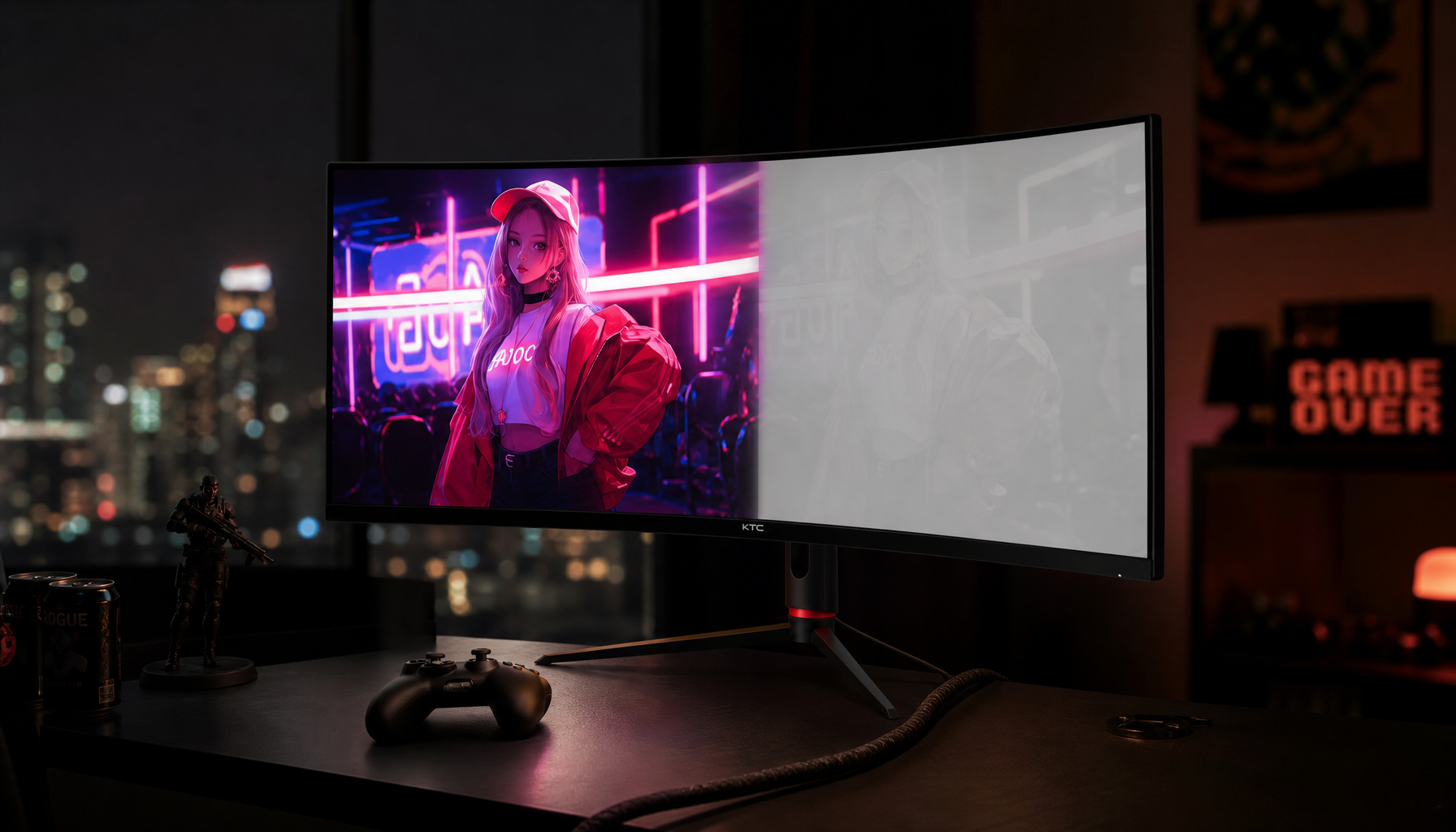
An ultrawide monitor can be a better home-and-office match than duplicated dual screens if your work depends on keeping related windows in one continuous visual field. That setup usually asks for more deliberate window sizing, but it removes the bezel split and tends to rely more on eye movement than head turning, which some people find easier over long sessions.
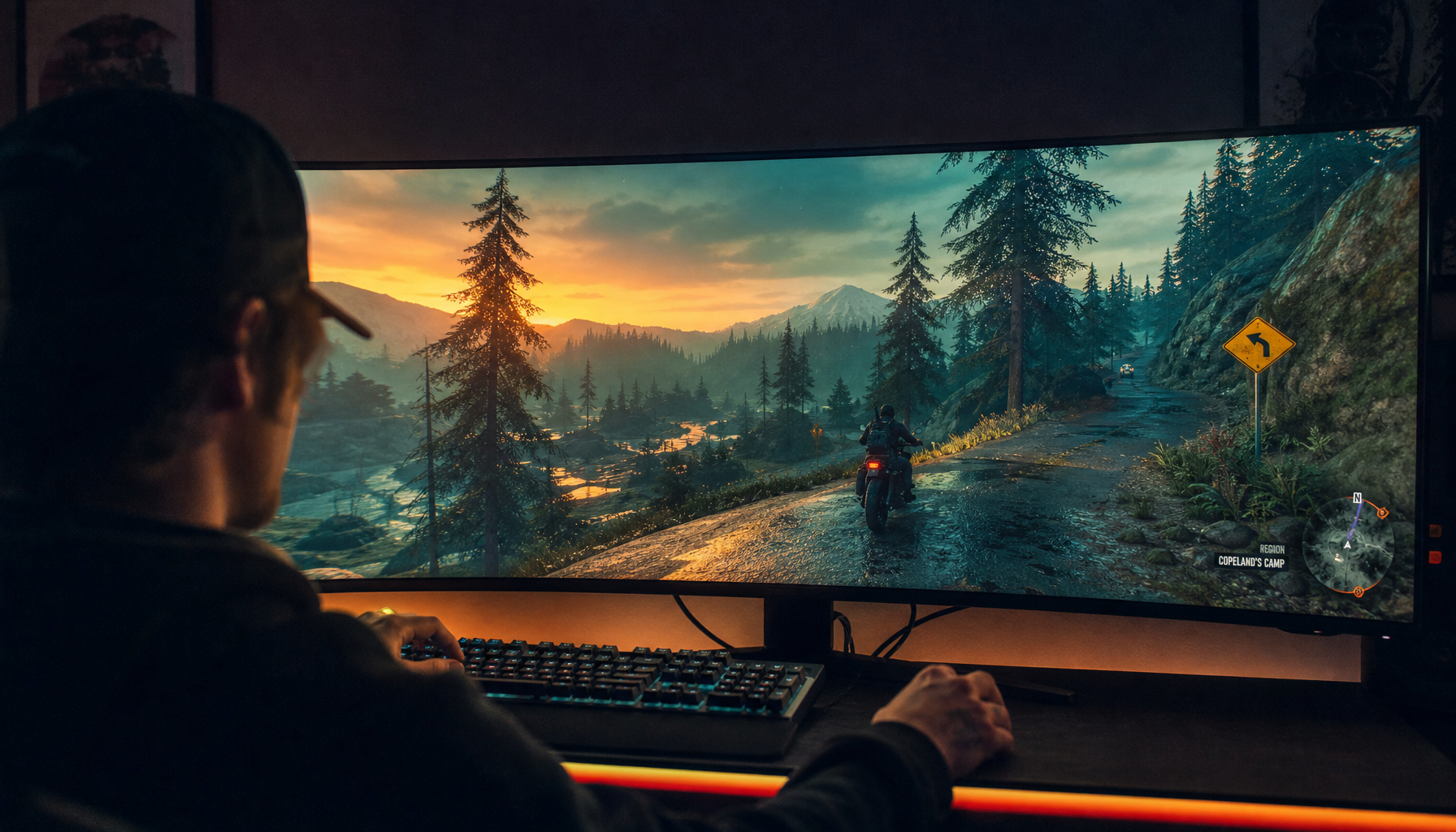
A 49-inch ultrawide or a 34-inch class model can replace dual monitors for spreadsheets, coding panes, and editing timelines, and a curved screen may reduce strain for some users. If both locations can fit the same ultrawide and support the same mount height, duplicating that single-screen setup can feel more natural than trying to recreate it with two different smaller panels.
Portable monitors are the exception, not the default
A portable monitor is most defensible when you commute often, keep the panel under 15.6 inches and 2.2 lb, use a modern single-cable connection, and can point to at least about 90 minutes a day of real two-screen benefit. For everyone else, a standard second monitor is usually the better long-term buy for comfort, and a recent budget-shopping example made that tradeoff obvious: one buyer was comparing a $60 portable screen against an $80 24.5-inch 100 Hz desktop monitor for coding, reference material, and general desk use.
How to Standardize a Monitor Setup Without Overbuying
Match ports and docking behavior
A single-cable display path removes more friction than many buyers expect because one cable can carry video, data, and power. If your office setup uses a display connector standard, single-cable docking, or daisy chaining, duplicating that same port logic at home prevents the annoying failure mode where one desk works with a single cable and the other requires adapters, extra chargers, or a different connection order.

Match ergonomics and calibrate when color matters
A color match cannot be guaranteed from specifications alone, because panel technology, coatings, and factory tuning all affect the final image. If color-sensitive work matters, the safest route is the same model plus calibration; at minimum, align brightness, contrast, color temperature, and gamma so your home and office screens do not force you to re-judge images every time you switch desks.
An ergonomic feature set worth matching includes height adjustment, tilt, and pivot if you use one screen vertically. Consistent monitor height and distance reduce the silent fatigue caused by one desk forcing you to look down, lean forward, or rotate your neck more than the other.
Action checklist
- Pick one primary layout first: dual 27-inch 1440p, single 32-inch 4K, or single 34-49-inch ultrawide.
- Match size, resolution, refresh rate, and port mix before worrying about cosmetic differences.
- Verify desk fit and viewing distance at both locations before buying the second setup.
- If color matters, buy the same model or budget for calibration hardware.
- Mirror monitor height, mount position, and cable routing in both places.
- Choose a portable monitor only if you travel often enough to use it nearly every day.
FAQ
Q: Do home and office monitors need to be the exact same model?
A: No, but the same model is the safest choice. If that is not possible, match size, resolution, refresh rate, panel type, ports, and ergonomic adjustment range as closely as you can.
Q: Is 60 Hz enough for a hybrid work setup?
A: For pure office work, usually yes. For mixed work and gaming, 120 Hz to 144 Hz is a better compromise because scrolling, cursor motion, and game feel stay smoother and more consistent.
Q: Is one ultrawide better than two monitors?
A: It depends on how you work. Ultrawides keep related windows on one surface and remove bezel gaps, while dual monitors make it easier to dedicate one screen to chat, email, or reference material.
Practical Next Steps
If you are standardizing two desks today, start with the behavior you want to preserve rather than the fanciest panel. For most hybrid users, that means either matching dual 27-inch 1440p monitors in both places or matching one 34-inch ultrawide or 32-inch 4K screen across both locations, then keeping refresh rate, ports, and ergonomics aligned.
That is the real reason identical configurations keep gaining appeal: they remove renegotiation. When the home desk and office desk ask your eyes, hands, and laptop to behave the same way, productivity tools, game settings, and window habits transfer cleanly instead of fighting you.