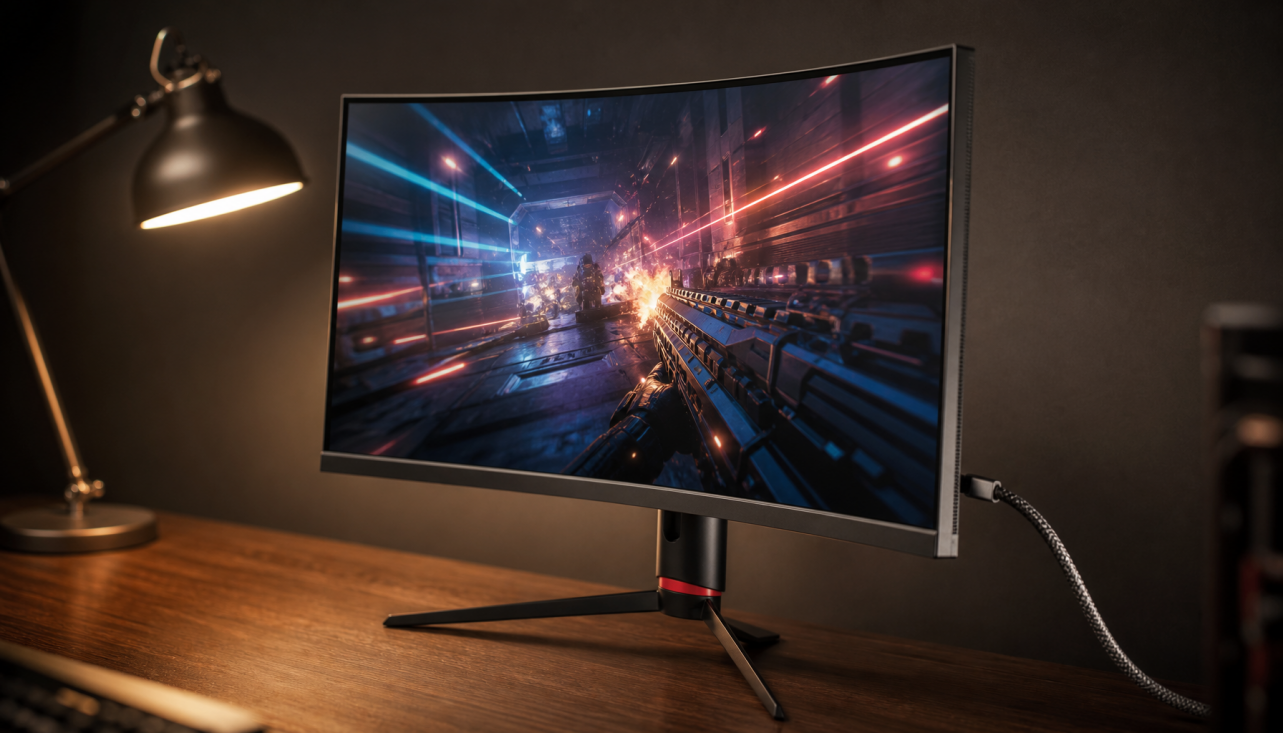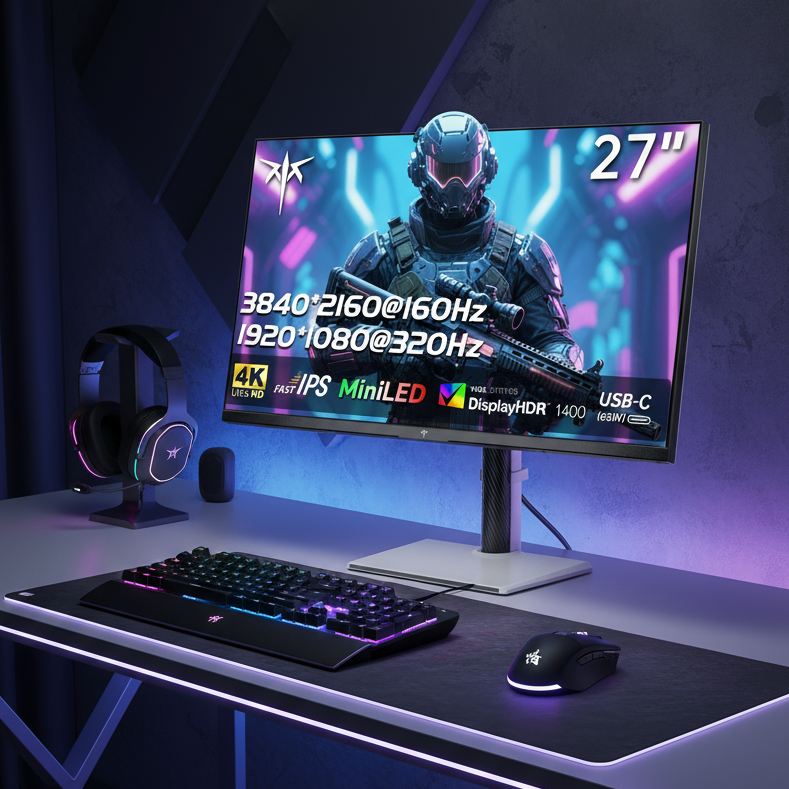




Panel coating changes how light behaves before it reaches your eyes. Matte coatings reduce glare by scattering reflections, while glossy and semi-gloss finishes preserve stronger contrast and color but reveal sharper reflections.
The Coating Is the Screen’s First Filter
A monitor’s panel technology matters, but the surface coating decides how room light interacts with that panel. A high-color IPS or OLED display can still look flat if overhead lights wash across a rough anti-glare layer.
Matte coatings diffuse incoming light across a wider area. That makes bright windows, lamps, and office lighting less distracting, but it can also soften perceived black depth and reduce the wet-paint look of saturated colors.

Glossy coatings do the opposite. They keep light more direct, so colors often look cleaner and blacks look deeper, but reflections become sharper and easier to notice.
Matte: Better Control, Softer Pop
Matte is the reliable productivity choice for bright rooms, open offices, classrooms, and shared desks. It reduces hard reflections, so spreadsheets, documents, dashboards, and code stay readable during longer sessions.

The tradeoff is vibrancy. Because matte coating spreads reflected light, it can create a slight haze over the image, especially in dark scenes or rich colors. Forum users discussing monitor coatings often describe heavier anti-glare finishes as adding sparkle or grain on white backgrounds.
Choose matte if you work near windows or ceiling lights, prioritize text clarity over cinematic depth, use the display for 6 or more hours a day, or find reflections more distracting than mild haze. For office productivity displays, matte is usually the safer value pick.
Glossy and Semi-Gloss: More Vibrancy, More Risk
Glossy coatings preserve more perceived contrast because they scatter less light across the panel surface. That helps games, movies, photos, and OLED content feel more dimensional.
This is why glossy OLED and premium gaming screens can look so immersive in controlled lighting. OLED already benefits from pixel-level black control, and OLED monitor comparisons show why contrast and color volume are major image-quality advantages when the environment cooperates.
The risk is room control. A glossy screen facing a window can show a clear reflection of your room, your keyboard, or even your shirt. In a dark game, that reflection competes directly with shadow detail.
Semi-gloss sits in the middle. It keeps more color punch than heavy matte while softening reflections more than full gloss. For gaming monitors in mixed-use rooms, semi-gloss is often the most practical compromise with a premium feel.
Panel Type Still Sets the Ceiling
Coating modifies the experience, but panel type sets the baseline. IPS is widely favored for color and viewing angles, while VA often delivers stronger native contrast, and TN prioritizes speed over image richness. For color-focused play, IPS panels can offer broad gamut coverage and wide viewing angles.
Think of coating as the final tuning layer. A matte IPS monitor may look stable and accurate in daylight, while a glossy IPS version may look richer at night. A VA panel with a glossy or semi-gloss finish can feel especially deep in dark scenes, but only if reflections are controlled.
Contrast also drives perceived vibrancy. Higher contrast generally means deeper blacks and brighter highlights, which is why contrast ratio remains a key display-quality spec alongside brightness and color gamut.
Best Choice by Setup
For competitive gaming, pick the coating that keeps enemies visible under your real lighting. A fast panel with distracting glare is not a performance advantage.
For creative work, prioritize consistent lighting, a quality IPS or OLED panel, and a coating you can tolerate during long edits. Heavy matte can make whites look textured; glossy can make dark edits unreliable in a bright room.

For portable smart screens, semi-gloss is usually the most flexible. It keeps videos and presentations vivid without becoming unusable under normal indoor light.
One nuance: matte versus glossy is not binary, because coating haze level, panel brightness, and room lighting can change the result as much as the label itself.