OLED lifespan estimates usually measure how long a panel takes to lose a defined amount of brightness, not when it suddenly stops working. For gamers, creators, and office users, the real question is how quickly brightness, color balance, or static-image wear may become visible in everyday use.
How Labs Calculate OLED Lifespan
OLED pixels are self-emissive, meaning each pixel produces its own light instead of relying on a backlight. That is why OLED delivers perfect blacks, fast pixel response, and the high-contrast depth that makes games, HDR video, and focused desktop work feel clean.
The common lab benchmark is luminance decay. A technical lifetime rating often means the time it takes for brightness to fall to 50% of its original output, a threshold known as LT50 in display testing. That lifetime is shaped by brightness, temperature, fabrication quality, and user behavior.
That 50% brightness point is not a failure cliff. A monitor can remain usable before and after that mark, but HDR impact, white balance, and uniformity may no longer match the panel’s original performance.

Why One Lifespan Number Can Mislead
A 100,000-hour claim sounds enormous, and some OLED TV claims have reached that figure; one manufacturer’s reported improvement from 36,000 hours to 100,000 hours shows how quickly OLED TV lifespan estimates have advanced.
Those numbers usually assume controlled use: moderate brightness, varied content, reasonable room temperature, and working compensation cycles. A productivity monitor locked on spreadsheets, toolbars, and white browser tabs for 40 hours per week creates a different aging pattern than a living-room TV showing mixed movies and shows.

A quick reality check: 50,000 hours equals about 17 years at 8 hours per day. That does not mean every OLED monitor will look factory-new for 17 years; it means the test condition reached a defined brightness-loss point after that many operating hours.
The Big Variables: Brightness, Blue Pixels, and Static UI
Brightness is the biggest lever because higher luminance requires more electrical drive. More drive creates more stress on the organic materials, so running full brightness all day can age pixels faster than using a calibrated office setting.
Blue emitters are another weak link. Industry coverage consistently notes that blue OLED materials remain harder to stabilize than red or green, making blue OLED emitters a central challenge for long-term color balance.
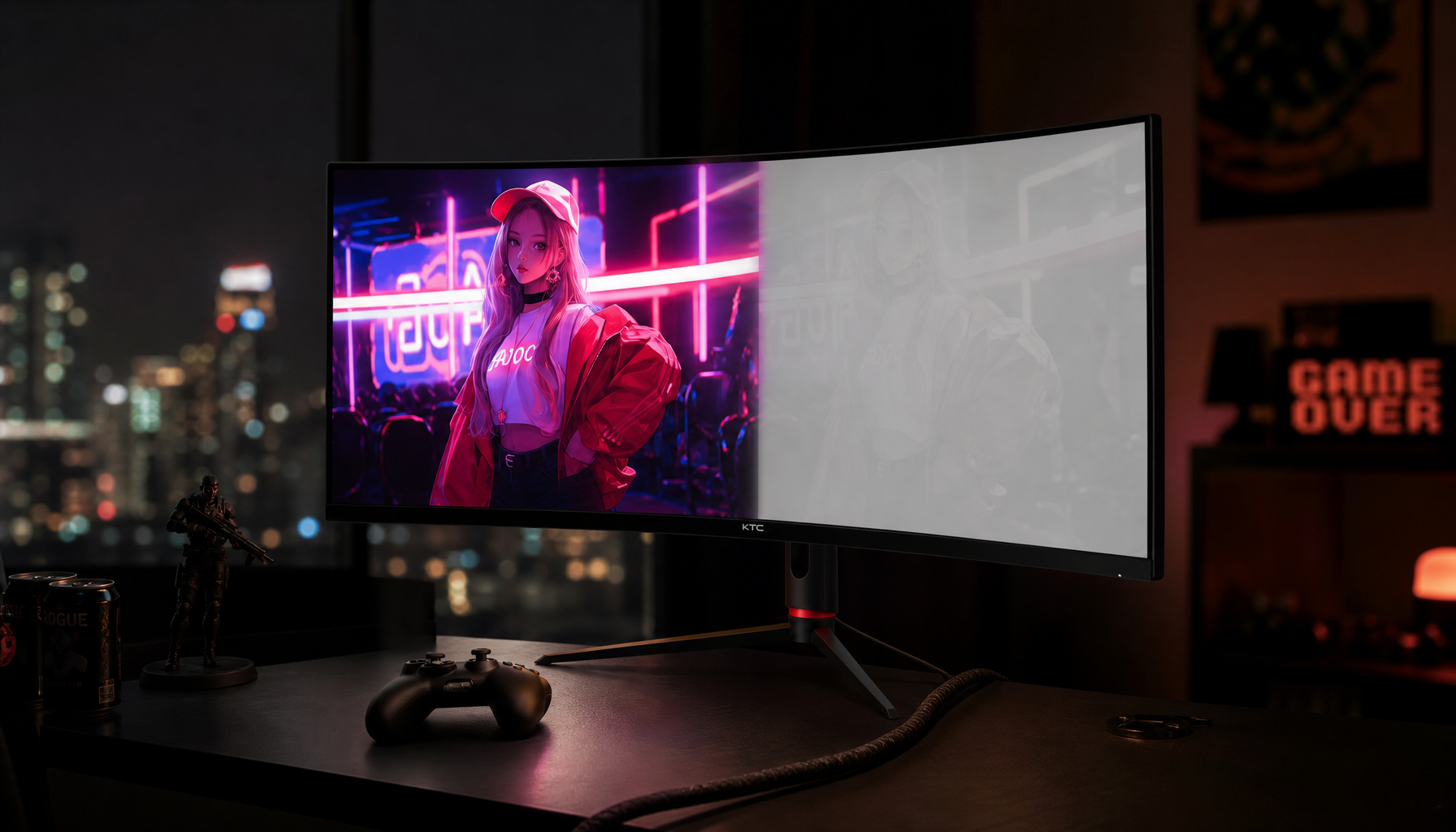
Static content is the practical risk for monitors. Game HUDs, desktop taskbars, menu bars, stock tickers, and editing timelines can wear certain pixels faster than surrounding areas. That uneven wear is what users call burn-in.

Lifespan ratings describe average brightness decay, while burn-in is uneven pixel aging. A panel can still have plenty of rated life left and show a faint static element.
What the Estimate Means for Buyers
For a gaming monitor, OLED lifespan estimates are best read as a confidence range, not a warranty promise. Mixed gaming, video, and web use spreads pixel wear well; fixed desktop layouts concentrate it.
A real-world OLED monitor test after 2,656 hours found little visible burn-in in normal use, though faint marks appeared on test patterns. That kind of screen-on time is useful because it reflects actual mixed PC behavior, not just lab math.
For office productivity, the estimate means you should value panel-care tools as much as peak specs. Pixel shifting, dimming, sleep timers, and refresh cycles are not gimmicks; they are how the panel manages uneven wear over thousands of hours.

How to Make the Rating Work in Your Favor
Use OLED like a performance display, not a static signboard. The goal is to enjoy the contrast and speed while avoiding unnecessary pixel stress.
- Keep everyday brightness moderate; save peak brightness for HDR and bright rooms.
- Enable pixel shift, panel refresh, screen timeout, and auto-dimming features.
- Use dark mode where it fits your workflow.
- Auto-hide static desktop elements like the taskbar.
- Let the display sleep instead of showing idle windows.
Modern OLED laptops and monitors already include protection features such as pixel shifting, automatic dimming, and refresh cycles, and good habits mainly help those systems do their job. OLED screen care is about reducing needless static wear, not babying the panel.
The practical takeaway: OLED lifespan estimates are not fake, but they are conditional. Read them as lab-based brightness-decay benchmarks, then judge your own risk by brightness level, static content, daily hours, and how consistently the panel’s protection features are allowed to run.