Render resolution is the pixel count your GPU draws, while display resolution is the fixed pixel grid your monitor can actually show. For most gaming monitors, the clearest setup is native display resolution, with render resolution adjusted only when you need more frame rate or better anti-aliasing.
Ever drop a game setting and still wonder why your expensive monitor suddenly looks soft? One common setting can make a 1080p screen render as if it were 4K, while the opposite extreme can turn the picture into a blocky blur. This guide will help you choose the right setting for sharpness, frame rate, and the kind of monitor you actually plan to buy.
Render Resolution and Display Resolution Do Different Jobs
One setting belongs to the GPU
In most PC games, render scale changes the internal frame the GPU builds before the image is sent to the monitor. On a 1080p display, 200% scale means the game is effectively rendered at 3840x2160 internally, which is four times the pixel count of native 1080p, not just “double.”
A monitor’s native resolution is its fixed physical pixel structure, so display resolution is about what the panel can map cleanly to that grid. If a game renders at 1600x900 on a 1920x1080 monitor, the GPU draws 1600x900 first, then the image is scaled to fill the panel, which is why performance and sharpness are separate questions.
Why the distinction matters when buying a monitor
A gaming monitor resolution choice is always a tradeoff between visual detail and how hard your GPU has to work. That matters more once you move beyond basic 1080p screens into 27-inch 1440p panels, 34-inch ultrawides, or 4K high-refresh displays, where the monitor itself raises your performance demands before you touch any in-game scaling.
Why Native Display Resolution Usually Looks Better on a Gaming Monitor
The panel is sharpest at its own pixel grid
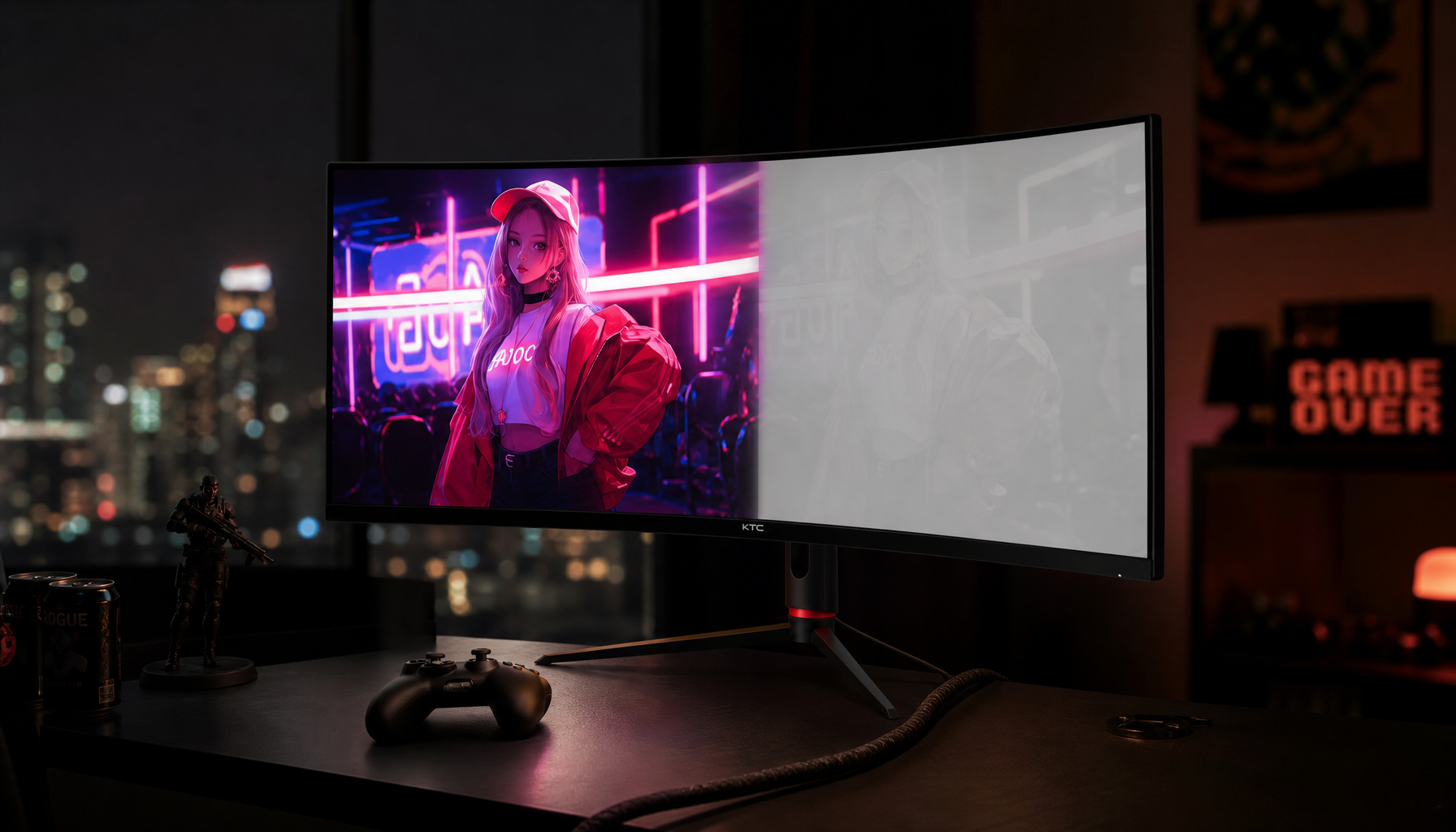
A monitor running at native resolution usually gives the cleanest text, HUD elements, and fine detail because each input pixel maps more directly to the panel’s fixed pixels. Run below native, and the display has to interpolate the image, which is where blur, softness, or slight stretching tends to show up first.
Larger screens benefit more from higher resolution, and screens over 27 inches are where 1440p or 4K usually start looking meaningfully sharper than 1080p. That is why a 32-inch QHD panel run at 1080p often looks acceptable in motion but noticeably softer in menu text, foliage edges, and distant geometry than the same panel run at native 2560x1440.

Size and pixel density change how obvious softness feels
A monitor’s pixel density affects how quickly you notice non-native scaling. On a small portable 1080p display, reduced sharpness can be less obvious because the pixels are packed more tightly, but on a 34-inch desktop monitor or 49-inch super ultrawide, the same compromise is harder to hide.
For ultrawide buyers, common size and resolution pairings are already a useful rule of thumb: 29-inch models often use 2560x1080, 34-inch models commonly use 3440x1440, 38-inch panels often use 3840x1600, and 49-inch super ultrawides frequently use 5120x1440. Those combinations exist for a reason: once the panel gets bigger, native resolution matters more.
When Lowering Render Resolution Is the Right Move
Keep the monitor native and reduce the game workload
Lowering resolution scaling is usually smarter than lowering your monitor’s output resolution if your goal is better frame rate with less damage to desktop and UI clarity. The monitor stays at its sharp native mode, while the game internally renders fewer pixels and scales them back up.
That approach is especially useful on 1440p and ultrawide monitors where dropping the whole display to a lower mode makes everything look softer. In practical terms, a 27-inch 1440p monitor at native output with a modest internal cut often looks better than forcing the panel itself down to 1080p full screen.
Performance gains are real, but they are not always linear
A lower internal render resolution can help, but lowering resolution does not guarantee a big FPS gain. Some users report frame rates that stay nearly the same even when the output resolution drops, which is a reminder that game engines, CPU limits, memory bandwidth, and frame pacing can matter as much as raw pixel count.
Community testing also shows edge cases where very low render settings can feel worse. In one example, a system ran more smoothly at 1600x900 with 25% scale than at 1280x720 with the same 25% scale, even though the lower setting seemed like it should be easier. The useful buying takeaway is simple: do not assume “lower always means faster.” Test the actual game on the actual monitor.
Quick comparison for monitor buyers
Setup choice |
What the GPU renders |
What the monitor shows |
Typical result |
Best use case |
Native render + native display |
Full panel resolution |
Native panel resolution |
Sharpest overall image |
Everyday use, single-player visuals, desktop clarity |
Fewer pixels internally |
Native panel resolution after scaling |
Better FPS, softer game image only |
Competitive play, midrange GPUs on 1440p or ultrawide |
|
Higher render + native display |
More pixels than the panel |
Downsampled to native |
Cleaner edges, heavier GPU load |
Older games, strong GPUs, aliasing cleanup |
Lower display resolution |
Often lower output mode to the panel |
Non-native panel scaling |
Whole image can look blurrier |
Last resort when a game or device lacks good scaling controls |
Wrong aspect ratio on ultrawide |
Usually 16:9 on a 21:9 panel |
Stretched image or black bars |
Poor geometry or unused screen area |
Avoid unless the game has no ultrawide fix |
High Refresh Rate Monitors Change the Best Answer
Smoothness is part of image quality
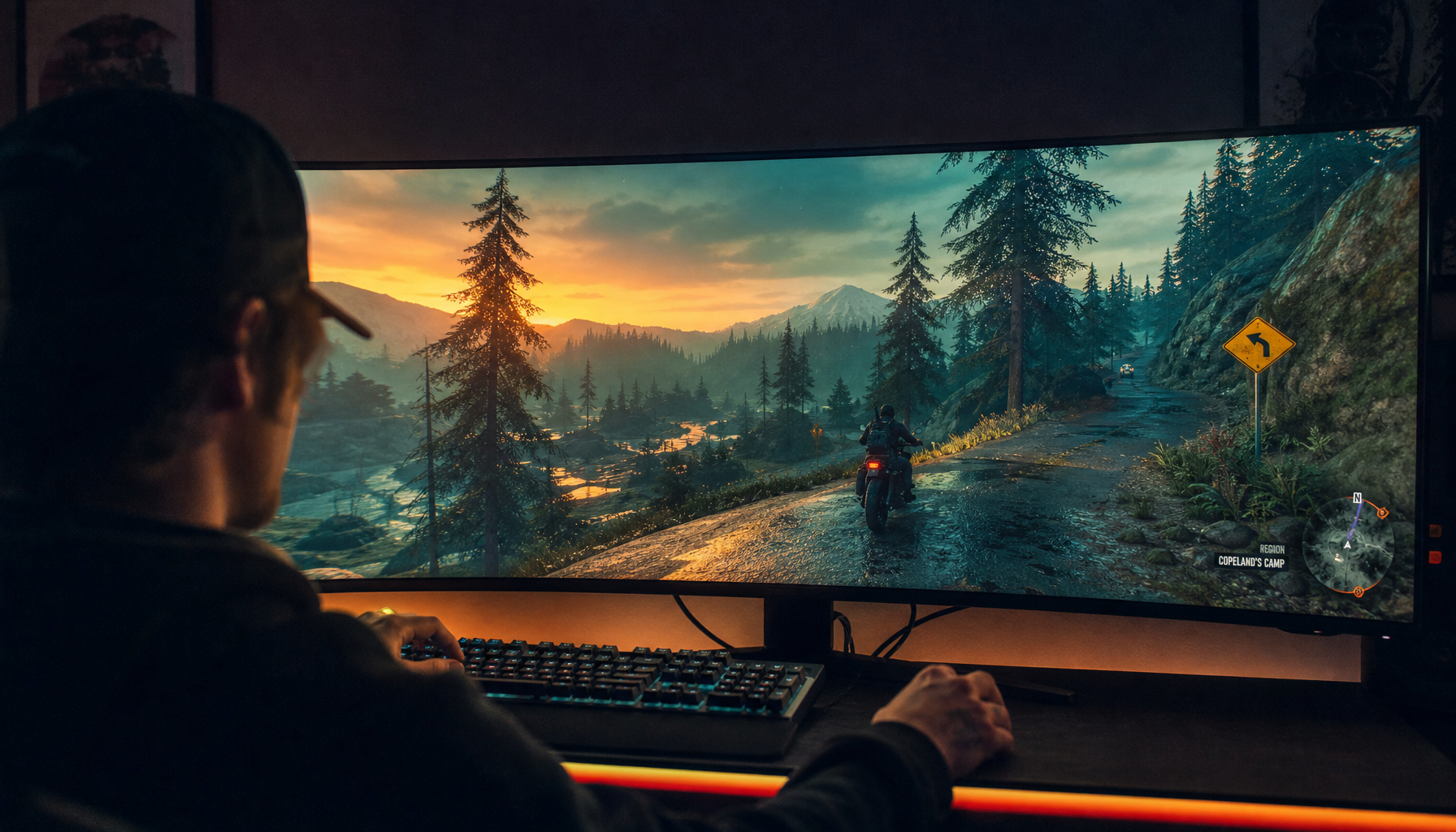
A higher refresh rate reduces motion blur, improves responsiveness, and can cut visible tearing when the rest of the system keeps up. On a 144 Hz, 165 Hz, or 240 Hz gaming monitor, that means a slightly softer image at stable frame rates can look and feel better than a perfectly sharp image that constantly misses the refresh target.

That is why 1080p remains strong for esports, while 1440p is often the balance point for gamers who want more detail without giving up too much speed. If you bought a high-refresh monitor for low latency and fluid tracking, preserving frame delivery usually matters more than insisting on the highest possible internal render count.
Refresh rate settings can depend on resolution
Some a platform refresh rate options are tied to the current resolution, which is why a monitor may show one refresh ceiling at one mode and another at a different mode. That is another reason to think of display resolution as part of the monitor’s operating mode, not just a picture-quality setting.
If you have GPU headroom, raising render resolution above native can also help. A 200% scale example on 1080p behaves like internal 4K supersampling, which often cleans up jagged edges better than basic anti-aliasing alone. On modern high-refresh displays, this only makes sense when you already have more frame rate than you need.
Ultrawide and Portable Displays Need Different Scaling Decisions
Ultrawide monitors reward aspect-ratio discipline
Most ultrawide monitors use 21:9 or wider, so when you reduce render resolution, you should keep that same shape. A 34-inch 3440x1440 or 29-inch 2560x1080 panel usually looks best when the internal render target stays proportional instead of falling back to a generic 16:9 mode.
User reports on ultrawide scaling behavior show why this matters. A 16:9 image on a 21:9 screen can leave black bars or tempt users into ugly stretching, while a matched custom resolution such as 1280x540 for a 2560x1080 display preserves the correct geometry even at lower internal load.

Portable monitors are more forgiving, but not magic
A smaller screen can hide some image softness because higher pixel density makes individual pixels less obvious. That is why a 15-inch or 16-inch portable 1080p monitor often stays readable and reasonably crisp even when a game uses moderate internal scaling.
Still, the same core rule applies: native resolution gives the clearest monitor image. If you use a portable monitor with a laptop GPU, keep the display at native 1080p, then reduce render resolution only as much as needed to hold your target frame rate.
Final Takeaway
For monitor buyers, the cleanest rule is to treat display resolution as the panel’s home setting and render resolution as your performance dial. Buy the monitor size and native resolution you actually want to look at every day, then use render scaling carefully to match your GPU, your refresh target, and your game type.
Action Checklist
- Leave the monitor at its native resolution first.
- Set the highest refresh rate your monitor and cable support in a platform.
- If FPS is too low, lower render resolution before lowering display resolution.
- On ultrawide monitors, keep the same aspect ratio when using custom internal resolutions.
- On 27-inch and larger displays, be conservative with aggressive scaling because softness is easier to spot.
- If you already have extra GPU headroom, try render scale above 100% for cleaner edges in older or lighter games.
FAQ
Q: Should render resolution always match display resolution?
A: For the sharpest image on a gaming monitor, yes, matching them is the safest default. Lower render resolution is a deliberate trade for more performance, while higher render resolution is a deliberate trade for cleaner edges and better image quality.
Q: Is lowering display resolution the same as lowering render resolution?
A: No. Lowering display resolution changes the signal the monitor receives, which often adds panel scaling blur. Lowering render resolution changes the image the GPU draws while letting the monitor stay in its sharp native mode.
Q: What is the best approach for a 34-inch ultrawide or a portable monitor?
A: On a 34-inch ultrawide, keep native output and preserve the 21:9 aspect ratio if you lower internal resolution. On a smaller portable monitor, native output still looks best, but moderate render scaling is usually easier to tolerate because the screen is smaller and pixel density is higher.
References
- Someone explain how Resolution scaling works to me.. | a platform community
- Scale a game to Ultrawide? What resolution should I choose? | a platform community
- How to Set a Custom Render Scale | a platform community
- Change the refresh rate on your monitor in a platform | a company support page
- Help me understand rendering resolution and monitor’s native output resolutions! | a forum
- Can setting a lower resolution actually HURT performance??? | a forum
- How much does lowering the resolution of your monitor increase performance? | a forum