


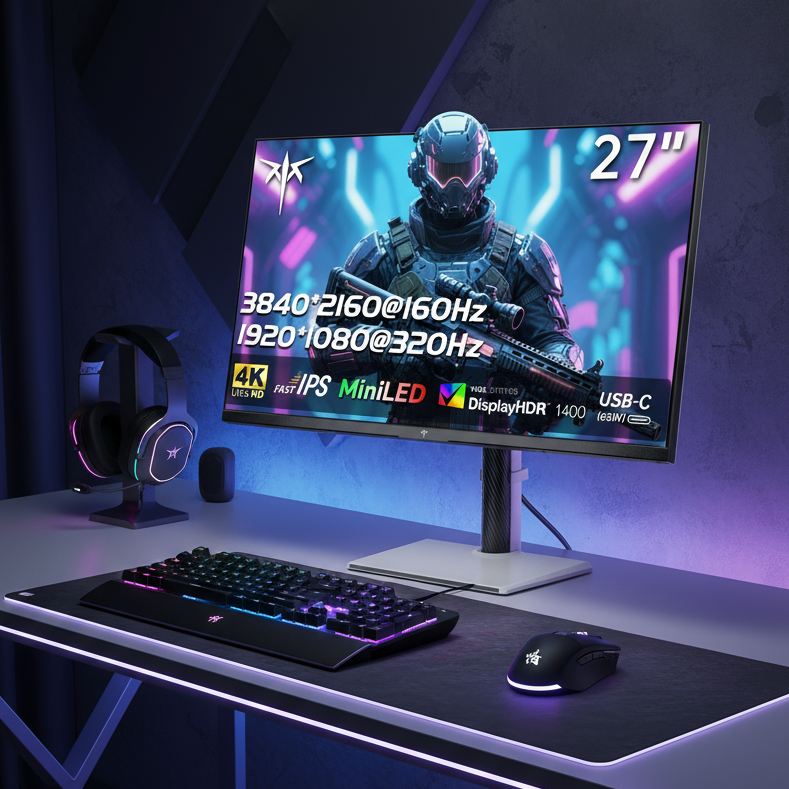
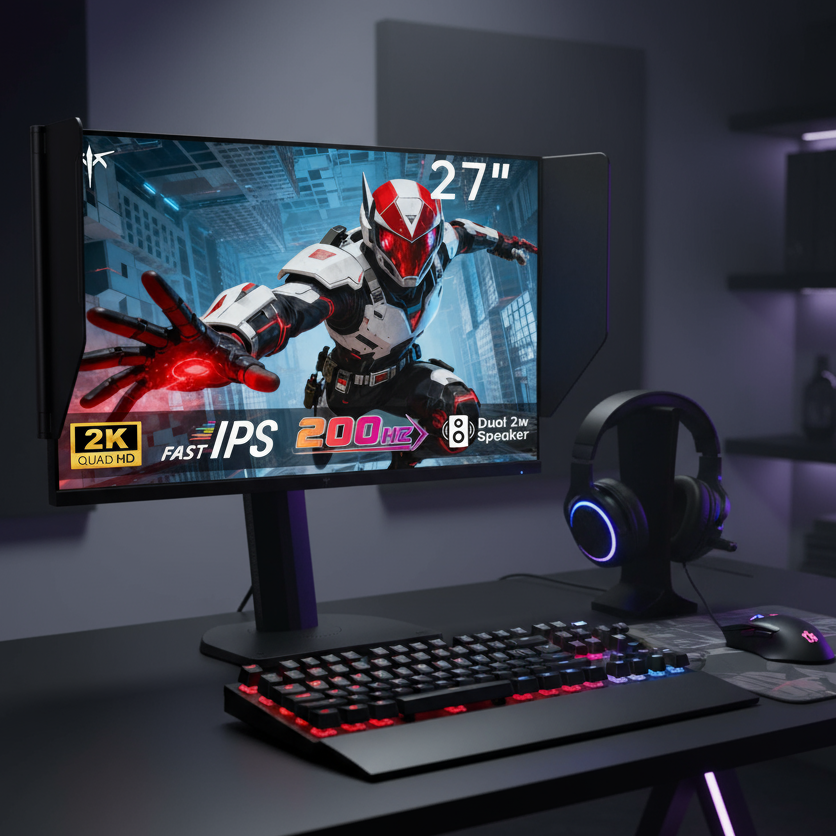
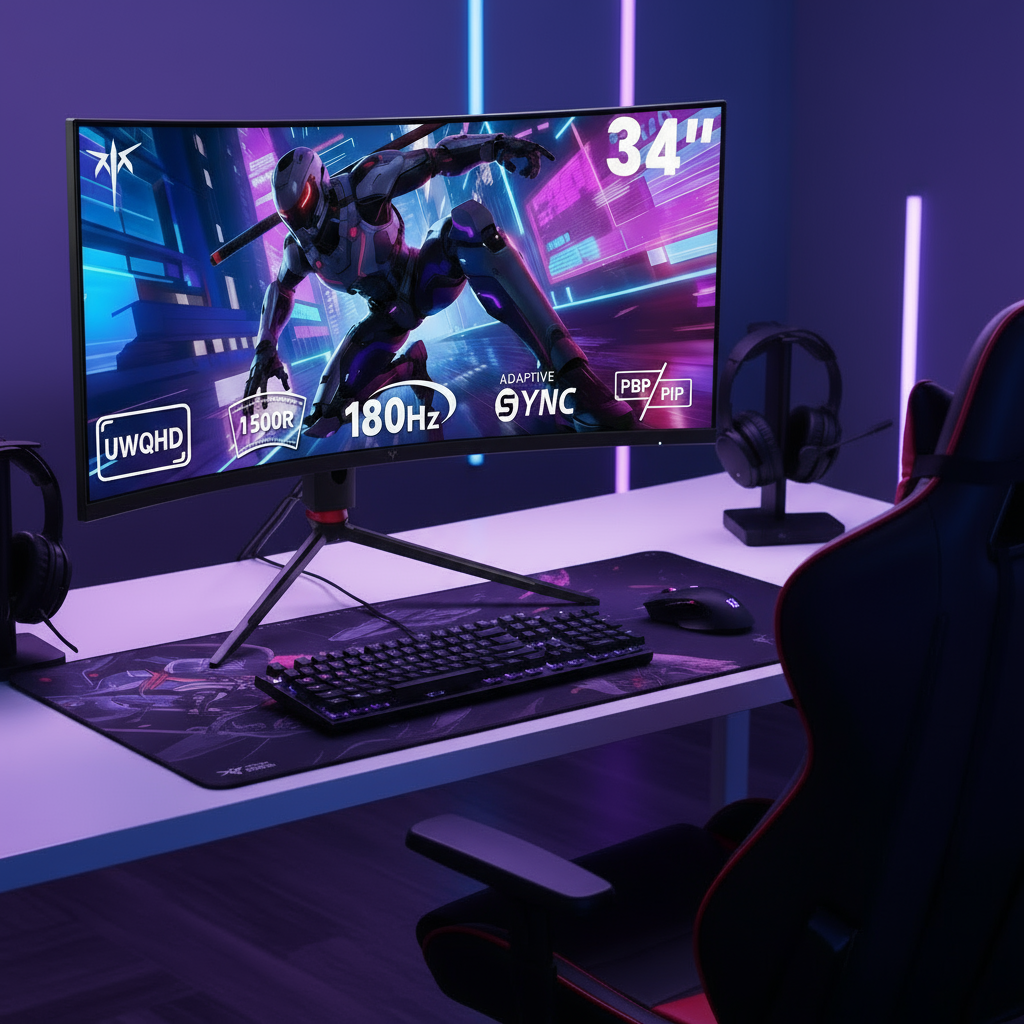


In stealth games, spotting a faint silhouette or glint of gear in near-black shadows often decides whether you survive the encounter or reload. OLED and Mini-LED monitors deliver the deep blacks that make these scenes immersive, yet default settings frequently crush the subtle gray tones that reveal enemies, traps, and paths.

The Stealth Visibility Problem: Why Black Crush Kills Your Gameplay
Stealth titles such as Assassin's Creed Shadows and Metal Gear Solid Delta place critical cues in the darkest 5–10 % of the luminance range. When those near-black values collapse into flat black, silhouettes disappear and floor textures vanish. OLED panels can struggle with the transition from fully off pixels to the first visible gray steps, while Mini-LED local-dimming zones sometimes dim small highlights too aggressively. Both behaviors produce the same tactical disadvantage: lost information exactly where you need it most.
Tuning Your KTC OLED: Recovering Near-Black Detail
On KTC OLED models such as the G27P6, black crush stems from the panel's difficulty rendering the first few gray levels above absolute black. Raising the Black Equalizer from its default of 50 to 52–55 lifts those tones without washing out highlights or turning the image gray. Pair this adjustment with a Gamma 2.2 preset in typical gaming rooms so dark details remain visible rather than compressed. After changes, run the Starfield Test: a static field of tiny dim points should stay visible and flicker-free during gentle mouse movement.

See how OLED and Mini-LED compare for gaming overall in this MiniLED vs. OLED comparison.
The Mini-LED Advantage: Managing Local Dimming for Stealth Clarity
Mini-LED panels such as the M27P6 and M27T6 reach HDR 1400 brightness with thousands of local dimming zones. The VESA DisplayHDR 1400 standard requires black levels of 0.02 cd/m² or lower while maintaining at least 500,000:1 contrast, which preserves punchy highlights. Yet “High” local dimming can extinguish faint cues such as distant enemy eyes or thin tripwires. Setting local dimming to Medium and Black Equalizer to 55 keeps deep blacks while restoring those silhouettes. IPS-based Mini-LED models handle zone transitions differently from VA-based ones, so test both presets in your actual game.
Learn what local dimming zones actually control in this guide to local dimming zones.
Gamma Curves: BT.1886 vs. Gamma 2.2 for Tactical Visibility
BT.1886 is the cinema-oriented gamma curve that preserves deep contrast in completely dark rooms, but it can hide shadow detail when any ambient light is present. Gamma 2.2 lifts the lower end of the curve more linearly, making near-black grays easier to discern without sacrificing too much contrast. In rooms with bias lighting or daylight bleed, Gamma 2.2 is the safer default for stealth sessions.
Shadow Visibility by Room Lighting
Recommended gamma and local dimming settings for OLED versus Mini-LED monitors across typical room lighting levels
Show data table
| Room Lighting | OLED Gamma 2.2 | OLED BT.1886 | Mini-LED Medium | Mini-LED High |
|---|---|---|---|---|
| Dark room (<5 lux) | 75 | 95 | 80 | 92 |
| Typical gaming room (20-50 lux) | 90 | 65 | 88 | 70 |
| Bright room (>100 lux) | 85 | 40 | 82 | 55 |
The BT.1886 standard is explained in detail by this Portrait Displays resource.
Using Black Equalizer for a Tactical Advantage
Black Equalizer selectively raises luminance in the darkest 10 % of the image while leaving mid-tones and highlights untouched. On KTC monitors, moving the slider from 50 to 58–60 usually reveals hidden enemies without turning the screen into a flat gray field. Use the setting as a situational tool: raise it for difficult nighttime maps, then return to default when you want cinematic immersion restored. Over-lifting reduces the very contrast advantage that drew you to OLED or Mini-LED in the first place.
Follow this five-step calibration guide to integrate Black Equalizer with the rest of your picture settings.
Practical Verification: Testing Your Stealth Setup
After any adjustment, verify that real detail survives. Load a calibration pattern and confirm squares #2 and above remain visible against black. In-game, move to a known dark area such as Elden Ring’s Belurat Gaol and check whether floor textures or distant silhouettes appear. If small points of light vanish during motion, reduce local dimming or lower Black Equalizer by one step.
How Do I Know If Local Dimming Is Crushing Small Details?
Watch for thin highlights such as laser sights or distant eyes disappearing when you switch from Medium to High dimming. Pause on a static frame and toggle the setting; if the highlight returns, the higher mode is over-aggressive for that scene.
Should I Use HDR or SDR Presets for Stealth Games?
HDR preserves peak brightness and color volume, but many titles master shadows differently in HDR. If you lose detail after enabling HDR, drop Black Equalizer by two points or switch to an SDR preset with Gamma 2.2 until the game receives a patch.
What Room Lighting Level Requires Gamma 2.2 Instead of BT.1886?
Any ambient light above roughly 20 lux makes Gamma 2.2 the better choice. You can measure this quickly with a phone light-sensor app; if the reading stays under 5 lux, BT.1886 remains viable.
Does Raising Black Equalizer Affect HDR Highlights?
Slight lifts up to 60 leave peak HDR highlights intact on KTC panels. Beyond 65 the brightest specular reflections begin to clip, so treat higher values as a temporary visibility boost rather than a permanent preset.
Compare Mini-LED backlight behavior with standard IPS in this Mini-LED IPS vs. IPS breakdown.
Check your final calibration results against this verification checklist.


