Tired of grabbing your phone every time you want to adjust the lights, change the thermostat, or check the front door camera? In 2026, a large shared smart monitor can serve as a practical household dashboard that keeps controls visible and accessible to everyone without constant app switching. When properly equipped with Matter and Thread support, these displays act as a convenient central interface, though they work best as a secondary convenience hub alongside dedicated infrastructure for maximum reliability.

Why Your Household Needs a Shared Smart Monitor Dashboard
Phone-only smart home control creates real friction in busy households. Family members often need to open different brand apps, remember logins, or hand the phone around just to turn on lights or adjust climate settings. A wall-mounted or desk-side smart monitor changes this by providing one always-visible surface everyone can use.
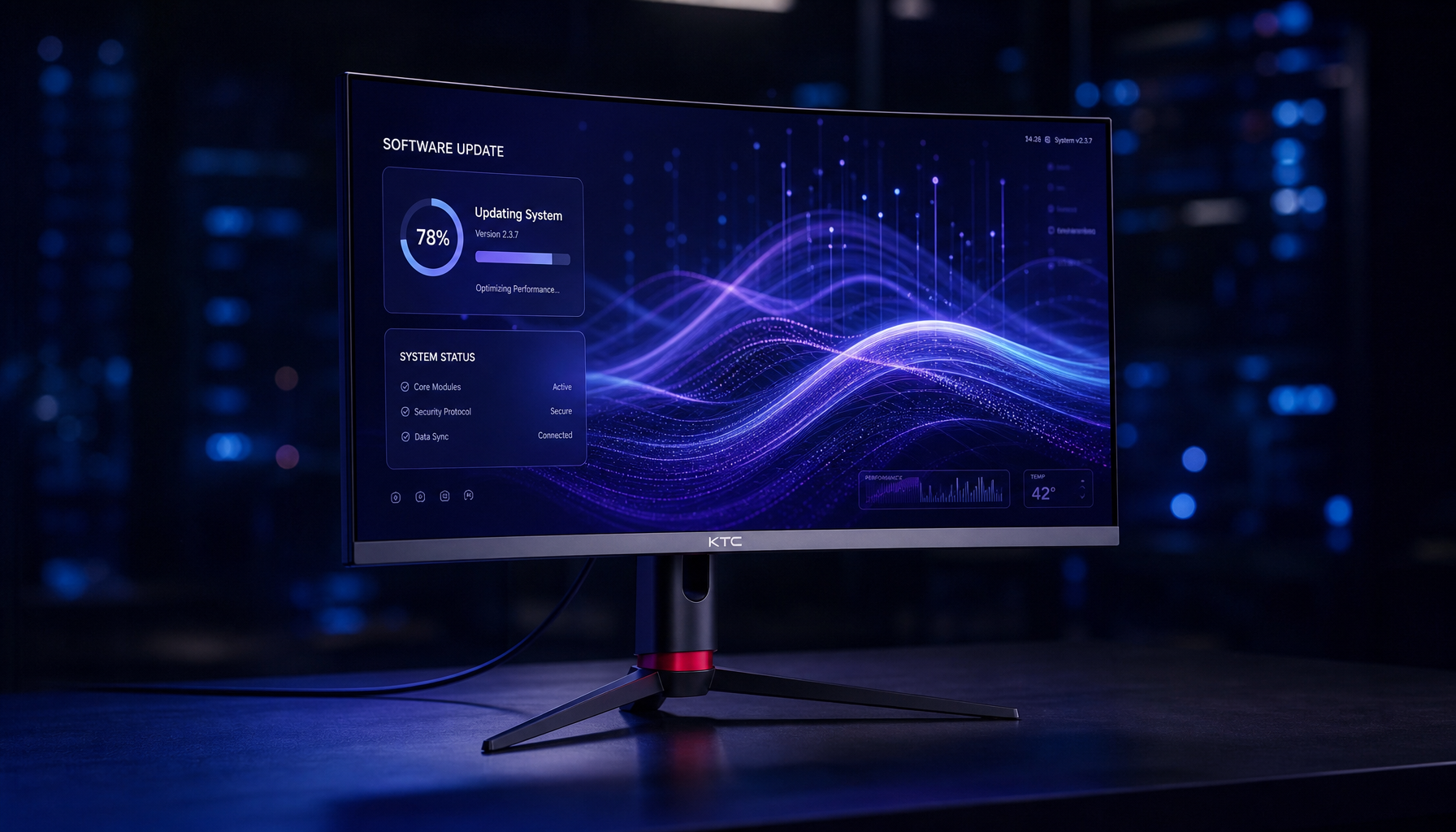
In 2026, devices like the KTC MEGAPAD series with Android 14 deliver a unified visual interface. You can pin routines, view camera feeds, and control multiple systems without juggling separate applications. This setup particularly helps in shared spaces where quick access matters more than personal phone customization. One Screen for the Whole House: Why MegPad Is the Perfect Christmas Gift explores similar shared-screen benefits.
For most households moving beyond basic voice commands, a monitor-based dashboard reduces daily steps and makes automation feel more natural. However, it works best when the underlying network infrastructure already supports reliable local control.
Matter Explained: The Universal Language of the 2026 Smart Home
Matter functions as the common language that lets devices from different manufacturers work together seamlessly. As the CSA's Matter 1.4 announcement details, version 1.4 enhances multi-admin capabilities, allowing a single device to be controlled from Apple Home, Google Home, and other ecosystems after one user consent.
This means your smart monitor can issue commands to lights, locks, or sensors that are also paired to family members' phones running different platforms. You no longer need brand-specific hubs or duplicate accessories for each ecosystem. The monitor simply becomes one more authorized controller in a shared environment.
For households with mixed devices, Matter removes the fragmentation that previously forced users into one brand's walled garden. It enables true cross-platform routines where, for example, a motion sensor from one company can trigger a light from another—all managed from the monitor's dashboard.
Thread Explained: The Invisible Road for Low-Latency Control
While Matter provides the shared commands, Thread delivers the reliable, low-power network that carries them. According to the Thread Group's 1.4 Features White Paper, Thread 1.4 standardizes credential sharing between border routers from different brands, creating one unified mesh instead of separate islands.
Thread operates as a self-healing mesh where battery-powered sensors pass signals through each other, extending range without draining batteries as quickly as Wi-Fi devices would. This makes it ideal for lights, locks, and environmental sensors that need instant local response rather than cloud round-trips.
Compared to Wi-Fi, Thread avoids congesting your main network and offers better reliability for simple on/off or status commands. The combination of Matter over Thread gives the fastest, most stable local control in a 2026 setup.

The Monitor's Role: Controller, Border Router, or Just a Dashboard?
A smart monitor can function as both a Matter Controller that runs automations and a Thread Border Router that bridges low-power devices to your Wi-Fi or Ethernet network. However, it typically serves best as a convenience hub rather than a complete replacement for dedicated always-on infrastructure.
The key limitation involves power states. Many monitors enter deep sleep or eco modes to meet energy regulations, which can temporarily disable the Thread radio and disrupt the mesh for battery-powered sensors. This makes a monitor more suitable as a secondary or shared control surface unless it supports specific network standby modes and remains hardwired via Ethernet.
Users should therefore treat the monitor as an excellent dashboard and occasional controller while ensuring at least one dedicated, always-powered border router exists in the network for backbone stability. This approach avoids single points of failure when the display gets powered down or rebooted.
When a 2026 Smart Monitor Works Best as a Matter/Thread Hub
Scenario-based guidance showing practical fit levels for using a smart monitor as convenience hub versus needing dedicated infrastructure. Based on typical 2026 network and power conditions.
View Scenario Table
| Scenario | Fit Level | Key Condition | Recommended Action |
|---|---|---|---|
| Hardwired Ethernet + Network Standby mode | Good Fit (Convenience Hub) | Monitor stays awake for Thread radio | Use as primary dashboard and secondary router |
| Wi-Fi 6 only, occasional sleep | Partial Fit | Thread mesh may drop during deep sleep | Add dedicated border router for reliability |
| No Thread radio, basic Matter over Wi-Fi | Limited Fit | Requires separate router for low-power devices | Use monitor only for visual dashboard |
| Battery-powered monitor in portable use | Limited Fit | Not suitable for always-on mesh | Pair with fixed infrastructure hub |
Setup Prerequisites: Building Your 2026 Matter/Thread Network
Stable operation requires a solid foundation. Start with a Wi-Fi 6 or preferably Ethernet backbone for the monitor itself to handle dashboard updates without adding latency to the Thread mesh. At least one always-on Thread Border Router should remain active even if the monitor sleeps.
Look for the official Matter and Thread logos when purchasing new devices to ensure compatibility. The setup flow usually involves installing the monitor's ecosystem app (such as Google Home on Android 14 devices), pairing gadgets directly, and then using Matter's multi-admin sharing to grant access to other family phones.
For best results, verify your chosen monitor includes a Thread radio before assuming border router functionality. Many 2026 models support Matter over Wi-Fi as a minimum; full Thread capability needs specific hardware confirmation. How a USB-C Monitor Can Streamline Your Workspace offers related advice on integrating displays into productive environments.
Real-World Use Cases: From the Home Office to the Kitchen
In a home office, the monitor can trigger focus routines that dim lights, adjust the thermostat, and mute notifications with one tap. The shared screen keeps these controls visible during video calls or deep work without pulling out a phone.
In the kitchen or family common area, a portable touch touch model like the KTC MEGAPAD serves as an always-available dashboard for checking security cameras, managing energy use, or displaying recipes. Matter 1.4's expanded energy management features let you monitor solar production or appliance consumption directly on screen, helping households optimize usage in real time.
These scenarios highlight the monitor's strength as a visible, touch-friendly interface that makes automation part of everyday shared spaces rather than a phone-only experience. Explore the full Smart Monitor collection to see options suited for different rooms.
Performance Expectations: Latency, Offline Access, and Sharing
Thread delivers near-instant local responses for supported devices, typically under 100 milliseconds for simple commands, making the experience feel immediate compared to cloud-dependent systems. Cloud-reliant features may still introduce slight delays, but core local controls remain fast.
Because Matter operates as a local IP protocol, many lights, locks, and basic routines continue working even during internet outages, as long as your home network stays up. This provides meaningful resilience for daily household functions.
Multi-admin support simplifies sharing. Family members or guests can gain control through their preferred ecosystem apps without creating new accounts or complex permissions on the monitor itself. This makes the setup truly household-friendly rather than tied to one person's phone.
How Does Matter 1.4 Improve Shared Household Control?
Matter 1.4's enhanced multi-admin and energy management features allow devices to be shared across ecosystems with simpler consent flows. This reduces setup time and lets every family member control the same devices from their preferred apps while the monitor provides the central visual overview. It particularly benefits mixed-brand homes that previously required duplicate hubs.
Can a Smart Monitor Replace a Dedicated Thread Border Router?
It can serve as one when equipped with the proper radio and configured for network standby, but most users should keep a dedicated always-on router as the primary backbone. Monitors excel as dashboards and secondary controllers. Relying solely on one that powers down regularly risks mesh instability for battery devices. Check your specific model's documentation for Thread and standby support before planning a single-device setup.
What Network Is Required for Reliable 2026 Matter and Thread Performance?
A Wi-Fi 6 access point or Ethernet connection for the monitor provides the best backbone. At least one always-powered Thread Border Router should stay online continuously. Battery-powered sensors perform best when they can mesh through multiple Thread devices rather than depending solely on Wi-Fi. Test your layout for dead zones before finalizing device placement.
How Does Thread Compare to Wi-Fi for Smart Home Devices?
Thread uses far less power and creates a self-healing mesh that extends range through intermediate devices, making it superior for sensors and locks. Wi-Fi works well for high-bandwidth needs like cameras but drains batteries faster and can suffer congestion. The ideal 2026 setup uses Thread for low-power local control and Wi-Fi or Ethernet for the monitor's dashboard and cloud features.
Will the Setup Still Work During Internet Outages?
Local Matter commands over Thread or Wi-Fi continue functioning for lights, basic automations, and many sensors even without internet. Features that rely on cloud services or remote access will be unavailable. Keep at least one local controller (the monitor or a dedicated hub) powered to maintain the mesh during outages. This local-first design is one of Matter's strongest advantages for reliability.
Which Smart Monitors Work Best as 2026 Home Hubs?
Look for models with confirmed Matter Controller support, preferably with Thread radio and Ethernet options for stable performance. Larger touch-enabled Android displays offer the best dashboard experience for shared use. Verify exact capabilities in the product specifications, as not every smart monitor includes full Thread border router functionality. The Mobile Touch Screen category contains several suitable portable options for flexible placement around the home.