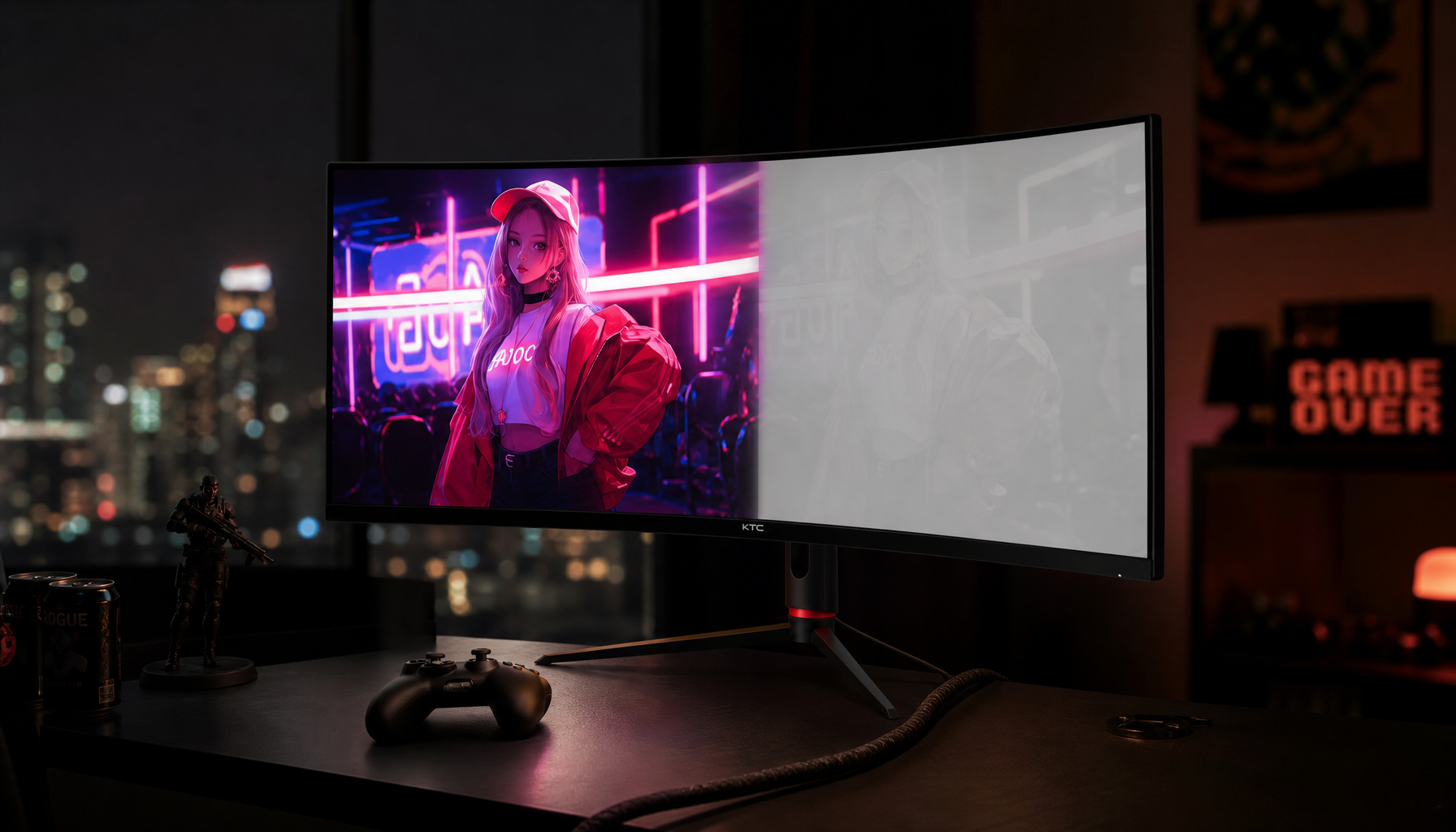
Tone mapping changes how HDR brightness, contrast, shadow detail, highlight texture, and color energy appear on real displays. The same master can feel cinematic, flat, exaggerated, or faithful depending on the algorithm, metadata, display limits, and calibration.
Does a night scene look gray instead of deep, or do neon signs bloom into white blobs on a screen that should make HDR feel premium? With the right tone-mapping approach, you can preserve the director’s highlight priorities, keep faces natural, and avoid the washed-out HDR-to-SDR look that frustrates creators, gamers, and streamers. Here is how to judge the tradeoffs and choose settings that support the image instead of rewriting it.

Why Tone Mapping Is a Creative Decision, Not Just a Display Feature
Tone mapping maps one range of color or luminance values into another so HDR imagery can be represented on displays with lower dynamic range. That sounds technical, but the creative consequence is immediate: a 1,000-nit sunset, a dim office lamp, and a black suit in shadow cannot all be shown unchanged on every monitor, projector, capture card, or portable screen.
Creative intent lives in those choices. If the algorithm protects every highlight aggressively, the midtones may darken and faces may lose presence. If it lifts shadows too much, a thriller’s black levels can turn milky. If it compresses saturation poorly, a game HUD or city-night grade can lose the color separation the artist built into the scene.
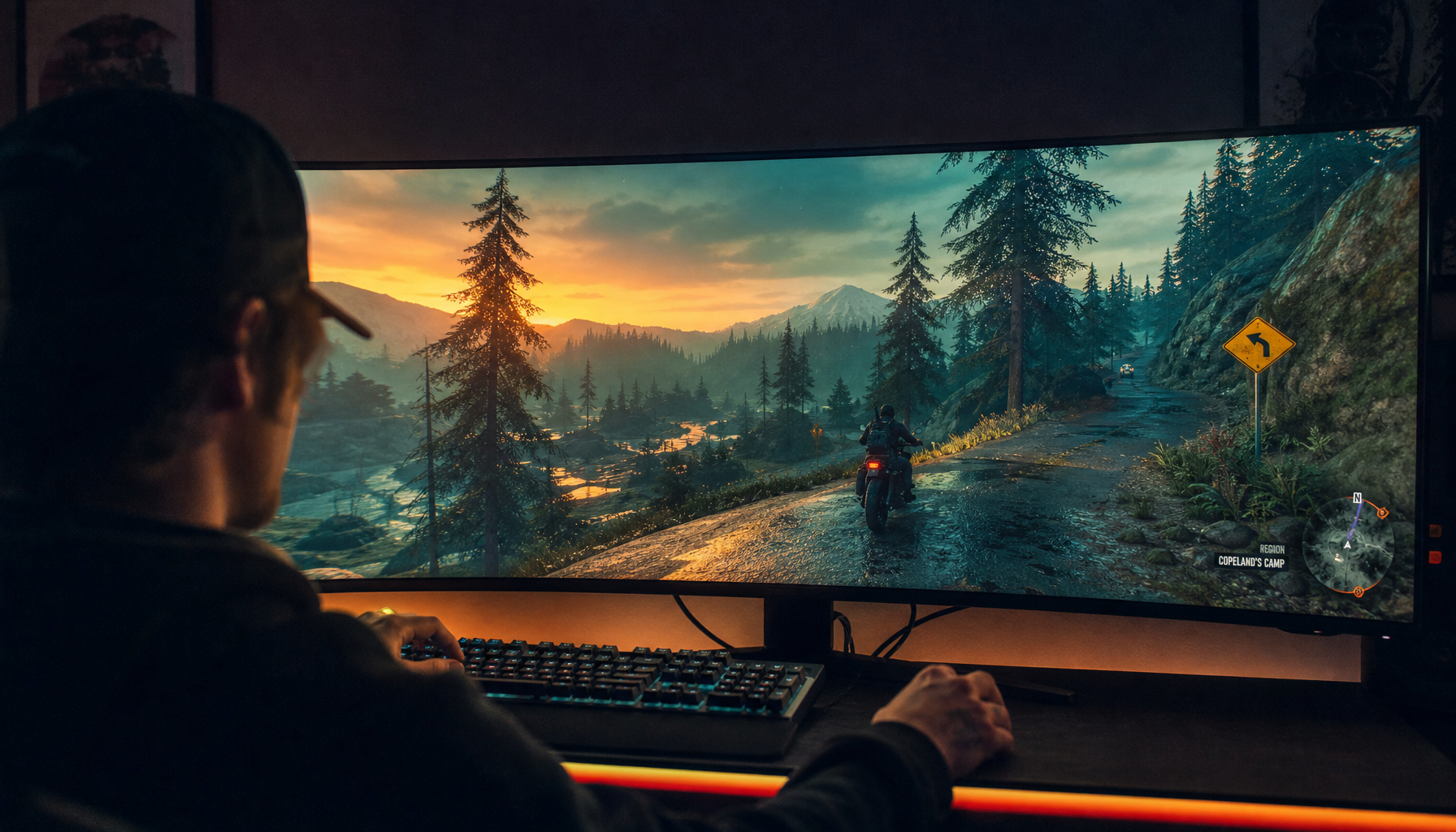
For gaming monitors and creator displays, tone mapping is especially important because users often switch between HDR games, SDR productivity apps, streaming video, and captured footage in one setup. A reliable display does more than support HDR. It handles conversion predictably, exposes useful controls, and has enough brightness and color volume to avoid crushing the grade into something smaller than intended.

The Core Algorithms: Global, Local, Filmic, and Dynamic
Global Tone Mapping
Global tone mapping operators apply one mapping behavior across the whole image, usually based on scene-wide luminance values. Their appeal is speed and consistency. In a competitive gaming display, that can mean lower processing overhead and a stable look from frame to frame.
The downside is bluntness. If a scene contains a small explosion, a bright window, or a flashlight against a dark wall, a global operator may let that small highlight influence the entire exposure. Research notes from an HDR rendering implementation showed that simple average luminance could be skewed by a few extremely bright or dark pixels, causing the full scene to look overexposed or underexposed. In practice, a desktop HDR video can suddenly feel dim just because a bright UI element or specular highlight enters the frame.
Local Tone Mapping
Local tone mapping operators adapt the mapping based on nearby pixels, which can preserve local contrast and make textures easier to read. This is useful for landscapes, games with rich environmental detail, and office displays used for HDR photo review.
The tradeoff is artifact risk. Local methods can introduce halos around high-contrast edges or make detail look unnaturally sharpened. A skyline at dusk may gain building texture, but if the transition around the sun glows oddly, the algorithm has started calling attention to itself. For creative work, that is a warning sign: the display is no longer only translating the content; it is adding a look.
Filmic Tone Mapping
Filmic tone mapping uses curves designed to roll highlights more gracefully, protecting bright areas from hard clipping while keeping the image visually pleasing. This is why filmic curves are popular in games and rendering engines. They usually feel more cinematic than purely linear compression because highlights can taper instead of slamming into white.
The notes include a real-time rendering case where Reinhard, filmic, and adjusted filmic operators were compared, and the adjusted filmic curve gave the best visual control. That finding lines up with what display reviewers often see: the best HDR look is rarely the mathematically simplest one. It is the curve that preserves the priority of the scene, whether that priority is skin tone, sky detail, fire, metal reflections, or a readable shadow corridor.
Static and Dynamic Tone Mapping
Static tone mapping uses one set of mapping assumptions across a whole image or video, while dynamic tone mapping adjusts scene by scene or frame by frame. Static mapping is predictable and less complex, but it can struggle with films and games that jump between bright exteriors and dark interiors.
Dynamic tone mapping can better protect creative intent when brightness changes dramatically. Dynamic-metadata HDR formats are associated with more precise scene-aware handling, while static HDR workflows may depend more heavily on the display’s own interpretation. The practical point is simple: if you watch varied HDR content on a mid-brightness display, dynamic tone mapping can be the difference between an accepted HDR signal and a convincing HDR image.
Tone-Mapping Approach |
Main Strength |
Main Risk |
Best Fit |
Global |
Fast, stable, simple |
Can flatten contrast |
Gaming monitors, real-time rendering |
Local |
Preserves detail |
Halos, artificial texture |
HDR photos, detailed scenes |
Filmic |
Smooth highlight rolloff |
Can look too stylized if tuned poorly |
Games, cinematic video, CG |
Dynamic |
Adapts to scene changes |
Depends on metadata and implementation |
Movies, streaming, mixed HDR libraries |
How Algorithm Variation Changes Creative Intent
Highlights: Preserve Texture or Preserve Brightness?
HDR displays are valuable because they can preserve more detail in bright highlights and dark shadows than standard video workflows. But a monitor with limited peak brightness must decide what happens when the content asks for more light than the panel can deliver.
One algorithm may compress the top end smoothly, keeping cloud texture and preserving the color of a sunset. Another may prioritize a punchier image, making highlights brighter but sacrificing fine detail. On a 400-nit portable display, a 1,000-nit master cannot be shown at full intensity, so the tone map decides whether a glowing sign remains red with texture or becomes a flat red-white patch.
For creative review, watch highlight color first. If bright yellow lamps turn white too early, or blue lightning loses hue before it should, the algorithm is clipping more than brightness. It is changing the emotional palette of the scene.
Midtones: Where Human Attention Usually Lives
HDR exposure guidance treats image detail, brightness range, and contrast as connected parts of the production chain. In real viewing, however, midtones do most of the storytelling. Faces, product surfaces, game characters, office documents, and UI panels usually sit in the middle of the brightness range.
If tone mapping darkens midtones to save highlights, the image may look technically controlled but emotionally distant. If it raises midtones too much, the result can feel SDR-like, with less depth and less scene contrast. A practical display test is to pause on a person standing near a bright window. Good tone mapping should keep the face believable while preventing the window from becoming a blank rectangle.

Shadows: Detail Without Fog
HDR-to-SDR conversion matters because content often needs to move between HDR and SDR displays, production monitors, and distribution paths. The shadow challenge is that preserving dark detail can easily become over-lifting.
For gaming, this can be controversial. A player may want more shadow visibility for competitive advantage, while the game’s art direction may intend a darker, more suspenseful scene. A performance-driven monitor should give you modes or controls that separate accuracy from gameplay visibility. Use the accurate HDR mode for film and content creation, then use a game-specific black equalizer only when the goal is competitive readability.
Display Hardware Still Sets the Boundary
Tone mapping and wide color gamut work together because HDR is not only brighter whites and deeper blacks; it is also broader, more accurate color reproduction. A monitor with weak color coverage can accept an HDR signal and still make saturated scenes look muted.
Brightness matters too. If a display cannot reach strong peak brightness, the algorithm must compress more aggressively. Mini-LED and OLED monitors have more room to honor HDR highlights, while many portable screens and office-focused displays need more careful tone mapping because their backlights are more limited.
This is where value-oriented buying gets practical. Do not shop only for the HDR badge. Look for measured peak brightness, local dimming behavior, color-gamut coverage, HDR mode controls, and clean HDR-to-SDR switching. A monitor that tone maps consistently at moderate brightness can be more trustworthy than a flashy HDR model with unstable exposure behavior.
Static Metadata, Dynamic Metadata, and Real Content
HDR video production depends on planning around camera choice, log capture, monitoring, and post-production workflow. Once that content reaches your screen, metadata and display processing decide how much of that work survives.
Static metadata gives the display broad instructions for the whole program. That can be fine for consistent content, such as a studio interview or a product demo with controlled lighting. Dynamic metadata is more useful when the content shifts dramatically, such as a science-fiction movie moving from a dark spacecraft interior to a sunlit planet surface.
The nuance is that dynamic does not automatically mean accurate. A poor dynamic implementation can pump brightness scene to scene or make the image feel unstable. A well-tuned static implementation on a high-quality display can look more faithful than aggressive dynamic processing on weaker hardware. Trust the result on screen, not the logo alone.
Practical Calibration and Evaluation Advice
Tone mapping has different goals depending on whether the priority is realism, detail preservation, contrast, or matching human perception. That means your settings should follow your task.
For HDR movies, start with the display’s Cinema, Filmmaker, or most accurate HDR mode, then disable unnecessary contrast enhancers if they make skin, skies, or subtitles fluctuate. For HDR gaming, use the console or PC HDR calibration tool and set peak brightness to match the display’s real capability, not the most optimistic marketing number. For creator work, use a calibrated HDR monitor and check the same scene on an SDR output if the project will be published broadly.

For office productivity displays, HDR can be helpful for media review but distracting for documents and spreadsheets if SDR content is forced into an expanded brightness range. If white backgrounds feel harsh or grays shift after enabling HDR at the operating-system level, use SDR for daily work and switch to HDR only for HDR content review, gaming, or grading.
For capture and streaming, HDR footage converted to SDR can appear washed out or incorrectly exposed when tone mapping fails. Test before going live. A quick workflow is to record a one-minute clip with bright UI, skin tones, dark shadows, and saturated color, then review it on an SDR screen. If the image looks flat, either adjust the capture software’s tone mapping or disable HDR output from the playback device for that session.
Pros and Cons of Algorithm Variation
Algorithm variation is not a flaw by itself. It is the reason a display can adapt a bright HDR master to a compact portable screen, a 27-inch gaming monitor, a living-room TV, or a dim projector. The benefit is flexibility: better highlight rolloff, more visible shadow detail, and improved compatibility across devices.
The cost is inconsistency. Two screens can receive the same HDR signal and show meaningfully different creative results. A filmic curve may make a game look dramatic, while a local operator may reveal more texture than the artist intended. Dynamic tone mapping may rescue a hard scene on one display and overcorrect it on another.
For buyers and creators, the best strategy is controlled flexibility. You want accurate defaults, transparent controls, and enough panel capability that the algorithm does not have to perform extreme compression all the time.
FAQ
Does better tone mapping make a low-brightness display equal to a true HDR monitor?
No. Tone mapping can preserve detail and improve perceived balance, but it cannot create peak brightness, black depth, or color volume the panel cannot physically produce. It can make a limited display more usable, not unlimited.
Should gamers use accurate HDR or visibility-enhancing settings?
Use accurate HDR for story games, cinematic titles, and visual evaluation. For competitive play, visibility controls can be useful, but they may override creative intent by lifting shadows or compressing contrast.
Why does HDR sometimes look worse than SDR?
HDR can look worse when the display has limited brightness, poor tone mapping, incorrect operating-system settings, weak color handling, or a mismatch between the content metadata and the screen’s capabilities. The signal may be HDR, but the rendering path may still be compromised.
Bottom Line
Tone mapping is the translator between creative HDR ambition and the real display in front of you. Choose screens and settings that protect midtones, roll highlights cleanly, preserve shadow intent, and give you control when the content or workflow changes. That is how HDR becomes immersive and reliable instead of simply brighter.