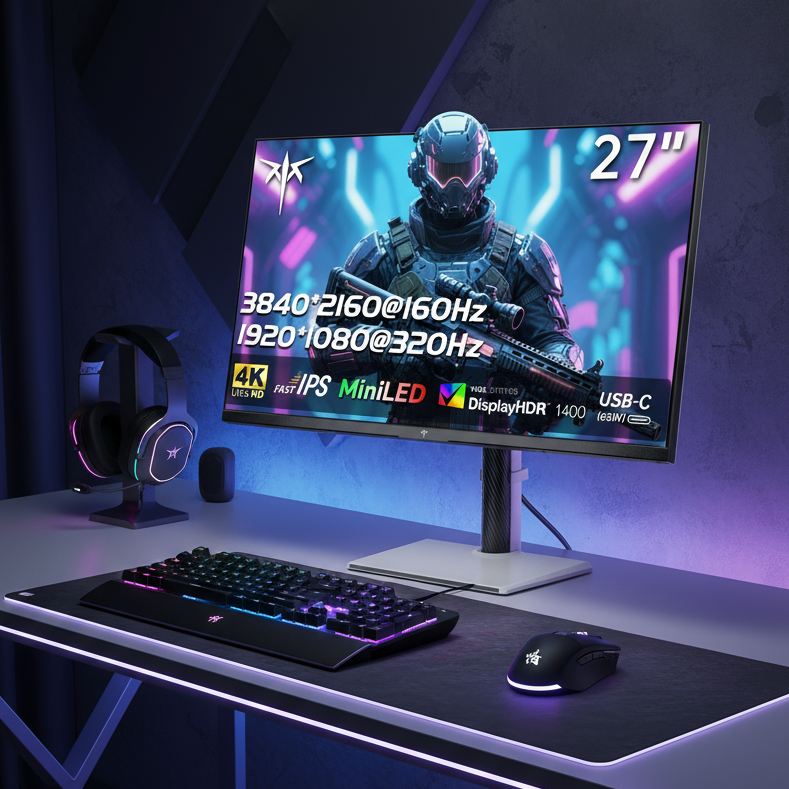
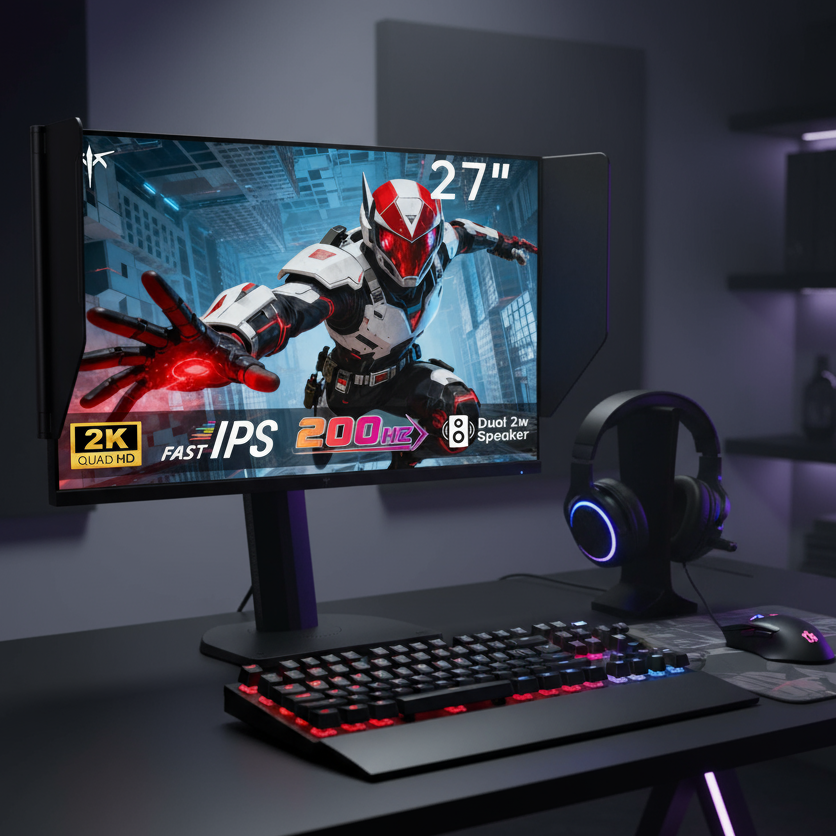
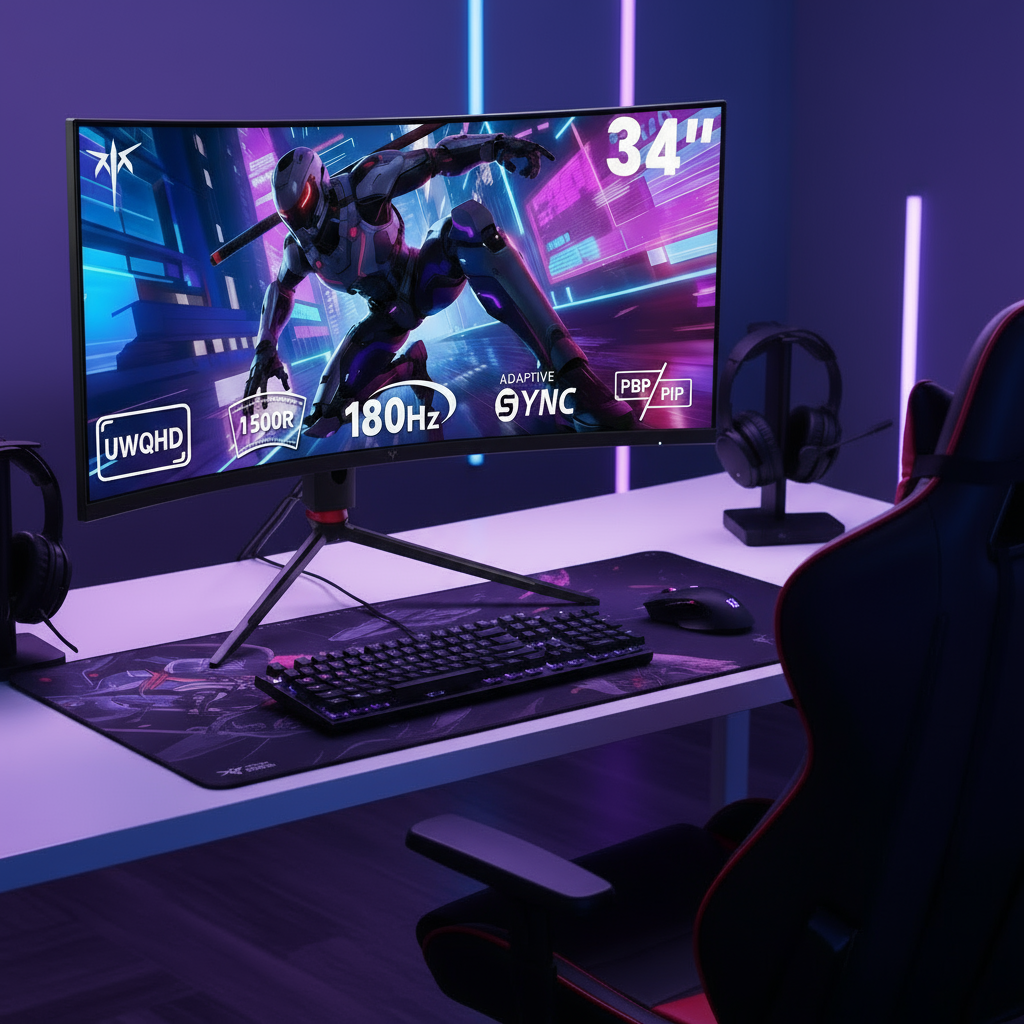




Some IPS monitors look cleaner in motion because real clarity is not decided by a single “1 ms” response-time number. Refresh rate, overdrive tuning, pixel transition consistency, strobing, and frame persistence can make a well-tuned IPS panel outperform what its basic spec sheet implies.
The Spec Sheet Measures Too Little
The response-time number on a monitor box usually points to GtG, or gray-to-gray pixel transition speed. That matters, but it is only one part of motion clarity; monitor responsiveness also depends on refresh behavior, overdrive artifacts, input latency, and how long each frame stays visible.
A 240 Hz IPS display refreshes every 4.16 ms. Even if its advertised GtG number is not instant, the shorter frame hold can reduce perceived blur far more than a slower 60 Hz screen with a flattering response-time claim.

This is why a practical display specialist reads “1 ms” as a starting clue, not a verdict.
Frame Persistence Can Beat Pixel Marketing
Most LCD monitors are sample-and-hold displays: each frame remains visible until the next one arrives. Your eyes track motion across that held frame, creating perceived blur even when pixel transitions are fast.
That makes refresh rate and frame rate critical. At 60 Hz, each frame persists for about 16.67 ms; at 144 Hz, about 6.94 ms; at 240 Hz, about 4.16 ms. The motion gap is obvious because the image is updated and replaced more often.
For competitive play, that means a well-driven 180 Hz or 240 Hz IPS panel can feel sharper than its GtG spec suggests, especially when your GPU keeps frame rates high and stable.
Overdrive Tuning Is the Hidden Difference
IPS panels vary heavily by model. Two displays can advertise similar response times while behaving very differently in real play.
Good overdrive accelerates pixel transitions without creating obvious overshoot. Poor overdrive may chase a fast number and leave bright halos, inverse ghosting, or noisy edges around moving targets. That artifact can make a “faster” monitor look worse than a more balanced IPS panel.

Look for measured review data, not only manufacturer claims. IPS is often recommended for mixed gaming and work because it combines faster response times, stable color, and wide viewing angles better than many alternatives at the same price.
Strobing Can Change the Whole Result
Some IPS monitors use backlight strobing to flash each frame briefly instead of holding it continuously. Done well, this can dramatically improve motion resolution because the visible frame duration becomes much shorter.

That is why enthusiast discussions separate unstrobed and strobed performance. In one forum discussion, the key distinction is whether users prioritize flicker-free sample-and-hold motion or strobed display operation.
The tradeoff is real: strobing can reduce brightness, may add flicker sensitivity for some users, and often conflicts with variable refresh rate. Still, for aim training, retro motion tests, or fixed-FPS esports, a strong strobed IPS mode can look far clearer than the spec sheet implies.
How to Judge IPS Motion Before Buying
Start with the use case. A monitor for ranked shooters should be judged differently than a display for spreadsheets, design work, and evening RPGs. One monitor testing approach stresses judging performance against the display’s intended category and specs, not a universal pass/fail standard.
Quick checks that matter:
- Prioritize refresh rate: 144 Hz minimum, 240 Hz+ for serious esports.
- Check measured response charts: avoid slow dark transitions and heavy overshoot.
- Review pursuit photos: they reveal blur, trailing, and artifacts more realistically.
- Test overdrive modes: the fastest setting is not always the cleanest.
- Decide on strobing: excellent for clarity, less ideal for brightness and VRR.

The practical takeaway: IPS motion clarity is a system result. The best panels win by balancing refresh rate, transition consistency, overdrive, and blur-reduction tuning, which is why some look faster than their headline specs ever promised.