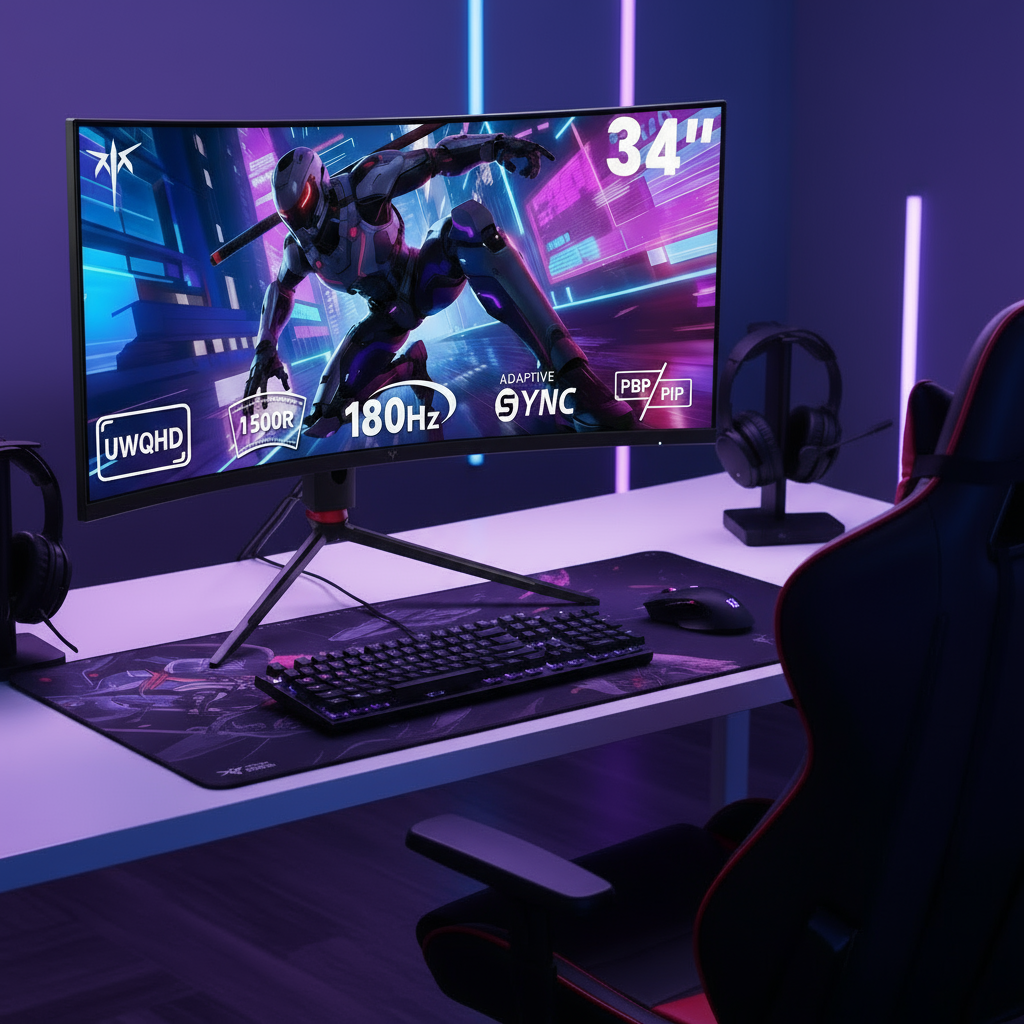




Blue light from the same monitor can disrupt two people very differently because the real sleep hit comes from a mix of timing, brightness, color temperature, and what each person is doing on the screen.
If you can finish a late session on your gaming monitor and still feel wide awake while your partner falls asleep almost immediately, that mismatch is not in your head. In student research, 2 hours of evening device light delayed body timing by about 1.1 hours, and LED tablet exposure cut melatonin by 55% in one comparison. The useful part is that once you know which monitor and habit factors matter most, you can usually reduce the problem without giving up your setup.
Why the Same Monitor Can Hit Two People Differently
The same panel does not mean the same exposure
Evening blue light can delay circadian phase, and circadian-sensitive retinal cells respond most strongly near 480 nm. That means the same 11:30 PM monitor session can push one person’s sleep later more than another’s, especially when the session lasts a couple of hours and lands right before bed. In the student data summarized in that review, evening light exposure shifted sleep timing in a measurable way, which matches what many couples notice at home.
At bedtime, screen timing, screen brightness, and the type of activity may matter more than blue light alone. A shared 34-inch ultrawide or 27-inch gaming monitor is not really shared if one person uses a warm preset for light browsing at 9:30 PM and the other uses a bright, cool profile for work or competitive games at 11:45 PM. The second person is getting a stronger mix of light and mental stimulation, even if the hardware is identical.

Which Display Factors Matter Most at Night
Brightness and color temperature do most of the damage
Blue light has the strongest effect on circadian rhythms among visible wavelengths discussed in sleep guidance. Since most modern monitors use LED backlighting and white on-screen content still contains blue wavelengths, a cool factory preset plus high brightness is a poor combination after dark. This is why a display mode that looks sharp and lively during the day can feel harsh late at night.
Lowering screen brightness and using night mode or blue-light filters reduces the total evening light load and often makes the screen feel less glaring. In practice, the best move is to save a separate night preset on your monitor: warmer white point, lower brightness, and no “Vivid,” “FPS,” or HDR-style picture mode unless you truly need it. That matters on office monitors, high-refresh-rate gaming panels, ultrawides, and portable monitors alike.

Size, distance, and room lighting still matter
Even small amounts of light from LEDs and devices can suppress melatonin, so a compact portable monitor used close to your face can be more disruptive than a bigger desktop panel used earlier and dimmer. The room matters too: if your monitor is the brightest object in a dark bedroom or office, the contrast itself can keep the setup feeling more intense. For late-night use, low minimum brightness is often a more valuable spec than high peak brightness.

Are Gaming Monitors Worse for Sleep?
A fast panel is not the same as a stimulating session
Nighttime screen use is linked to shorter sleep and higher insomnia risk. In a March 2025 study of nearly 40,000 university students, each extra hour of screen time after going to bed was associated with a 59% higher chance of insomnia symptoms and about 24 fewer minutes of sleep. That does not mean a 240 Hz monitor is automatically worse than a 75 Hz monitor by itself; it means late, extended use is costly.
Blue light increases alertness more than warmer light tones, and gaming adds another layer on top of that. Fast motion, voice chat, ranked matches, bright HUDs, and the urge to queue one more round can keep your brain activated long after the monitor goes dark. That is why one partner can finish a casual session and sleep fine while the other stays mentally “on” for another hour.
Monitor Settings That Actually Help
Create a real night profile
Stopping electronics 2 to 3 hours before bed is still the most reliable fix if your sleep is clearly sensitive. If that is unrealistic, create a true night profile instead of making random adjustments: dim the panel, shift to a warmer preset, disable unnecessary ambient lighting, and keep the room from going fully dark while the screen stays bright. On a gaming monitor, save this as a dedicated preset so it is one button away.

Built-in night mode or dark mode can also make late reading or admin work more comfortable. The key is to pair that setting with lower-stimulation use in the last 30 to 60 minutes before bed: no competitive matches, no work sprints, and no doomscrolling if you already know you are the more sensitive sleeper. If your eyes feel dry or gritty late at night, use the 20-20-20 rule and take hourly breaks, because eye strain often makes a bad nighttime setup feel even worse.
Protect sleep, not just your eyes
A consistent wake time every day is one of the strongest anchors for sleep timing, which is why monitor tweaks work best when they sit inside a real routine. If sleep is fragile, keep the monitor out of the bedroom when possible, use the bed only for sleep, and keep the room around 65-68°F. Those boring changes often matter more than arguing over whether one low-blue-light mode is better than another.
What to Look for if You’re Buying a Monitor for Late-Night Use
Buy for low-light usability, not showroom impact
For late-night users, dimming screens and using blue-light filters matter more than any “eye care” sticker on the box. The most useful features are practical ones: a low minimum brightness, a warm preset that still looks usable, fast profile switching, and software support that can change settings automatically in the evening. If you work nights or split time between day and night use, those features will matter every day.
Because computer screens and video game consoles are common artificial blue-light sources, late-night buyers should think about behavior first. A monitor that looks amazing under store lighting but stays too bright at its lowest setting is a poor choice for bedtime-adjacent use. If you game at night, it is worth checking whether the monitor’s sRGB, Reader, or Low Blue Light mode still has decent contrast and color, because a mode you dislike will not stay enabled.
Match the monitor to your real habits
In practice, screen brightness and the type of activity are better buying filters than refresh rate alone. A 49-inch ultrawide is not automatically a sleep problem, and a high-refresh esports display is not automatically worse than a basic office panel. But if you know you routinely use a monitor after 10:00 PM, favor models with gentle low-end dimming, easy warm presets, and settings you can switch without digging through five menus. If your evening use is mostly reading, writing, spreadsheets, or browser-based work, a 60Hz office-focused display such as a monitor may be a more sensible late-night fit than a bright high-refresh gaming monitor. The same rule applies to portable monitors: if you use one close up in hotels, dorms, or on the couch, nighttime dimming performance matters a lot.
Final Takeaway
Most people still use screens within 1 hour of bedtime, so if blue light from your monitor seems to affect you more than your partner, that difference is believable and common. Usually the cause is not one magical “bad” display feature. It is the combined effect of your timing, your brightness level, your color mode, your content, and how close to sleep you keep using the screen.
Warm evening lighting, lower screen brightness, and regular breaks are the fastest fixes to test this week. Start here:
- Set a screen cutoff 1 to 2 hours before bed, and move it closer to 2 to 3 hours if you already know you are sensitive.
- Save a night preset on every monitor you use: low brightness, warm color temperature, and no HDR or Vivid mode.
- Treat late-night gaming differently from daytime gaming, especially on bright high-refresh-rate monitors.
- If you use an ultrawide or portable monitor after dark, prioritize low-light comfort over maximum brightness.
- Keep the bedroom cool, keep the bed screen-free when possible, and keep your wake time consistent.