A 34-inch ultrawide monitor under $300 delivers the screen real estate of two smaller displays in a single bezel-free panel, making it a strong upgrade for home-office multitasking when you prioritize WQHD resolution and proper curvature. For most remote workers and spreadsheet users on a tight budget, this size and aspect ratio improves workflow efficiency while keeping total spend under control, provided you avoid lower-resolution traps that make text blurry.

Why 34-inch Ultrawide Matters: The Ergonomic Advantage
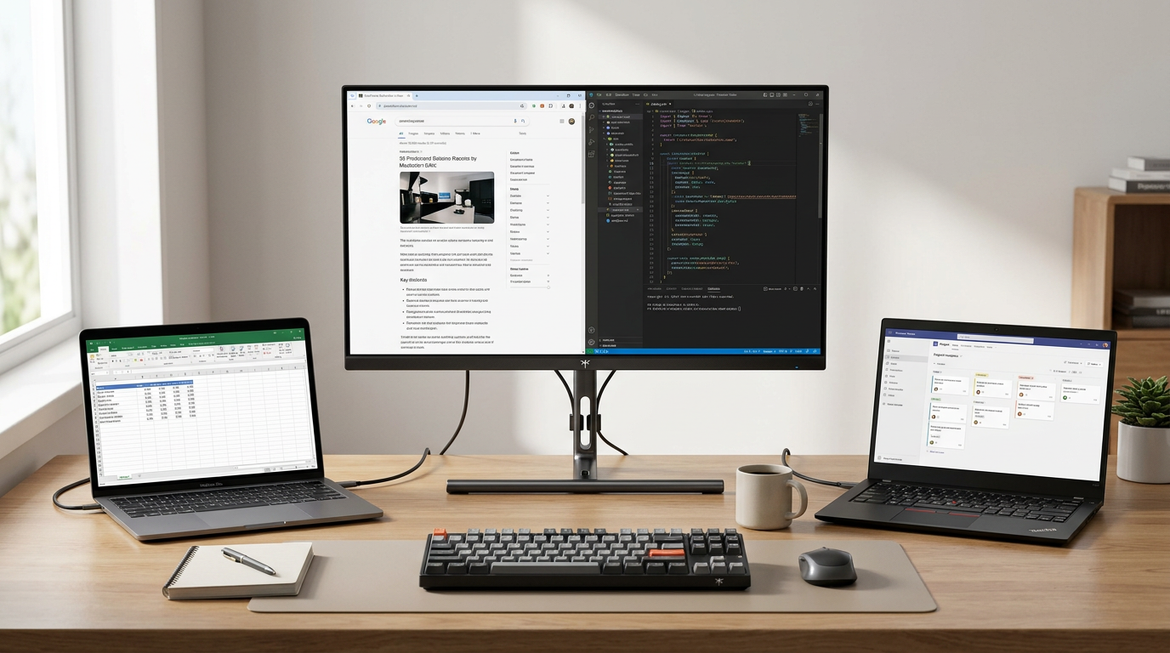
Is one big monitor really better than two smaller ones? A single 34-inch ultrawide keeps your focal point centered and reduces the neck pivoting required in dual-monitor setups. This ergonomic guide highlights how dual-monitor configurations impose significantly higher biomechanical strain on the neck and shoulders compared with a single large display.
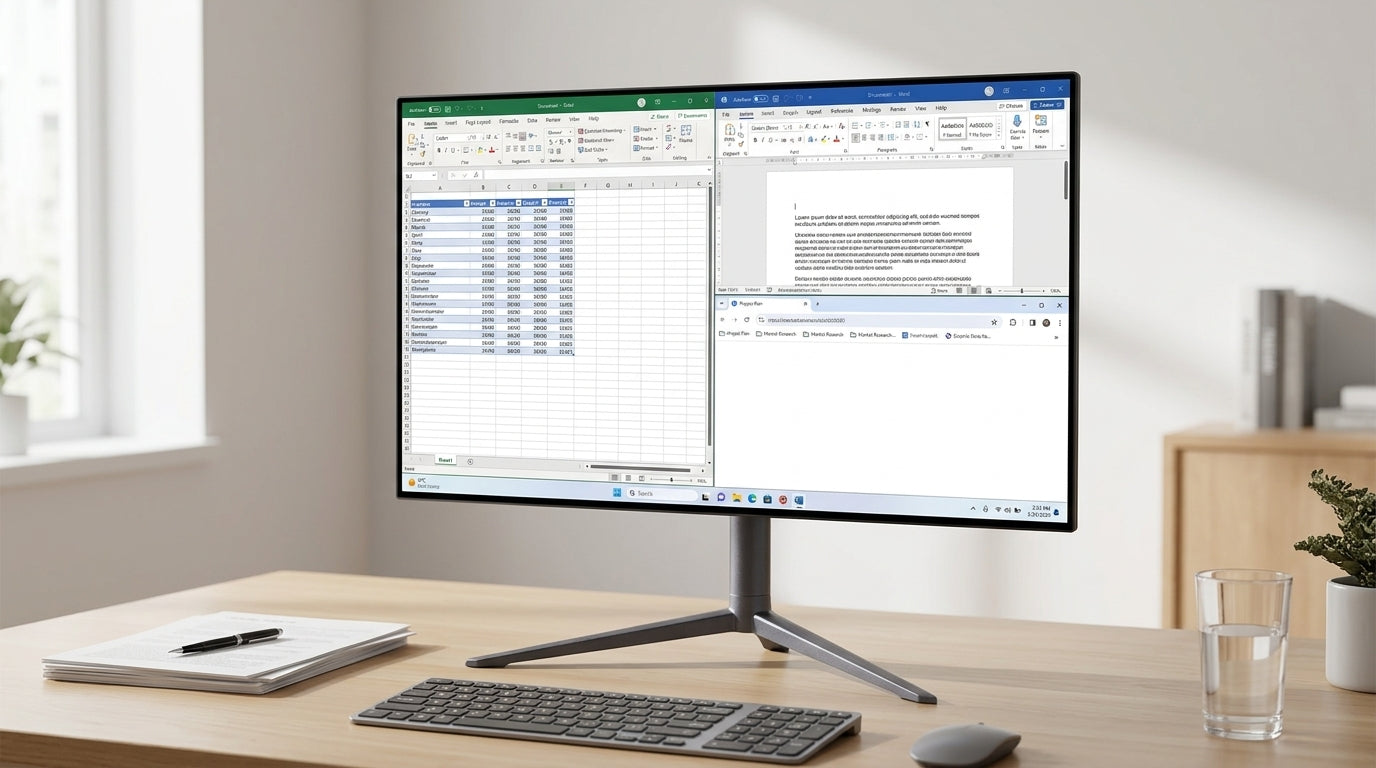
The 21:9 aspect ratio eliminates the physical bezel break that interrupts spreadsheets, timelines, or multi-window dashboards. You can view columns A through Z without constant scrolling or window switching. For most multitaskers running documents, browsers, and communication tools side by side, this seamless workspace translates into fewer interruptions and smoother daily flow.
The Productivity Floor: Technical Specs Under $300
What specs should I look for in a budget ultrawide? Resolution is the non-negotiable starting point. Never buy a 1080p panel at 34 inches for office work, because the resulting pixel density drops to roughly 81 PPI and text becomes noticeably soft for spreadsheets or detailed documents.
WQHD resolution (3440 x 1440) delivers approximately 110 PPI on a 34-inch panel, which most users consider the sweet spot for sharp text without Windows scaling. The RTINGS resolution and pixel-density guide confirms this range provides clear, comfortable readability at typical desk distances.
Curvature also matters at this width. A 1500R curve aligns better with the ISO 9241-5:2024 workstation standard that recommends keeping frequently used visual information inside a comfortable viewing arc to minimize head movement. The official ISO standard underscores why tighter curvature helps maintain ergonomic posture across the full panel.
Higher refresh rates such as 180Hz further improve everyday UI responsiveness. Cursor movement and window snapping feel smoother, even though the benefit is subtler than in competitive gaming.
The Productivity Floor: Technical Specs Under $300
A decision aid for office work: the chart shows which monitor specs are the floor for readable, low-strain productivity, and where 1080p starts to look like the compromise rather than the default.
View chart data
| Category | Productivity floor | Below-floor risk |
|---|---|---|
| Resolution | 2.0 | 0.0 |
| Pixel density | 2.0 | 0.0 |
| Curvature | 1.0 | 1.0 |
34" Ultrawide vs. Dual Monitors: Which Fits Your Workflow?
Will an ultrawide actually improve my specific workflow? Spreadsheet power users usually gain the most from a single 34-inch panel because they can view long rows without a bezel break. Researchers who constantly reference multiple independent sources may still prefer dual monitors for their hard visual boundary between windows.
A 1500R curve centralizes the focal point and reduces neck pivoting, delivering a measurable ergonomic edge. However, budget ultrawides rarely include built-in window-management software, so you may need third-party tools or manual snapping techniques to replicate the clean separation dual monitors provide automatically.
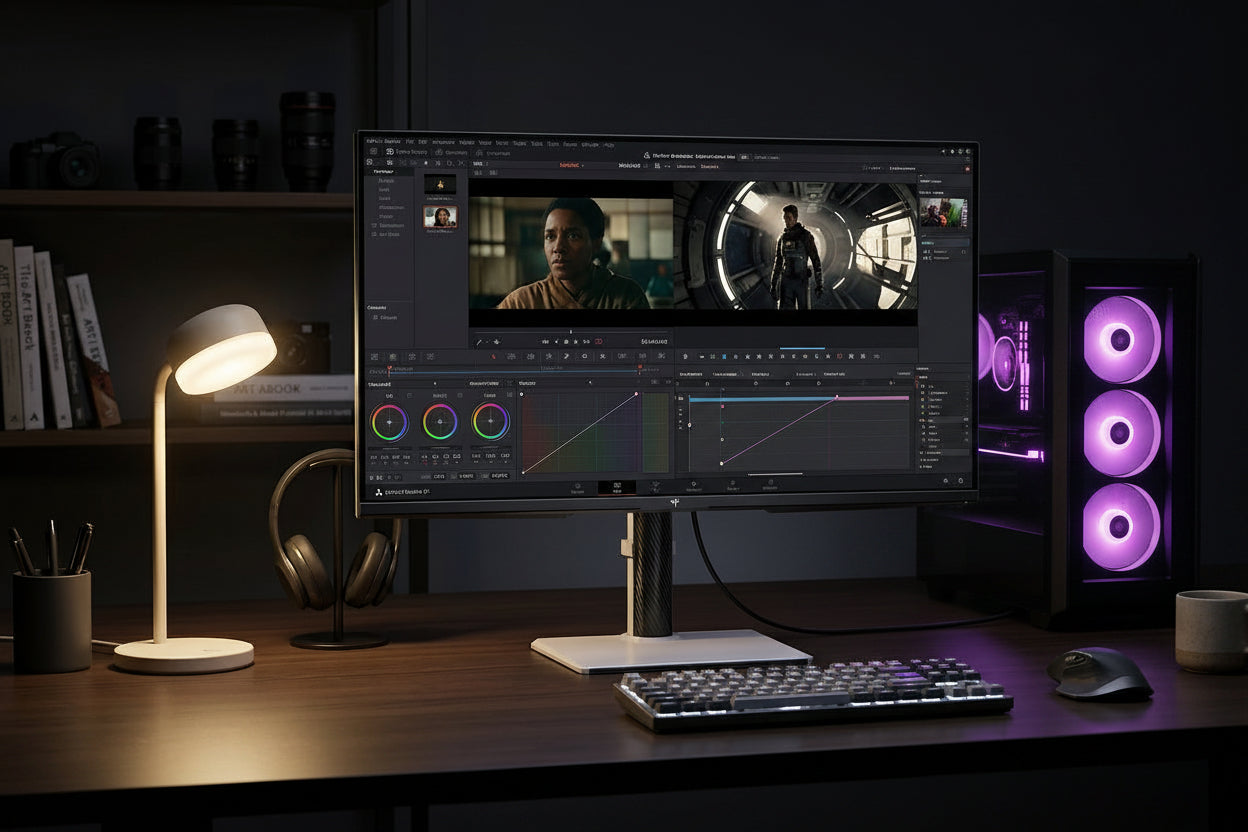
For light gaming or streaming after hours, the 21:9 format offers a more immersive field of view than two separate 16:9 panels. The same monitor therefore serves both productivity during the day and casual entertainment at night without extra hardware.

The Hidden Tradeoffs of Budget Displays
What am I giving up by spending less than $300? Most sub-$300 ultrawides use VA panels that deliver high contrast ratios around 3000:1, which helps dark-mode documents and media pop. The tradeoff is potential black smearing, where dark pixels lag slightly during motion. This appears mainly in dark-themed office apps and is generally accepted as a hardware characteristic of the panel type rather than a defect.
Many budget stands lack height adjustment, forcing users to add a VESA-compatible monitor arm for proper ergonomic positioning. Without adjustment, neck strain can return even on a large curved panel. Our home office ergonomic guide explains how correct monitor height prevents discomfort during long sessions.
Connectivity is another common gap. Most entry-level models rely on HDMI and DisplayPort rather than USB-C with Power Delivery, so laptop users often need a separate dock. This adds minor cost and desk clutter but remains manageable within the overall budget.
Panel differences also matter for mixed use. Our IPS vs VA panel comparison breaks down when the higher contrast of VA outweighs minor motion characteristics for productivity-focused buyers.
Decision-Making: How to Choose Your Productivity Powerhouse
Which monitor should I buy for my home office? Look for a 34-inch model that meets the productivity floor: 3440 x 1440 resolution, 1500R curvature, at least 300 nits brightness, and VESA mount compatibility. The KTC H34S18S meets these criteria with its WQHD panel, 1500R curve, and 180Hz refresh rate while staying comfortably under $300.
Before purchasing, verify the stand offers height adjustment or plan for a VESA arm. Prepare a simple window-management strategy using built-in OS tools or free software to maximize the wide canvas. Check current pricing and connectivity options directly on the product page, since availability and minor spec updates can occur.
Treat the $300 limit as a realistic gateway to professional-grade screen real estate. When the monitor satisfies the core resolution, curvature, and ergonomics requirements, it delivers tangible workflow gains for remote workers, freelancers, and multitaskers without premium-brand pricing.
Frequently Asked Questions
Is a 34-inch ultrawide better than dual monitors for productivity? A 34-inch ultrawide reduces neck strain by keeping the focal point centered, according to ergonomic comparisons, but dual monitors may still suit users who need a hard visual separation between unrelated windows. Spreadsheet and timeline work usually benefits more from the single seamless panel.
What resolution is required for a 34-inch monitor used for office work? WQHD (3440 x 1440) is the practical minimum. Lower resolutions such as 2560 x 1080 produce roughly 81 PPI, which makes small text and spreadsheet cells noticeably soft for prolonged reading.
Do curved monitors reduce eye strain during long work sessions? Research on intensive visual tasks shows curved monitors can lower reported eye fatigue, difficulty focusing, and blurred vision compared with flat panels of similar size. The benefit is most noticeable when the curvature matches the viewing distance.
Can a budget ultrawide under $300 handle both work and light gaming? Yes. A 180Hz VA panel provides smooth cursor movement for office tasks and immersive 21:9 gameplay for casual titles. The same monitor serves both purposes without requiring separate displays.
What hidden costs should I budget for with a sub-$300 ultrawide? Many models have fixed stands, so add a VESA arm for height adjustment. Laptop users without USB-C Power Delivery may need a dock. Window-management software or simple OS tweaks help fully utilize the wide canvas.
Is USB-C Power Delivery common on ultrawides under $300? Most entry-level models rely on HDMI or DisplayPort only. Confirm the exact ports before purchase if one-cable laptop charging is essential; otherwise, a separate dock solves the gap for a small additional cost.