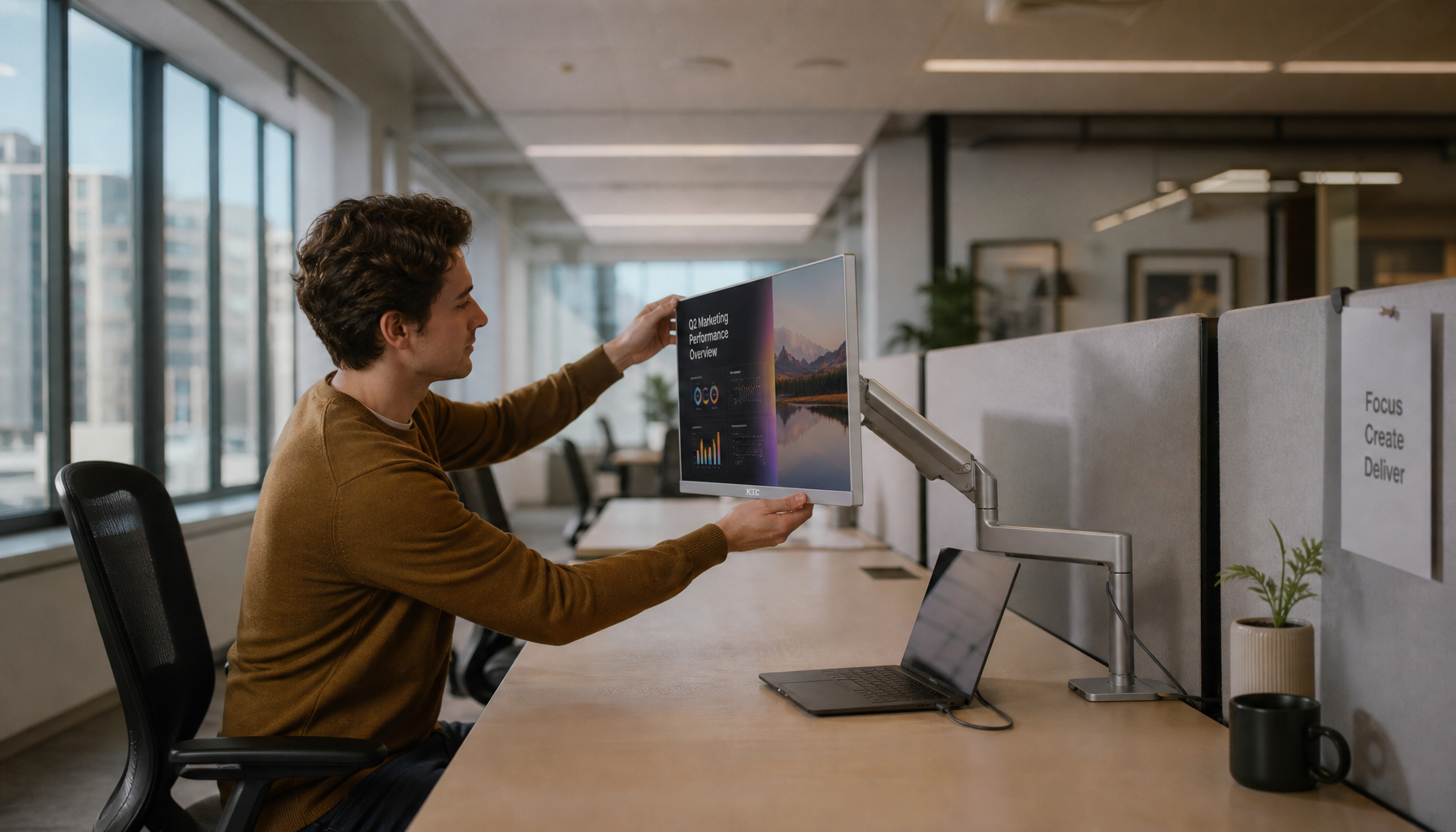
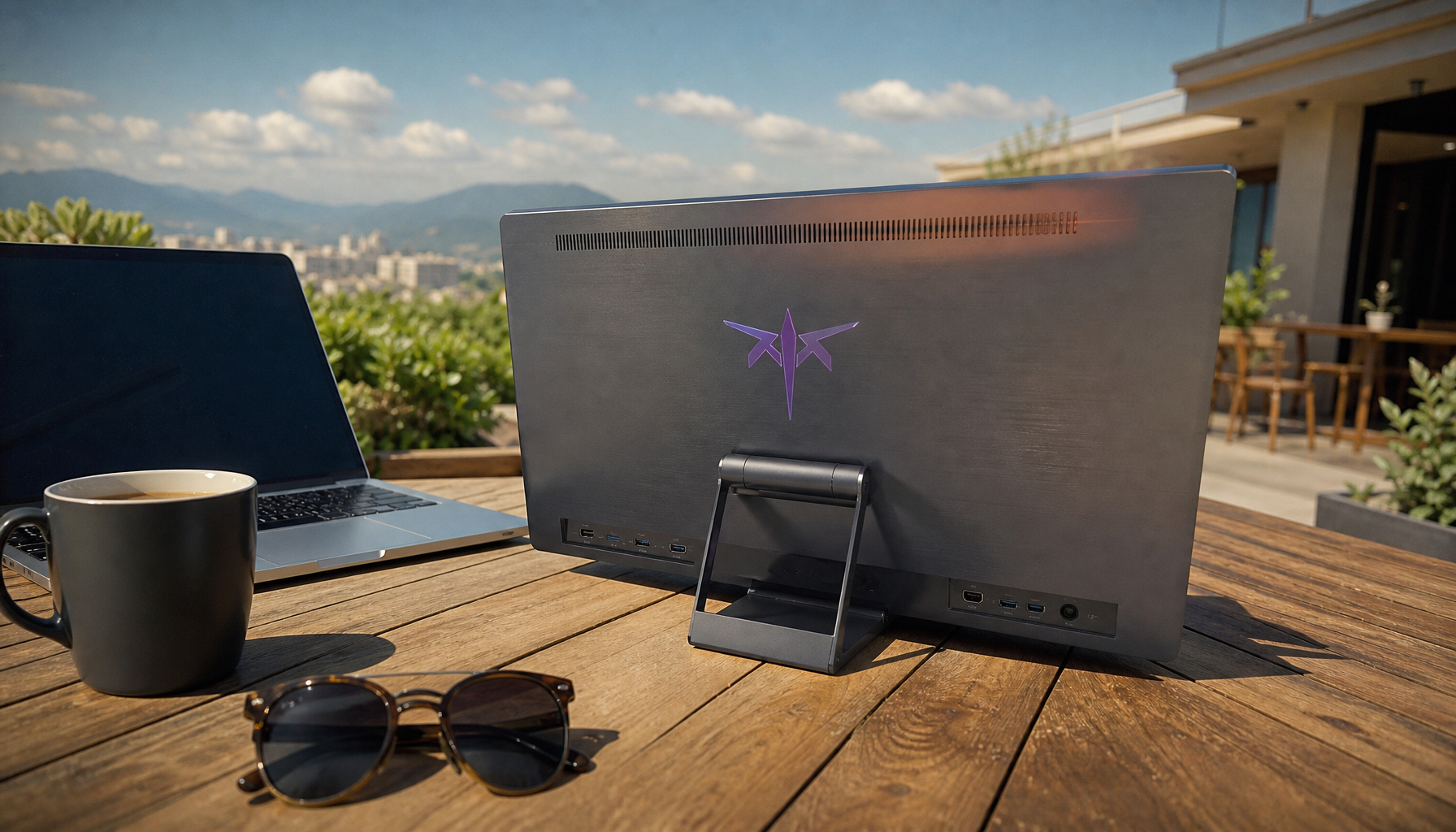
Mounting a monitor on an arm can dramatically improve ergonomics and desk space, but only if the display's VESA pattern matches the arm and the monitor's net weight stays within the arm's safe capacity. Checking these two factors first prevents sag, drift, or a dropped screen, especially with heavier Mini-LED, OLED, or ultrawide panels common in 2026 gaming setups.

How to Check Your Monitor's VESA Mount Size Correctly
VESA compatibility follows the Flat Display Mounting Interface (FDMI) standard, which defines standardized hole patterns and screw sizes so most modern monitors work with standard arms. The pattern appears as two numbers in millimeters, such as 100x100 or 200x200, representing the horizontal and vertical distance between the centers of the four mounting holes.
To verify your monitor, first consult the user manual or the sticker on the back panel near the stand. Most 27-inch to 32-inch gaming monitors use 100x100 mm, while larger or ultrawide models often require 200x100 mm or 200x200 mm. If the manual is unavailable, measure directly: locate the four holes, then measure the center-to-center distance horizontally and vertically with a ruler or caliper. Always measure in millimeters between hole centers—never from outer edges or in inches.
Pay attention to recessed or circular mounting areas common on many KTC and similar gaming displays. A standard flat VESA plate may not seat properly without 10-20 mm standoff spacers. Using the wrong spacers can scratch the housing or leave the plate unable to reach the screw holes, so test-fit before tightening.
Calculating Weight Ratings: Why the 'Net Weight' is the Only Number That Matters
Monitor arm weight ratings refer to the net weight of the display panel itself, not the packaged weight or weight with the original stand. Always subtract the stand before comparing to the arm's listed capacity. For example, many 27-inch IPS models weigh 4-6 kg net, while Mini-LED versions add several kilograms due to their dense backlight arrays, and large ultrawides can exceed 10 kg.

Professional installers often recommend a 20-25% safety margin between the monitor's net weight and the arm's maximum rating. This buffer accounts for dynamic forces during adjustment and gradual wear on gas springs or joints. Treat the margin as best practice rather than a strict rule, and verify the specific arm's manual.
OLED panels tend to be lighter, making them easier to mount on standard arms, whereas Mini-LED and larger curved displays often need heavy-duty models with stronger tilt mechanisms. For instance, the KTC M27T6 Mini LED monitor carries more weight than a comparable IPS like the H27P6, changing which arms remain suitable.
The Ultrawide Challenge: Managing Torque and Curvature Physics
Even when total weight falls within limits, curved and ultrawide monitors can cause downward tilt drift because their depth shifts the center of gravity forward. This creates extra torque—a rotational force—on the arm's tilt joint, similar to how a longer lever makes an object feel heavier at the pivot point.
Deeper curves, such as 1000R on many 49-inch super-ultrawides, move the center of gravity farther from the mounting plate than shallower 1800R or flat panels. The result is greater stress on standard tilt mechanisms, often leading to gradual sagging despite correct weight ratings. For displays like the KTC H49S66 49" curved gaming monitor, this effect becomes pronounced and may require arms with reinforced tilt joints rather than relying on lift capacity alone.
Monitor Curvature and Tilt-Joint Torque Risk
Shows how heavier ultrawides and deeper curves tend to raise tilt-joint load in typical setups.
View chart data
| Category | Typical 34" ultrawide | Typical 49" ultrawide |
|---|---|---|
| Flat / shallow curve | 1.0 | 2.0 |
| 1800R | 1.0 | 2.0 |
| 1500R | 2.0 | 3.0 |
| 1000R | 3.0 | 3.0 |
This chart helps visualize the likely pattern: deeper curvature combined with greater size raises torque risk, guiding you toward arms rated for higher tilt loads when mounting ultrawides.
Solving Installation Friction: Recessed Mounts and Cable Tension
Many gaming monitors feature recessed mounting areas that prevent a standard VESA plate from sitting flush. In these cases, use manufacturer-provided or aftermarket standoff spacers to bridge the gap. Without them, screws may not reach or the plate can damage the monitor housing.
Non-VESA monitors without standard holes generally require universal adapter kits that clamp the edges or attach to the original stand mount. However, these solutions are less stable than native VESA for heavy or frequently adjusted displays, so evaluate your usage carefully before relying on them.
Cable tension often creates “ghost sag” where the monitor slowly drifts downward even when weight is correct. Route cables with enough slack—known as a service loop—through the arm channels so they do not pull like an extra spring. Also inspect whether the VESA plate blocks downward-facing ports or the OSD joystick, a common frustration with oversized plates on ultrawide models.
For deeper guidance on curved versus flat panel behavior, see our Curved vs. Flat Monitors: Which Is Better for Gaming Immersion? article.
Final Checklist: Verifying Your Setup Before You Mount
Before tightening the final screws, confirm four decision points: VESA pattern match, net weight with margin, torque suitability for curvature, and cable slack. Begin with gas-spring or tension adjustment using the included hex key—turn one direction to increase lift and the opposite to reduce it—until the monitor holds position without drifting.
Leave enough cable length for full range of motion so movement does not create constant downward pull. Position the screen so the top sits at or slightly below eye level, following OSHA ergonomic guidelines to reduce neck strain during long sessions.
Finally, verify clamp stability on your desk material. Glass desks require extra caution and often need reinforcement or alternative mounting methods to avoid cracking under sustained pressure; our dedicated guide covers these glass desk mounting risks in detail.
If you want to explore more ergonomic options, the Home Office Setup Guide: How to Choose the Right Ergonomic Monitor offers practical positioning advice.
Frequently Asked Questions
What Does VESA Compatible Mean? VESA compatible means the monitor follows the FDMI standard with correctly spaced threaded holes that accept standard M4 screws. This allows direct attachment to most monitor arms without adapters, though recessed designs may still need spacers.
How Do I Know What Size VESA Mount My Monitor Has? Check the manual, back-panel sticker, or measure the center-to-center hole distances in millimeters. Common sizes are 75x75 mm for smaller displays and 100x100 mm or 200x200 mm for larger gaming monitors.
Does Monitor Weight Include the Stand? No. Arm ratings apply to the net panel weight only. Remove the original stand and use that figure when comparing against the arm’s capacity, then apply a safety buffer.
Can I Mount a Curved Ultrawide on Any Monitor Arm? Not safely. Deep curves like 1000R on 49-inch models increase torque significantly. Choose arms explicitly rated for the combined weight and depth, and test tilt tension after installation.
What Should I Do If My Monitor Has No VESA Holes? Use a universal adapter kit designed for non-VESA displays. These grip the edges or original mount point, but confirm the kit supports your exact weight and size before purchase, as stability is generally lower than native VESA.
How Much Weight Margin Should I Leave on a Monitor Arm? Industry practice suggests 20-25% below the arm’s rated maximum to allow for adjustment forces and long-term wear. Always confirm with the specific arm manufacturer.
Why Does My Mounted Monitor Keep Tilting Down? Common causes include insufficient tension calibration, excessive cable pull, or torque from curvature that exceeds the tilt joint’s design. Re-adjust the gas spring and ensure cables have slack.