Mini-LED is usually the safer choice for a mini led monitor no burn in for spreadsheets and coding setup when you keep the same taskbar, IDE, or dashboard on screen for hours. The main decision is simple: if your desk lives in fixed layouts and long sessions, Mini-LED reduces burn-in anxiety, while OLED still makes more sense if perfect blacks matter more than ownership simplicity.

Static UI Work Is Not the Same as General Use
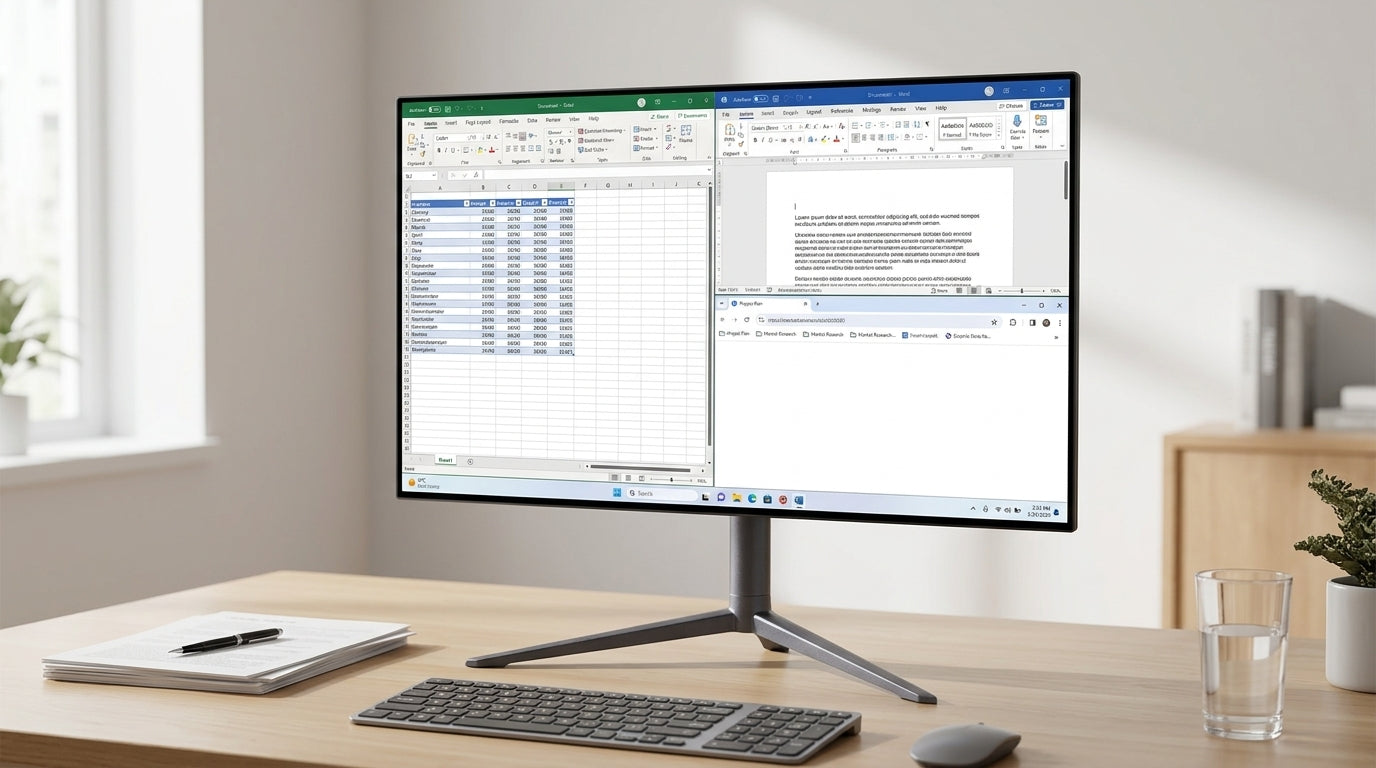
Static UI work means the screen stays on the same bright elements for a long time, such as code sidebars, spreadsheets, dashboards, browser tabs, and taskbars. That matters because the buying question is not just image quality. It is whether you want a display that can sit in one layout all day without adding long-term worry.
For this kind of use, the risk is cumulative. Long-running OLED stress tests have documented visible retention under prolonged daily use, and PCWorld's summary of expert guidance points in the same direction for office-style workloads.
A practical rule: if your screen is mostly fixed windows for 6 to 10 hours a day, you should judge the panel by long-term ownership comfort, not only by contrast. Consider how often you switch between light and dark themes or leave the same windows open across multiple days; those patterns compound pixel stress on emissive panels.
Mini-LED Reduces Burn-In Anxiety Better Than OLED
Mini-LED is the lower-risk default for static productivity because it uses a backlight rather than organic self-emissive pixels. RTINGS' Mini-LED vs. OLED overview explains the core difference: Mini-LED does not carry the same pixel-wear path that drives OLED burn-in concerns.
That does not make Mini-LED magically perfect. It means the biggest regret trigger for productivity buyers, visible retention after years of fixed UI use, is much less central to the purchase decision. For people who leave toolbars, spreadsheets, and code panes up all day, that usually matters more than perfect black levels.
Mini-LED also tends to feel steadier in bright rooms, which helps with consistent visibility during long productivity sessions. The trade-off is local dimming behavior. If you are sensitive to haloing or uniformity quirks, Mini-LED still deserves a close look. But for static UI buyers, that is usually a better trade than managing OLED retention habits.
If you want to monitor panel health over time, testing methods for early burn-in can help spot issues before they become permanent.

Match the Panel to Your Daily Workflow
For most static UI buyers, the best Mini-LED choice depends on whether you care more about text density, brightness comfort, or mixed-use flexibility. The core keyword is not just about avoiding burn-in. It is about choosing the layout that fits your workday without extra maintenance habits.
| Workflow | What Matters Most | Better Fit | Why It Usually Wins |
|---|---|---|---|
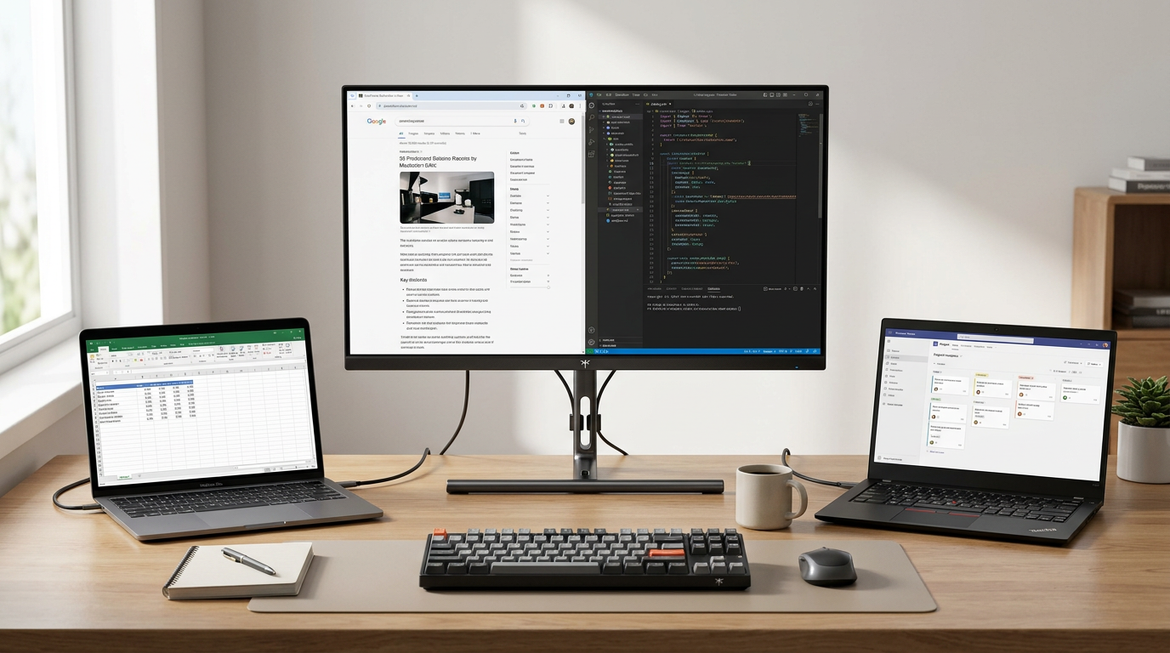
| Coding and light-mode IDEs | Sharp text, vertical space, stable brightness | 27-inch QHD Mini-LED | A 1440p desktop is easier to drive and gives enough density for code, logs, and split windows. |
| Spreadsheets and dashboards | Brightness stability, clear grid lines, low worry | 27-inch QHD or 4K Mini-LED | These users benefit from a panel that stays comfortable through long, fixed layouts. |
| Design, office, and document work | Text clarity, canvas space, color confidence | 27-inch 4K Mini-LED | 4K is the better pick when the work is text-dense or visually detailed. |
| Mixed work and play | Speed plus productivity confidence | 27-inch QHD Mini-LED | You get a practical desktop setup without giving up a fast refresh rate. |
The first concrete product to check is the KTC Mini LED 27" 180Hz 2K HDR1400 Gaming Monitor | M27T6. Its 27-inch 2560×1440 panel, 180Hz refresh rate, full ergonomic stand, and Mini-LED backlight make it a balanced fit when you want coding comfort and static-work confidence without moving into 4K pricing.
If your day is mostly spreadsheets and browser-based dashboards, that balance is often enough. If you want denser text and more canvas space, move up to 4K. If you want stronger mixed-use speed, keep QHD and prioritize the faster option.
What to Check Before You Buy
Before you buy a Mini-LED monitor for static UI work, check the decision in this order:
- Resolution first. For productivity, text clarity usually matters more than refresh rate. If you stare at code or cells all day, 4K can feel cleaner, while QHD is often the better value if you still want a fast desk monitor.
- Stand flexibility second. A monitor that can raise, tilt, swivel, and pivot is easier to live with for long sessions. That matters more than many buyers expect because posture problems show up faster than spec regrets.
- Brightness behavior third. Bright rooms favor Mini-LED because it stays more usable when the lights are on and the UI is bright.
- Port needs last. Make sure your laptop, desktop, or dock has the input you actually plan to use.
If you want to browse the whole category, the All-Mini-LED Monitors collection is the cleanest starting point. It helps you compare 2K and 4K options without assuming the same desk setup fits every workflow.
For static-work buyers, the main not-a-fit case is simple: if you only care about the deepest black levels for movies or HDR media, OLED may still be the more appealing panel type. If your screen is mostly code, sheets, or dashboards, Mini-LED is the lower-maintenance choice.
Best Next Step for Static Desk Setups
If you want the shortest path to a good choice, use the model that matches your workday. Choose M27T6 if you want a balanced QHD Mini-LED desk monitor for coding and spreadsheets. Choose M27P6 if you want 4K sharpness and a more premium productivity canvas. Choose M27T6S if you want a faster QHD option for mixed work and play.
That is the cleanest way to narrow a mini led monitor no burn in for spreadsheets and coding search without overthinking it. For fixed layouts, stable brightness and lower retention anxiety matter more than chasing the flashiest panel features.
FAQs
Q1. Can Mini-LED Handle Eight-Hour Spreadsheet Days Better Than OLED?
Usually, yes, because Mini-LED does not rely on organic emissive pixels that can wear unevenly under fixed UI use. In office-style lighting, that also means you are less likely to manage dimming habits or retention checks as a routine part of ownership.
Q2. Why Does Static UI Create More Burn-In Concern on OLED?
Static UI keeps the same bright shapes in the same places for long stretches, which is exactly the kind of pattern that can create visible wear over time. That concern matters more in 2026 because many buyers now keep the same app layout open for workdays, not just for short gaming sessions.
Q3. What Resolution Is Best for Coding on a 27-Inch Mini-LED Monitor?
For most people, 4K is the sharper pick when text clarity is the top priority, but QHD is often the better balance of clarity, speed, and price. On a 27-inch desk, the right answer depends on whether you care more about denser text or a lighter GPU load.
Q4. Can a Mini-LED Monitor Be Used for Design Work Too?
Yes, especially when you want strong brightness and color confidence for mixed office and creative tasks. The main difference is that design buyers should still check the panel's resolution and ergonomics, because long editing sessions are easier when the screen can pivot or sit at the right height.
Q5. What Should I Prioritize If I Plan to Keep the Same Layout Open All Day?
Prioritize resolution, stand ergonomics, and brightness comfort before refresh rate. If your workday is mostly static, the best display is the one that stays easy to read and easy to live with after months of the same layout, not the one with the most gaming-style headline spec.
Related Resources
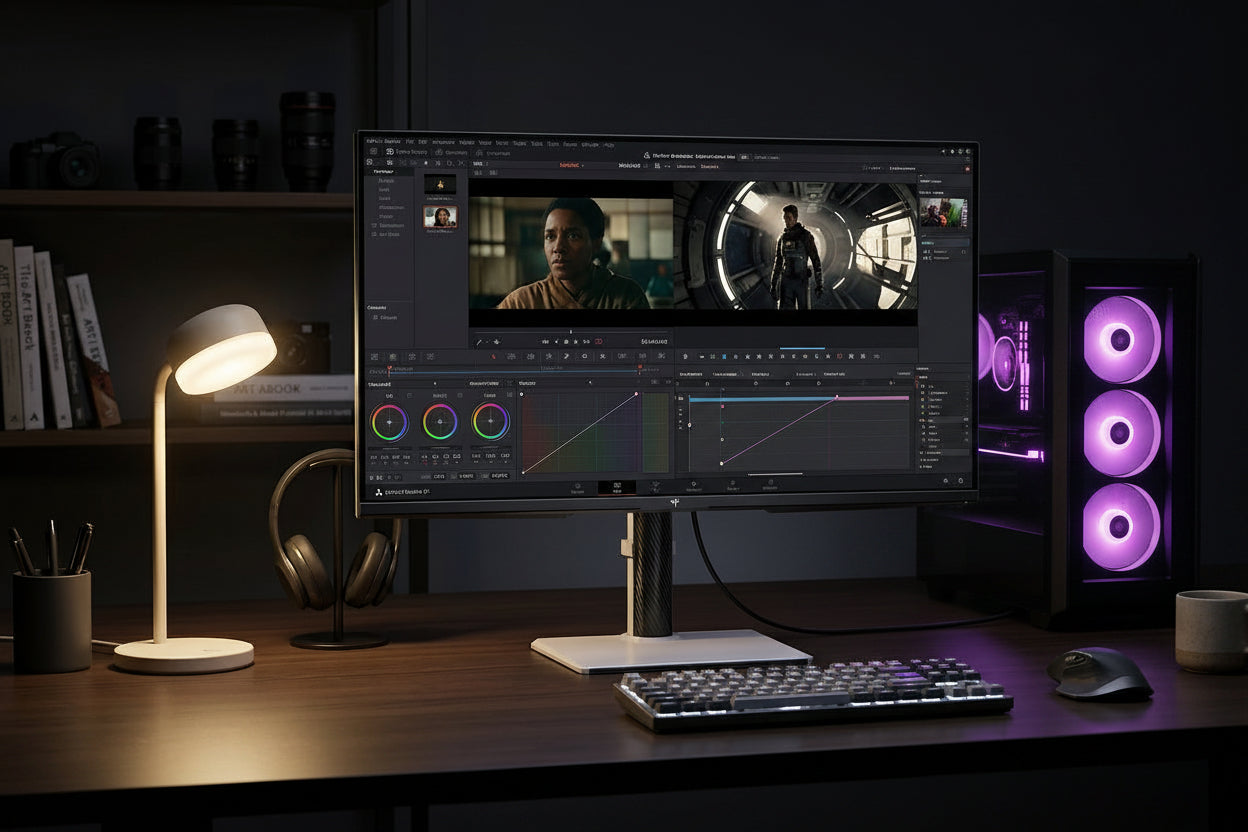
Static desk setups often benefit from comparing specific panel behaviors across real workflows. Review the 4K option when text density is the priority, the higher-refresh QHD model when occasional gaming is mixed in, and the color-grading comparison when creative tasks appear alongside spreadsheets. These resources help match exact use cases without assuming every buyer needs the same brightness or stand adjustments.