Local Stable Diffusion turns your monitor into a critical evaluation tool for spotting fine textures, edge artifacts, color shifts, and upscale seams that a standard office display often hides. The right configuration improves how accurately you judge outputs and manage complex interfaces like ComfyUI or Automatic1111, though it has no effect on the actual generation speed determined by your GPU and VRAM.

Why Local Stable Diffusion Changes Your Monitor Requirements
When you run Stable Diffusion locally, the workflow quickly shifts from casual generation to professional-grade evaluation. You spend significant time inspecting outputs for subtle defects, refining prompts, and comparing iterations side by side. A typical 1080p or basic 1440p monitor can obscure fine texture noise, stair-stepping on edges, or tonal shifts in shadows that modern models like SDXL or Flux produce.
Monitor specifications affect only visualization and workflow efficiency. Generation performance remains entirely dependent on GPU compute and VRAM capacity, as confirmed in local setup guides. This distinction prevents misallocating budget toward displays when the real bottleneck is elsewhere. For savvy enthusiasts building dedicated AI art workstations, the display becomes the primary interface for catching issues before they reach final export.
Best Monitor Configurations for Running Stable Diffusion Locally: Resolution and Pixel Density
4K resolution serves as the practical threshold for reliably detecting seams in tiled upscaling and stair-stepping along generated edges. At 27 inches, a 4K panel delivers roughly 163 PPI, providing the sharpness needed to judge high-resolution renders and upscaled outputs that lower-density screens soften or obscure.
A 32-inch 4K panel offers a larger canvas with slightly lower PPI but superior vertical real estate for portrait-oriented character work. In comparison, a 27-inch 5K display like the KTC H27P3 pushes pixel density even higher while maintaining excellent color volume, making it a strong choice for precision detail review. The KTC M27P6 (4K Mini-LED) and H27P6 provide balanced 4K performance with the added benefit of high refresh options for smoother UI navigation.
While 4K is ideal for professional evaluation, a well-calibrated 1440p panel with strong pixel density can function as a capable baseline for hobbyist or non-critical workflows. The key check is whether your typical output resolution and upscale size exceed what the display can render without visible softening.
Judging Output: Color Accuracy and Dynamic Range in AI Art
For accurate evaluation of AI-generated portraits and stylized scenes, color accuracy measured by Delta E below 2 helps ensure skin tones, lighting gradients, and palette shifts appear as the model intended. Monitors covering 99% or more of sRGB and a high percentage of DCI-P3 reduce the risk of false editing decisions caused by inaccurate reproduction.
Mini-LED panels deliver a meaningful advantage in shadow artifact visibility. Their localized dimming reveals subtle texture noise and “digital mud” in dark areas that standard IPS panels often crush into uniform black. As DisplayNinja explains in its overview of the technology, this high contrast and peak brightness help uncover tonal differences critical for reviewing darker AI generations.
However, the choice involves a clear trade-off. Local dimming on Mini-LED can introduce blooming around bright highlights that may mask edge artifacts, requiring users to occasionally disable the feature for edge-critical checks. This “toggle tax” is a common friction point for hybrid productivity and AI sessions. The 90% Rule offers a useful decision frame: many creators accept Mini-LED’s 90% of OLED contrast performance in exchange for zero burn-in risk during the long static UI sessions typical of ComfyUI or A1111. The KTC M27P6, with its 1152 dimming zones and HDR1400 capability, exemplifies a power-user option that gains shadow detail while maintaining usability for extended prompting.

Optimizing the Workflow: Screen Real Estate for ComfyUI and A1111
Complex node graphs in ComfyUI frequently span multiple screen widths on a standard 16:9 display, leading to constant panning fatigue. An ultrawide (21:9) monitor reduces this sprawl significantly, allowing a clean “Prompt–Generation–Preview” triple stack without overlapping windows. The KTC H34S18S 34-inch ultrawide curved model provides the horizontal canvas many node-based users find transformative.
Conversely, character artists working in portrait (9:16) ratios benefit from the greater vertical preview height of a 32-inch 4K panel such as the KTC H32P22P. This configuration delivers approximately one-third more usable vertical space for full-frame review compared with a 34-inch ultrawide, reducing the need to scroll or zoom during refinement of SDXL or Flux outputs.
The chart below visualizes the practical fit across common AI workflows.
Which Monitor Fit Matches the Workflow
A practical fit map for ComfyUI and portrait-focused AI work. The split is strongest when your time is mostly node-based; hybrid use sits in the middle, while portrait-first work leans toward a 4K display.
View chart data
| Scenario | ComfyUI-dominant | Hybrid | Portrait-dominant |
|---|---|---|---|
| 34" Ultrawide | 3.0 | 2.0 | 1.0 |
| 32" 4K | 1.0 | 2.0 | 3.0 |
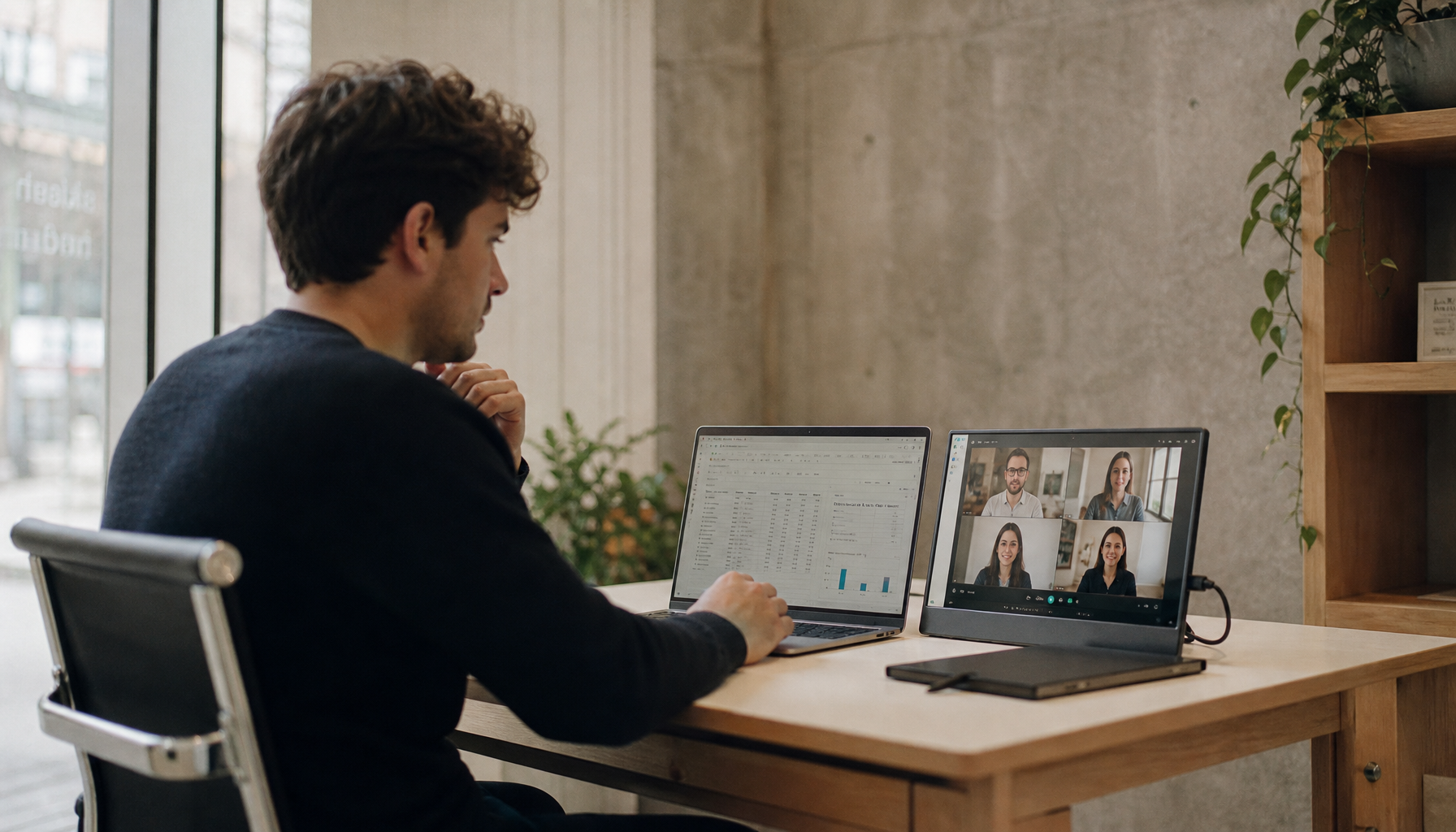
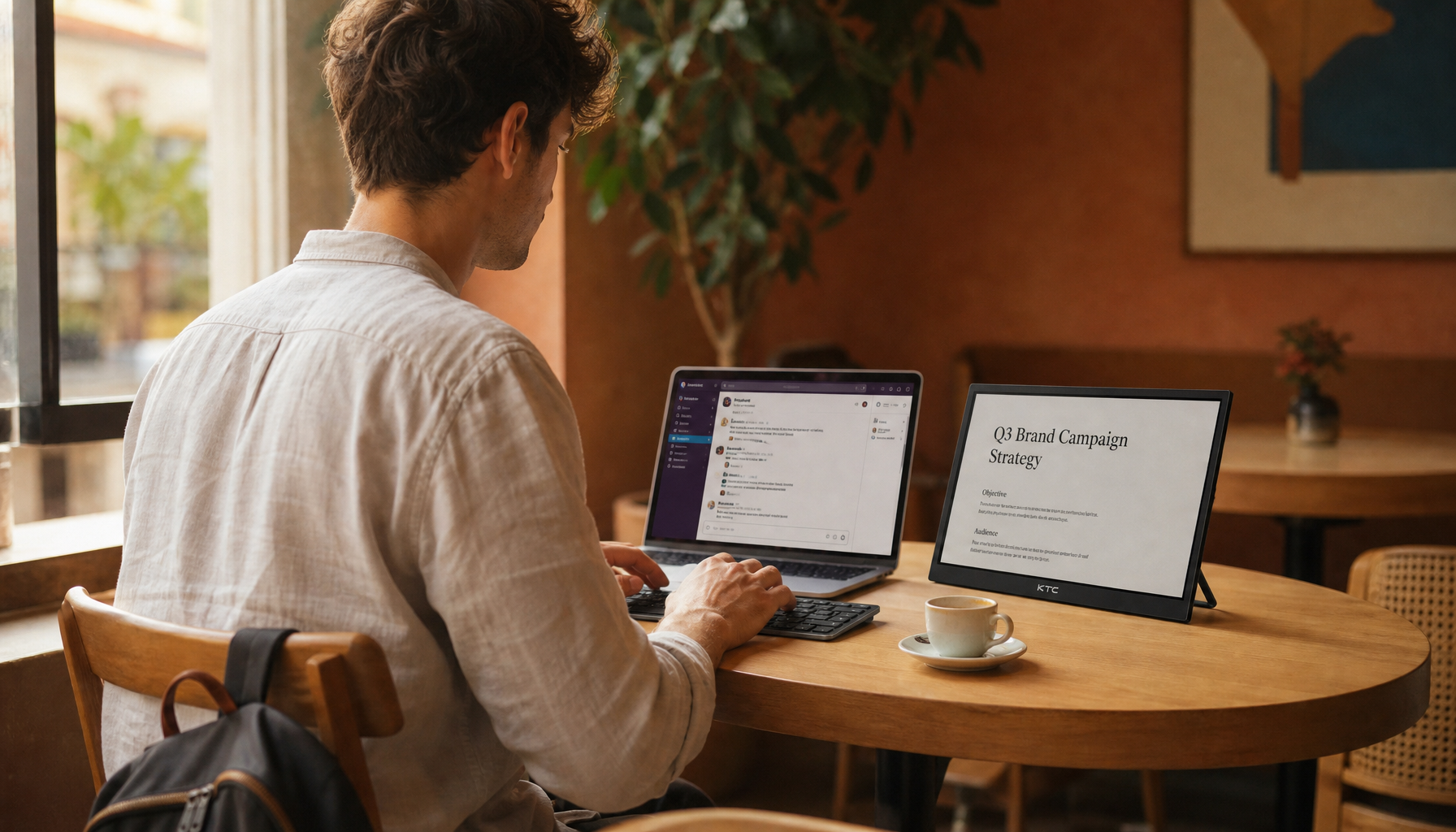
Dual-monitor setups combining a 27-inch or 32-inch 4K panel with an ultrawide can eliminate most compromises for reference-heavy prompting, though they require more desk space and cable management.
For deeper insight into color accuracy requirements in creative work, see our guide on What Delta E Values Actually Mean for Your Creative Work. Users exploring contrast technologies may also benefit from What “Local Dimming Zones” Mean in Monitor Backlight Technology.
The 'Toggle Tax' and Hybrid Use: Choosing Your Configuration
Many AI creators also use their workstation for general productivity, creating the daily friction of toggling local dimming on and off. The “Toggle Tax” — navigating OSD menus to disable dimming for clean SDR text work — can interrupt creative flow during iterative prompting sessions. This makes Mini-LED a power-user choice best suited to those who prioritize shadow visibility and can tolerate occasional adjustments.
A practical decision framework starts with your dominant workflow and budget. Entry-level users focused on SD 1.5 may find the KTC H27T27 or H27P27 sufficient for basic review. Performance-oriented creators benefit from the KTC M27T6S Mini-LED for balanced contrast and speed, while professional Flux or SDXL users often prefer the KTC M27P6 or H27P3 for their combination of resolution, color accuracy (ΔE < 2), and high contrast.
Check your primary interface first: ComfyUI-heavy users should lean ultrawide; portrait-first character artists should prioritize 32-inch 4K. If you frequently switch between text-heavy prompting and visual review, confirm your tolerance for the toggle tax before choosing Mini-LED. Matching the monitor to your specific model needs (SDXL/Flux versus lighter models) prevents over- or under-spending on features that do not materially improve judgment.
For related reading on panel trade-offs, review Mini-LED IPS vs. Standard IPS: Is the Advanced Backlight Worth the Upgrade? and MiniLED vs. OLED: Which Display Technology Wins for Gaming in 2025?. The 4K Monitor and All-Mini-LED Monitors collections offer practical starting points once you have narrowed your requirements.
Does a 4K Monitor Improve Stable Diffusion Generation Speed?
No. Generation speed is governed exclusively by GPU, VRAM, and model optimization. The monitor only improves your ability to evaluate and iterate on results.
How Much Resolution Is Needed to Spot Artifacts in SDXL Outputs?
4K at 27 inches or larger is the practical minimum for consistently detecting tiled seams and edge artifacts in SDXL or Flux upscales. Lower resolutions often require zooming, which breaks natural workflow comparison.
Is Mini-LED Worth the Extra Cost for AI Art Review?
It depends on how often you evaluate dark or high-contrast generations. Mini-LED reveals shadow noise standard IPS crushes, but the local-dimming toggle tax and occasional blooming make it most suitable for dedicated creators rather than casual or hybrid users.
Should I Use Ultrawide or Standard 4K for ComfyUI?
Ultrawide is generally superior for ComfyUI because the node graph benefits from horizontal space, enabling non-overlapping prompt, queue, and preview panels. Standard 4K is preferable only if most of your work involves portrait-ratio character refinement.
What Color Accuracy Level Matters Most for AI Portrait Work?
Aim for Delta E below 2 and at least 98% DCI-P3 coverage. This combination minimizes color shifts that could lead to incorrect adjustments to skin tones or stylized lighting before export.
Can a Single Monitor Replace a Dual Setup for Stable Diffusion?
Yes for many users. A 34-inch ultrawide or 32-inch 4K can comfortably host a triple-stack layout. Dual monitors become advantageous only when you need simultaneous high-resolution reference libraries or multiple model comparisons open at full size.