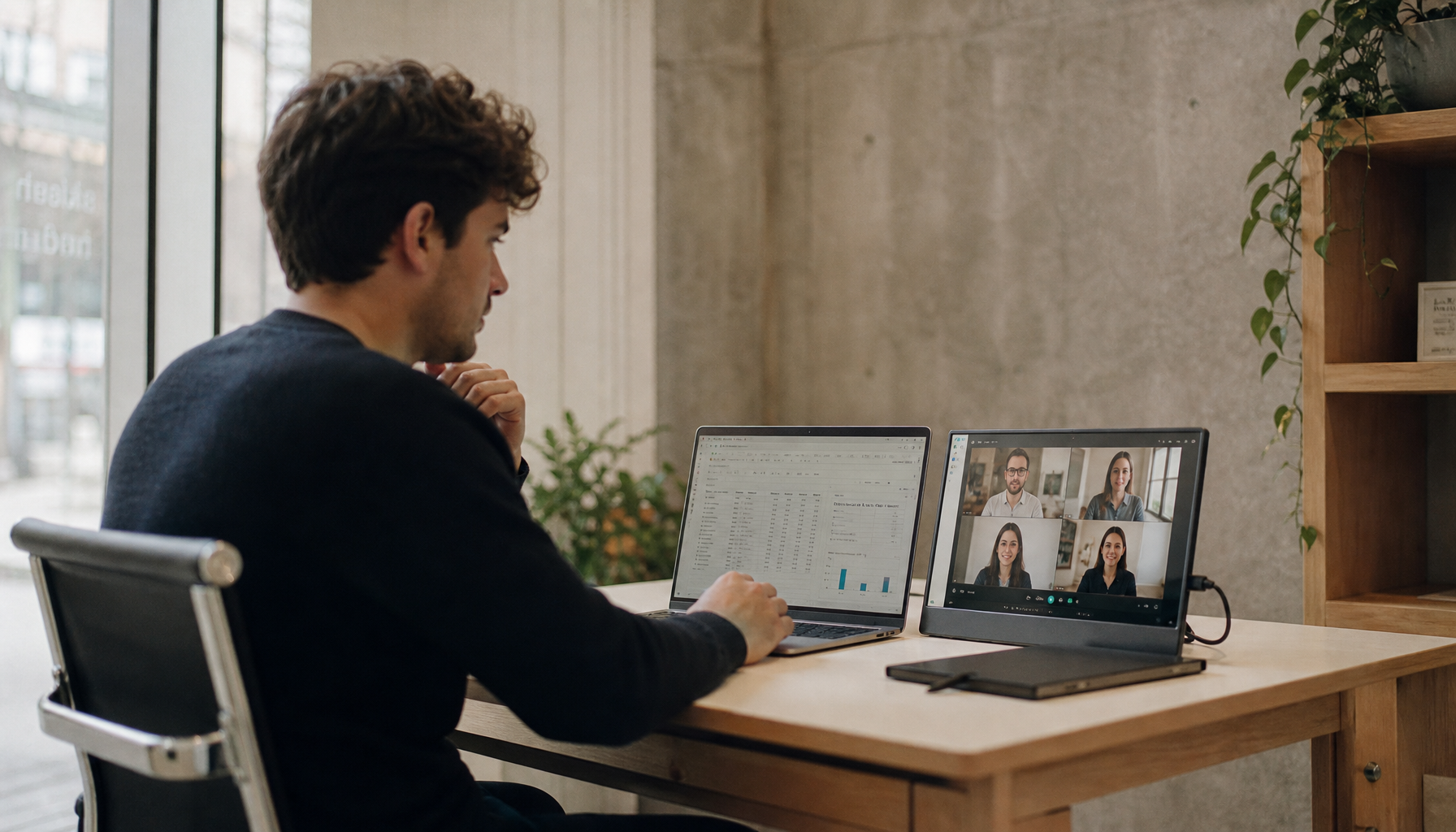
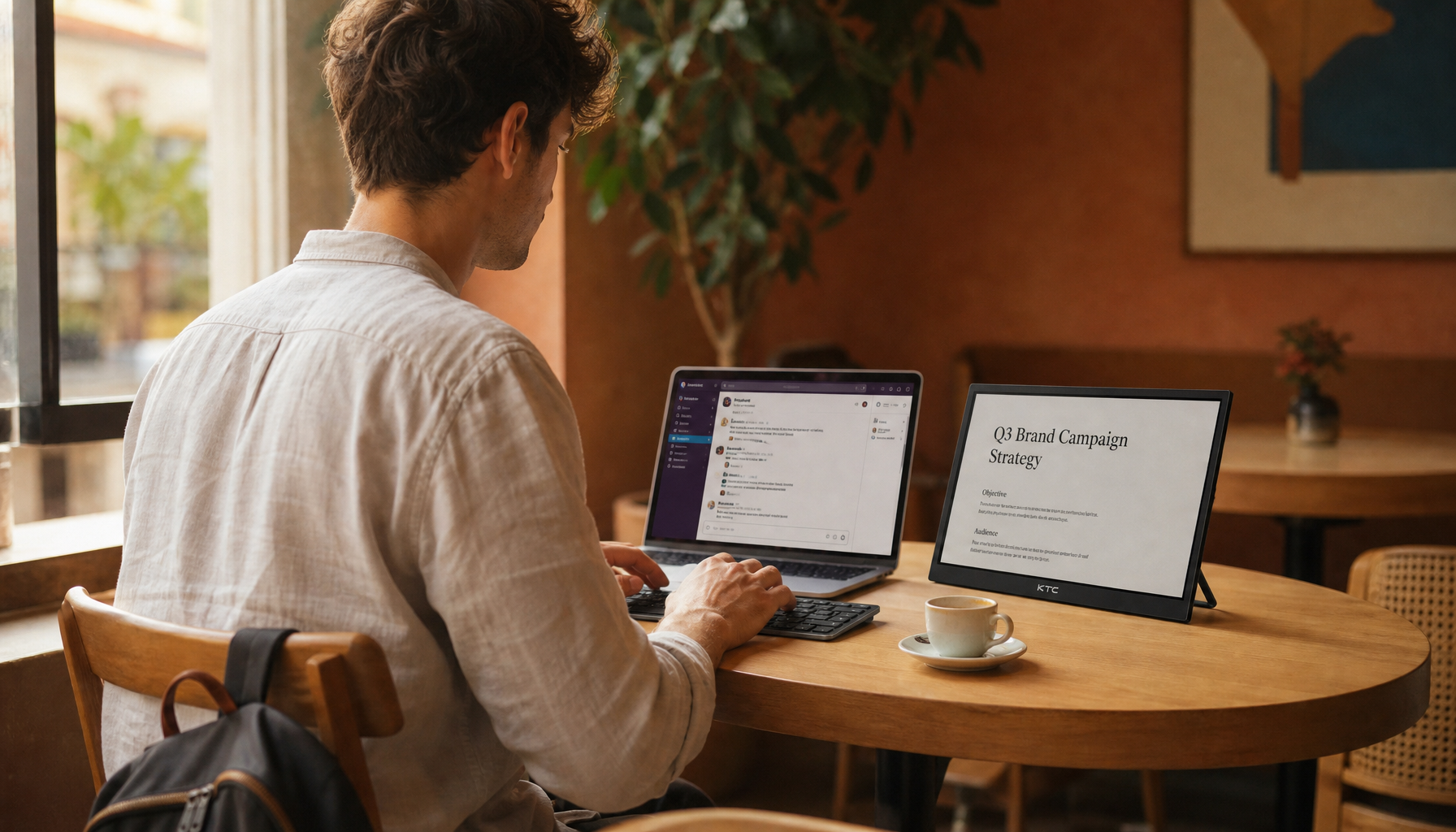
A monitor can usually be leveled without replacing the display if you isolate whether the lean comes from the desk, wall, stand, arm, or mount head. The best fix is the one that straightens the screen while keeping it comfortable to view for long work or gaming sessions.
Does your screen look slightly “off” no matter how many times you push it straight, especially during a long match or while editing across a wide panel? In real setups, a lean as small as about 0.16 inches on one side has been enough to make a monitor feel obviously crooked. You will get a practical way to diagnose the cause, fix the tilt safely, and keep the final position ergonomic.
Start by Finding Where the Lean Begins
Separate the screen problem from the surface problem
The fastest mistake is adjusting the monitor head before proving the desk or wall is actually level. Start with the monitor powered off, then check three things separately: the desk or wall plate, the stand or arm, and the panel itself. If the desk surface is slanted, the screen may look crooked even when the stand column is perfectly straight.
A useful real-world test is to remove the monitor from the stand, place the stand by itself on a known level surface, and see whether the top of the stand still twists to one side. In one support case, a monitor that leaned right by a few millimeters was fixed only after the user re-seated the stand bracket and carefully counter-twisted it. That matters because many bundled stands allow tilt, swivel, and height changes, but not true side-to-side leveling.
Check for mount limitations before forcing an adjustment
If you use dual monitors, the problem may not be the desk at all. Different displays can place their rear mounting holes at different heights on the rear shell, so two screens mounted on the same crossbar may never line up cleanly even when the arm is level. A mount with only about 2 inches of vertical travel can run out of room fast.
This is especially common when mixing office monitors with gaming panels, or pairing a standard 16:9 display with an ultrawide. If the screens are different sizes, different thicknesses, or have different rear mounting positions, the mount needs independent height, tilt, and rotation adjustment on each side.
Fix a Built-In Stand or a Slanted Desk First
Re-seat the stand before buying new hardware
If the monitor uses its original stand, detach it and reinstall it on a soft towel so the panel is protected. Then place the stand base on a level surface and confirm the riser is straight before reattaching the screen. Some stands develop a slight twist at the connection module; if the module is not centered, the screen can drift back to one side even after you push it straight.
If the monitor still leans, check whether the stand has any hidden rotation range. Some bundled stands allow a few degrees of rotation at the head, even if that function is easy to miss in the quick-start sheet. Do not force the panel past its designed range. If the display returns to the same crooked position after adjustment, the stand mechanism may be too loose or internally biased.
Use the desk surface as a temporary fix only when the monitor is light
On a mildly slanted desk, a hard riser or a thin shim under the stand base can level the screen, but this works best with lighter displays and compact bases. It is much less reliable with a heavy gaming monitor, a curved panel, or a large ultrawide because the load is higher and the center of mass sits farther forward.
A desk-level workaround is reasonable when you cannot drill, clamp, or replace furniture. It is not the best long-term answer for a heavy 27-inch 210Hz gaming monitor, because minor desk vibration and panel weight make tiny misalignments more obvious over time. If the desk itself flexes, leveling the base may hide the symptom without solving the movement.
Choose the Right Mount When the Stand Cannot Level the Screen
A monitor arm is usually easier to level than a fixed stand
A monitor arm with separate height, tilt, swivel, and rotation controls is usually the cleanest fix for an uneven surface. Ergonomic guidance and mount-adjustment guides largely agree here: once the arm is installed correctly, you can level the screen at the mount head instead of relying on the desk surface or the factory stand.
Fully articulated arms give the most control. Pole-style arms can work, but they are more limited if you need to compensate for a crooked wall plate, different monitor heights, or a desk that is not perfectly flat. If your screen slowly droops after leveling, the problem is often spring tension or the tilt-tension bolt behind the mount plate, not the display itself.

Match the arm to the desk, wall, and monitor weight
Before buying an arm, measure desk thickness at the clamp point. Many desk mounts fit surfaces roughly 0.4 to 2.5 inches thick, while common desks fall around 0.75 to 2 inches. For clamp mounts, keep about 2 inches of clear edge space and avoid unsupported glass. If the desk edge is beveled, thick, or awkwardly shaped, a grommet mount is usually more stable.
Weight rating matters more than many buyers expect. A curved 24-inch 165Hz gaming monitor can place more forward load on the arm than a flat panel of the same size, and larger ultrawides demand even more headroom. For heavier or curved displays, a safety buffer above the monitor’s listed weight helps reduce sagging and repeated re-leveling.
Method |
Best use case |
Leveling control |
Main limit |
Built-in stand |
Single monitor on a mostly flat desk |
Low to medium |
Often no true left-right leveling |
Mild desk slope, light display |
Low |
Can reduce stability on heavier screens |
|
Fully articulated arm |
Gaming monitors, ultrawides, dual setups |
High |
Must match weight, mounting pattern, and desk thickness |
Grommet arm |
Thick or awkward desks |
High |
Requires a hole or existing grommet |
Wall-mounted arm |
Permanent setups, limited desk depth |
Medium to high |
Uneven wall plates can magnify lean if installed off-level |
Re-Level the Screen Without Breaking Ergonomics
Straight is not enough if the screen sits too high or too close
Once the monitor looks level, recheck whether it is actually comfortable. A workplace safety agency’s guidance recommends placing the monitor directly in front of you, at least 20 inches away, with the top line of the screen at or slightly below eye level. A common target is a viewing distance of about 20 to 30 inches, with the screen center roughly 15 to 20 degrees below your horizontal line of sight.

That matters because many people correct a lean by lifting one side of the monitor too high or tilting the whole display backward too aggressively. A slight backward tilt of about 10 to 20 degrees is typically enough. More than that can force your neck into a strained position, especially during long workdays or extended gaming sessions.
Recheck angle, posture, and glare after the final adjustment
After you level the display, sit in your normal position and look straight ahead. The monitor should stay mostly centered in front of you, not more than about 35 degrees left or right unless it is a secondary screen. If you use dual displays equally, angle them slightly inward and keep their inside edges close together so your head does not keep turning.
Leveling also affects eye comfort. A screen that is straight but too low can make you hunch; a screen that is straight but too high can make you tip your chin upward. A simple habit helps catch this early: every 20 minutes, look about 20 feet away for 20 seconds, and do a quick posture check at least every 30 minutes.
Buying Guidance for Gaming, Ultrawide, and Portable Monitors
High-refresh and ultrawide panels need stricter mount checks
A basic office stand can be acceptable for a light single display, but high-refresh-rate gaming monitors and ultrawides are less forgiving. Heavier panels, wider chassis, and curved screens make small mount errors easier to see, especially when the panel sits on a flexible desk or a low-cost arm with limited tension adjustment.
When buying for a leveling-sensitive setup, check four items before anything else: total monitor weight with the stand removed, mounting compatibility, the arm’s stated weight range, and how much independent rotation the head allows. If the arm cannot hold the screen at the chosen height without drifting, it is undersized even if the monitor technically falls inside the published limit.
Portable monitors are easier to place, but harder to position well
A 25-inch portable touch screen is easier to level on a temporary desk because it is light and easy to reposition, but it creates a different problem: the screen often sits too low and too close. On travel desks, hotel furniture, or compact apartments, the stand may be straight while the viewing angle is still poor.
For portable setups, prioritize height support and viewing distance over perfect mechanical leveling. If the screen is visually level but only 12 to 16 inches from your eyes, the setup is still not ideal. A small stand or riser under the portable display often improves comfort more than another round of tilt adjustments.

FAQ
Q: Why does my monitor still look tilted after I tighten the mount?
A: Tightening only solves one failure point. The lean may come from a twisted stand connection, mismatched arm tension, different rear mounting hole heights, or a desk or wall plate that is off-level. Check each part separately before tightening more.
Q: Can I level a monitor on a slanted desk without replacing the desk?
A: Usually, yes. For a light display, a stable riser or thin shim under the base can work. For a heavier gaming monitor or ultrawide, an articulated arm is usually a better fix because it lets you level the screen independently of the desk surface.
Q: What mount features matter most for leveling a gaming monitor or ultrawide display?
A: Look for independent tilt, swivel, and rotation at the mount head, plus a weight rating that comfortably exceeds the monitor load. For curved or wide panels, extra headroom helps prevent sagging and repeated readjustment.
Practical Next Steps
Use this sequence if you want the fastest path to a straight, comfortable setup.
- Power the monitor off and verify whether the desk surface or wall plate is actually level.
- Detach and re-seat the stand or mount head on a soft surface, then check whether the stand itself twists.
- Confirm the monitor’s mounting pattern and weight before switching to an arm.
- If you use an arm, adjust spring tension and tilt tension in small increments until the screen holds position without drifting.
- Set the top of the screen at or slightly below eye level and keep the display about 20 to 30 inches away.
- Recheck the screen after a full work session or gaming session, because slow sagging often appears only after the hardware settles.
References
- A workplace safety agency, computer workstation monitor guidance for screen height, tilt, distance, and viewing angle.
- A company community support cases involving monitors that leaned to one side and were corrected by re-seating or counter-twisting the stand connection.
- A brand monitor arm adjustment instructions for tension, tilt, swing, rotation, and leveling paired displays.
- A publication and related monitor-arm testing summaries on arm types, weight ratings, reach, and vibration tradeoffs.
- Ergonomic summaries citing monitor distance, eye-level placement, and mild backward tilt as key factors for reducing neck and eye strain.