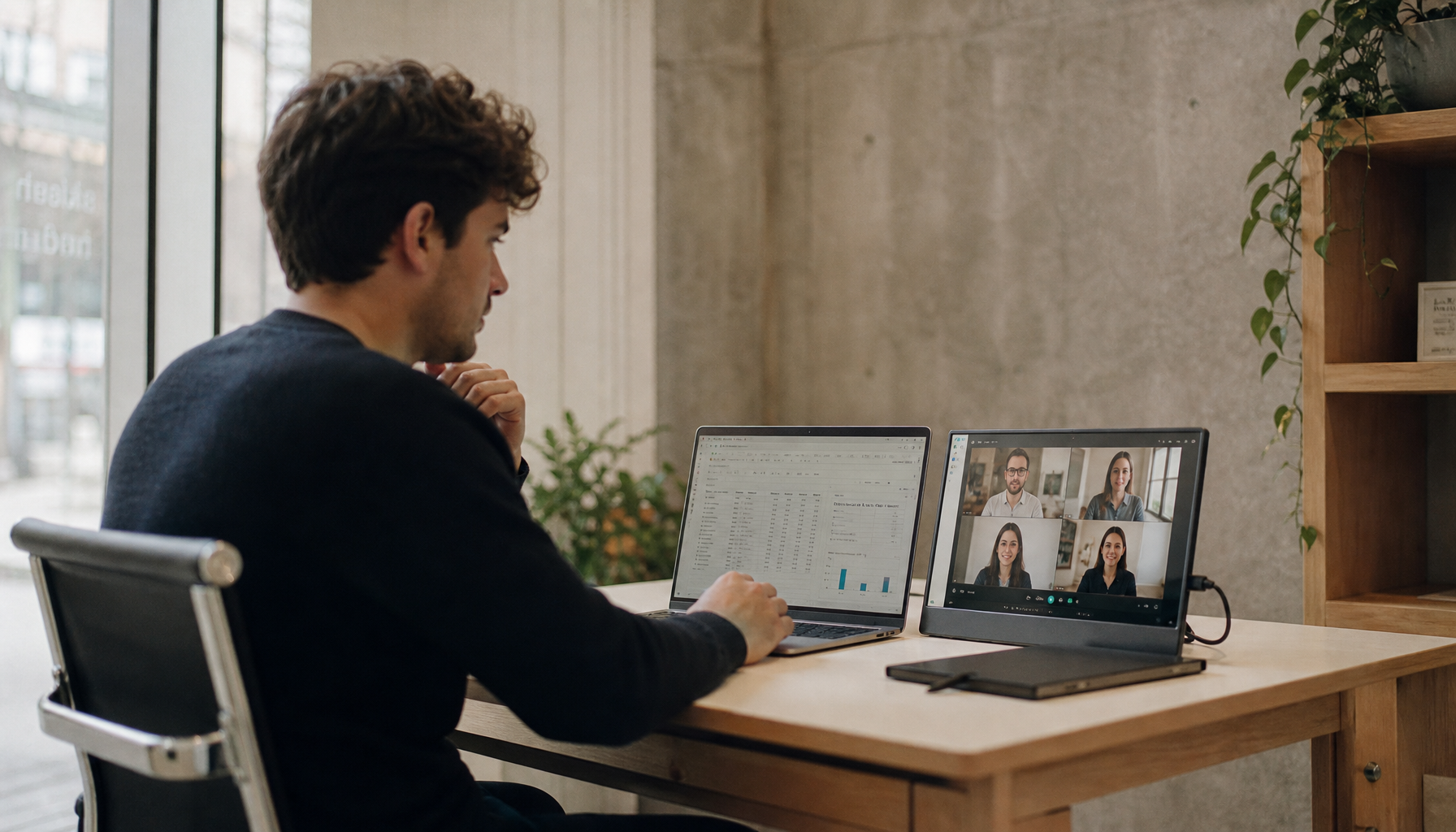
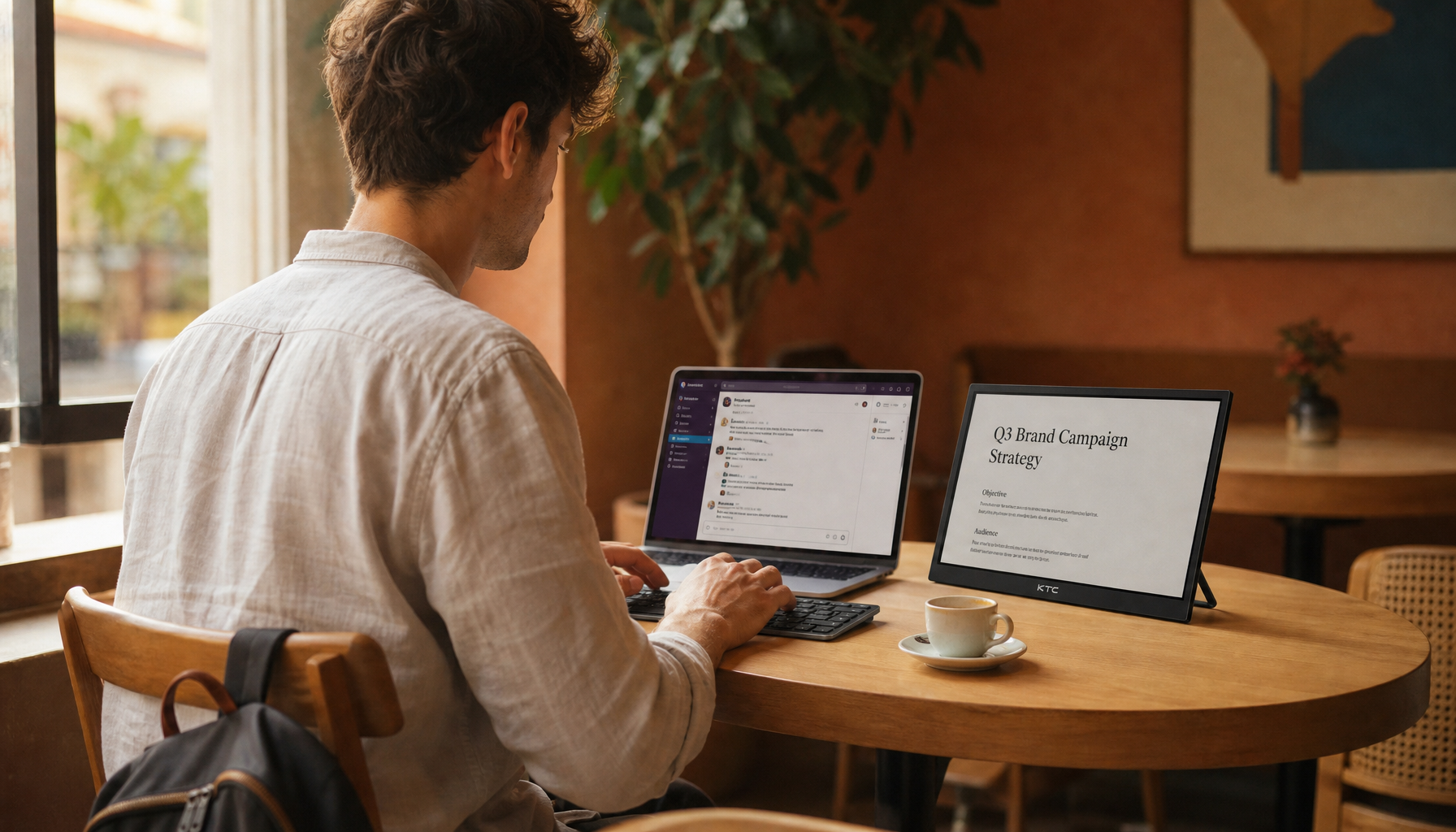
A USB-C KVM monitor simplifies hybrid setups by letting you control a work laptop and gaming PC with one keyboard, mouse, and screen while delivering video, data, and up to 90W of charging through a single cable for compatible devices.

Why a USB-C KVM Monitor is the Core of a Modern Hybrid Setup
Users who alternate between spreadsheets by day and competitive games at night often face constant cable swaps and peripheral juggling. A monitor with built-in KVM and USB-C Power Delivery addresses this by combining video output, peripheral sharing, and laptop charging in one connection where supported.
This approach recovers desk space and reduces the number of cables that cross the workspace. Many hybrid users report fewer connection errors once they confirm their laptop supports DisplayPort Alternate Mode and pair it with a full-featured cable.
KTC models such as the H27P6 demonstrate how integrated KVM and 90W USB-C can serve both productivity and gaming without requiring a separate dock. The monitor maintains Variable Refresh Rate support for gaming sessions while handling office peripherals during work hours.
The chart below shows how a built-in KVM monitor typically reduces cable count and recovers desk space compared with a standard monitor plus external switch.
Cable and Cost Reduction with USB-C KVM Monitor
Typical hybrid desk outcomes when replacing a standard monitor plus external KVM with a single USB-C KVM monitor (tiered estimates based on common two-computer setups)
Show comparison table
| Metric | Standard Monitor + External KVM | USB-C KVM Monitor |
|---|---|---|
| Cables Crossing Desk | High (8+ visible runs) | Low (3 or fewer runs) |
| Desk Space Used | Medium-High | Low |
| Peripherals Swapped Daily | Frequent | Minimal |
| Added Hardware Cost | ~$100–150 extra | Included in monitor |
How a USB-C Monitor Can Streamline Your Workspace
Technical Requirements: USB-C Alt Mode, Power Delivery, and Cable Quality
Not every USB-C port carries video. Laptops must support DisplayPort Alternate Mode for the monitor to receive a signal over USB-C. Check the laptop specifications or test with a known-good cable before purchasing.

Power Delivery wattage matters for sustained work. Ultrabooks often run well on 65W, but workstations and gaming laptops benefit from 90W ports to avoid battery drain during demanding tasks. As this official DisplayPort over USB-C guide explains, DP Alt Mode enables video, data, and power over the same connector when the hardware supports it.
Cable choice determines stability at higher resolutions and refresh rates. DP Alt Mode: How USB-C Handles Video, Data & Power notes that cables without an E-marker chip cannot reliably carry Power Delivery above 60W or the bandwidth needed for 4K at 144Hz or higher. Passive cables longer than about 0.8 m often lose signal integrity for demanding modes.
DisplayPort Alternate Mode Over USB-C: How Video, Data, and Power Share the Same Lanes
How to Connect Your Work Laptop and Gaming PC via Integrated KVM
Begin with the laptop. Connect a full-featured USB-C cable from the laptop to the monitor’s USB-C port. This single cable should carry video, supply charging power, and allow the monitor’s USB hub to share the keyboard and mouse.
For the gaming PC, run a DisplayPort or HDMI cable for video and a USB-B upstream cable from the PC to the monitor. The upstream connection lets the monitor’s USB ports follow the active video input.
Plug your keyboard, mouse, webcam, and other peripherals into the monitor’s USB-A ports. When you switch inputs on the monitor, the peripherals move with the video signal without unplugging anything.
Built-in KVM vs. External KVM Switches: Which One Should You Choose?
Built-in KVM monitors generally preserve Variable Refresh Rate features such as G-Sync and FreeSync because the switching happens inside the display controller. External switches sometimes require manual VRR passthrough configuration and can add minor latency.
External KVM switches offer more USB ports and support for three or more computers, but they occupy additional desk space and require separate power. For most users running one laptop and one desktop, the integrated KVM in monitors like the KTC H27P6 provides sufficient ports while keeping the desk cleaner.
Cost is another factor. A capable external KVM can cost $100 or more on top of the monitor price. Integrated KVM functionality is already included in the monitor purchase for models that list the feature.
27-inch 4K 160Hz/320Hz 90W Gaming Monitor | H27P6
Optimizing Your Desk Layout and Cable Management for a Dual-Computer Setup
Place the monitor on a height-adjustable arm or stand so both the laptop and desktop can sit at comfortable viewing heights. Route cables through under-desk trays or monitor arm channels to keep the visible surface clear.
Group power bricks near a single outlet strip mounted under the desk. This reduces floor clutter and makes it easier to power everything on or off with one switch.
Users who need frequent posture changes appreciate monitors with full ergonomic stands. The H27P6 includes height, swivel, tilt, and pivot adjustments that support both upright work sessions and occasional portrait document review.
Home Office Setup Guide: How to Choose the Right Ergonomic Monitor
Vertical vs. Horizontal: How to Build the Ultimate Dual Monitor Productivity Setup
Troubleshooting Common USB-C KVM Setup Failures and Wake Issues
No Signal After Connecting USB-C
Confirm the laptop USB-C port supports DisplayPort Alternate Mode. Try a shorter, certified full-featured cable. Restart both the laptop and monitor, then select the correct input source manually in the OSD.
Mac Wake-from-Sleep Problems
Some Mac users experience lost connections after sleep. Disabling “Auto Source Detection” or “Deep Sleep” in the monitor OSD often restores reliable handshakes. Keeping the Mac in clamshell mode with an external keyboard and mouse connected also helps maintain the session.
Peripherals Do Not Follow the Active Input
Verify the USB-B upstream cable is connected from the gaming PC to the monitor. Some operating systems require a one-time permission prompt before USB devices appear on the new input.
HDR or Local Dimming Toggle Friction
Switching between office work and HDR gaming may require manual OSD adjustments for optimal contrast. Setting a consistent picture mode for each input reduces the need for daily changes.
If wake issues persist on macOS, some users find that disabling “Deep Sleep” or “Auto Source Detection” in the OSD provides a more stable handshake.
DisplayPort Alternate Mode on MacBook USB-C Explained