









For the most consistent color on a large monitor, keep your eyes centered on the screen and view the panel as close to straight-on as possible, with the screen face perpendicular to your line of sight. For most 27-inch to 32-inch desktop monitors, a practical target is about 20 to 30 inches away, with the top edge at or slightly below eye level.
Have you ever opened a game, photo, or spreadsheet on a large monitor and noticed that the edges look warmer, dimmer, or less saturated than the center? On bigger gaming monitors and ultrawides, that can happen even when you are sitting “normally,” because your eyes see the center straight-on but the sides from an angle. A few setup changes can make the image look more even, and this guide explains the viewing angle, panel choice, and positioning decisions that matter most.
What Viewing Angle Should You Maintain?
The best viewing angle is the straight-on “sweet spot”: your head centered horizontally, your eyes aligned near the middle-to-upper portion of the display, and the monitor tilted so the panel faces you directly. The best viewing position is directly in front of the center of the screen at 0 degrees, and image quality changes become more noticeable as the viewing angle increases.
For a large desktop monitor, this means you should avoid using the screen from a strong side angle unless color accuracy does not matter for the task. A good practical rule is to keep normal use within about 30 degrees of center, and for color-sensitive work, stay much closer to center. A company notes that most TV viewers sit within plus or minus 30 degrees of screen center, but monitors are usually used from a shorter distance, so off-angle edge effects can show up sooner on a desk.
Horizontal Angle: Stay Centered

Horizontal viewing angle is the main issue on ultrawide and large gaming monitors. If you sit off to one side, one edge of the screen may look more washed out, darker, or slightly tinted compared with the opposite edge. On a 32-inch monitor viewed from about 2 ft away, edge angles can exaggerate the panel’s natural viewing-angle behavior, especially on VA and TN panels.
The fix is simple but specific: place your chair, keyboard, and monitor centerline on the same axis. If you use a 34-inch or 49-inch ultrawide, center your main game, editing timeline, or primary browser window in front of you rather than working heavily at one far edge.
Vertical Angle: Keep the Screen at Eye Level
Vertical angle matters when the monitor is too high, too low, or tilted incorrectly. A wide vertical viewing angle helps colors, brightness, black levels, and gamma stay consistent when viewed from above or below, but proper placement still matters.
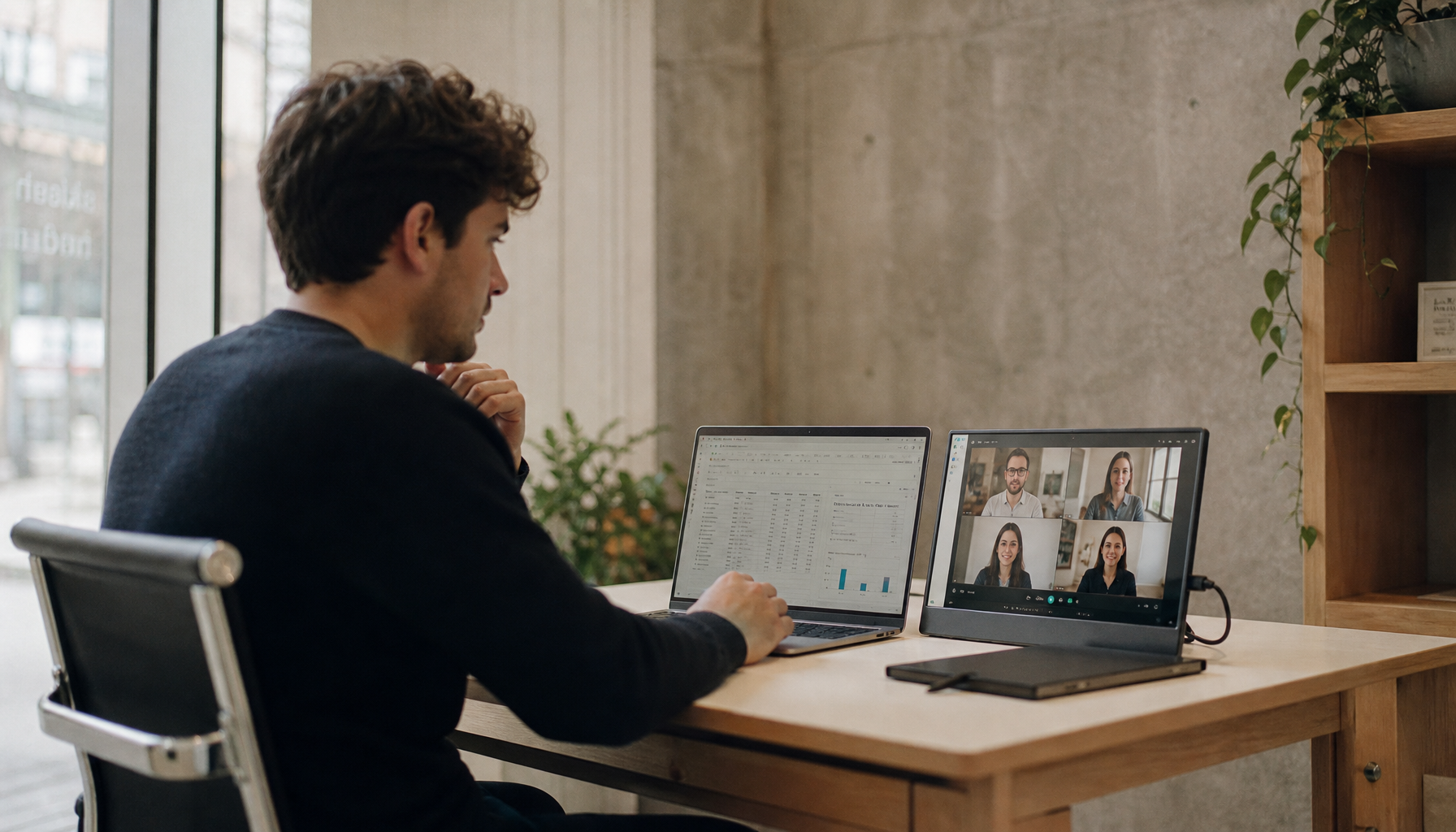
For most setups, keep the top of the screen at or slightly below eye level. Tilt the monitor back only enough so the panel surface faces your eyes. If you are looking up at a tall 32-inch or 4K monitor, the lower part of the screen may appear different from the top; if you are looking down at a portable monitor on a low stand, the same issue can happen in reverse.
Why Larger Screens Show More Color Shift
Larger monitors make color shift more obvious because your eyes do not view every part of the screen from the same angle. The center is nearly perpendicular to your eyes, while the left edge, right edge, top, and bottom are viewed off-axis. Larger screens increase off-angle viewing, which is why 32-inch monitors and ultrawides can show edge differences even when you sit centered.
This is not always a defect. Some of it comes from panel physics, some from backlight uniformity, and some from the way your viewing position interacts with screen size. If the color change moves when you move your head, viewing angle is probably the main cause. If a warm, cool, bright, or dark patch stays fixed in one corner no matter where your head is, the issue is more likely panel uniformity or backlight behavior.
The Edge-to-Center Problem

The edge-to-center effect is easiest to notice on solid-color backgrounds, gray windows, white documents, blue skies in games, and photo-editing canvases. You may see the center look neutral while the sides appear slightly pink, green, yellow, dim, or washed out.
On an ultrawide monitor, the problem can feel worse because the far edges sit farther away from your straight-ahead sightline. A gentle curve can reduce the angle between your eyes and the edges, but it does not turn a narrow-viewing-angle panel into a color-critical display.
Brightness, Contrast, and Gamma Can Shift Too
Color shift is rarely just about hue. Poor viewing angle can also cause brightness falloff, raised blacks, weaker highlights, and lower perceived contrast. This is why a dark game scene may look rich in the center but flatter near the sides.
For VA monitors, the most visible issue is often gamma shift: shadows and midtones can change as you move your head. For TN monitors, color and brightness shifts can be much more aggressive. IPS and OLED displays usually hold color and shade more consistently, though they can still have uniformity variation from unit to unit.
Panel Type Comparison for Large Monitors

Panel technology has a major effect on how much color shift you see from normal desk positions. TN LCDs have large brightness, contrast, and color shifts; VA LCDs usually offer high contrast but more viewing-angle shift; IPS LCDs tend to have smaller color and contrast changes.

For larger gaming monitors, high-refresh-rate displays, ultrawides, and portable monitors, the panel choice should match how sensitive you are to edge consistency. A fast TN panel can still work for competitive play if you sit perfectly centered and care more about response than color. A VA panel can look excellent for contrast-heavy games and movies, but large flat VA screens may show side-to-center tonal differences. IPS is often the safer choice for large screens when color consistency matters; a 27-inch 4K IPS option such as a 27” 4K IPS 60Hz low blue light home and office monitor can serve as a comparison point against VA or curved gaming displays when you are prioritizing off-center color consistency.
Panel Type |
Viewing-Angle Behavior |
Best Fit |
Watch For |
TN |
Narrowest viewing angles; visible color and brightness shift |
Budget esports monitors where speed matters more than color |
Washed-out edges, vertical color changes, weak off-angle contrast |
VA |
Better contrast than TN, but more gamma and color shift than IPS |
Immersive gaming, movies, dark-room use |
Side-to-center tone changes, black-level changes, edge inconsistency |
IPS |
Strong color consistency and wide viewing angles |
Large 4K monitors, ultrawides, mixed gaming and productivity |
IPS glow, backlight uniformity variation, lower contrast than many VA panels |
OLED |
Very strong viewing angles and pixel-level contrast |
Premium gaming and media displays |
Burn-in risk management, brightness behavior, higher price |
Portable IPS |
Usually better angle stability than portable TN-style panels |
Travel, laptop second screen, presentations |
Stand height, tilt limits, lower brightness in bright rooms |
A useful real-world benchmark comes from a company’s 45-degree comparison of two large TVs: the IPS LCD showed only small color changes, while the VA LCD’s Full HD color gamut dropped from 101% to 55% at 45 degrees. That is a TV test, not a direct monitor buying score, but it illustrates why panel type becomes more important as screen size and off-angle viewing increase.
Setup Adjustments That Reduce Color Shift
The fastest way to reduce perceived color shift is to improve your geometry before changing settings. Sit centered, move the monitor far enough back that the edges are not viewed at an extreme angle, and keep the panel square to your face. A recommended desktop range for many gaming monitors is about 20 to 30 inches, with the top of the screen at or slightly below eye level.
For a 32-inch monitor, start around 2 ft away, then move back a few inches if the sides still look different from the center. For a 34-inch ultrawide, you may need a deeper desk or a monitor arm to place the screen far enough back. For a 49-inch super-ultrawide, expect to manage the workspace actively: keep color-critical content centered, and use the far sides for chat, tools, timelines, or secondary panels.
Practical Setup Checklist
- Keep your nose aligned with the physical center of the screen.
- Set the panel perpendicular to your face, not angled toward one shoulder.
- Keep the top edge at or slightly below eye level.
- Use a stable monitor arm if the included stand cannot provide proper height and tilt.
- Move large flat monitors slightly farther back if the edges look washed out.
- Use a gentle curve for very wide screens when immersion and edge visibility matter.
- Avoid judging color from a reclined, side-seated, or standing position.
Lighting also matters. Strong side reflections can mimic color shift by changing perceived brightness or contrast near one edge. If the left side of the screen faces a bright window and the right side faces a darker wall, the monitor may look uneven even if the panel itself is acceptable.
Gaming Monitor Example
For a 32-inch high-refresh-rate monitor used at a desk, set the display about 24 inches away as a starting point. If the far corners look dimmer in a racing game or the sky gradient looks uneven in an open-world game, move the screen back toward 28 to 30 inches and recheck from a centered position. If the problem improves as you move back, viewing angle was a major factor.
For competitive games, keep the crosshair, minimap, and key HUD elements within your central field of view when possible. If your game supports HUD positioning, avoid placing color-critical information at the extreme edges of a large ultrawide.
Calibration Helps, But It Cannot Defeat Panel Limits
Calibration can make a good setup more accurate, but it cannot fully correct a panel’s physical viewing-angle behavior. Calibration can improve white point, tone, brightness, gamma, and color response, with common SDR targets such as D65 white point and Gamma 2.2, but a center-based profile usually cannot remove edge tint.
If you are checking color accuracy seriously, warm up the monitor for at least 10 to 15 minutes before measuring. Keep test conditions identical: same room lighting, resolution, refresh rate, picture mode, brightness, contrast, color temperature, gamma, HDR setting, and local dimming setting. For SDR testing, disable HDR, dynamic contrast, vivid modes, and local dimming because they change luminance behavior.
What to Measure
A colorimeter or spectrophotometer is the right tool for verification. Visual test patterns can reveal obvious banding, tinting, or crushed shadows, but they cannot prove small improvements in Delta E. Average Delta E below 2 is commonly treated as a strong baseline for color work, but maximum Delta E, grayscale neutrality, gamma, brightness, gamut, and uniformity also need attention.
On large monitors, do not measure only the center. Check multiple zones, including the left edge, right edge, top corners, and bottom corners. Center-only measurements can miss edge tinting, brightness falloff, and color drift across large ultrawide, 4K, and portable displays.
Simple Head-Movement Test

Use a neutral gray or white full-screen image and sit in your normal position. Move your head slowly left and right, then up and down. If the color shift changes as your head moves, viewing angle is a major contributor. If the same area stays discolored from every position, the cause is more likely panel uniformity, backlight variation, coating behavior, or assembly tolerance.
This test is especially helpful before returning a monitor. A large VA panel that changes with head position may be behaving within its panel-type limits, while a fixed green corner or fixed dark patch may point to unit-specific uniformity variation.
Buying Guidance for Large and Ultrawide Displays
When buying a large monitor, do not rely only on advertised viewing-angle numbers. Many monitors list wide angles on paper, but real-world performance depends on panel type, screen size, coating, backlight uniformity, curve, and calibration quality. A testing platform measures color washout, color shift, brightness loss, and black-level raise at different angles, which is the kind of testing that matters more than a spec-sheet viewing-angle claim.
For a 27-inch monitor, most users can get good consistency with a centered setup and an IPS or OLED panel. For a 32-inch monitor, panel choice and desk depth become more important. For ultrawides, especially 34-inch and larger models, prioritize reviews that discuss edge uniformity, viewing-angle behavior, and curve effectiveness rather than only refresh rate and color gamut.
What to Prioritize by Use Case
For gaming, choose based on the balance you care about most. IPS is a strong default for high-refresh-rate gaming when you want stable color across a large screen. VA can be excellent if you value deeper contrast in darker games, but test for side-to-center gamma shift. OLED is strong for contrast and viewing angle, but it requires more attention to static UI elements and long-term panel care.
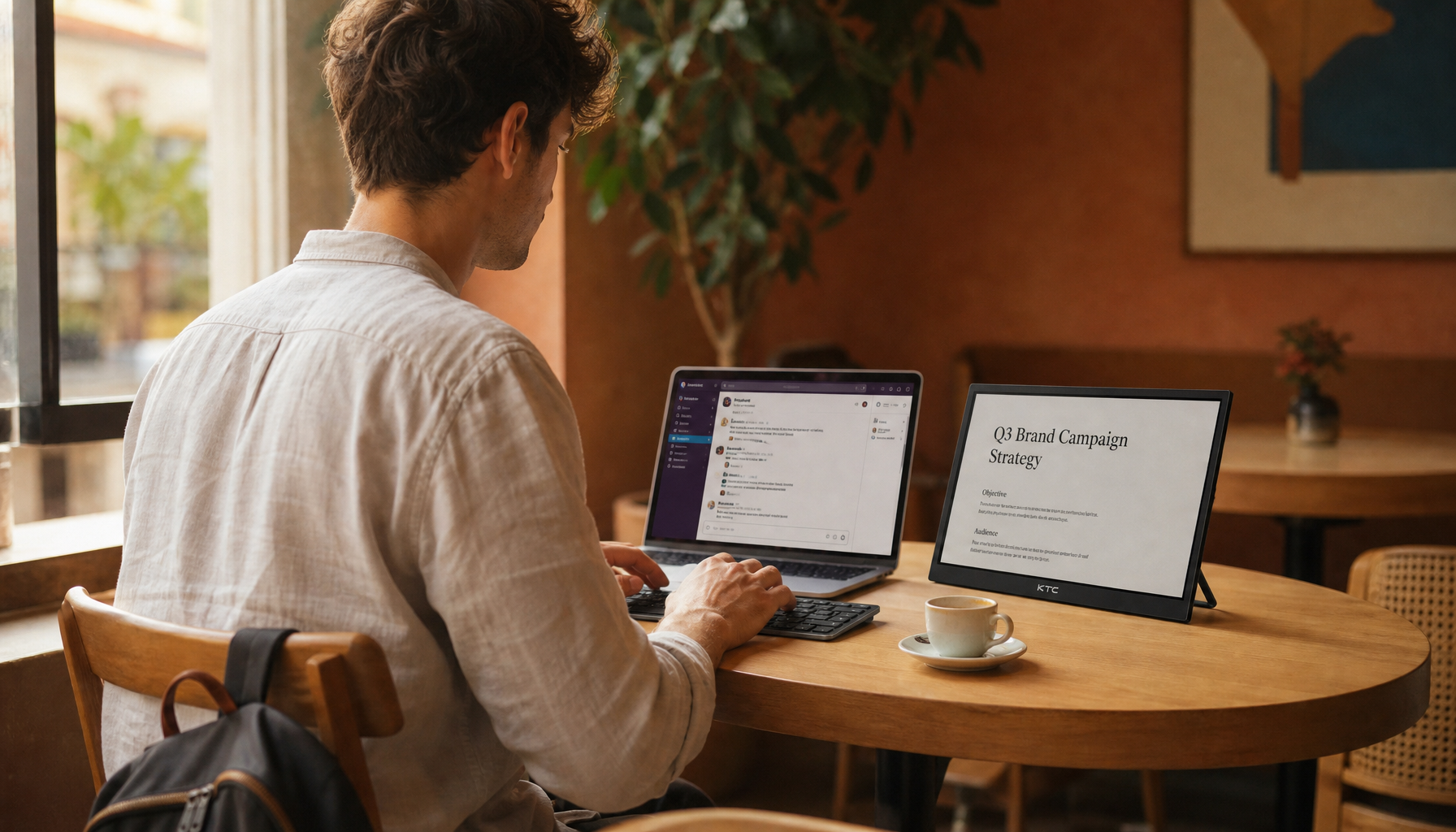
For productivity and creative work, prioritize IPS or OLED, strong uniformity results, an accurate sRGB or wide-gamut mode, and ergonomic height adjustment. For portable monitors, viewing angle and stand design matter together: even a decent IPS portable screen can look inconsistent if it sits too low and forces you to view it from above.
Specs That Matter More Than Marketing Claims
Look for independent notes on uniformity, viewing-angle performance, grayscale tracking, Delta E, gamma, and usable picture modes. Gamut coverage sounds impressive, but a huge gamut does not guarantee consistent color from edge to edge. For large screens, uniformity and viewing-angle behavior often matter more in daily use than chasing the biggest color-space percentage.
If you are shopping for a monitor to use with a gaming PC, console, and work laptop, a 27-inch or 32-inch IPS high-refresh-rate display is usually the safer all-around choice. If you want a cinematic ultrawide, a curved IPS, OLED, or carefully reviewed VA model will usually be easier to live with than a large flat VA or TN display.
FAQ
Q: What viewing angle should I maintain on a large monitor?
A: Sit directly in front of the screen center and keep the panel facing you squarely. For normal desktop use, try to stay within about 30 degrees of center; for photo work, design, color grading, or judging game visuals, stay much closer to straight-on and keep important content near the center of the screen.
Q: Why do the edges of my ultrawide monitor look different from the center?
A: The center is viewed straight-on, while the edges are viewed from a side angle. On large and ultrawide monitors, that off-axis view can reveal panel viewing-angle behavior, gamma shift, brightness falloff, screen-coating effects, or backlight uniformity differences. If the shift changes when you move your head, viewing angle is likely involved.
Q: Can calibration fix color shift on a large monitor?
A: Calibration can improve white point, gamma, brightness, grayscale neutrality, and overall color response, but it cannot fully fix physical viewing-angle limits or poor edge uniformity. A center-based ICC profile may make the middle of the screen more accurate while the edges still look different.
Key Takeaways
For larger monitors, the best way to avoid color shift is to stay centered, keep the screen perpendicular to your eyes, and sit far enough back that the edges are not viewed from a steep angle. A 20- to 30-inch viewing distance works well for many 27-inch to 32-inch desktop monitors, while ultrawides may need more desk depth or a curved panel to keep edge viewing angles manageable.
Panel choice matters. TN is the weakest for color consistency, VA offers strong contrast but can show gamma and edge shifts, IPS is a reliable choice for large gaming and productivity monitors, and OLED generally provides excellent viewing-angle stability with its own ownership tradeoffs. For color-sensitive buying decisions, prioritize independent uniformity and viewing-angle testing over spec-sheet claims.


,%20and%20setup%20for%20consistent%20color.
)